
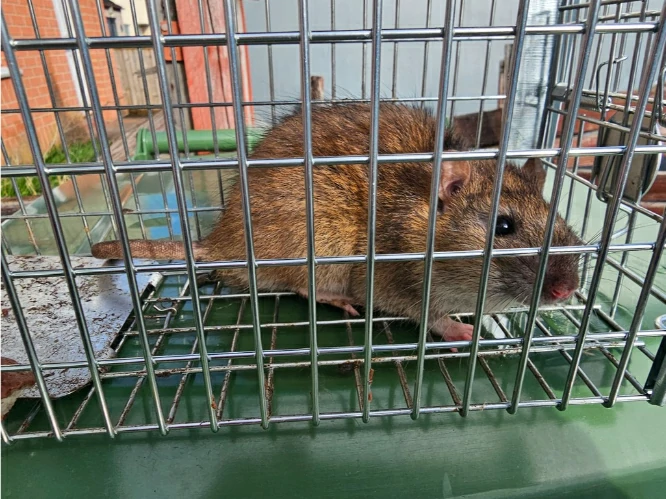
If you’ve got rats in your home, you might want to get rid of them without actually killing them. Humane rat traps let you catch rats alive so you can release them somewhere far away from your house. But how do humane rat traps work?
Humane rat traps work by luring rats inside with food bait, then trapping them in an enclosed space they can’t escape from. The rat walks in through a one-way door or trigger mechanism that closes behind them, keeping them safely contained until you release them.
These traps don’t use poison, snap mechanisms, or anything that hurts the rat. Instead, they just hold the animal in a small cage or box until you come back to check on it.
What Makes a Rat Trap “Humane”?
A humane trap is designed to catch rats without causing them pain, injury, or death. The goal is to trap the animal alive so you can move it to a different location.

Most humane traps are basically small cages or boxes made from metal wire, plastic, or wood. They have an opening on one end where the rat can walk in, but once they’re inside, they can’t get back out.
The trap doesn’t use sharp edges, crushing force, or anything that could hurt the rat. It just keeps them contained in a safe space until you’re ready to let them go.
How the Door Mechanism Works
The key part of any humane rat trap is the door. This is what actually catches the rat and keeps it inside.
When you set up the trap, you place food bait at the far end, away from the door. The rat smells the food and walks inside to get it.
As the rat moves toward the bait, it steps on a trigger plate or pushes against a lever. This sets off the door mechanism, which quickly closes the entrance behind the rat.
Some traps use a spring-loaded door that snaps shut when triggered. Others use a gravity-based door that swings down and locks into place.
Once the door closes, the rat can’t push it back open from the inside. The door either locks automatically or stays shut because of how it’s designed.
Different Types of Humane Rat Traps
There are several styles of humane traps you can use, and they all work a bit differently.
Cage Traps
These are the most common type. They look like small metal or plastic cages with a door on one or both ends.
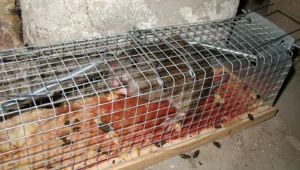
You put bait inside, and when the rat enters and touches the trigger, the door slams shut. The rat is now trapped in the cage but can still move around, breathe, and stay safe until you release it.
Tunnel Traps
Tunnel traps are long, tube-shaped containers with openings on both ends. The rat walks in from one side, triggers the mechanism, and doors on both ends close at the same time.
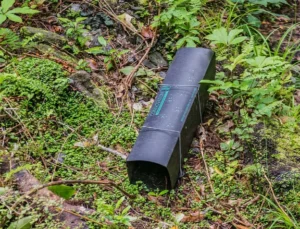
These work well because rats naturally like to run through tunnels and tight spaces. The trap feels safe to them, so they’re more likely to go inside.
Box Traps
Box traps are enclosed containers with a hinged door. When the rat steps on the trigger inside, the door swings shut and locks.
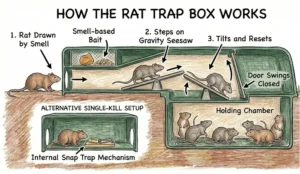
Some box traps have see-through sides so you can check if you’ve caught something without opening the trap. This is helpful because you don’t want to accidentally let the rat escape.
What Happens After the Rat Is Trapped?
Once the door closes, the rat is stuck inside but still alive and unharmed. The trap is designed to give the rat enough space to turn around and stay comfortable.
Most humane traps have small air holes or wire mesh sides so the rat can breathe. This is really important because you don’t want the animal to suffocate while it’s waiting for you.
You should check your traps at least twice a day. Rats need food and water, and leaving them trapped for too long can cause stress, dehydration, or even death.
When you find a rat in the trap, you can carry the whole thing to a release location. Some traps have handles on top to make this easier.
Why Rats Fall for These Traps
Rats are smart, but they’re also driven by hunger and curiosity. If they smell food, they’ll usually take the risk to get it.
The best baits for humane traps are things rats love to eat, like peanut butter, chocolate, dried fruit, or nuts. You want something with a strong smell that will attract them from a distance.

Rats also like to explore new spaces, especially tunnels and dark corners. If your trap looks like a safe hiding spot with free food inside, there’s a good chance the rat will go in.
Once they step on the trigger, it’s too late. The door closes in less than a second, and they can’t escape.
Where to Place Humane Rat Traps
Location is everything when you’re trying to catch rats. You can’t just put a trap anywhere and hope for the best.
Rats travel along walls and edges because they don’t like being out in the open. They leave behind greasy marks, droppings, and gnaw marks that show you where they’ve been.
Place your traps along these paths, with the entrance facing the wall. Rats will naturally run into the trap as they follow their usual route.
Good spots include behind appliances, in corners, along baseboards, in attics, and inside cabinets. Anywhere you’ve seen rat activity is a good place to try.
How Long Does It Take to Catch a Rat?
This depends on how many rats you have and how hungry they are. Sometimes you’ll catch one the first night, but other times it might take a few days.
Rats are cautious around new objects in their environment. They might sniff around the trap for a while before actually going inside.

You can make the trap less scary by leaving it open (without setting it) for a day or two with bait inside. Let the rats get used to going in and out safely.
Once they trust the trap, set it properly. The next time a rat goes in for food, it’ll get caught.
Do Humane Traps Work for All Rats?
Humane traps work for most rats, but you need to make sure the trap is big enough for the type of rat you’re dealing with.
Roof rats and Norway rats are the two most common types in homes. Norway rats are bigger and heavier, so they need a larger trap.
If your trap is too small, the rat might not fit inside, or the door might not close properly. Check the trap’s size before you buy it to make sure it’ll work for the rats in your area.
Baby rats are easier to catch because they’re smaller and less experienced. Adult rats are more cautious and might avoid traps they think are dangerous.
What to Do If the Trap Isn’t Working
If you’ve had your trap set for several days and haven’t caught anything, there are a few things you can try.
First, check your bait. If it’s dried out or doesn’t smell strong anymore, replace it with something fresh. Rats won’t go into a trap if the food isn’t appealing.
Second, move the trap to a different location. You might not have placed it along the rat’s actual path, so try a new spot where you’ve seen more activity.
Third, make sure the trigger mechanism is working. Sometimes the trap gets stuck or doesn’t close properly, and the rat can walk in and out without getting caught.
You can also try using a different type of trap. If a cage trap isn’t working, switch to a tunnel trap or box trap.
Can You Reuse Humane Traps?
Yes, you can use the same trap over and over again. After you release a rat, clean the trap thoroughly before setting it up again.
Rats have a strong sense of smell, and if the trap smells like another rat, it might scare new rats away. Wash the trap with soap and water, then let it dry completely.
You should also check the trap for damage. If the door is bent, the trigger is broken, or the cage has holes, it won’t work properly.
Replace any worn-out parts or buy a new trap if the old one is too damaged. A broken trap won’t catch rats, and it might even let them escape after they’ve been caught.
Are There Any Downsides to Humane Traps?
Humane traps are great if you don’t want to kill rats, but they do have some challenges.
The biggest issue is that you have to release the rat somewhere else. If you let it go too close to your house, it’ll just come back.
You also need to check the traps regularly. If you forget and leave a rat trapped for too long, it could die from stress or dehydration, which defeats the purpose of using a humane trap.
Some people find it hard to handle live rats. If you’re scared of them, it can be tough to carry the trap to a release location without panicking.
Finally, humane traps only work if you fix the problem that brought the rats inside in the first place. If you don’t seal up holes, clean up food, and make your home less inviting, new rats will just move in after you release the old ones.
How to Handle the Trap Safely
When you catch a rat, don’t open the trap inside your house. The rat could escape and cause even more problems.
Carry the trap carefully to your car or outside. Some traps have handles, but if yours doesn’t, hold it steady so the rat doesn’t get thrown around.
Wear gloves if you’re worried about germs or bites. Rats can carry diseases, and even though they’re trapped, it’s better to be safe.
Don’t shake the trap or poke at the rat. This will stress the animal out and make it more likely to panic when you release it.
Where to Release the Rat
You need to release the rat at least a few miles away from your home. If you don’t take it far enough, it’ll find its way back.
Look for a wooded area, field, or park where the rat can find food and shelter. Don’t release it near someone else’s house, because that just moves the problem to them.

When you get to the release spot, set the trap on the ground and open the door. Step back and give the rat space to run out on its own.
Sometimes the rat will bolt out immediately. Other times it’ll sit inside for a minute, confused about what’s happening. Just wait patiently until it leaves.
What If You Catch the Wrong Animal?
Sometimes humane traps catch things other than rats. You might trap a mouse, squirrel, chipmunk, or even a small bird.
If you catch something you didn’t mean to, just release it the same way you would release a rat. Take it outside, open the door, and let it go.
This is one reason why humane traps are better than poison or snap traps. If you accidentally catch a pet or non-target animal, you can just let it go without any harm done.
Can Humane Traps Stop a Rat Problem Completely?
Humane traps can help reduce the number of rats in your home, but they won’t solve the problem by themselves.

If you have a serious rat problem, you’ll need to catch multiple rats over several weeks. This takes time, effort, and patience.
You also need to figure out how the rats are getting inside and block those entry points. Seal cracks, fix holes in walls, and make sure doors and windows close tightly.
Clean up food scraps, store trash in sealed containers, and remove clutter where rats like to hide. If your home is clean and sealed up, rats won’t want to stay.
Conclusion
Humane rat traps work by using bait to lure rats into an enclosed space, then trapping them inside with a one-way door they can’t open from the inside.
These traps don’t hurt the rat, so you can release it alive somewhere far from your home.
The traps use simple trigger mechanisms that close the door when the rat steps inside. You just need to place them in the right spots, use good bait, and check them regularly.
If you don’t want to kill rats but still need to get them out of your house, humane traps are a good option. Just remember that catching the rat is only part of the solution. You also need to make sure new rats can’t get inside.

Hi, my name is Ezra Mushala, i have been interested animals all my life. I am the main author and editor here at snakeinformer.com.