
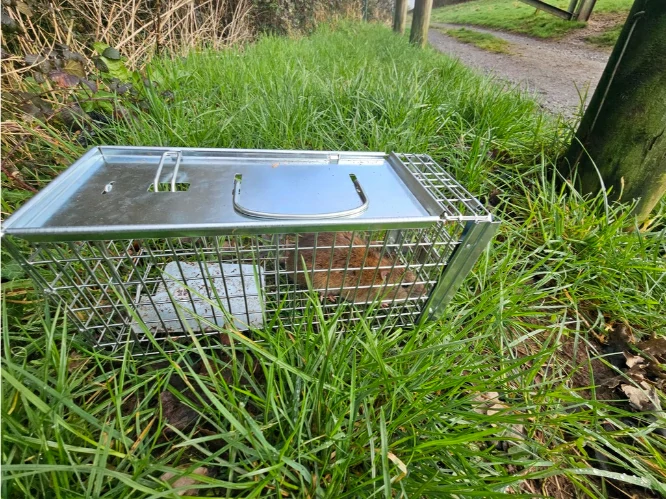
Dealing with rats can be stressful, especially if you want to handle the problem without killing the animals. Live rat traps let you catch rats safely so you can release them far from your property or deal with them however you see fit.
But with so many different live traps on the market, how do you know which one actually works? What is the best live rat trap you can buy?
The best live rat trap is the Havahart 1025 Live Animal Two-Door Cage Trap. It’s large enough to catch even big Norway rats, has two doors to increase catch rates, is built from sturdy galvanized steel that won’t rust, and has a sensitive trigger that works reliably. Other excellent options include the AB Traps Humane Rat Trap and homemade bucket traps for budget-conscious buyers.
Choosing the right live trap depends on what kind of rats you’re dealing with, where you need to set the trap, and how many rats you need to catch.
Some traps work better for single rats, while others can handle multiple catches without being reset.
Why the Havahart 1025 is the Top Choice
The Havahart 1025 is widely considered the best live rat trap you can buy, and for good reason. This trap has been around for years and has proven itself reliable in countless situations.
First, it’s the right size. The trap measures 18 inches long, 5 inches wide, and 5 inches tall.
This is big enough to comfortably hold even large Norway rats, which can grow up to 16 inches long including their tail. Roof rats are smaller, so they’ll fit easily as well.
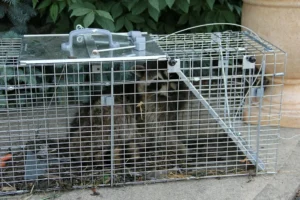
The two-door design is a huge advantage. Most live traps only have one entrance, which means the rat has to approach from a specific direction.
With two doors, the rat can enter from either end, which roughly doubles your chances of a catch. This is especially helpful if you’re not sure which direction the rats are traveling from.
The trap uses a spring-loaded door mechanism that’s triggered when the rat steps on a metal plate inside the trap.
The trigger is sensitive enough to catch even young rats, but not so sensitive that it goes off from wind or vibrations.
Once the door closes, it stays closed, so there’s no chance of the rat escaping.
The construction is solid. The trap is made from galvanized steel wire with a rust-resistant coating.
You can use it outdoors in rain or humid environments without worrying about it breaking down.
The wire spacing is small enough that rats can’t squeeze through, but large enough that you can clearly see if you’ve caught something.
The handle on top makes it easy to carry the trap once you’ve caught a rat. You can transport the trap without having to touch the rat or worry about getting bitten.
AB Traps Humane Rat Trap: A Strong Alternative
The AB Traps Humane Rat Trap is another excellent choice, especially if you want something a bit more affordable than the Havahart. This trap uses a different design that some people find even more effective.
Instead of cage-style doors, the AB trap uses a walk-in tunnel design with a gravity door. The rat walks into the tunnel attracted by bait at the far end.
As it moves through the tunnel, its weight triggers the door behind it to close. The rat can’t push the door back open because of how the mechanism is designed.

This trap is very easy to set. You don’t have to mess with springs or latches. You just put bait inside, open the door, and place the trap. When a rat enters, the trap does the rest.
The tunnel design also appeals to rat behavior. Rats prefer traveling through enclosed spaces rather than open areas, so a tunnel trap feels safer to them than a cage trap. This can lead to higher catch rates, especially with cautious rats that avoid traditional traps.
The downside is that the AB trap is typically smaller than the Havahart, so it works better for roof rats and young Norway rats than for full-grown adult Norway rats. If you’re dealing with very large rats, the Havahart is still the better choice.
Homemade Bucket Trap: Best Budget Option
If you’re on a tight budget or you enjoy DIY projects, a homemade bucket trap can be just as effective as any commercial trap, and it costs almost nothing to build.
A basic bucket trap uses a 5-gallon bucket, a wooden dowel, a soda can, and some bait. The can is mounted on the dowel so it can spin freely.
You spread bait (usually peanut butter) on the can and place the dowel across the top of the bucket. A ramp leads up to the rim of the bucket.

When a rat climbs the ramp and steps onto the spinning can to get the bait, the can rotates and the rat falls into the bucket. If you leave the bucket empty, you’ve got a live trap. If you fill it with water, it becomes a lethal trap.
The bucket trap has some major advantages. It’s extremely cheap to build (you probably have all the materials already), it can catch multiple rats without being reset, and it’s very reliable once you get it set up correctly.
The disadvantages are that it’s not as portable as a cage trap, it requires more setup than just buying a ready-made trap, and you need to check it frequently if you’re using it as a live trap.
Rats left in an empty bucket for too long will become stressed and might hurt themselves trying to jump out.
What Size Trap Do You Need?
Size matters when it comes to live traps. A trap that’s too small won’t catch large rats, and even if it does, the rat will be cramped and might injure itself trying to escape.
For roof rats, which typically grow to about 13-16 inches long including the tail, a trap that’s 15-18 inches long is sufficient. For Norway rats, which can reach 16-19 inches, you want a trap that’s at least 18 inches long.
The width and height of the trap matter too. A trap that’s too narrow can make it hard for the rat to turn around, which increases stress. A trap that’s too short can make the rat feel exposed and reluctant to enter.
Most commercial rat traps are designed with these dimensions in mind, so if you buy from a reputable brand like Havahart or Victor, you’re usually safe. Just double-check the dimensions before you buy to make sure the trap will work for the type of rats in your area.
Single Door vs. Two Door Traps
This is one of the most important decisions you’ll make. Single-door traps are simpler and usually cheaper, but two-door traps are more effective.
With a single-door trap, the rat has to approach from one specific direction. If the rat usually travels from the opposite direction, it might never encounter the entrance. You have to guess which way the rat is coming from and orient the trap accordingly.
Two-door traps eliminate this guesswork. No matter which direction the rat is traveling, there’s an entrance facing it. This significantly increases your catch rate, especially in the first few nights when you’re still figuring out the rats’ travel patterns.
The only downside of two-door traps is that they’re slightly more complex mechanically. There are two trigger mechanisms instead of one, which means twice as many parts that could potentially fail.
In practice, this rarely causes problems with quality traps like the Havahart.
How Sensitive Should the Trigger Be?
The trigger sensitivity is critical. A trigger that’s too sensitive will go off from wind, vibrations, or even insects walking across it. A trigger that’s not sensitive enough won’t catch small or lightweight rats.
The best live traps have adjustable triggers that you can tune to your specific situation. If you’re catching young rats or roof rats (which are lighter than Norway rats), you can make the trigger more sensitive.
If you’re getting false triggers, you can make it less sensitive.
Most commercial traps come with the trigger set to a middle sensitivity that works for average-sized rats. This is usually fine for most situations, but having the ability to adjust it is a nice feature if you run into problems.
Wire Spacing: Why It Matters
The spacing between the wires in a cage trap affects both security and visibility. If the wires are too far apart, small rats might be able to squeeze through and escape. If they’re too close together, it’s hard to see into the trap to check if you’ve caught anything.\

Most quality rat traps use wire spacing of about 1/2 inch to 1 inch. This is small enough to hold even young rats, but large enough that you can clearly see inside the trap.
Some very cheap traps use wider wire spacing (1.5 inches or more) to save on materials. Don’t buy these. Rats can and will escape through gaps that large.
Ease of Setting and Releasing
Some live traps are easy to set, while others require you to fiddle with springs, latches, and complicated mechanisms. If you’re going to be setting and resetting the trap frequently, ease of use matters.
The Havahart traps are known for being easy to set. You just pull back on a lever, hook it in place, and the trap is ready. Releasing the rat is just as simple. You carry the trap to your release location, unhook the lever, and the doors spring open.
Some cheaper traps require you to manually hold the door open while you secure it with a hook or pin. This is awkward and frustrating, especially if you’re trying to do it in a tight space or awkward position.
Durability and Weather Resistance
If you’re using the trap outdoors, it needs to withstand rain, humidity, and temperature changes. Galvanized steel traps like the Havahart are designed for this. The galvanized coating prevents rust, and the steel won’t warp or crack in extreme temperatures.

Plastic traps are lighter and sometimes cheaper, but they don’t hold up as well outdoors. UV radiation from sunlight can make plastic brittle over time, and extreme cold can cause it to crack.
If you’re only using the trap indoors, plastic traps are fine. But if there’s any chance you’ll use it outside, invest in a metal trap.
How to Choose Based on Your Situation
The best trap for you depends on your specific needs. If you’re dealing with a single rat in your house and you want a reliable, easy-to-use solution, the Havahart 1025 is your best bet. It’s proven, durable, and effective.
If you’re on a budget and you’re comfortable with DIY projects, build a bucket trap. It’ll cost you less than $10 and work just as well as commercial traps.
If you have a large rat population and need to catch multiple rats quickly, go with the Victor TIN CAT. You’ll catch more rats faster than with single-catch traps.
If you want modern convenience and notifications, the Smart Mouse Trap is worth the investment, especially if you’re setting traps in hard-to-check locations.
Where to Buy Live Rat Traps
You can find live rat traps at most hardware stores, farm supply stores, and home improvement centers. They’re also widely available online through Amazon, Walmart, and specialty pest control websites.
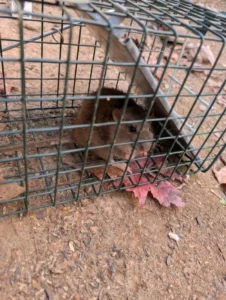
Buying online usually gives you more options and better prices, but buying in a store lets you see the trap in person and check the build quality before you purchase.
Watch out for very cheap traps from unknown brands. These often use thin wire that rats can bend or break, or poorly designed triggers that don’t work reliably. Stick with established brands like Havahart, Victor, AB Traps, or Tomcat.
Conclusion
The best live rat trap is the Havahart 1025 for most people. It’s large enough for any rat, has two doors for maximum effectiveness, is built to last, and is easy to use. If you need something cheaper, a homemade bucket trap works great.
Whatever trap you choose, success depends on proper placement, good bait, and patience. Place the trap along rat travel routes, use attractive bait like peanut butter or bacon, and give the rats a few days to get comfortable with the trap’s presence.
With the right approach, any of these traps will help you catch rats humanely and effectively.

Hi, my name is Ezra Mushala, i have been interested animals all my life. I am the main author and editor here at snakeinformer.com.