
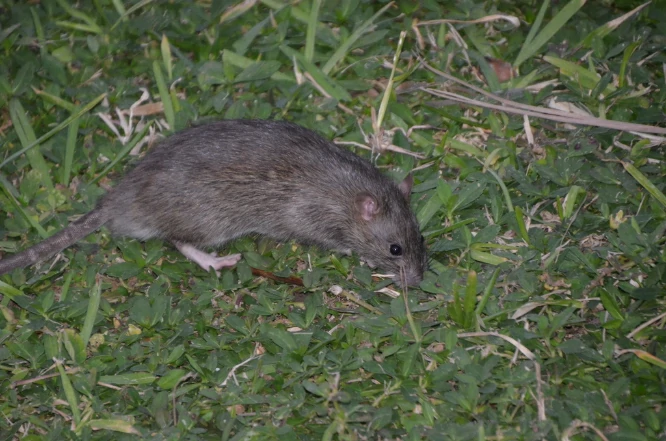
Glue traps are one of the most common ways people try to catch rats, but many people don’t really know how they work.
Unlike a snap trap, a glue trap doesn’t have a quick way of killing built in. So how does a glue trap actually kill a rat?
Glue traps don’t kill directly. They hold the rat in place, and it dies slowly from things like exhaustion, thirst, hunger, and stress, usually over many hours or even days. Most animal welfare experts consider that inhumane.
Understanding how glue traps work helps you decide whether to use one, and what to do if you find a rat stuck on one.
In this post, you’ll see what a glue trap actually does, why experts object to them, what to do if you find a rat on one, and what works better.
What Happens When a Rat Gets Stuck on a Glue Trap?
A glue trap is a flat board covered in a very sticky adhesive. When a rat steps on it, the glue grabs its feet and holds on.
The rat pulls to get away, but moving usually just puts more of its body in contact with the glue. Soon, it can’t get free.
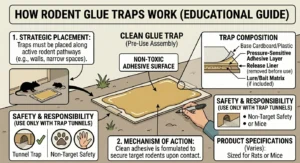
From that point on, the rat is stuck out in the open, with no food, no water, and no shelter. It’s also under a lot of stress, which affects its whole body.
Glue traps are usually sold as a clean, simple fix. However, they hold an animal alive until a person steps in, which is the part many buyers don’t expect.
That’s the key difference from a snap trap. A snap trap is meant to work in an instant, while a glue trap just holds the animal and leaves the rest to time.
Time is what makes a glue trap so hard on the animal. It’s the main reason experts worry about them.
What Actually Kills a Rat on a Glue Trap?
Scientists who study pest control say the main problems are exhaustion, thirst, hunger, and exposure (being too hot or too cold with no way to move to a better spot).
Which one matters most depends on the rat and the situation. Often, more than one is happening at the same time.
Animal welfare groups say a rat left on a glue trap can last many hours, and sometimes days, before it dies.
There’s no exact number, because every rat and every setting is different. However, the pattern is the same: the longer the rat is stuck, the weaker it gets.
That’s why people who study this call glue traps one of the least humane ways to deal with rats.
Exhaustion Wears a Trapped Rat Down
Rats are small animals with fast metabolisms (the rate at which the body uses energy). They burn through it quickly, especially when they’re trying hard to get free.
Being stuck is tiring, and the rat gets weaker as the hours pass. It has less and less strength left, and nothing to replace it.
This is especially hard on rats that are very young, old, or already sick, because they have fewer reserves to draw on.
Heat adds to the problem. Rats can’t sweat the way people do, so a rat in a warm spot has a harder time cooling down.
That’s one reason finding a trap early makes such a big difference for the animal.
Dehydration Adds to the Problem Over Time
Rats need water regularly, and a rat stuck on a glue trap can’t reach any.
After a day or more, thirst becomes a serious problem. Dehydration (when the body doesn’t have enough water to work properly) weakens the rat more and more.
Heat and stress make it worse, because the body loses water faster when it’s working hard and feeling stressed.
For many rats, this is one of the main reasons a glue trap is so hard on them. It’s slow, and there’s nothing the animal can do about it.
Hunger and Stress Make Things Worse
Rats eat often, so going a day or more without food wears them down too. In most cases, thirst becomes the bigger problem first, but hunger adds to it.
Stress plays a part as well. When a rat is scared, its body releases stress hormones (chemicals that help it react to danger).
In short bursts, those chemicals help. Over many hours, they wear the body down.
Stress can make a rat weaker faster, and it can be hardest on older or sick animals. That’s one reason some rats decline sooner than you’d expect.
Why Do Some Rats Last Longer Than Others?
No two rats are the same, and a few things change how long a rat lasts on a glue trap.
Size, age, and health matter. A big, healthy adult usually has more strength to draw on than a very young, old, or sick rat.
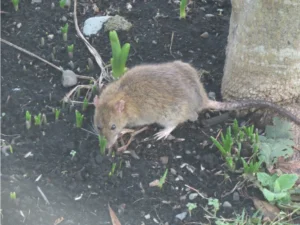
How much of the body is stuck matters too. A rat caught by just a foot is in a different spot than one stuck across more of its body.
In some cases, the way a rat is held can even make breathing harder.
Temperature makes a difference. Very hot or very cold spots are harder on a trapped animal than a room with a steady temperature.
Water nearby can also change things. If a leak or another water source is within reach, a rat may last longer.
None of this makes a glue trap kinder. These things only change how long the rat is in trouble, not whether it is.
What to Do If the Rat Is Still Alive
If you find a rat that’s still alive on a glue trap, act right away. Stay calm and keep kids and pets out of the room.
Put on thick gloves. Leather work gloves are best, because a scared rat can bite through thin latex or nitrile ones. Don’t try to pull the rat off the board.
Sprinkle torn paper towel over any open glue so the rat doesn’t stick to more of the board. Then cover the trap with a towel and slide it into a box or tote with air holes.
Put the box somewhere quiet, dark, and warm, and call a vet, a pest control company, or animal control. Say it’s urgent, and ask about the fee.
Many vets will put down a pest animal like a rat, though not all do, so call ahead. If it’s the middle of the night, try an emergency vet that’s open all night.
Don’t release the rat. Pest control experts don’t recommend it, relocated rats often don’t survive, and in many places it’s against the law to move wild animals.
Don’t drown it, freeze it, or use blunt force. Doing it wrong can be inhumane, and a vet or pest control professional uses methods designed to be quick and painless.
Some groups describe freeing an animal with warmed cooking oil, but experts don’t agree on it. Treat it as a last resort, and see a vet afterward.
What to Do If the Rat Is Already Dead
If the rat is already dead, the steps are simpler, but you still need to be careful. Put on thick gloves first, because a dead rat can still carry germs.
Pick up the glue trap by its edges, and try not to touch the rat itself. Drop the whole trap into a plastic bag and seal it.
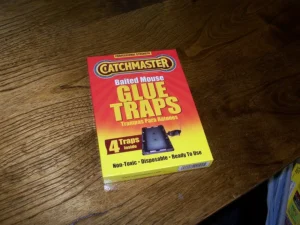
Put that bag inside a second bag and seal it too. Then put it in your outdoor trash, and don’t leave it sitting in your house.
Check your local rules, since some places have special rules for disposing of animals.
Then clean the spot. The CDC says to spray the area with a disinfectant or a bleach mix, made with 1.5 cups of bleach in a gallon of water, and to mix it fresh each time.
Let it soak for about five minutes, then wipe it up with paper towels and throw them away. Don’t sweep or vacuum, because that can kick germs into the air.
Wash your hands with soap and warm water for at least 20 seconds when you’re done, even if you wore gloves.
How to Protect Yourself When You Handle a Glue Trap
Rats can spread germs through bites, scratches, and contact with their urine, droppings, and saliva.
Salmonella is one of them (a stomach bug that causes cramps, diarrhea, and fever). Leptospirosis is another (a bacterial infection spread through the urine of infected animals).
Rat-bite fever is a third (an illness that can follow a bite or scratch). However, most people who follow basic safety steps stay healthy.
Wear thick gloves, keep your face away from the trap, and don’t touch your eyes, nose, or mouth until you’ve washed up.
If you get bitten or scratched, wash the spot with soap and warm water right away. Then call your doctor, since rat bites can get infected.
Why Do Experts Call Glue Traps Inhumane?
Most animal welfare groups and many pest control experts consider glue traps one of the worst options for rodents. There are a few clear reasons.
The first is time. A snap trap is meant to work in an instant, while a glue trap can leave an animal stuck for hours or days.
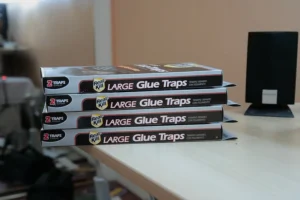
The second is that glue traps aren’t picky. People have found birds, squirrels, lizards, snakes, and even pets stuck on them.
The third is that people don’t always check them often enough. Many people check once a day or less, so a rat can be stuck for a long time before anyone knows.
Even when people do find a rat, most don’t know how to help it quickly. That often leaves the animal stuck longer.
That’s why animal welfare groups advise against using them at all. Because of this, some places have banned or limited glue traps. England bans using them without a license, and Wales, Scotland, Ireland, New Zealand, and Iceland have bans too.
In the US, a few cities have banned them, including West Hollywood and Ojai in California.
Glue Traps Stay Popular Because They’re Cheap and Easy
Glue traps stay popular because they cost very little and take no skill to use. You just set one down and walk away.
The packaging also makes them look clean and simple, and it doesn’t show what can happen to the animal.
Many people don’t realize how hard they are on a rat until they actually find one stuck. If that’s you, there’s no shame in it.
The good news is that you can switch to a better method right now. The next section shows you which ones work.
What Works Better Than Glue Traps for Rats?
Snap traps are the safest, most effective, and cheapest way to trap rats, and you don’t have to deal with a live animal afterward.
Use a trap made for rats, not mice. Press a bit of bait about the size of a pea onto the trigger, and place the trap at a right angle to the wall, with the trigger end next to it.
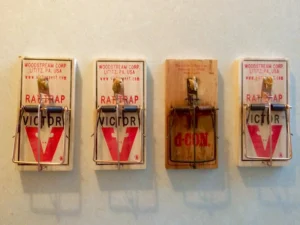
Rats are cautious about anything new, so leave the traps out unset for a few days first, then set them. Check them at least twice a day.
Electronic traps are another good option. They cost more, but they usually kill quickly, and they’re easy to empty with less contact with the rat.
If you’re not sure which trap to buy, ask for one made for rats at a hardware store, or call a pest control company for advice.
Live traps catch a rat without hurting it, but then you have to deal with a live animal. Releasing it isn’t recommended, so you’d need a vet or professional ready to help.
If you still choose to use glue traps where they’re legal, keep them indoors, away from pets and kids. Check them at least every 12 hours, and have a plan ready before you set one.
Check Any Glue Trap at Least Every 12 Hours
If you do use glue traps where they’re legal, check them at least every 12 hours. Twice a day, once in the morning and once in the evening, is easier to remember.
The sooner you find a catch, the sooner you can get help for the animal. So the shorter the wait, the better.
Don’t set glue traps if you’re going away for a weekend, since nobody will be there to check them.
Keep them indoors, in spots only rats will reach, and well away from pets and kids. Never set them outside, where birds and other wildlife can land on them.
Have your plan ready before you set one: a box, thick gloves, and the numbers for a vet and a pest control company.
Sealing Entry Points Keeps Rats From Coming Back
Traps only deal with the rats you already have. To stop new ones, you need to close up their way in.
Seal any crack or gap bigger than a quarter inch around your home. Steel wool, metal mesh (called hardware cloth), and caulk all work well.
Check where pipes and wires enter the house, and look around vents, doors, and the foundation.
Then take away what attracts them. Store pet food and bird seed in sealed containers, use trash cans with tight lids, and clear up fallen fruit.
Also move wood piles away from the house and fix leaking pipes or taps, because rats need water as much as food.
Check your home again every few months, especially in the fall, when rats look for warm places.
When Is It Time to Call a Pest Control Company?
Call a professional if you keep seeing rats after a week or two of trapping. It’s also time if you hear scratching in the walls or attic.
The same goes for droppings in several rooms, or if you can’t find how they’re getting in, since a pro can track down entry points you’d likely miss.
You can also call one if you just don’t want to deal with traps, and there’s no shame in that.
Many companies do an inspection first, then give you a plan and a price. Ask what methods they use, and ask about humane options.
Conclusion
Glue traps don’t kill rats directly. They hold the animal in place, and it dies slowly from exhaustion, thirst, hunger, and stress, often over many hours or even days.
That slow process is why most animal welfare experts consider glue traps inhumane, and why some places have banned them.
If you find a rat on one, put on thick gloves, cover the trap, box it, and call a vet or pest control company. Don’t drown it, freeze it, or use blunt force, because doing it wrong can be inhumane.
For the future, a good snap trap, sealed entry points, and a clean yard work better and cause far less suffering.

Hi, my name is Ezra Mushala, i have been interested animals all my life. I am the main author and editor here at snakeinformer.com.