
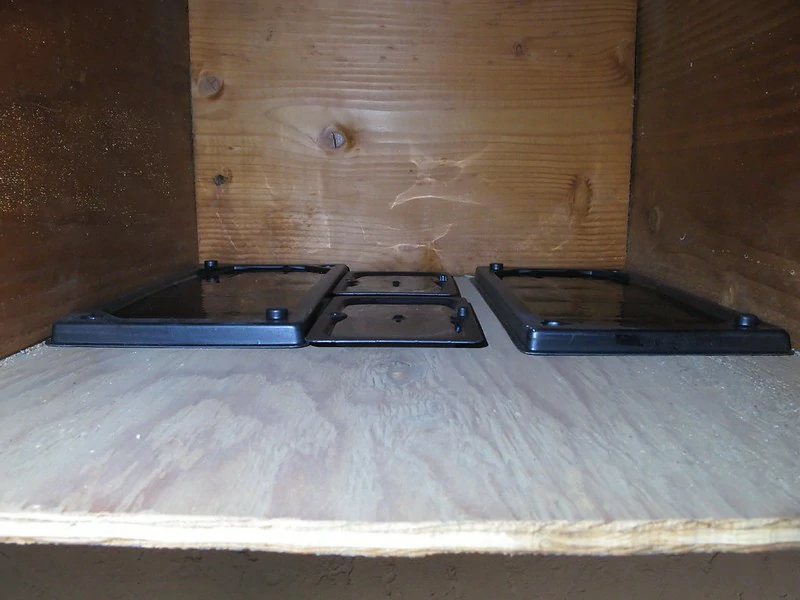
Catching a rat is a lot harder than catching a mouse. Rats are bigger, smarter, and far more careful, so the way you set up a trap really matters.
Bait is a big part of that, and if you’ve bought a glue board and you’re not sure what goes on it, you’re not alone. So, what should you put on glue traps for rats?
A small dab of sticky, smelly food in the middle of the board works best. Peanut butter is the most popular choice, and bacon bits, nuts, and dried fruit work too. Use only about the size of a pea.
That said, bait is only half the story. Rats are cautious animals that avoid anything new, so where you put the trap matters just as much as what’s on it.
Below, you’ll see which baits work best, how much to use, and what to avoid. You’ll also learn why glue traps often struggle with rats, and what to try if they don’t work for you.
Why Do You Need Bait on a Rat Glue Trap at All?
Some glue boards come with a scent already in the glue, and some people set them with no bait at all. That can work for mice, which wander around a lot, but rats are much pickier.
Rats are neophobic, which just means they’re afraid of new things. A strange flat board suddenly sitting on their usual path can make them stop, sniff, and walk around it.
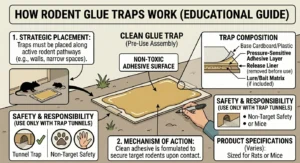
Bait gives them a reason to step onto the board. A strong smell says there’s food, and a hungry rat will often put up with something odd to get it.
However, not everyone agrees on this. Some pest pros skip bait completely and rely on putting the board right on a busy rat path.
Both ways can work, so it’s worth trying a small amount of bait first and seeing what happens. If the bait sits untouched for a few nights, you can change it up.
Peanut Butter Is the Go-To Bait for Rats
Peanut butter is the classic choice, and for good reason. It smells strong, it’s sticky enough that a rat can’t just grab it and run, and almost everyone has a jar at home.
Put a small dab right in the middle of the board, so a rat has to step onto the glue to reach it.
Smooth peanut butter usually works a little better than chunky, since there are no big pieces to knock loose and it stays put on a flat surface.
Norway rats (the big, heavy, brown rats you find in basements, garages, and around bins) tend to love fatty and sweet foods. Peanut butter fits that perfectly.
Roof rats (the slimmer, darker rats that climb well and nest in attics and trees) like it too. However, they tend to lean more toward fruit and nuts, which you’ll see below.
Bacon, Nuts, and Dried Fruit Also Work Well
If peanut butter doesn’t get any attention, try something with a different smell. Small bits of cooked bacon work really well, since the greasy, salty smell travels far.
Nuts are another good pick, especially for roof rats. Walnuts, pecans, and hazelnuts are all easy to find, and you can crush them a little so the smell gets out.
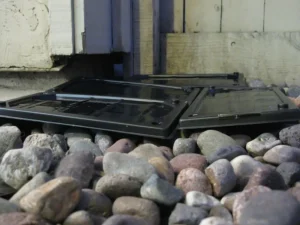
Dried fruit also works, since raisins, dried apricots, and dates are sticky and sweet, and a rat can smell them from a good distance.
Pet food is worth trying too, since dry dog or cat food (or a bit of the wet kind) is something rats already know and like.
A smart trick is to use what the rats are already eating. If they’ve been raiding your bird feeder, use a few seeds, and if they’ve been getting into the pet food, use that.
How Much Bait Should You Put on the Trap?
Less than you’d think. About the size of a pea is plenty, and a little more than that is the most you’ll ever need.
If you pile on too much, a rat can eat from the edge without stepping into the glue. It might also pull food across the board and leave crumbs that cover the sticky surface.
So keep the bait small and keep it in the center, so the only way to reach it is to walk onto the glue.
Fresh bait works better than old bait, so if it dries out, gets moldy, or has been sitting for days, scrape it off and put on a new dab.
Don’t smear it around the board either, since one small spot in the middle is much better than a thin layer all over.
Nesting Materials Can Work Better Than Food
Food isn’t the only thing that gets a rat’s attention. Rats also look for soft things to build nests with, and that can be just as tempting as a snack.
A small tuft of cotton, a bit of yarn, or a piece of string in the middle of the board can work really well. Some pest pros even tie a little cotton to a trap for this reason.
This can be a good option if the rats have plenty of food nearby and ignore your bait. A rat with a full belly might still want a soft spot to sleep.
You can also mix the two by putting a tiny bit of peanut butter on a small piece of cotton, then setting it in the center of the board.
Just keep it small, and don’t let it hang over the glue. The goal is to get the rat to step onto the board, not to cover the sticky part.
Where Should You Put the Bait on the Board?
Right in the middle. A rat that walks up to the edge should have to step across glue to reach the bait.
If your board is long, one dab in the center is usually enough. For a really big board, you can put two small dabs a few inches apart, as long as both are away from the edge.
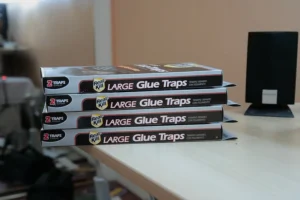
Keep the bait off the plastic or cardboard rim. If a rat can eat from there, it never has to touch the glue, and you’ve just fed a rat for free.
Press the bait down gently so it stays put, since if it slides off when you move the board, it won’t be there when the rat shows up.
Also, set the board down gently and don’t tilt it. Glue can slide, and bait can end up in a spot you didn’t plan.
Don’t Put Anything on the Glue That Could Ruin It
Glue boards only work while the glue is sticky, and a lot of things can take that away. Dust, dirt, water, flour, and oil all make it less sticky.
Some people sprinkle sawdust or leaves on a board to hide it. That’s a mistake, since it can cut the stickiness down to almost nothing.
Don’t spray the board with perfume, cleaning products, or any other strong scent either. Rats may avoid it, and it won’t help the glue.
Poison doesn’t belong on a glue board, and it’s a bad idea in general. A poisoned rat can wander off and die somewhere you can’t reach, and pets or wildlife can get sick if they eat it.
Keep boards out of damp, dusty, or very hot spots too. A glue trap cover or a box with openings can help keep dirt and moisture away.
Should You Pre-Bait the Area First?
Pre-baiting means putting out food (or a trap that isn’t set yet) for a few days so rats get used to it. It’s one of the best tips for catching rats, and UC IPM suggests it for snap traps.
The idea is simple: rats are afraid of new things, so letting them get used to a spot makes them less jumpy.
For a glue board, you can do the same thing. Put a bit of bait on a piece of cardboard where you plan to set the trap, and leave it for a night or two.
Once you see the bait disappearing, swap the cardboard for the glue board. The rats already know the spot is safe, so they walk right up.
It takes a little patience, but it often works far better than setting a board down on the first night and hoping for the best.
Rats Are Cautious, So Placement Matters as Much as Bait
Even the best bait won’t help if the board is in the wrong place. Rats like to travel along walls, fences, and pipes, where they feel hidden and safe.
So put the board along a wall with the long side pressed against it. Look for signs like greasy smears, droppings, gnaw marks, and tracks.

Where you look depends on the type of rat. Norway rats stay mostly on the ground, while roof rats prefer high places like beams, rafters, and the tops of walls.
Use more than one board. A rat can simply hop over a single trap, so a few boards spaced a few feet apart along the wall give you better odds.
Set them out in the evening, since rats are mostly active at night. Also keep them away from pets and kids, ideally inside a box or cover that rats can still get into.
Why Do Glue Traps Often Fail on Rats?
Because rats are strong, and a grown Norway rat can weigh close to a pound and pull itself free from a weak glue board.
When that happens, the rat leaves behind fur and sometimes skin, and it gets away hurt and scared. Even worse, it will probably avoid that spot for good.
Rats are also smart and learn quickly, so one scary experience can turn a bold rat into one that avoids every trap in your home.
Another problem is size, since a small mouse board just isn’t big enough and a rat can step on one edge and tip it, or drag it away.
There’s also a chance a hurt rat hides in a wall or attic and dies there, which can cause a bad smell. That’s a lot of trouble for a trap that didn’t do its job.
Boards Made for Rats Matter More Than Bait
If you’re going to use a glue board for rats, make sure the label says it’s made for them. Mouse boards are too small and the glue isn’t strong enough.
Rat boards are bigger and use stronger glue, and some are made for large rodents and have a lot more sticky surface.
You’ll also want to stop the board from sliding or being dragged. Some boards have a side you can tear off and press against the wall, and that helps hold them in place.
UC IPM also says rat traps should be secured down, so you can find them later and the rat can’t drag them off. Tape or a heavy object can help, as long as it doesn’t touch the glue.
Check the date and the condition too. Old glue can dry out or get dirty, and a board that’s been sitting in a hot garage for a year won’t be very sticky.
Check Glue Traps Often and Know the Rules in Your Area
If you use glue traps, check them often, since a rat stuck on a board is in pain and scared, and every hour makes it worse.
Check at least a couple of times a day, and more often is better. Early morning and late evening are good times.
Also know the rules where you live. Glue traps are still legal in many parts of the US and Canada, but some cities and states are moving to limit them.
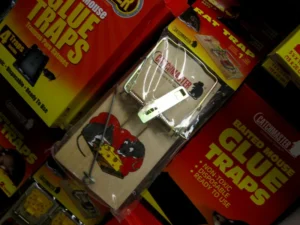
Several countries, including England and Ireland, have already banned them.
They can also catch things you didn’t mean to catch. Birds, lizards, and small wildlife can end up stuck, so keep boards inside or in a covered box where only rodents can reach them.
If you’re not sure about the rules, check with your local council, city, or state wildlife or agriculture office. It only takes a few minutes.
What Should You Do With a Rat Caught on a Glue Trap?
First, wear thick gloves. Rats can carry germs like salmonella and leptospirosis (a bacterial infection spread through rat urine), so you never want to touch one with bare hands.
Don’t try to pull a live rat off the board, since that usually hurts it badly and a scared rat can bite hard.
A vet or your local animal control can end its suffering quickly. A pest control company can also help, and many will come out the same day.
Once the rat is dead, seal the trap and the rat inside a plastic bag, then put that bag inside a second one. Throw it in an outdoor bin with a lid, then wash your hands well with soap and water.
Clean the area too, but don’t sweep or vacuum rodent droppings, since the CDC says that can send germs into the air.
Wet the spot with disinfectant first, then wipe it up with paper towels.
Snap Traps and Electronic Traps Are Usually Better for Rats
Many pest pros call snap traps the best all around trap for rats, since they’re cheap, quick, and easy to use again and again.
UC IPM calls trapping the safest and most effective way to deal with rats around the home. Just be sure to buy snap traps made for rats, not mice.
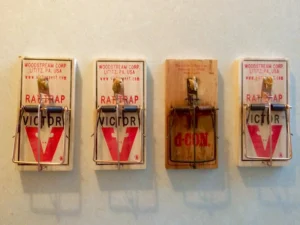
The same bait works on snap traps. Peanut butter, nuts, and dried fruit are all good, and a bit of dental floss can tie the bait to the trigger so a rat can’t just steal it.
Electronic traps are another good choice, since they kill the rat quickly and you can empty them without touching the animal, though they cost more.
Whichever you pick, set traps at night and take them in during the day, so birds and other animals don’t get caught.
When Should You Call a Pest Control Pro?
If you hear scratching in the attic or walls, or you keep finding droppings after a few days of trapping, it’s time to think about getting help. That usually means there’s more than one rat.
Rats breed fast. A female can have several litters a year, often with half a dozen or more pups each, so a small problem can turn into a big one in months.
Chewed wires are another warning sign. Rats gnaw on cables, and that can start a fire or knock out your power.
A pest pro can find how the rats are getting in, which is something traps can’t do. They can also set up bait stations and clean up the mess safely.
Even then, you’ll want to close the entry points. Steel wool, metal mesh, and cement can fill gaps that rats chew through, since they can eat through plastic and foam.
Conclusion
The best things to put on a glue trap for rats are small dabs of peanut butter, bacon bits, nuts, or dried fruit. Put it in the middle, and don’t use more than about the size of a pea.
Nesting materials like cotton or string can work too, especially if the rats have lots of food around. Keep the glue clean, and don’t cover it with dust or sprays.
However, rats are strong, smart, and careful, so glue traps often fail on them. Placement along walls, several boards, and pre-baiting all help.
If you can, think about snap traps or electronic traps instead, since they’re quicker and come with fewer risks for you and for other animals.
Whatever you use, check your traps often and know the rules where you live. And if the problem keeps coming back, a pest pro can find the real cause.

Hi, my name is Ezra Mushala, i have been interested animals all my life. I am the main author and editor here at snakeinformer.com.