
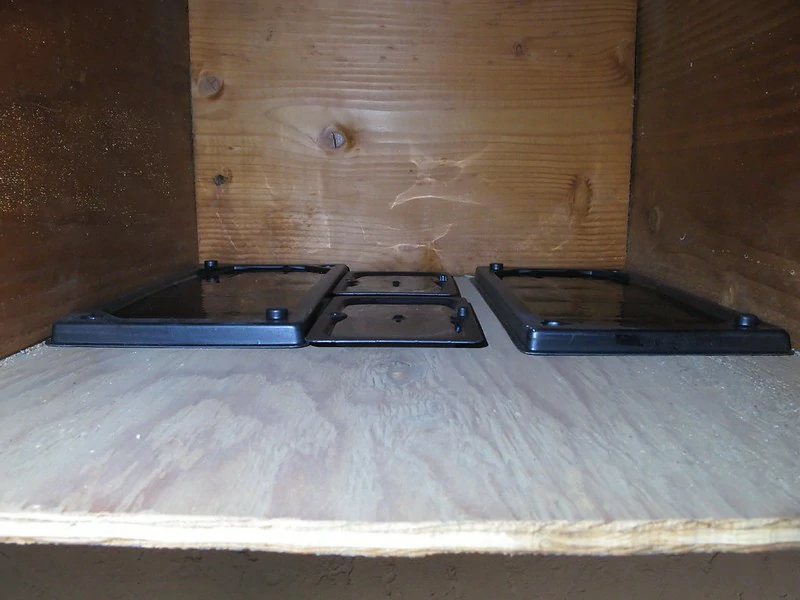
Walk down the pest control aisle at any hardware store and you’ll see rows of sticky roach traps. They cost a few dollars, they don’t use any poison, and they look like an easy fix for a roach problem.
But catching a few roaches on a sticky board isn’t the same as getting rid of them. So, are glue traps good for cockroaches?
Glue traps are good for finding cockroaches, but not for getting rid of them. They catch a few roaches and show you where the problem is, but most roaches stay hidden, so you’ll still need bait and cleanup to fix it.
Think of a glue trap like a smoke alarm: it tells you something’s wrong and where to look, but it won’t put the fire out.
That’s how pest control pros use them too. They set traps out to find roaches and keep track of them, then use other tools to wipe them out.
So if you’re hoping a few sticky boards will clear out your kitchen, you’ll probably be disappointed. But if you want to know what you’re dealing with, they’re one of the best tools you can buy.
Here’s what glue traps do well, where they fall short, and what to use alongside them so you actually get results.
How Do Glue Traps Actually Work On Cockroaches?
A cockroach glue trap is a flat piece of cardboard or plastic covered in very sticky glue. Many come folded into a small tunnel or tent that’s open at both ends, so roaches can walk right in.
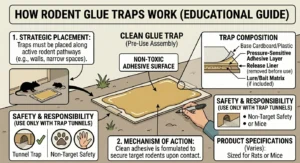
Cockroaches are nocturnal (active at night) and love to run along walls and edges, so when one steps onto the sticky surface, its feet get stuck and it can’t pull itself free.
Most roach glue traps don’t have any poison on them, which is a big reason people like them for kitchens and homes with kids.
Some traps also have a bit of food scent or a pheromone (a scent roaches give off to signal each other), but it won’t pull roaches in from across the house.
You’ll hear people call them “roach motels,” a nickname from an old ad line that said roaches check in but they don’t check out.
In one set of tests, a plain flat sticky surface caught more roaches than fancier designs, so don’t assume a bigger or more complicated trap works better.
A trap can only catch the roaches that happen to walk across it. That one detail explains almost everything these traps can and can’t do.
Glue Traps Are Great For Finding Where Roaches Hide
Here’s the thing about cockroaches: you almost never see most of them. They spend the day packed into dark cracks and only come out after the lights go off.
An adult German cockroach (the most common roach inside homes) can squeeze into a crack just 1/16 of an inch wide, which is about the thickness of two credit cards stacked together.
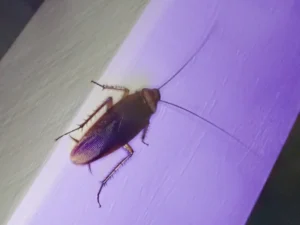
Young roaches fit into even smaller gaps. So the roach you spot in the kitchen at midnight is usually just a small part of a much bigger group.
That’s where glue traps really shine. You set them out for the night, and by morning you can see where the roaches walked and how many showed up.
In many homes, you’ll catch roaches within the first 24 hours. A trap behind the fridge might come back full while the one by the window stays empty, and that tells you exactly where to focus.
Say you’ve seen a couple of roaches near the dishwasher. A few traps around the kitchen can show you whether they’re coming from under the sink, behind the stove, or a gap in the wall.
A trap can also show you which room is worst, which corner the roaches use, and whether they’re sneaking in from outside. That’s really hard to figure out just by looking.
Traps are useful later on too: once you start treating the problem, fewer roaches on your traps next week is a good sign your plan is working.
Glue Traps Can’t Get Rid Of A Cockroach Problem On Their Own
Now for the part that surprises people. A glue trap only catches roaches that happen to cross it, and that’s usually a tiny slice of the whole group.
Take a female German cockroach, who carries an egg case (called an ootheca, which is basically a small pouch of eggs) with about 30 young roaches inside.
She can make a new egg case every few weeks, and one female and her offspring can produce over 30,000 roaches in a single year.
With numbers like that, catching ten roaches on a trap barely makes a dent, especially if twenty more hatch inside a wall that same week.
In one university study of homes with German cockroaches, even 36 sticky traps in a single home never got roach numbers down by 70%. That’s a lot of traps for not much progress.
Traps also work worse as the problem gets bigger. Catch rates tend to drop as roach numbers and droppings pile up, likely because roaches with plenty of food nearby have less reason to roam.
That’s why traps do the most good early. Once a place is crawling with roaches, a trap mostly tells you what you already know.
There’s one more catch: females carrying egg cases tend to stay out of open spaces, so the roaches that are making more roaches are the least likely to end up on your trap.
Which Cockroaches Will You Catch On A Glue Trap?
It depends on where you live and what’s sneaking in. A glue trap is also a handy way to figure out which kind of roach you’re dealing with.
German cockroaches are the most common roaches indoors. They’re about half an inch long and light brown, with two dark stripes just behind the head.
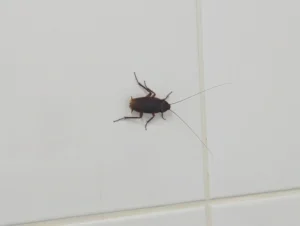
They love kitchens and bathrooms and like it warm, around 70 to 75°F (21 to 24°C), which is one reason they’re such a common problem in apartment buildings.
Brownbanded cockroaches look similar, but they have lighter bands across their bodies. They like it even warmer (around 80°F or 27°C), and they hide in furniture, behind wall decorations, and inside electronics.
They also go for starchy stuff, like the glue on stamps and envelopes, so you might find them in bedrooms and offices, not just the kitchen.
American cockroaches are the big ones, up to 2 inches long and reddish brown. They usually live outdoors or in sewers and drains, then wander inside through gaps, pipes, and basements.
In Florida and across the southern US, people often call them palmetto bugs. In Australia, you may also come across the Australian cockroach, which looks a lot like the American one but has a cream band along its wings.
Oriental cockroaches are dark, almost black, and about an inch and a quarter long. They like cool, damp places such as basements, garages, and drains, so they’re a common sight in cooler parts of Canada and the UK.
They can’t climb smooth surfaces, so they often end up trapped in sinks and bathtubs, and if you find one stuck in your tub in the morning, an oriental roach is a good guess.
Why does the species matter? Because the fix isn’t the same for every roach, and brownbanded roaches, for example, are harder to control with bait than German roaches.
So look at a roach stuck on your trap, compare it to photos online, and write down what you find, because it’ll save you time and money later.
Put Glue Traps Along Walls And Corners For The Best Results
Roaches rarely cross open floors, since they hug walls and edges and gather in corners when they’re searching for food.
So the best spot for a trap is right where the floor meets the wall, with one long side lying flat against it.
Tests back this up: traps along the floor and wall edges caught more roaches than traps out in the open.
In the kitchen, set traps behind the fridge and stove (warm spots roaches love), under the sink, and inside the cabinets near the plumbing, and add one along the wall behind the trash can.
In the bathroom, put one behind the toilet and one under the vanity, since roaches go where there’s water and bathrooms have plenty.
Put a few near the doors that lead outside too, because they’ll catch roaches sneaking in from the yard, the garage, or the basement.
Don’t put traps in the middle of a room. Roaches don’t wander out there much, so the trap will probably stay empty.
Skip spots that are dusty, greasy, or often wet, because dust, grease, and spills can coat the glue and make the trap less sticky.
Keep in mind that traps don’t pull roaches in from far away. They only catch what walks by, so put them close to where roaches already hide.
How Many Glue Traps Do You Need, And When Should You Replace Them?
For a start, put one trap in each corner of any room where you’ve seen roaches, and use extra traps in the kitchen and bathroom since roaches like food and water.
As a rough guide, a small apartment might need six to ten traps at first, and a bigger house will need more. It sounds like a lot, but the more spots you cover, the better your picture gets.
Write a number on each trap, or draw a quick map showing where each one sits, so you can track what each spot catches.
Check your traps every day for the first few days. Once you know where the roaches are, checking once a week is usually enough.
Swap a trap out when it’s full of roaches, covered in dust, or not sticky anymore, because a trap that’s lost its grip won’t tell you much.
When you throw one away, seal it in a plastic bag first and put it in the outdoor trash if you can.
Wear gloves or use a paper towel when you pick up a full trap, and wash your hands afterward, since roaches can carry germs.
Keep checking for a few weeks after you start treating the problem. If the number of roaches you catch keeps going down, your plan is working.
Even after the roaches are gone, it’s smart to leave a few traps out, since they’ll give you an early warning if roaches come back.
Your Glue Traps Can Tell You Where The Roaches Are Coming From
Don’t just toss a full trap in the trash. Take a minute to look at it, because it’s basically a report card.
Lots of tiny roaches (young ones called nymphs, which look like small adults without full wings) usually mean roaches are breeding close by.
Mostly big adults stuck near a door or basement entrance? That’s a sign they’re coming in from outside, so seal the gaps and add door sweeps.
If most of the roaches are stuck at one end of the trap, the hiding spot is probably in that direction, so move a trap closer and see what happens.
A couple of roaches on one trap isn’t a reason to panic. Several traps full in the same week means you’ve got an established problem.
Look for other signs too: tiny dark specks or smears (roach droppings, which can look like ground pepper), shed skins, egg cases, and a stale, oily smell all point to a bigger group.
Those droppings and skins matter for more than looks, because they carry allergens that can trigger asthma, especially in kids.
That’s a good reason to vacuum cracks and corners often, and a vacuum with a HEPA filter (a very fine filter that traps tiny particles) helps keep that dust out of the air.
Write down your counts, too. A simple note like “fridge trap, 12 roaches, Monday” lets you see whether things are getting better.
What Works Better Than Glue Traps For Getting Rid Of Cockroaches?
Baits are the main tool for killing roaches, and they come as gels you squeeze from a syringe, small plastic bait stations, or granules.
Roaches eat the bait and die later, and most baits are slow acting, so give them a week or more before you decide whether they work.
Put small dabs of gel (not big globs) where roaches hide or walk, like under appliances, along walls, and inside cabinets. You can even put a dab near droppings, since droppings contain a scent that pulls roaches together (an aggregation pheromone).
Gel can harden over time, so you may need to reapply it, while bait stations are easier and can keep working for many months.
Baits only work if the roaches are hungry for them, so clean up crumbs, wipe up grease, and put food in sealed containers first.
Boric acid powder is another good option. Dust a very thin layer into dry, out of the way spots like under the fridge and stove and behind the kick panels.
Thin layers work better than piles, and if the powder gets wet and cakes, it stops working.
Skip bug bombs and sprays, because they can scatter roaches into other rooms without killing them, and many roaches have become resistant to common sprays.
Cleanup and sealing matter just as much as any product. Fix leaky pipes, take the trash out often, and seal cracks and gaps.
Roaches need food, water, and hiding places, so if you take those away, your baits and dusts will work much better.
If you live in an apartment building, tell your landlord or building manager early, since roaches can travel between units and treating just your place may not fix it.
For a serious problem, call a licensed pest control pro, who has stronger tools and knows how to treat spots that are hard to reach.
Start With Traps For A Few Days, Then Treat The Hot Spots
The smartest way to use glue traps is as the first step, not the only step: they give you a map, and then you act on it.
On day one, set out your traps and clean up the obvious food and water sources. Wipe the counters, fix any drips, and empty the trash.
For the next two or three days, check the traps every morning and write down where the roaches showed up and roughly how many.
Once you know the hot spots, put bait and boric acid dust right there, and don’t wait weeks to start, because the roaches are breeding the whole time.
Keep the traps out while you treat, since they’ll show you whether the numbers are dropping.
After a week or two, compare your counts to the first few days. Fewer roaches means the plan is working, and the same or more means something needs to change.
If the numbers aren’t dropping, look for new entry points, move your bait stations, or try a different bait product, because sometimes roaches just ignore one brand.
If you still don’t see progress after a few weeks, it’s time to call a pro. Your trap notes will save them a lot of time.
Are Glue Traps Safe Around Kids And Pets?
Most roach glue traps don’t have any insecticide on them, so there’s no poison to worry about. The glue is the only real risk.
However, that glue is very strong, and a sticky trap is a mess if the wrong thing steps on it. A curious cat, a small dog, or a crawling baby could end up stuck.
The easy fix is placement: put traps behind appliances, under the sink, inside closed cabinets, or behind furniture where little paws and hands can’t reach.
If a pet does get stuck, stay calm and don’t pull, because pulling hurts and can tear fur or skin.
Rub a little cooking oil on the stuck spot to loosen the glue, then wash with dish soap and warm water. If the trap is stuck on your pet’s face, or they’re panicking, call your vet.
The same goes for boric acid and gel baits: they’re not meant to be eaten, so keep them out of reach.
Bait stations help here, since the bait stays locked inside a small plastic case, which is one reason they’re so popular for homes with kids and pets.
Always wash your hands after handling traps, especially ones with roaches on them, because roaches walk through trash and drains and can carry germs.
Conclusion
So, are glue traps good for cockroaches? They’re good at finding roaches, but they’re not good at getting rid of them.
A glue trap only catches the roaches that happen to walk across it, while most of the group stays hidden in cracks, laying eggs and growing in number.
That doesn’t make traps a waste of money. Used the right way, they show you where roaches hide, which kind you have, and whether your treatment is working.
The best plan uses a few steps together. Set traps along walls and corners, find the hot spots, put bait and boric acid dust where the roaches hide, and clean up and seal the gaps.
Check your traps often, replace them when they’re full or dusty, and keep them where kids and pets can’t reach.
If the roaches keep coming back, or you’re seeing them in the daytime, call a licensed pro, since that can be a sign of a bigger problem than a few traps can handle.
Use your glue traps like a smoke alarm and your bait like the fire hose, and you’ll be a lot more likely to win.

Hi, my name is Ezra Mushala, i have been interested animals all my life. I am the main author and editor here at snakeinformer.com.