
Glue traps are sticky boards that hold a rat in place until someone deals with it. They’re cheap and easy to buy, but the laws are changing fast. Are glue traps for rats illegal?
It depends on where you live. Glue traps for rats are legal in most of the US and Canada, apart from a few California cities. They’re banned for the public in England, Wales, and Scotland, and in several Australian states.
So there’s no single answer, because the rules change from country to country, and sometimes from city to city. The sections below break it all down so you can see where you stand.
What Is a Glue Trap, and How Does It Work?
A glue trap is a flat board (made of cardboard, plastic, or wood) covered in a sticky coating that never dries. Some are big boards made for rats, and some are small strips made for mice.
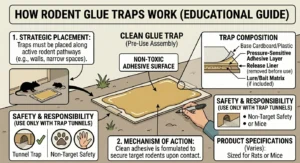
Many are scented with something rats like, such as peanut butter, so the rat walks across the board to reach the smell and its feet stick. It’s a simple idea.
Once it’s stuck, the rat panics and struggles, and the more it fights, the more of its body ends up touching the glue.
Unlike a snap trap, a glue trap doesn’t kill anything, so the animal stays stuck until it dies or someone comes to deal with it.
That’s the heart of the whole debate. Fans like that glue traps are cheap and easy to set without touching the rat, but critics say the animal pays too high a price.
You’ll also see the names “glue board” and “sticky trap” on packaging, and they all mean the same thing.
What Does “Illegal” Really Mean When It Comes to Glue Traps?
When people say glue traps are illegal, they could mean one of three different things, so it helps to know which one you’re dealing with.
The first is a ban on selling them, which means stores can’t put them on the shelf. The second is a ban on using them, so you might be able to buy one but you can’t legally set it.
The third treats people differently. In England, for example, the public can’t use glue traps, but some licensed pest controllers still can.
Some places ban both selling and using, like Victoria in Australia and a few California cities, while others only ban using, like England.
That matters because you can break the law without knowing it. If a store sells glue traps, it’s easy to assume they’re fine to use, but sometimes they aren’t.
Glue Traps for Rats Are Still Legal in Most of the United States
In most of the US, you can walk into a hardware store, buy a rat glue trap, and use it at home without breaking any law. That goes for big stores and online shops too.
There’s no federal ban, and as far as I could find, no state has banned them either. Lawmakers have tried, though, and bills have been introduced in several states, including California, New York, and New Hampshire.
None of the ones I found have become law, and a proposal in Congress called the Glue Trap Prohibition Act hasn’t passed either.
So for now, the rules mostly come down to your city, not your state, and a few cities have stepped in on their own.
Still, legal doesn’t mean you should use one. We’ll get to the reasons in a bit.
Which US Cities Have Banned Glue Traps?
A handful of California cities have banned them. West Hollywood was the first, back in April 2023, and Ojai followed in March 2024.
Culver City came next, and its ban started on November 26 (2025). Ventura passed its own in March 2026, and it’s the biggest city in the country to do it so far.
Animal welfare groups also count Laguna Beach on that list.
Culver City goes a step further. Its rule covers glue traps for insects too, so even a sticky strip for flies can be a problem there.
Other places are working on it, and New York City has a bill that would ban selling glue traps, with fines of up to $500 for each violation.
The last I checked, that bill was still sitting in committee. New York State also has bills that would ban glue traps inside buildings the state owns or leases.
A few other cities, such as Eugene in Oregon and Cartersville in Georgia, just stopped using them in their own buildings. That’s their choice, not a law for everyone else.
Rules can change in a matter of months. If your city is thinking about it, check before you buy.
Canada Has No Ban on Glue Traps, but People Are Pushing for One
In Canada, glue traps are legal to buy and use almost everywhere, and I couldn’t find a national or provincial ban.
But the pressure is growing, especially in British Columbia. In 2024, the province’s association of local governments backed a request for a ban on selling, buying, and using glue traps.
The province didn’t agree to a ban, and it explained that its pest laws cover poisons, not devices like glue boards.
It did say snap traps and electric traps are the best choice. They work well, and they kill quickly.
A group called Canadians for Animal Protection also took big retailers, including Walmart, Canadian Tire, and Home Depot, to court in Ontario.
The group argued that glue traps break Canada’s animal cruelty law and shouldn’t be sold. I couldn’t find a ruling that stopped those sales.
A petition has also asked Parliament for a national ban. For now, though, you can probably still buy one if you’re in Canada.
But local bylaws can change on their own, so it’s worth a quick look at your city’s rules.
Glue Traps Are Banned for the Public in England, Wales, and Scotland
The UK has gone the furthest, and all three nations now stop the public from using glue traps on rodents.
Wales moved first. Its full ban came with the Agriculture (Wales) Act 2023 and started in October 2023.
Scotland passed its ban in March 2024. It covers buying and using glue traps, though ministers can approve them in rare cases when everything else has failed.
England’s rule comes from the Glue Traps (Offences) Act 2022, which took effect on 31 July 2024.
In England, if you set a glue trap to catch a rat or mouse, you’re breaking the law. Pest controllers can still use them, but only with a license from Natural England.
The penalty can be up to 51 weeks in prison, a fine, or both, which is a lot of trouble for a trap that costs a few pounds.
Here’s the catch. England still lets shops sell glue traps, so you can buy one legally and break the law the moment you set it.
That trips up a lot of people. The law also says that if you find a glue trap someone else left out, you’re expected to make it safe so nothing else gets stuck.
Outside the UK, Ireland and New Zealand have banned glue traps too.
Several Australian States Have Banned Glue Traps Too
Australia doesn’t have one national law. Each state and territory makes its own rules, so what’s legal depends on where you live.
Victoria has some of the strictest rules anywhere, because it bans selling and using glue traps for animals, and that includes professional pest controllers.
Victoria does allow glue traps for insects, as long as a cage or cover stops animals from touching the glue. That’s meant to keep a lizard or a small bird from getting stuck on a fly strip.
Tasmania has banned glue traps since 2008, though licensed pest control companies can still get an exemption and use them under set guidelines.
The ACT has banned them too, and New South Wales joined in 2025 when it updated its animal cruelty rules (the Prevention of Cruelty to Animals Regulation 2025).
Queensland doesn’t clearly ban them. But its animal care law says pest control should keep an animal’s pain as low as reasonably possible, and the RSPCA says that makes glue traps a risky choice there.
Other states and territories have their own rules. Check with your state’s animal welfare agency, or the RSPCA in your state, before you use one.
Do the Same Rules Cover Glue Traps for Mice and Insects?
For mice, the answer is mostly yes. England’s law covers rodents, so that means mice as well as rats, and the California city bans cover glue traps meant to catch any animal.
Insects are where it gets messy. Many places have no rule at all for sticky strips that catch flies, spiders, and other bugs.
A few places do step in. Victoria only allows insect glue traps if animals can’t touch the glue, and Culver City bans them outright.
The reason is simple, because a sticky strip doesn’t care what lands on it. A small lizard, a young bird, or a bat can get stuck on a fly strip just as easily as a fly can.
Some glue boards are used by professionals only to see where bugs are crawling, which is a very different job from catching a live rat.
If you just want to catch flies, a swatter or a covered fly trap does the job without the risk. You don’t need an open sticky strip hanging in the garage.
Why Do So Many Places Want to Ban Glue Traps?
The short answer is suffering. A rat stuck on a glue trap can’t get away, and it doesn’t die quickly.
It can take hours, and sometimes days. The animal struggles, tears its fur and skin, and can die from thirst, hunger, cold, or blood loss.
Some animals get their nose or mouth stuck in the glue, and they can suffocate, which alone can take hours.
Then there’s the problem of what else gets caught, because a glue trap can’t tell a rat from anything else that walks across it.
Birds, lizards, snakes, bats, squirrels, and even pet cats and small dogs have been found stuck on them.
Picture a glue board on the floor of your garage. A small lizard crosses it looking for bugs, and it’s stuck just as badly as a rat would be.
Health is a worry too. A trapped rodent often pees and poops while it struggles, which can spread germs around your home.
Rats and mice can carry bacteria such as salmonella and leptospirosis (an infection people can catch from rodent pee). If you ever handle a trapped animal, wear thick gloves.
Can a Glue Trap Break Animal Cruelty Laws Even Where It’s Legal?
Possibly, in some places, and it depends on how the local law is written.
Some animal lawyers argue that glue traps already break cruelty laws, since the animal suffers for so long. However, I couldn’t find a US case that settled the question.
The clearer problem is wildlife. Wild birds, bats, and other protected animals have their own legal protection, and in the US that includes federal laws like the Migratory Bird Treaty Act.
Say you set a glue board in your shed (or garage) to catch mice. A wild bird gets stuck on it, and you could end up in legal trouble even though you never meant to catch one.
The same argument has come up in other countries. In Canada, the Ontario court case was built on it, and in Australia, Queensland’s rule on pain gives groups something to point to.
So “it’s legal” isn’t always the full story. A trap can be legal to buy and still land you in trouble once it catches the wrong animal.
Professional Pest Controllers Often Get Different Rules
Even where glue traps are banned for you, professionals sometimes still get to use them.
In England, a pest controller can use one with a license from Natural England. There are two types: a class license for urgent cases, and an individual license for a specific job.
Tasmania lets licensed pest control companies use them under an exemption, and Scotland lets ministers approve them in rare cases.
Victoria is stricter, since even pest controllers can’t use them there.
Why would any place allow it? A UK pest control trade group argued that a full ban could hurt public health, partly because some rats have stopped dying from poison.
Even that group admitted glue boards can cause suffering. It said they should only be used when there’s a real health risk or when everything else has failed.
If you hire a pest control company (a licensed one), ask what they plan to use. You can also ask them to start with snap traps and sealing up your home.
Glue Traps Don’t Fix Why Rats Are in Your Home
Even when glue traps are legal, they don’t solve the real problem, because rats move in when they find food, water, and a warm place to hide.
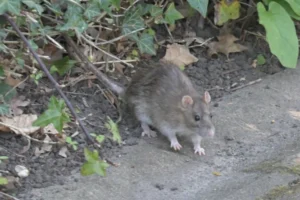
A glue trap catches one rat. Then another shows up, because the reason they came is still there.
Animal welfare groups call this an endless loop of trapping and suffering, and it’s easy to see why.
Say there’s a gap under your garage door and a bag of birdseed sitting in the corner. You can trap five rats, and number six is already on its way.
Glue traps can also fail in plain ways. A strong rat can sometimes drag a small board into a hiding spot where you can’t reach it.
That’s why groups like the BC SPCA say to start with sealing up your home, and the trap comes second.
What Should You Use Instead of a Glue Trap?
Start with the boring stuff, because it works best, and that means stopping rats from getting in. A rat can squeeze through a gap about the size of a quarter.
Walk around your home and look for holes near pipes, vents, and the garage door. Plug them with steel wool and caulk, or use metal mesh, since rats chew right through soft materials (like foam, rubber, and thin plastic).
Also take away what drew them in. Store food in sealed containers (glass or hard plastic works best), keep trash can lids tight, and bring pet food and bird seed inside at night.
If you still need a trap, snap traps are the top pick. Government and animal welfare groups in the UK, Canada, and Australia all point to them as a quicker option than glue.
Pick a sturdy trap and set it along a wall where rats run. A cardboard tube or small box over it can help guide the rat in.
If a trap keeps failing, toss it and try a different brand, because a trap that doesn’t kill quickly causes the exact problem you were trying to avoid.
Electric traps are another good choice, especially indoors. They stun and kill the rat with a shock, and many models let you empty them without touching the animal.
Live traps catch a rat unharmed, but then you have to decide what to do with it. Moving it somewhere else often just moves the problem, and it may not be allowed in your area.
Keep every trap where kids and pets can’t reach it, and look for snap traps that come with a cover or box made for this.
If you see rats in daylight, hear them in your walls, or find droppings in several rooms, call a pro. That usually means there are more than one or two.
What Should You Do If an Animal Is Stuck on a Glue Trap?
Stay calm, and put on thick gloves first, because a scared rat, bird, or lizard can bite or scratch and it’s already in a lot of pain.
Don’t pull the animal off, because that can rip its skin, feathers, or fur.
Instead, slowly drip cooking oil (like vegetable oil) around the spot where it’s stuck. The oil loosens the glue, but it takes patience, so go slowly.
Hold the animal’s body steady as it comes free, and keep its face away from the glue and the oil.
A wild animal covered in oil and leftover glue is still in trouble, so call a wildlife rehabilitator or a vet right away.
Never touch a bat with your bare hands (bats can carry rabies). Call animal control or a wildlife rehabilitator instead.
If it’s a rat you meant to catch and it’s badly hurt, a vet can put it down quickly and gently, and it’s worth a phone call.
Afterward, wash your hands well. Bag up the glue board and throw it out so nothing else can get stuck on it later.
Check Your City Rules Before You Buy a Glue Trap
Laws are changing fast, so a quick check can save you a fine, and it only takes a few minutes.
In the US, search your city’s name plus “glue trap ordinance.” Your city’s website or municipal code (the book of local laws) may list it.
In Canada, search for your city’s bylaws, since local rules can change on their own.
In England, the government’s glue trap pages and the Natural England site are the best places to start, and in Australia, your state’s animal welfare agency can help.
A phone call to local animal control works just about anywhere.
You can also ask your pest control company, since they’ll know what’s allowed where you live.
And don’t count on the store shelf. A shop selling glue traps doesn’t mean they’re legal to use, and England is the best example.
Conclusion
So, are glue traps for rats illegal? It depends on where you live, and in most of the US and Canada they’re still legal, apart from a few California cities.
In England, Wales, and Scotland, the public can’t use them. Victoria, Tasmania, the ACT, and New South Wales have banned them too.
Even where they’re legal, glue traps cause long suffering, catch animals you never meant to catch, and don’t fix why the rats showed up.
Sealing up your home and using a well-made snap trap is a better way to go, because it’s quicker for the animal and it works better for you.
Before you buy anything, check your local rules. They may have changed since you last looked.

Hi, my name is Ezra Mushala, i have been interested animals all my life. I am the main author and editor here at snakeinformer.com.