
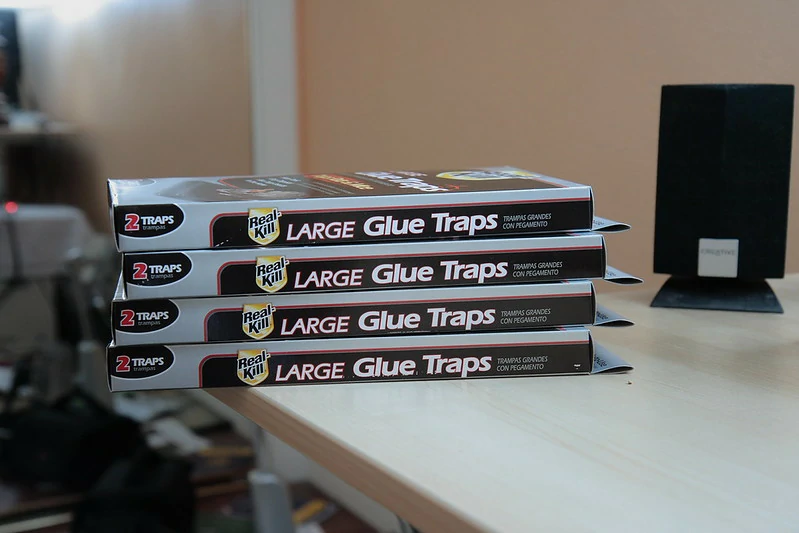
Rats are bigger, stronger, and a lot smarter than mice, and that matters when you’re picking a trap. A board that holds a mouse in place might not do much to a full grown rat.
So, if you’re thinking about using one, you might be wondering: are glue traps strong enough for rats?
Not usually. Glue traps made for mice aren’t strong enough for rats, and even rat sized boards can fail on big adult rats, which often pull free or drag the board away. That’s why most pest experts suggest snap traps instead.
The glue isn’t the only issue, since a rat’s weight, strength, and habits all work against a trap that depends on stickiness alone.
In this post, you’ll see how glue traps hold an animal, why rats can beat them, and what works better.
Why Rats Are a Much Bigger Challenge Than Mice
The size gap is bigger than you’d expect. An adult house mouse weighs about half an ounce to an ounce, while an adult Norway rat can weigh anywhere from 7 to 18 ounces.
A big Norway rat can weigh as much as a can of soup (and some are even heavier). That’s a lot of animal pulling against a thin layer of glue.
Rats also have strong legs and a powerful grip, and they’re built for climbing, digging, and squeezing through tight spaces (they can even chew through plastic, foam, wood, and caulk).
A glue trap doesn’t hold an animal with force. It only works by sticking, so the bigger and stronger the animal, the better its chance of pulling loose.
How Can You Tell If You Have Rats or Mice?
This matters more than you’d think, because the trap has to fit the animal. A mouse board is way too small for a rat, and you don’t want to find that out the hard way.
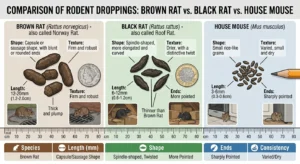
Start with the droppings. Mouse droppings are about 1/8 to 1/4 inch long (a bit like a grain of rice), while Norway rat droppings are closer to 3/4 inch.
Look for gnaw marks and greasy rub marks along walls too, since rats usually leave bigger, rougher marks and the rub marks show you the paths they use.
Listen as well. Scratching or running sounds in your walls or attic at night can mean rats, and the sound is often heavier than a mouse’s.
If you still aren’t sure, a pest control company can tell you in a single visit.
How Glue Traps Actually Hold an Animal
A glue trap is a flat board covered in sticky glue. When an animal steps on it, the glue grabs its feet and fur, and the more of its body touches the board, the harder it is to get free.
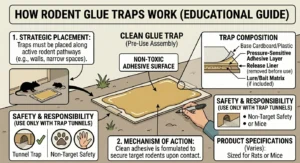
That’s why a mouse gets stuck so easily. Even a light touch can hold it, because it has so little weight or strength to pull against the glue.
A rat is a different story. If only one foot touches, a strong rat may pull it loose, and sometimes it takes the board along with it.
Of course, a panicking rat often makes things worse for itself. Once one paw is stuck, it thrashes around, and that can put more of its body on the glue.
Are Mouse Glue Traps Strong Enough for Rats?
No. Some mouse boards are barely five inches long, and they’re made for an animal that weighs about an ounce.
Now compare that to an adult Norway rat, which has a body 7 to 12 inches long (and that’s not counting the tail).
So a rat can step on the edge of a mouse board and keep most of its body off the glue. That means it can walk away, or drag the whole board behind it.
One review of rat trapping methods says rats shouldn’t be caught on boards made for mice, because the boards are too small. If the box says mouse, believe it.
What About Rat Sized Glue Traps?
Rat sized boards are much bigger. One popular tray measures about 11 by 10 inches, and another is about 10 by 5 inches, so they cover a lot more ground.
They also use a thicker layer of glue, and the makers say they hold rats firmly (some extension guides say they can catch young rats).
However, the results are mixed. Some reviewers say they caught big rats, while others say the rats broke free or walked right across the board without getting stuck.
Even a big board isn’t a sure thing. A full grown Norway rat is heavy, strong, and willing to fight, so if only a foot or a patch of fur touches the glue, it can still pull loose.
A Rat Will Fight Hard When It Feels the Glue
Most rats panic right away, pulling, twisting, and thrashing, and they may squeal or bite at the board.
That thrashing can help the glue hold, since more of the body ends up stuck. But it can also flip the board, tear the cardboard, or send the whole thing sliding across the floor.
A stuck rat can end up on its side, with its feet, tail, and belly all glued down and no way to get up.
Animal welfare groups worry about this part most. A stuck rat can be scared and in pain for hours before anyone finds it, and that’s one reason some places have banned glue traps.
Why Some Rats Break Free or Drag the Board Away
It usually comes down to partial contact. A rat that only gets a toe or a bit of fur stuck can brace against a wall or a pipe and pull hard enough to break the hold.
Boards are also light, so a rat that’s stuck by a foot can drag one into a wall gap or behind an appliance. Then you’ve lost both the trap and the rat.
Rats are clever too. One reviewer even said a rat covered a board with insulation so it could walk across.
When a rat does escape, it’s often left with glue on its feet and fur, or it’s dragging the board along. That’s painful for the rat, and it can leave a sticky mess (and sometimes a smell) in places you can’t reach.
Roof Rats and Norway Rats Behave Differently on Glue Boards
Roof rats are smaller, usually 5 to 10 ounces, and they’re leaner than Norway rats. In theory, a rat sized board holds a lighter animal better.
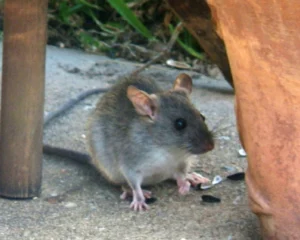
However, roof rats are also great climbers, and they travel along ledges, pipes, fences, and beams (like the ones in your attic). A glue board up there can slide off, fall, or get dragged away.
Norway rats are heavier, at 7 to 18 ounces, and they stay near the ground along walls and basements. That makes a board easier to place but harder to hold.

Knowing which rat you have helps. Roof rats have larger ears and a tail longer than their head and body, while Norway rats are stockier with a shorter tail.
Rats Are More Careful Around New Objects Than Mice
Rats tend to be wary of anything new in their territory, so you may find they avoid a trap for days. That’s why pest control guides often suggest putting traps out unset first, so rats get used to them.
Some people report that rats ignore bait and snap traps but walk right onto flat glue boards. That’s part of why glue boards have a reputation for catching smart, cautious rats.
However, catching a rat and holding a rat aren’t the same thing, since a rat that steps on the board and breaks free just learns to avoid that spot.
So the trap has to hold the rat on the first try, and that’s the hardest part when you’re dealing with a big, strong one.
Is It Safe To Deal With a Live Rat Stuck on a Glue Trap?
No, it can be risky. A frightened rat can bite, and rat bites can get infected or spread illness (rats can carry germs that cause diseases like rat bite fever).
Don’t pick up the board with bare hands, and keep kids and pets well away from it. Call a pest control company or your local animal control and ask for help.
Pest controllers have training, gloves, and a plan for a stuck animal (and most homeowners don’t), which is one more reason to skip glue boards for rats.
Wash your hands well after touching anything a rat has touched (that includes droppings, nesting material, and traps).
Glue Traps and Rats Can Be Dangerous for Pets Too
Rats and pets don’t mix well, and a glue trap makes it worse. A cat or dog that goes after a stuck rat can get bitten, and rat bites can get infected.
Rat sized boards are also big, which gives your pet even more sticky surface to step on, and the largest trays are about the size of a dinner plate.
Rats can carry fleas, worms, and germs like salmonella, so a pet that touches or eats one can get sick.
And if a rat drags a board through your house, it can spread glue right where your pets walk.
Do Glue Traps Work for Rats in Attics, Garages, and Outdoors?
Glue only works while it’s clean and tacky. Attics are dusty and full of insulation, garages are dusty and cold, and outdoor spots get wet and dirty, and all of that can weaken the grip.
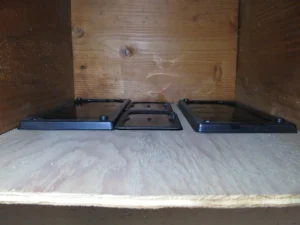
Some brands make boards for cold places (often called refrigerator use boards), and covered boards can protect the glue from dust. Extension guides mention both options.
Even then, a rat may walk through debris before it reaches the glue, and the trap loses its grip. A board that’s covered in dust is basically a floor.
If you’re hearing rats in your attic, it usually means there’s a way in and food nearby, and a glue board won’t fix either one.
Where Would You Place a Glue Trap for Rats?
If you’re set on using a rat sized board anyway, where you put it matters a lot. Rats run along walls, so set the board flat against a wall, behind objects, or in a dark corner where you’ve seen droppings.
A board out in an open room usually gets avoided, so use boards in dry, dust free spots and keep them away from your pets and kids.
A covered or boxed board helps protect the glue and keeps curious animals out. Check it once or twice a day, because a stuck animal shouldn’t be left for hours and a board that sits around can lose its grip.
And remember that a trap out in the open is a trap anyone can step on, including your pet, a lizard, or a bird.
What Works Better Than Glue Traps for Rats?
Snap traps made for rats are the safest, most effective, and cheapest way to trap them. They work fast, and they don’t leave an animal stuck and suffering.
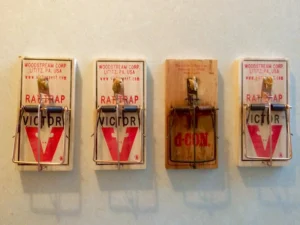
For Norway rats, place traps close to walls, behind objects, and in dark corners where you’ve seen droppings. For roof rats, put traps up high, like on ledges, shelves, pipes, fences, or beams.
Rats are cautious, so set several traps at once and check them every day, and put them inside covered boxes or in spots your pets and kids can’t reach.
For a bigger problem, call a pest control company, since they can find how the rats are getting in and make a plan that fits your home.
How To Set Snap Traps for Rats So They Actually Work
Rats are careful, so how you set the trap matters as much as which trap you pick. Start by putting the traps out unset for a few days, so the rats get used to seeing them.
After that, add a small amount of bait and set the traps. Many guides suggest tying or gluing the bait onto the trigger, so a rat has to work at it.
Put the trap right against a wall, with the trigger side touching the wall, since that’s where rats run. Use more traps than you think you need (one trap rarely does the job), and secure them so a rat can’t drag one away.
Check the traps every day, wear gloves when you handle them, and wash your hands afterward. If you’ve got pets or kids, put the traps inside covered boxes.
What If the Rats Keep Coming Back?
If rats keep returning, the real problem is usually food, shelter, or a way in, and no trap fixes those. Walk around your home, inside and out, and look for what’s drawing them.
Open garbage, pet food, bird feeders, fallen fruit, and clutter all count, so fix those first and the number of rats usually drops.
Be careful with poison. It can harm pets, kids, and wildlife, and a poisoned rat can wander back inside to die in a wall, so seal the entry points first.
A pest control company can find the entry points, set the right traps, and check back so you’re not guessing.
How To Keep Rats Out in the First Place
Rats get in through gaps smaller than you’d think (a hole about the size of a quarter can be enough). Walk around your house and check the base of walls, pipes, vents, and the roofline.
Seal holes with metal, since rats can chew through plastic, foam, wood, and caulk, and metal mesh or sheet metal works better for rats than steel wool alone.
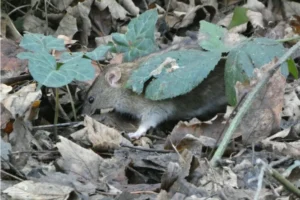
Take away food and shelter too. Keep garbage lids tight, store pet food in hard containers, and pick up fallen fruit and bird seed.
Trim tree branches that are within 3 feet of your roof, since roof rats use them like bridges. And clear woodpiles and clutter along walls, because Norway rats love to dig burrows right next to foundations.
Are Glue Traps for Rats Legal Where You Live?
Rules depend on where you are, and they keep changing. In England, setting a glue trap to catch a rodent (and that includes rats) has been against the law since 2022.
Licensed pest controllers can still use them in some cases, but only to protect public health or safety.
In Canada, local governments in British Columbia have asked the province for a ban, while rules in the US differ by state and city, so check with yours.
In Australia, some large hardware stores no longer sell them. Many vets and animal welfare groups also ask people not to use them anywhere.
Conclusion
Glue traps made for mice aren’t strong enough for rats, since a rat is much heavier and longer than the board you’d be using. Even rat sized boards can fail, because big adult rats often pull free or drag the trap away.
Rats are also cautious, they can bite, and a stuck rat is dangerous for pets and for you. That makes glue boards a poor choice for most homes.
Snap traps made for rats, sealed gaps, and less food and shelter work much better, and if the problem keeps growing, you can always call a pest control company.

Hi, my name is Ezra Mushala, i have been interested animals all my life. I am the main author and editor here at snakeinformer.com.