

Spotting a spider crawl across the bedroom wall at night makes plenty of people reach for the nearest quick fix, and a sticky trap is an easy one to grab.
They’re cheap, they don’t involve sprays, and you can tuck one in a corner and forget about it. So are glue traps effective for spiders?
Glue traps are effective at catching wandering spiders, like brown recluses and wolf spiders, but not web builders. They won’t clear out an infestation, so use them to find spiders and cut off the insects they eat.
That’s the short version. It matters, because the kind of spider you have decides whether a glue trap does anything at all.
Below, you’ll see which spiders get caught, which ones don’t, where to put traps, and what keeps them out for good.
How Do Glue Traps Catch Spiders?
A glue trap is a flat card or tray covered in sticky adhesive (a bit like flypaper). A spider that walks across it gets stuck by its legs.
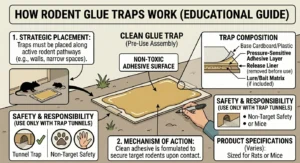
The trap only works on spiders that move around on the ground, since a spider has to step onto the glue to get caught.
That’s why placement matters so much. A trap along a baseboard meets a spider on patrol, but one in open floor may catch nothing.
Spiders don’t come to the trap on purpose, and there’s no bait that pulls them in, so everything depends on their normal travel routes.
Most traps also catch whatever else crawls by, like crickets, silverfish, and beetles (which turns out to be useful).
That also means a glue trap is only as smart as its spot. A few minutes of thinking about where spiders travel pays off more than buying extra traps.
Which Spiders Do Glue Traps Actually Catch?
They catch the wanderers. Spiders that hunt on the ground, rather than waiting in a web, walk along walls and floors at night, and that’s when they hit the glue.
Wolf spiders, jumping spiders, sac spiders, and brown recluses all fit that pattern. They roam around in search of insects and, in the case of males, a mate.
Male house spiders also wander a lot, especially in late summer and fall. A few of those often end up on boards.
A good rule of thumb is that any spider you see running across open floor at night is a wanderer, and that’s exactly the kind a trap can catch.
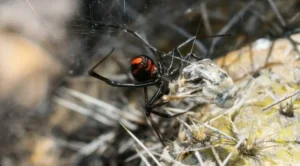
Web builders are a different story. Cobweb spiders (the common house spiders), orb weavers, and black widows spend most of their lives in or near their webs.
Because they stay put, they rarely touch a trap on the floor. That’s why extension experts say sticky traps don’t work well for spiders that stay in their webs.
How Can You Tell a Wandering Spider From a Web Builder?
Look at how the spider lives, since a spider sitting in a web is a builder and a spider running across the floor is a wanderer.
House spiders and cobweb spiders make messy, tangled webs in corners, under furniture, and in basements and garages.
Orb weavers spin round, wheel-shaped webs, and you’ll usually find those outdoors between plants, posts, and eaves.
Wolf spiders (the big, hairy, fast ones) run along the ground without a web, so they’re the ones that end up on traps.
Jumping spiders are small and stocky, with big front eyes, and they hop around on walls and windowsills in daylight.
Sac spiders are pale and fast, and they hide in silk tubes in corners, then come out at night to hunt.
Knowing which type you have tells you where to put traps, because web builders need a different plan than hunters.
Glue Traps Are Great for Finding Brown Recluses
If you live where brown recluses live, glue traps are one of the best tools you have. University extension offices recommend them to detect hidden recluses and to see how many are around.
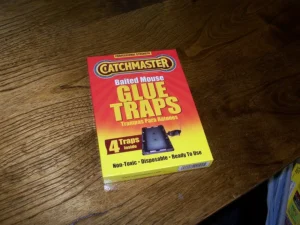
Brown recluses hide by day and roam at night, and they love warm, dry, undisturbed spots like closets, storage boxes, and the backs of cabinets.
Place traps in the corners of storage closets, along baseboards, and behind furniture, and check them weekly.
Finding one recluse on a trap doesn’t always mean a big infestation. Several on a few traps, however, tells you there’s a real population to deal with.
Brown recluses live mostly in the central and south-central United States, and they don’t live in California. If you’re outside that range, a “recluse” is much more likely to be a harmless look-alike.
Why Glue Traps Won’t Get Rid of Spiders
A trap only catches the spiders that wander across it, and plenty of spiders never do.
Spiders also aren’t the root problem. They show up because there’s food, which means there are insects in your home.
That’s why pest pros call spiders “nature’s pest monitors.” If you’ve got spiders, something else is probably feeding them.
Then there are egg sacs. A single sac can hold dozens or even hundreds of eggs, and a glue board can’t touch the ones hidden in a corner.
So you can fill a trap with spiders and still have more coming. Until you cut off the food and the hiding spots, the supply keeps refilling.
Sticky traps in general aren’t very good at controlling small pests. They’re best at telling you what’s there and where.
However, that doesn’t make glue traps useless, because a trap that shows you where spiders hide is worth far more than one that just catches a few.
How Do Spiders Get Into Your Home in the First Place?
Most spiders wander in through small gaps around doors, windows, pipes, and vents, which are the same gaps that let in the insects they hunt.
Others hitch a ride on firewood, potted plants, boxes, and secondhand furniture, and they settle into whatever quiet corner they find first.
Outdoor lights play a part too, because bugs gather around them at night and spiders gather around the bugs.
Once inside, spiders look for dark, undisturbed spots like basements, garages, closets, and attics where nobody bothers them for months.
That’s why a messy storage area is usually spider central, since piles of boxes give them places to hide and a steady supply of insects to eat.
So when you place glue traps, think about both sides of the problem: the way in and the places they settle.
Most Spiders Are Better Left Alone Than Killed
For most spiders, leave them alone, because they’re doing you a favor. They eat flies, mosquitoes, roaches, and other bugs you don’t want.
Unless a spider is venomous, you can leave it in place to help with pest control. That’s the advice pest experts give for ordinary house spiders.
If you don’t want them in your living space, you don’t have to use glue. Catch the spider in a jar or cup, slide a card under it, and carry it outside.
A vacuum works well too, since it removes the spider and its web and egg sacs in one pass. Empty the bag outdoors afterward.
Glue traps can’t tell a helpful spider from a harmful one, so they’ll catch both. That’s another reason to save them for spots where you really need to know what’s going on.
Which Spiders Are Actually Dangerous?
Only a few. In the US, the two that matter are the black widow and the brown recluse, and bites from both are rare.
Black widows are shiny and black, and females have a red hourglass shape on the belly. They build messy webs in quiet, low spots like woodpiles, garages, and meter boxes.
Brown recluses are plain tan to brown, with a violin-shaped mark on the back and six eyes instead of the usual eight. Their legs have no stripes or bands.
Lots of harmless spiders get mistaken for recluses, including funnel weavers, so don’t panic over a single brown spider. Your local extension office can identify one from a photo or a saved specimen.
In California, the brown widow is a close cousin of the black widow that you might also see. In Australia, the redback and the funnel-web are the ones to take seriously.
If you’re bitten and get a spreading sore, severe pain, cramping, or feel unwell, get medical help right away. In the US, the Poison Help line (1-800-222-1222) can also advise you.
What Time of Year Do Spiders Show Up Indoors the Most?
Many people notice more spiders in late summer and fall, and there’s a good reason for that.
Lots of male spiders are fully grown by then, and they wander widely in search of mates, so they cross your floors more often.
Cooler weather also pushes spiders and the insects they eat toward warm buildings, which adds to the crowd.
That makes fall a great time to put out traps, since you’ll catch more of the wandering kinds and learn more about what’s in your home.
In warmer parts of the US and Australia, you may see spiders indoors all year, so keep traps fresh.
Winter is a quiet time for outdoor spiders, so any spider you find indoors then probably lives with you full time.
Where to Put Glue Traps for Spiders
Put them where spiders walk, not where they sit. That means along baseboards, in corners, behind furniture, and in the back of closets.
Try basements, garages, attics, and storage rooms too, since spiders love quiet, cluttered areas. Add a few near doors and windows where insects come in.
Use flat cardboard sticky traps when you can. Deep plastic glue boards have a thick lip, and many crawling bugs simply walk around them.
Keep traps dry and dust-free, since dust ruins the glue. Tuck them against the wall, with one long side touching the baseboard.
Check them weekly, and write the date on each one. If you find a spider you don’t recognize, take a photo before you throw it out.
Keep traps away from kids and pets, because glue is a mess on fur and skin.
How Many Glue Traps Do You Need, and for How Long?
Plan on a few traps per room where you’ve seen spiders. More traps give you a better picture, and they cost very little.
Leave them out for at least a few weeks. A single night tells you almost nothing, but a month shows you the pattern.
Replace a trap when it’s full, dusty, or covered in bugs, since a full trap stops catching anything.
Keep a simple note of what you caught and where. That log helps you decide where to seal gaps or clean.
If a closet or storage area is a hot spot, keep traps there for months. They’re a cheap early warning system.
What Can You Learn From the Spiders on Your Glue Traps?
A trap tells you more than you’d think, as long as you take a minute to look at what’s on it.
One lone spider usually means a wanderer passing through, while several spiders across several traps point to a real population.
Check the size, too. Tiny spiders, called spiderlings (baby spiders), mean they’re hatching nearby, and that’s a sign to look for egg sacs.
Look at where you caught the most. The busiest trap sits closest to a hiding spot or an entry point, and that’s where to seal and clean first.
Take a photo of anything you can’t identify before you toss the trap, and send it to your local extension office.
You’ll also see what else is on the board, and a pile of crickets or silverfish tells you what’s keeping the spiders fed.
What Else Do Glue Traps Catch Besides Spiders?
Plenty. Crickets, silverfish, earwigs, beetles, roaches, and even scorpions in the Southwest can end up on a sticky card.
That’s actually the most useful part. If your trap is full of crickets or silverfish, you’ve just found what the spiders are eating.
So don’t focus only on the spiders. Fix the insect problem, and the spiders usually thin out on their own.
Traps also catch things you didn’t plan on, like a gecko, a lizard, or a small mouse. Keep that in mind before you set one in a garage or on a patio.
Glue Traps Aren’t a Humane Choice for Spiders
Not really. A spider stuck on glue can’t be released, and it usually dies slowly from stress and exhaustion.
For ordinary house spiders, catch-and-release works better, and it keeps a helpful hunter in your yard.
Save glue traps for jobs where you truly need to monitor something, like a suspected recluse in a storage closet.
And never use glue traps outdoors, where birds, lizards, and beneficial insects can walk onto them.
What Works Better Than Glue Traps for Spiders?
Cut off the food first. Seal gaps around doors, windows, pipes, and vents, add door sweeps, and fix torn screens so insects can’t get in.
Move outdoor lights away from doors and windows when you can, since lights draw insects and insects draw spiders.
Vacuum regularly, including corners, ceilings, and behind furniture. A vacuum removes spiders, webs, and egg sacs all at once.
Clear out clutter, especially cardboard boxes and piles of old paper. Switch to sealed plastic bins for storage, since spiders love cardboard.
Outdoors, keep woodpiles, leaves, and thick shrubs away from the foundation. Spiders hide in those spots and then slip inside.
Shake out shoes, gloves, and clothes left in garages or sheds before you put them on. That one habit prevents most surprise bites.
Wear gloves when you move boxes or firewood in areas with black widows or recluses.
None of these steps cost much, and together they work far better than glue because they fix the problem at the source.
When You Do Need a Pest Pro for Spiders
Usually not, but there are times when it’s worth it. If you’ve found several brown recluses on traps, or black widows keep coming back, call a pro.
A pro can identify what you have, find where the spiders are hiding, and treat cracks and voids that you can’t reach.
They may use dusts in wall gaps and targeted treatments along entry points, and they’ll often suggest sealing steps too.
Your local extension office is also a great free resource. Bring a photo or a spider in a sealed container, and they can tell you what it is.
How to Keep Spiders From Coming Back for Good
Keep the insects out, and the spiders follow. That means sealing gaps, cleaning up crumbs, and fixing leaks that attract bugs.
Do a quick sweep with a vacuum or broom every couple of weeks. Webs and egg sacs are much easier to remove when they’re new.
Check your glue traps once a month in problem areas, even after things calm down.
A little upkeep every few weeks costs you maybe ten minutes, and it saves you from the slow buildup that turns a few spiders into a crowd.
Take a look at the outside of your home each season, too. Clear webs, trim plants, and fix any new gaps.
Conclusion
Glue traps are effective at catching wandering spiders, like brown recluses, wolf spiders, and sac spiders. They don’t work well on web builders like house spiders, orb weavers, and black widows.
They also won’t clear out an infestation, since spiders show up for food and hide in places a trap can’t reach.
Use glue traps as monitors to find out what you have and where. Then cut off the insects, seal the gaps, vacuum the webs, and call a pro if you find dangerous spiders.
Most spiders are harmless and even helpful, so save the glue for the jobs where it really counts.

Hi, my name is Ezra Mushala, i have been interested animals all my life. I am the main author and editor here at snakeinformer.com.