
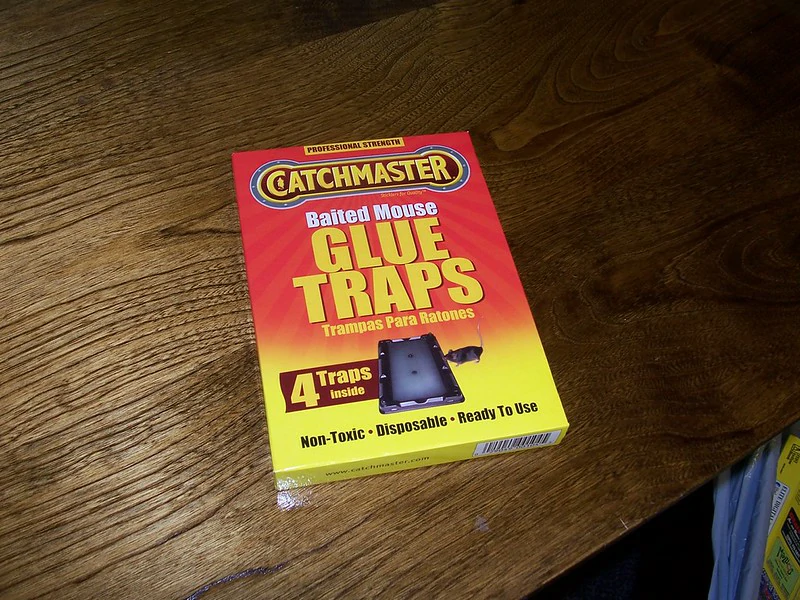
Dogs sniff, lick, and chew almost everything they find, and that includes the sticky board you just put down for a mouse. If you have a dog at home, it’s smart to ask what could happen before it happens.
Glue traps look harmless enough, but your dog doesn’t know that, and neither do most people until something goes wrong. So, are glue traps poisonous to dogs?
No, most glue traps aren’t poisonous to dogs, because the glue is usually non-toxic. However, they’re still risky. A dog can get stuck, swallow pieces of the trap, or eat a trapped mouse, so they’re not safe to leave where your dog can reach them.
That’s the short answer, but “not poisonous” doesn’t mean “safe.” The glue may not poison your dog, yet the trap can still cause real pain, stress, and vet bills.
Below, you’ll see what’s in these traps and how they can hurt a dog.
You’ll also learn what to do if your dog gets stuck or eats one, and how to deal with mice without putting your dog at risk.
What Are Glue Traps Made Of?
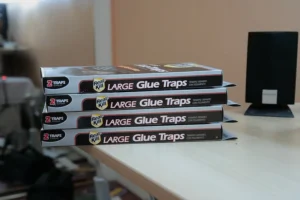
Most mouse glue traps are simple. They’re a flat tray or sheet of cardboard covered in a thick, sticky adhesive that stays tacky and never fully dries.
Makers usually describe the glue as non-toxic, and it doesn’t contain a poison that’s meant to kill. It works by sticking, not by poisoning, which is a big difference from mouse bait.
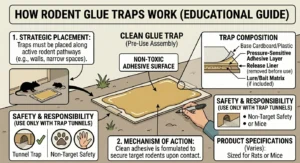
Some boards also have a scent added to attract mice. A smell like peanut butter can attract a curious dog just as easily, and that’s one way dogs end up in trouble.
The trays are often cardboard or plastic, and the adhesive is a sticky, rubbery gum. None of these things are meant to be eaten, even if they aren’t truly toxic.
Because products differ from brand to brand, it’s always worth reading the label on the one you bought. If you can’t tell what’s in it, you can call the maker or a poison hotline and ask.
Glue Traps Aren’t Poisonous To Dogs, But They Aren’t Harmless
Here’s where a lot of people get confused. When you hear “non-toxic,” it’s easy to think “safe,” but those two words don’t mean the same thing.
Non-toxic just means the glue doesn’t contain a chemical that poisons the body. It doesn’t mean your dog can walk across it, chew on it, or eat it without any problems.
Think of it like a wad of chewing gum or a piece of tape. Neither one is poison, but you wouldn’t want your dog swallowing a whole roll.
The real dangers are physical. Your dog can get glued to the board, tear out fur, panic, chew on the cardboard or plastic, or end up with a belly ache or even a blockage.
So the honest answer to your question is a little split. The glue usually isn’t poisonous, but the trap as a whole can still hurt your dog.
What Do The Product Labels And Safety Sheets Say?
If you look at the safety sheets for common mouse glue traps, they tend to say the same kind of thing.
Skin contact has no known effect, and if someone swallows some, you rinse the mouth and call a poison center if you feel unwell.
Those sheets are written for people, but they give you a good idea of what’s in the box.
They also say to contact a poison specialist right away if a large amount has been swallowed.
Makers of glue boards also say it would take a very large amount of the actual glue for there to be any risk of poisoning.
In their words, you’d want to watch your dog and call the vet if the board hasn’t passed or if your dog stops eating.
Keep in mind that those answers come from companies that sell the traps. They’re a useful clue, but they don’t replace advice from your own vet.
That’s why it’s smart to treat any case of a dog eating a trap as worth a phone call. A quick call costs you nothing, and it can put your mind at ease.
How Can A Glue Trap Hurt A Dog?
A dog can get hurt in more ways than you’d expect. The most common is getting stuck, but there are a few others you should know about.
The first is the sticky glue itself. It can grab onto paws, legs, belly fur, and even a nose, and it can pull out fur or irritate the skin when it comes off.
The second is chewing. If your dog bites the board, it can swallow bits of cardboard, plastic, and glue, which can upset the stomach or, in a small dog, block the gut.
The third is panic. A dog that’s stuck may thrash around, roll on the floor, and spread glue over the carpet, the furniture, and its whole body.
Finally, there’s the mouse. A trapped mouse is bait for a curious dog, and your dog may go right for it.
Each of these problems is fixable if you catch it early. But they’re also a good reason to keep glue boards out of any home with a dog.
Dogs Can Get Stuck On Their Paws, Fur, And Face
Dogs explore with their noses and paws, which is exactly how they run into sticky boards. A dog that steps on one often freezes, then tries to pull away and gets more stuck.
If your dog puts its nose down to sniff the trap, the glue can grab its muzzle or whiskers. A stuck snout is scary, because your dog may struggle to open its mouth or breathe comfortably.
Fur is the other big problem. Long or fluffy coats can wrap right around a board, and you may need to trim some fur with scissors to get your dog loose.
Small dogs and puppies are at the most risk. They have less strength to pull away, and a trap can wrap around much more of their body.
The glue doesn’t poison the skin, but it can still be painful to pull away. Fur that gets yanked out can leave sore, red patches, and a stressed dog may bite or snap while you try to help.
What Happens If A Dog Eats Part Of A Glue Trap?
Most of the time, a dog that swallows a small piece of a glue trap ends up with a mild stomach upset at worst. You might see drooling, a lost appetite, vomiting, or loose stool.
The bigger worry is a blockage. Cardboard, plastic, and sticky glue don’t break down well, so a large piece can get stuck in the stomach or intestines, especially in a small dog.
Watch for signs that something’s wrong. These include repeated vomiting, a swollen or painful belly, no poop for a day or two, tiredness, or refusing food.
If you see any of those signs, call your vet right away. A blockage can turn serious fast, and your vet may want to take X-rays.
If you’re not sure how much your dog ate, call anyway. Give them the brand name, how much is missing, and when it happened, and they can tell you what to do next.
Dogs That Eat A Trapped Mouse Face Other Risks
A mouse stuck on a glue trap is a tempting snack for a dog. And that brings a whole different set of risks that have nothing to do with the glue.
Mice can carry germs like salmonella, and they can also carry worms and other parasites. A dog that eats one may end up with an upset stomach or a parasite infection.
Then there’s poison. If your home, garage, or yard also has mouse bait, the mouse may have eaten some before it got stuck, and your dog can get a dose of poison second-hand.
That second-hand poisoning is called secondary poisoning (when an animal gets sick from eating a poisoned animal). It’s less common than eating the bait directly, but it’s real, especially with the stronger poisons.
So if your dog eats a mouse from a glue trap, tell your vet about any poison you’ve used. That information can change the advice you get.
Are Some Dogs More At Risk Than Others?
Yes, a few types of dogs have a higher chance of trouble. Size is the biggest factor, since small dogs and puppies can get stuck more easily and can block up more easily.
Curious or greedy dogs are also at risk. If your dog eats socks, sticks, or things off the counter, a glue board is going to be tempting.
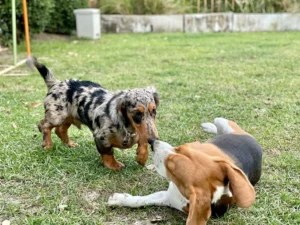
Long-haired breeds can end up with a mess. Fur wraps around the glue, and it can take a lot of work to get it out.
Dogs that already have health problems, like skin issues or stomach trouble, may react more to a trap. And senior dogs may have a harder time getting loose if they stick.
The easiest fix is the same for every dog. Keep glue boards out of any space your dog can reach, which means not under the couch, not in the garage, and not behind a low cabinet door.
What To Do If Your Dog Gets Stuck On A Glue Trap
First, stay calm. Your dog will pick up on your panic, and a stressed dog is harder to help.
Stop your dog from licking or chewing the glue. If you can, hold your dog still or put on a cone, and put on gloves if you have them.
Don’t just pull the trap off. That can tear out fur and skin, and it hurts a lot.
Instead, use cooking oil. Makers of glue traps and animal rescue groups say vegetable oil or mineral oil can loosen the glue, so gently rub a bit of oil around the stuck spot and work slowly.
Give the oil a few minutes to soak in. Then ease the trap away, and if some fur is still stuck to the board, trim only that fur with scissors.
When your dog is free, wash the oil off with dish soap and warm water. Dish soap cuts through grease, so it works well for getting the oily glue off paws and fur.
What Should You Never Use To Remove Glue From A Dog?
When people panic, they grab whatever’s in the garage. Some of those things can do more harm than the glue.
Don’t use paint thinner, nail polish remover, acetone, gasoline, or other strong solvents. They can burn the skin and make your dog sick if it licks them.
Skip rubbing alcohol and hand sanitizer too. They can dry out and sting the skin, and a dog may lick them off.
Also avoid pulling hard or using a hair dryer. Heat and force can make the glue spread and hurt your dog even more.
Stick with plain vegetable oil, mineral oil, or a cooking oil spray, and then dish soap and water. These are gentle, they work, and you probably already have them in your kitchen.
If the glue is near the eyes, mouth, or nose, or covers a big part of the body, don’t try to do it yourself. Go straight to a vet.
When Should You Call A Vet Or Poison Helpline?
Call your vet if the glue is on your dog’s face, in its mouth, or all over its body. Also call if your dog is panicking, bleeding, in pain, or the skin looks raw.
Call if your dog swallowed any part of the trap, even if it seems fine. Blockages can take a day or two to show up, so it’s better to ask early.
If you think your dog ate a mouse that may have been poisoned, call a poison helpline too.
In the US and Canada, you can reach Pet Poison Helpline at 855-764-7661 or the ASPCA Animal Poison Control Center at 888-426-4435, and a fee usually applies.
Have the package handy. The brand name and any ingredients listed can help the vet decide what to do.
If a child gets into a glue trap or swallows some, call your local poison center. In the US, that’s 1-800-222-1222.
Safer Ways To Handle Mice When You Have A Dog
The easiest way to keep your dog safe is to skip glue boards entirely. There are better choices that work just as well.
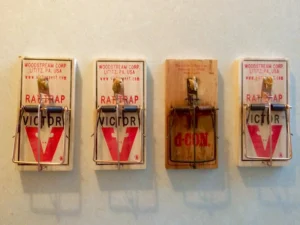
A good snap trap, set inside a covered trap box, keeps your dog’s nose and paws away from the spring. These boxes have a small hole that only a mouse can fit through.
Electronic traps are enclosed too, and they kill a mouse in seconds. You never have to touch the mouse, and the box keeps your dog out.
Live traps can also work if you can check them every few hours. Just be sure to release the mouse far from your home, since mice can find their way back.
Skip poison if you can. It’s far more dangerous for dogs than glue, and it can hurt pets and wildlife that never even touch the bait.
Finally, work on the root cause. Seal up gaps in your walls, store food in tight containers, and your mouse problem often gets much smaller on its own.
How To Set Traps Where Your Dog Can’t Reach Them
Where you put the trap matters as much as which trap you pick. Dogs go low and sniff everything, so you need to think like your dog.
Place traps behind big furniture, inside closed cabinets, or in rooms your dog can’t enter. Mice like to run along walls, so those spots work great.
If you use a trap box, push it tight against the wall and make sure it can’t slide around. A determined dog can drag a loose box across the room.
Check your traps every day, and wear gloves when you handle a mouse. Dispose of dead mice right away, in a sealed bag, so your dog can’t get to them.
Keep the garage and shed in mind. These are common places for mice, and many dogs get into them when you’re not looking.
Finally, count your traps. It’s easy to lose track of one, and a forgotten trap can turn into a problem months later.
Do Dogs And Mouse Poison Mix Any Better?
Not at all. Mouse poison is much more dangerous for dogs than glue traps, and that’s one of the biggest reasons to avoid it.
Rodenticide poisoning is one of the most common cases that Pet Poison Helpline handles. Some poisons cause internal bleeding (the blood can’t clot), some cause brain swelling, and some damage the kidneys.
Many baits are made to smell and taste good, and some come in bright colors. That makes them tempting to a dog, and a determined dog can chew right through a plastic bait station.
Some of these poisons have an antidote, such as vitamin K1 for anticoagulants. Others, like bromethalin, don’t, and signs can take days to show up.
So if you’re choosing between glue and poison for a home with a dog, neither one is a good pick. A covered snap trap or an electronic trap is a much safer choice.
Conclusion
So, are glue traps poisonous to dogs? Usually not, since the glue itself is typically non-toxic.
But that doesn’t make them safe. A dog can get stuck, swallow cardboard or plastic, or eat a trapped mouse that carries germs, parasites, or even poison.
If your dog gets stuck, use cooking oil, not solvents, and call your vet if the glue is near the face or your dog is in distress.
If your dog eats part of a trap, call your vet or a poison helpline right away.
The best plan is to skip glue boards altogether. Use a covered snap trap or an electronic trap, seal up the gaps, and keep your dog and your home safe.

Hi, my name is Ezra Mushala, i have been interested animals all my life. I am the main author and editor here at snakeinformer.com.