
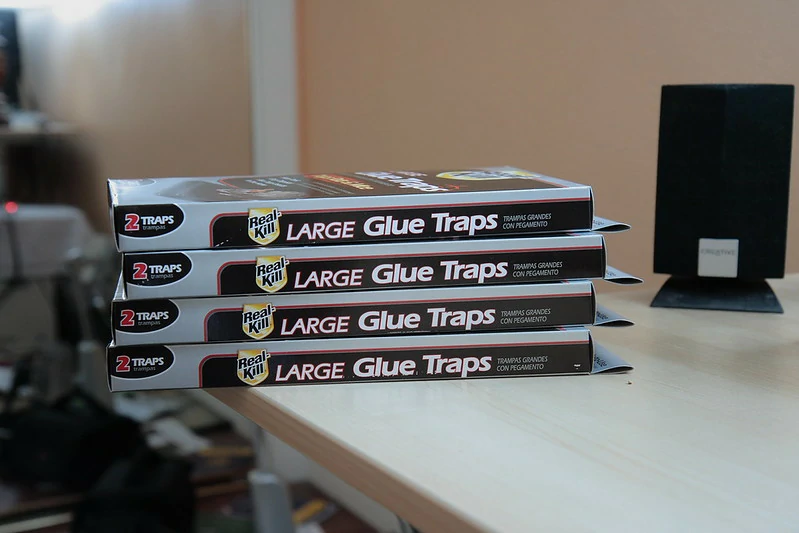
Glue traps are sold as a simple way to catch mice and rats without using poison. Many packages even say “non toxic” in big letters, and that wording makes a lot of people feel better about using them around the house.
But what does that label really tell you, especially if you’ve got kids, pets, or a worry about chemicals? So, are glue traps non toxic?
Most glue traps are non toxic, which means they have no poison or pesticide in them. However, non toxic doesn’t mean harmless, since the glue can still stick to skin and fur, and trapped animals suffer.
In most cases, the answer is yes, since the glue is made to stick rather than to poison. However, that’s only part of the story, because a product can be free of poison and still cause real problems.
Below, you’ll see what’s in the glue, what can happen if someone touches or licks it, and why “non toxic” doesn’t always mean safe. You’ll also learn what to do if glue ends up where it shouldn’t.
What Does “Non Toxic” Actually Mean on a Glue Trap?
“Toxic” means something can poison you if you swallow it, breathe it in, or get it on your skin. So when a glue trap says it’s non toxic, it’s basically telling you there’s no poison inside.
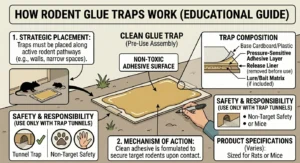
That’s a good thing to know, but it’s a narrow promise. A bicycle isn’t toxic either, and you can still get hurt riding one.
The same goes for glue traps, since a board can be free of poison and still stick to a child’s hand, a cat’s paw, or a bird’s wing.
The word “non toxic” also isn’t tightly controlled on labels, so brands use it a bit differently. The best way to check is to look at the product’s safety data sheet.
A safety data sheet (often called an SDS) is a document that lists what’s in a product and how to handle it. Most big brands post theirs online, and it only takes a minute to read.
Most Glue Traps Contain No Poison or Pesticide
For most glue boards, the answer is simple: there’s no rodent poison in them. They work by sticking, not by poisoning, and that’s what makes them different from baits and sprays.
The safety data sheets for common brands back this up. Several list no known serious effects from skin contact, eye contact, or swallowing, and one Australian brand sheet lists the product as non toxic across the board.
However, not every sheet says the same thing. One popular large rodent board lists “may cause skin irritation” and “may be harmful if swallowed,” which is more careful wording.
That doesn’t make the product dangerous in normal use, but it does show that “non toxic” isn’t the whole picture. It also shows why you should read the label on the exact product you buy.
If you’re ever unsure, call your local poison control. In the US that’s 1-800-222-1222, and in Australia it’s 13 11 26.
What Is the Glue Actually Made Of?
Brands don’t always list the full recipe on the package. Many use sticky rubber or petroleum based adhesives, a bit like the glue on tape or labels, but much stronger.
The glue also has to stay sticky for a long time. It’s made so it doesn’t dry out, which is how a board can stay ready to use for months on a shelf.
That’s also what makes it so hard to get off, since regular soap and water usually won’t cut through it but oil often will.
The glue isn’t one single recipe either, since each brand mixes its own and some add extra ingredients to make it smell better or stick harder.
So if you need to know what’s in a certain product, the safety data sheet is your best bet. It’s a lot more reliable than the wording on the front of the box.
Touching the Glue Usually Won’t Hurt You, But It’s Hard to Remove
For most people, a bit of glue on the skin isn’t dangerous. The safety sheets for common brands say there are no known serious effects from skin contact.
However, it can still be annoying and a little rough on your skin. One sheet notes that it may cause irritation, and that repeated contact can dry out and crack the skin.
The bigger problem is that it’s really sticky, so if it gets in your hair, on your clothes, or across your hands, it can turn into a long, messy cleanup.
Don’t scrub hard or pull, because that can hurt your skin or tear out hair. Instead, rub a bit of vegetable oil, baby oil, or cooking oil onto the glue, and give it a minute to loosen.
Once it starts to come off, wash the spot with soap and warm water. Some labels suggest stronger cleaners, but oil is gentler and works well for most people.
Are Glue Traps Safe for Dogs and Cats?
The glue itself isn’t known to be poisonous to pets, and the safety sheets don’t list serious effects from small amounts. That’s good news if your dog sniffs one or your cat gives it a lick.
However, a small taste can still upset a pet’s stomach. If a pet swallows a large amount, one label says to contact a poison treatment specialist right away.
So don’t wait and see if your pet swallowed a lot of glue. Call your vet or a pet poison line, and keep the packaging with you so you can read out the brand.
In the US, the ASPCA Animal Poison Control Center is at 888-426-4435. Your local vet can also help you work out what to do next.
The bigger danger for pets isn’t poison. It’s getting stuck, which you’ll see in the next section.
Pets Can Get Stuck, and That’s the Bigger Danger
Glue traps don’t pick and choose, and pets are curious. A cat that paws at a board, or a small dog that sniffs it, can end up stuck in seconds.
A pet that’s stuck will panic, and that’s where the real harm starts. It may pull hard, lick the glue, or chew at its fur, and the glue can end up in its mouth.
An MSPCA study found that two thirds of the licensed wildlife rehabilitators it surveyed in Massachusetts had treated an animal caught on a glue trap. The list included songbirds, snakes, chipmunks, and even a cat.
Pets that get stuck often need medical help to get the glue and the board off safely. Vets sometimes have to sedate the animal first so it doesn’t hurt itself.
If you have pets, put glue boards where only a rodent can reach them, like behind heavy appliances or inside a closed box with a small opening. Or better yet, choose a different trap.
Are Glue Traps Safe Around Young Kids?
Glue traps aren’t poisonous to kids, but they’re not a toy either. Small children put things in their mouths and touch everything, so a board on the floor can lead to a sticky mess very fast.
The main risks are glue on the hands, face, or hair, and a child touching a trapped animal. A rodent that’s still alive can bite or scratch, and it can leave germs behind.
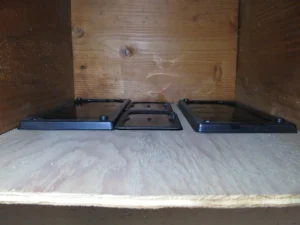
If you have young kids, keep glue boards out of any room they play in. A closed cupboard or the back of a high shelf is a lot safer than a hallway floor.
Also teach older kids not to touch the board or anything caught on it. A simple rule like “tell a grown up” is easy for them to remember.
If a child gets glue on their skin, use oil to loosen it and wash with soap and water afterward. If they swallow some, call poison control.
Some Glue Traps Have Scents and Extra Ingredients
Plain glue isn’t always what’s on the board. Some products add smells to attract rodents, such as a peanut butter scent in the glue itself.
Others add natural oils to help the glue stick better or to draw rodents in. These are usually small amounts, and brands still call the finished product non toxic.
That’s one more reason to check the label, since two boards that look the same on the shelf can have a slightly different recipe.
If you or someone in your house has allergies, this matters even more. A peanut scented glue board, for example, isn’t a great fit for a home with a serious nut allergy.
When in doubt, read the ingredients and the safety sheet, or ask the maker. A good brand will tell you what’s in the box.
“Non Toxic” Doesn’t Mean Humane for the Animals Caught
Even when a glue trap has no poison in it, the animals stuck on it still suffer. They can struggle for days, tearing their skin or limbs as they fight to get free.
Animals that can’t get away may die slowly from thirst, hunger, or exhaustion. The MSPCA also notes that many of these animals are very sick from weakness, injuries, and from swallowing glue as they try to clean themselves.
Some get their faces stuck, which makes it hard for them to breathe. It’s a slow and painful way to die, and that’s why so many animal groups oppose these traps.
So a “non toxic” label tells you something about poison, but nothing about how the animal feels. That’s an important difference to keep in mind.
If this matters to you, it’s a good reason to skip glue boards and use a quicker option instead. We’ll cover a few of those below.
Can a Glue Trap Make You Sick Without Any Poison?
It can, but the glue isn’t the cause, since the risk comes from the animal that’s stuck on it.
Rats and mice can carry germs like salmonella and leptospirosis (a bacterial infection that spreads through urine). A trapped animal often leaves droppings and urine on the board, and those can get on your hands.
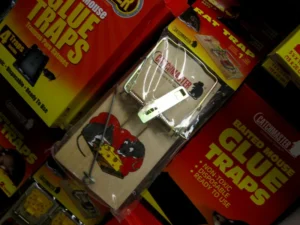
If the animal is still alive when you find it, it can also bite or scratch you. The MSPCA points out that this is one reason glue traps are unhygienic.
So always wear thick gloves when you handle a used board, and wash your hands well with soap and water afterward. Don’t touch your face until you’ve done that.
You should also clean the area where the trap was. Wet any droppings with a disinfectant first, then wipe them up, instead of sweeping or vacuuming them into the air.
Strong Household Glues Are a Different Story
It’s easy to mix up glue traps with other glues, but they’re not the same thing. Some household glues are far more dangerous than anything on a glue board.
Take diisocyanate glues, the kind sold as strong construction or wood glues (Gorilla Glue is a well known one). Pet Poison Helpline says these can swell up in a dog’s or cat’s stomach and form a hard lump that often needs surgery.
Glue boards don’t work this way, since their glue is a different type, but it’s a good reminder not to treat all glue as the same.
It’s also a good reason never to make your own glue trap from household glue. A homemade board can be far more dangerous than a store bought one, especially if a pet gets into it.
If you ever think your pet has swallowed any kind of strong glue, call your vet or a pet poison line right away. Don’t wait for symptoms to show up.
What Should You Do If Glue Gets on Skin, Hair, or Fur?
Stay calm, and don’t pull. Pulling can rip hair or fur, and it can hurt the skin underneath.
For your own skin or hair, work some cooking oil, baby oil, or vegetable oil into the glue with your fingers. Wait a minute or two, then rub gently until it starts to slide off.
Once it’s loose, wash the area with soap and warm water. You may need to repeat it a few times for a big patch.
For a pet, it’s best to call your vet first, since pets lick whatever is on them. Avoid using harsh cleaners or solvents on an animal’s skin, because they can do more harm than the glue.
If the glue is in your eyes or mouth, rinse with lots of water and call poison control or a doctor. And if a large patch of fur is stuck, a vet or groomer can often trim it away safely.
Never Burn Used Glue Traps, and Throw Them Out Safely
Once a glue trap has done its job, you still need to get rid of it the right way.
Burning one is a bad idea, because the safety sheet for at least one brand warns that burning or very high heat can make toxic gases.
So don’t toss a used board into a fire pit or burn pile. It’s not worth the fumes.
A safer way is to wrap the board in several layers of newspaper, then seal it in a bag and bin it (one brand’s own instructions say the same).
If there’s an animal on the board, wear gloves, bag everything twice, and put it in an outdoor bin with a lid. Then wash your hands well.
Also keep unused boards in a cool, dry place away from kids and pets. Heat can make the glue runny and messy.
Are There Better Options Than Glue Traps?
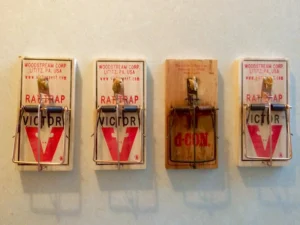
Yes, and many of them are quicker and cleaner. Snap traps are cheap, work fast when you set them right, and you can use them again and again.
Electronic traps are another good choice. They kill the animal quickly and you can empty them without touching it, though they cost more.
Cage traps catch the animal alive, but you’ll need to check them often and decide what to do with it afterward. For a bigger problem, a licensed pest controller can plan something that fits your home.
The best fix of all is to keep rodents out in the first place. Seal gaps with steel wool or metal mesh, store food in tight containers, and keep clutter down in garages and sheds.
That way, you rely less on any trap, glue or not, and you avoid the questions about toxic labels and sticky surprises.
Glue Trap Rules Are Changing in Many Places
Over the last several years, more places have started to restrict glue traps. England, Ireland, and Iceland have banned them, and several Australian states and territories have too.
In the US, some cities and states have looked at bans as well, and West Hollywood was the first city to ban them. In Canada, the rules can differ by province and city.
If you’re thinking about buying a glue trap, it’s worth checking the rules where you live first. A trap that’s legal today could be limited tomorrow.
Your local council or city office can tell you what’s allowed, and so can a licensed pest controller. It only takes a few minutes, and it can save you from fines.
If you can’t tell whether something’s allowed, picking a different type of trap is the easiest way to stay safe.
Conclusion
Most glue traps are non toxic, which just means there’s no poison in the glue. They’re not built to poison anything, and the safety sheets for common brands show few serious effects from skin or eye contact.
However, non toxic doesn’t mean harmless. The glue can stick to skin, hair, and fur, and a small taste can upset a pet’s stomach.
The bigger problems are getting stuck, germs from trapped rodents, and the suffering of the animals caught. Pets, wildlife, and even kids can end up in trouble if a board is left in the wrong place.
So if you use glue traps, keep them out of reach, wear gloves, and check them often. If you can, think about snap traps, electronic traps, or sealing up your home instead.
And if glue ever gets where it shouldn’t, stay calm and reach for the oil, not the scrub brush. When in doubt, call poison control or your vet.

Hi, my name is Ezra Mushala, i have been interested animals all my life. I am the main author and editor here at snakeinformer.com.