
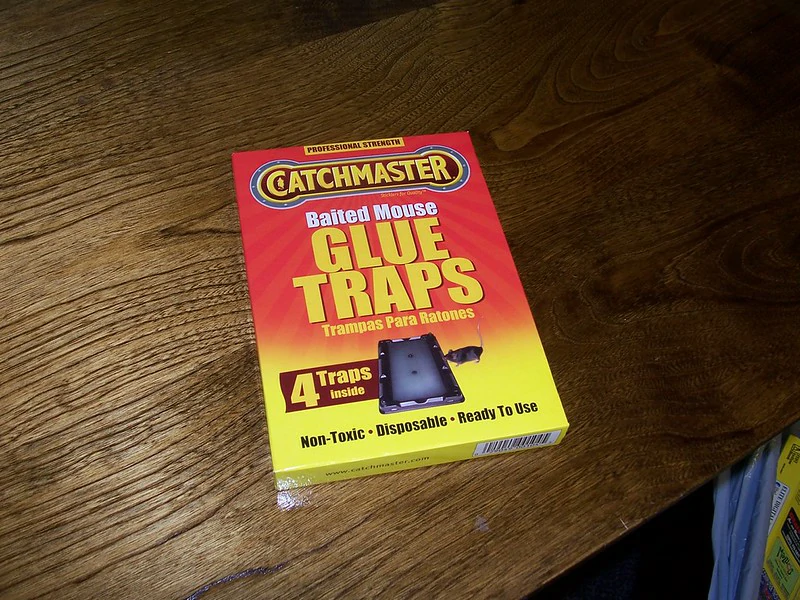
Rats are bigger, smarter, and a lot more cautious than mice, so it’s fair to wonder whether the sticky boards that catch mice can handle them too. Are glue traps good for rats?
No, glue traps aren’t a good choice for rats. Rats are big and strong, so they often pull free or drag the board away, and the ones that stay stuck can suffer for a long time. Snap traps work much better.
Even pest control groups that still use glue boards say they should be a last resort for rats. Here’s why glue boards fall short, and what works better.
How Glue Traps Are Supposed to Catch a Rat
Rat glue traps work the same way mouse traps do. They’re just bigger boards or trays with a thick layer of very sticky glue on top.
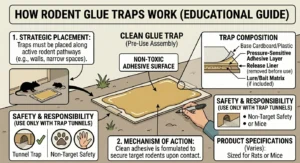
The idea is that a rat walks across the board, gets stuck, and can’t pull itself loose. It sounds simple, and that’s why plenty of people reach for them when they hear scratching in the attic.
Most rats in the US are one of two kinds, the Norway rat or the roof rat. The Norway rat is stockier and digs burrows, while the roof rat is slimmer and loves to climb.
Both are much heavier than a mouse, since a Norway rat can weigh close to a pound (a house mouse weighs about an ounce).
That size gap matters a lot when it comes to glue, since a trap that holds a mouse can be a very different story for an animal that’s many times heavier.
Rats Are Bigger and Stronger Than the Glue
Glue boards were first made for mice, and even the rat-size versions have limits. A strong, heavy rat can sometimes tear itself loose, leaving fur and skin behind on the board.
Other rats only get a foot or a patch of fur stuck, and they can drag the whole board along with them. That’s how people end up finding an empty spot on the floor and a bad smell weeks later.
A rodent control industry guide says glue boards are generally seen as inhumane and are only recommended when other methods aren’t practical. It adds that some countries ban them outright.
So even the people who write the rules for pest control treat glue boards on rats as a last resort. That’s a pretty strong hint that they’re not the best tool for the job.
If you’re dealing with a big Norway rat, a glue board is much more likely to end up as a mess than a solution, and the rat is probably still out there.
Do Rats Avoid Glue Traps?
Very often, yes. Rats have a built-in fear of new things (the science word is neophobia, which just means fear of new objects), and a new trap in their path makes them nervous.
UC pest experts say rats stay wary of new traps that show up on their regular routes. Norway rats in particular are very suspicious, and it can take several days before they go anywhere near one.
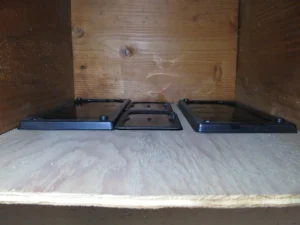
A glue board is a strange new object with a strong smell (people can smell it too), so a rat may simply walk around it. Once a rat has had one bad run-in with glue, it probably won’t forget it.
Pest pros also report that both rats and mice pile debris on glue boards until the surface is covered. After that, the trap is useless, and other rats can cross it with no trouble.
That’s one more reason glue boards don’t work well on rats. They need an animal that walks straight into the glue without stopping to think, and rats almost always stop to think.
What Happens to a Rat Stuck on a Glue Board?
It isn’t pretty. A review of glue boards used on rats, which the RSPCA points to, found that the suffering lasted for hours and was considered extreme.
A rat stuck on glue fights hard to get loose, and it’s much stronger than a mouse. That means more thrashing, more stress, and more chances to hurt itself.
It can also get glue in its fur, on its face, and around its nose and mouth. That makes it harder to breathe and harder to groom, and it can take a long time to die.
Glue boards don’t kill an animal quickly or cleanly. Anyone who uses them has to be ready to deal with a live, frightened rat, and most people aren’t.
The industry guide says glue boards must be checked very often so that stuck animals can be dealt with right away. In practice, many people don’t check often enough, and the rat is left to suffer.
Stuck Rats Can Bite and Spread Germs
A rat on a glue board is a scared wild animal, and a scared wild animal will bite, so you could end up with a deep bite and an infection.

The CDC says rodents can spread more than 35 diseases worldwide. In the US, those include hantavirus (a virus that can cause a serious lung illness), rat-bite fever, and leptospirosis (a bacterial illness spread through rat urine).
Salmonella (a type of bacteria that causes stomach illness) is on that list too. Rats can spread it through their droppings, urine, and the surfaces they walk over.
A stuck rat is also likely to pee and thrash around, which spreads germs onto the board and the floor around it. That makes cleanup riskier than it already is.
If you do end up with a live rat stuck on glue, don’t try to handle it yourself. Call a pest control pro or your local animal control office, and keep kids and pets well away.
Glue Traps Catch the Wrong Animals Too
A glue board can’t tell a rat from anything else that walks across it. The rodent control guide says glue boards can catch non-target animals and birds.
In places where rats live, such as sheds, garages, attics, and yards, that can mean squirrels, lizards, small birds, and even cats. Pets and wildlife get stuck more often than most people expect.
Humane groups have reported wild birds, bats, and even pet cats caught on glue boards. A large board in an open area makes it even more likely.
There’s also the issue of what happens after a rat dies on a board. The body can draw in other animals, which then get stuck themselves.
If you have a dog or cat, or if wildlife wanders through your yard, that’s a good reason to skip glue boards altogether.
How Glue Traps Compare to Other Rat Traps
Here’s a quick look at how the main rat control options stack up.
| Option | How It Works | How Fast | Can You Reuse It? | Biggest Downside |
|---|---|---|---|---|
| Glue board | Rat gets stuck on sticky glue | Slow (hours) | No | Suffering, and rats can pull free or drag it away |
| Snap trap (rat size) | A strong spring bar snaps shut | Usually fast | Yes | You have to set, bait, and anchor it well |
| Electric trap | Gives a shock when a rat steps inside | Fast | Yes | Costs more and needs batteries |
| Live trap | Rat goes in and can’t get out | Not lethal | Yes | Releasing rats isn’t recommended |
| Poison bait station | Rat eats the bait over several days | Slow (days) | No | Risk to pets and wildlife |
Every option has trade-offs, but glue boards are the only one where a big, strong animal is left alive and stuck for hours. That’s why they rank so low with most pest pros.
Snap traps top the list for a reason. They’re cheap, they work, and they’re the choice UC pest experts and the CDC point people toward.
Which Kind of Rat Are You Dealing With?
Knowing whether you have Norway rats or roof rats helps you set traps in the right places. It also tells you where the rats are probably getting in.
Roof rats are smaller and sleeker, with a tail that’s longer than their head and body. They’re great climbers, and they usually nest high up in attics, trees, and shrubs.
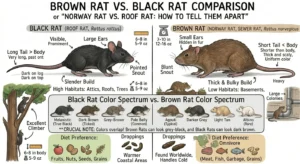
Norway rats are bigger and stockier, with small ears and a blunt nose. They dig burrows along foundations, under woodpiles, and under trash, so you usually find them at ground level.
If both kinds are in the same building, the roof rats are usually upstairs and the Norway rats are down in the basement. Norway rats can push roof rats out of an area.
Look at where you hear noises and where you find droppings, since that tells you a lot. Scratching overhead at night usually means roof rats, while burrows by the foundation point to Norway rats.
How to Tell You Have Rats
Rats leave plenty of clues. You might hear scratching in the walls or attic, especially at night, when they’re most active.
Droppings are another sign. Rat droppings are bigger than mouse droppings, and you’ll often find them along walls, near food, and in dark corners.
Rats also leave greasy smudges along the walls where they run, and they chew on wood, wires, and plastic. Chewed wires are a fire risk, so don’t ignore them.
Outside, look for burrows near the foundation and fruit or nuts that have been gnawed on. Roof rats are known for feeding on citrus and other fruit trees.
If you see a rat during the day, take it seriously. It can mean a lot of rats are crowded into a small space.
Rats Can Do Real Damage to Your Home
Rats don’t just carry germs. They chew on almost anything, including wood, plastic, insulation, and electrical wires.
Chewed wires are a real fire risk, and a rat in your attic can cause a lot of expensive damage before you ever see it.
Norway rats dig burrows along foundations, and those burrows can weaken buildings over time. Roof rats go after the fruit and nuts in your yard, so you may find half-eaten oranges still hanging on the tree.
Both kinds also contaminate food with droppings and urine. That’s why anything a rat has touched should be thrown out.
Why Rats Move In When the Weather Turns Cold
Rats want three things, which are food, water, and a warm, safe place to nest. When the weather gets cold, your house starts to look a lot better than the outdoors.

That’s why many people hear scratching in the attic for the first time in fall or early winter. The CDC even warns that rodents may come inside for food and shelter as it gets colder.
Pet food left out, bird seed on the ground, and open trash cans give rats an easy meal close to your house, so they stick around.
If you start trapping in the fall, you may be dealing with a few scouts. If you wait until winter, you could be dealing with a whole family.
Snap Traps Work Better for Rats
UC pest experts call a snap trap the safest, most effective, and cheapest way to control rats. That’s the same advice you’ll hear from most pest pros.
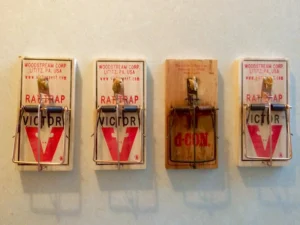
A good rat snap trap kills quickly when it’s set right, and you can use it again and again. It also keeps the rat in one place, so you don’t find it later by smell.
Make sure you buy traps made for rats, not mouse traps. A mouse trap is too small and too weak, and a rat can set it off without getting caught.
You don’t have to worry about human scent, either. UC says it isn’t known to affect rat trapping, though gloves are still smart for keeping germs off your hands.
Set several traps, not just one. Rats travel in groups, and more traps mean more chances to catch them before they breed.
How to Set Rat Traps Step by Step
Start by finding where the rats are running. Look along walls, behind appliances, near burrows, and anywhere you see droppings or greasy marks.
Because rats are so wary, put the traps out unset first, with a bit of bait on them. Let the rats get used to them for a few days, and then set them.
For bait, peanut butter, nuts, and dried fruit work well, and roof rats especially love fruit. Use a small amount, pressed firmly onto the trigger.
Place the traps with the trigger end against the wall, since rats run along walls and edges. For roof rats, set traps up high, on rafters or in trees and shrubs.
Anchor each trap so a rat can’t drag it away. Then check the traps every day, and wear gloves when you remove a rat and reset the trap.
When you find a dead rat, spray it and the area with disinfectant, then bag it twice and throw it out. Wash your hands well afterward.
Electric Traps, Live Traps, and Poison
Electric traps are another good choice, especially indoors. They kill fast and keep things clean, but they cost more than snap traps.
Live traps sound kind, but UC says releasing rats isn’t recommended. A rat dropped in an unfamiliar place often struggles to survive, and it can end up as someone else’s problem.
Poison baits kill rats, but they can also harm pets and wildlife. Hawks and owls that eat poisoned rats can get sick too.
That’s why most experts lean on snap traps, and they save poison for situations where traps can’t keep up. If you ever use bait, use a locked bait station that kids and pets can’t open.
Mistakes That Make a Rat Problem Worse
The most common mistake is setting just one or two traps. Rats are wary, so a single trap rarely does the job.
Another is using mouse traps on rats. They’re too small and too weak, and a rat that survives one will be much harder to catch the next time.
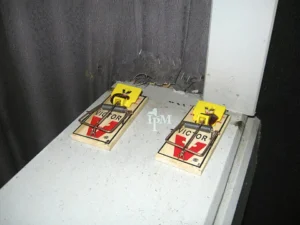
Many people also skip the step where you let rats get used to unset traps. It feels like wasted time, but it can make the difference between a catch and a miss.
Leaving food around is a big one, too. If rats have a dinner table in your yard, your traps have to compete with it.
Don’t forget the holes, either. If you never seal up the gaps, you’ll keep catching rats while new ones keep coming in.
And never touch a dead rat with bare hands, even if it looks clean. Always use gloves, and wash up afterward.
Seal Up and Clean Up, or More Rats Will Move In
Traps can’t solve a rat problem alone, because if rats can keep getting in, new ones will take the place of the ones you catch.
The CDC says rats can squeeze through a hole about the size of a half dollar. Young rats can fit through even smaller gaps.
Check inside and outside your home for holes, and fill the small ones with steel wool. Use hardware cloth or sheet metal for bigger gaps, since rats chew through soft materials.
Take away their food and water. Keep garbage in cans with tight lids, store pet food and bird seed in sealed containers, and pick up fallen fruit.
Stack woodpiles away from the house, and trim tree branches back from the roof (roof rats use them as a bridge into your attic).
Is It Legal to Use Glue Traps on Rats?
It depends on where you live. England banned most people from using glue traps in 2022, and several other countries have banned or limited them too.
In the US and Canada, glue traps are still sold in many places. However, some cities have banned them, and lawmakers keep pushing for more bans.
Rules can change, so check your city, county, state, or province before you buy. Pest control companies may also have their own rules.
If you hire a pro, ask what they plan to use. Many have moved away from glue boards for rats and lean on snap traps, sealing, and cleanup instead.
When Should You Call a Pest Control Pro?
Call a pro if you hear rats in your walls or attic, or if you see signs that there are a lot of them. Rats breed fast, and a small problem can turn into a big one quickly.
A female rat can have several litters a year, with about half a dozen pups or more each time. That’s why waiting almost never helps.
You should also call if you can’t find where they’re getting in, or if you’ve set traps for a week and caught nothing. A pro can find entry points you might miss.
Ask the pro what the plan is and whether they use glue boards. Good ones will inspect first, set snap traps, seal up the holes, and explain how to keep the rats from coming back.
Conclusion
Glue traps aren’t good for rats. Rats are big and strong, they’re suspicious of new objects, and a stuck rat can suffer for hours and bite anyone who gets close.
Snap traps work much better, and they’re safer for you and for other animals. Pair them with sealed holes and a clean yard, and you’ll go after the cause and not just the symptoms.
If the problem keeps growing, don’t wait. A pest control pro can solve a rat problem much faster than a pile of sticky boards ever will.

Hi, my name is Ezra Mushala, i have been interested animals all my life. I am the main author and editor here at snakeinformer.com.