
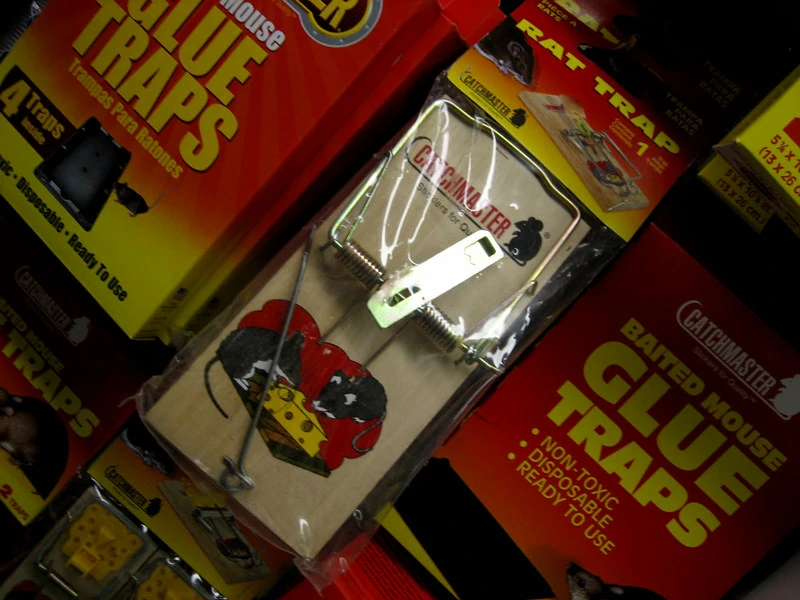
Glue traps, also known as glue boards or sticky traps, have been around for decades as a cheap way to catch mice and rats.
Set one down, and any rodent that walks across it gets stuck.
For most of that time, nobody questioned whether they were legal. They just were, pretty much everywhere.
That’s changed a lot in the last ten years, and the pace has picked up even faster recently.
So if you’re wondering whether glue traps are illegal or banned where you live, the honest answer depends entirely on your location.
Glue traps are banned or heavily restricted in a growing list of places, including England, Wales, Scotland, Ireland, New Zealand, Iceland, and parts of Australia and India. The United States and Canada have no federal ban yet. Several cities and a handful of states have passed or proposed their own restrictions.
There’s no single global answer here. Some countries have banned glue boards outright, some only restrict them, and some haven’t touched the issue at all.
Let’s break down exactly where things stand.
Why Glue Traps Keep Getting Banned
Before getting into the list of places, it helps to know why this keeps happening over and over, in country after country.
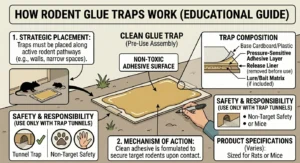
Glue traps don’t kill quickly. A rodent stuck to one is often still alive a full day later, sometimes longer.
Animals caught on a glue trap tend to panic and struggle hard to get free.
That struggle usually causes real injuries: torn skin, broken bones, and fur ripped out at the root.
The Centers for Disease Control and Prevention actually advises against using glue traps for a related reason.
A frightened, struggling rodent tends to urinate and defecate on the trap, which can raise the risk of disease exposure rather than lower it.
Then there’s the indiscriminate part. A glue trap can’t tell a mouse from a bird, a lizard, or a house cat.
Wildlife groups have documented birds, squirrels, snakes, bats, and pets getting caught right alongside the rodents these traps were meant for.
Many of those animals don’t survive, even when someone manages to free them.
Put those pieces together. A slow death for the target animal, real injuries along the way, and a high risk to animals that were never the target at all.
It’s easy to see why lawmakers across so many different countries have landed on the same conclusion.
Countries and Regions That Have Banned Glue Traps
Here’s where things stand internationally, based on the most current legal information available.
England banned public use of glue traps in July 2024, under the Glue Traps (Offences) Act 2022. Licensed pest control professionals can still use them in narrow, specific situations.
Wales went further. Since October 2023, Wales has had a complete ban on using glue traps, without the licensing exception England allows.
Scotland banned use, supply, and possession of glue traps under the Wildlife Management and Muirburn (Scotland) Act 2024, with that ban taking effect on July 1, 2026.
Ireland has actually banned glue traps the longest out of any of these. They’ve been prohibited there since 1976 under the Wildlife Act, with no authorizations for exceptions granted since 2008.
New Zealand banned the purchase and use of glue traps by the public back in January 2015, under the Animal Welfare (Glueboard Traps) Order 2009.
Iceland bans glue traps under its animal welfare law, which prohibits methods that cause what the law calls unnecessary entrapment or pain.
Germany, the Netherlands, and Norway don’t all have a law naming glue traps directly. Instead, authorities in these countries treat their use as effectively banned already, based on how existing animal cruelty laws get interpreted and enforced.
Victoria, a state in Australia, regulates both the sale and use of glue traps. A few other Australian states and territories have added their own restrictions too.
India has taken a state-by-state approach, and it’s added up to a lot of ground covered. More than 30 Indian states and union territories now restrict or ban glue traps.
Where Glue Traps Are Still Fully Legal
On the flip side, glue traps remain completely legal in a lot of places too, including some you might not expect given how much momentum this issue has picked up.
The United States has no federal ban. A bill called the Glue Trap Prohibition Act of 2024 was introduced in Congress, but it hasn’t passed.
Canada also has no federal or province-wide ban on glue traps as of now. They remain a legal, widely sold pest control option across the country.
Most of Asia still relies heavily on glue traps. Major economies like Japan, South Korea, Singapore, and Malaysia have little to no regulation around them.
Northern Ireland, unlike the rest of the UK, has no ban in place. Glue traps are still fully legal to buy and use there.
This mix is exactly why there’s no simple yes or no answer to whether glue traps are banned. It really depends on exactly where you’re standing when you ask.
Quick Reference Table: Glue Trap Legal Status by Country and Region
| Country / Region | Legal Status | Notes |
|---|---|---|
| England | Restricted | Public use banned, licensed pros exempt |
| Wales | Banned | Full ban, no licensing exception |
| Scotland | Restricted | Use, supply, and possession banned from July 2026, narrow pro exception pending |
| Northern Ireland | Legal | No ban in place |
| Ireland | Banned | Banned since 1976 |
| New Zealand | Banned | Purchase and use banned since 2015 |
| Iceland | Banned | Banned under animal welfare law |
| Germany | Effectively banned | No specific law, treated as banned under cruelty laws |
| Netherlands | Effectively banned | Same as Germany |
| Norway | Effectively banned | Same as Germany |
| Victoria, Australia | Restricted | Sale and use regulated |
| India | Restricted (by state) | 30+ states and territories restrict or ban |
| United States | Legal (federally) | No federal ban, some city and state action |
| Canada | Legal | No federal or provincial ban |
| Most of Asia | Legal | Minimal regulation in most major economies |
The US Picture Is More Complicated Than It Looks
Even though there’s no federal ban, calling glue traps simply “legal” in the US undersells how much is actually happening at the local level.
West Hollywood, California became the first US city to ban the sale and use of glue traps back in April 2023.
Since then, several other California cities have followed the same path, including Ojai, Culver City, Ventura, and Laguna Beach.
That’s a real, growing cluster, not just a one-off.
Beyond city-level bans, a long list of institutions have quietly stopped using or selling glue traps on their own.
More than 100 US airports have banned them, along with major retailers like Target, Walgreens, CVS, Dollar Tree, and Dollar General.
At the state level, both New York and Massachusetts have bills in progress aimed at restricting glue traps, though neither has become law yet as of now.
New York’s proposed legislation is actually fairly aggressive on paper.
One version would ban adhesive traps from even being shipped into the state at all, covering personal use and commercial distribution alike.
So while the US doesn’t have a federal ban, the trend line is pointing the same direction it has in the UK, Europe, and elsewhere.
More cities and states are moving toward restriction, not away from it.
Is Canada Considering a Glue Trap Ban?
Right now, no. There’s no active federal or provincial legislation moving toward a ban on glue traps in Canada.
That said, Canadian animal welfare organizations have raised the same concerns that led to bans elsewhere.
Public pressure on this issue tends to grow once neighboring countries or trading partners move first.
Given how quickly the US, UK, and various other countries have shifted position in just the past few years, similar proposals surfacing in Canada eventually wouldn’t be surprising.
For now though, glue traps remain a legal, widely available option across the country.
Are Glue Traps Banned by Retailers, Even Where They’re Legal?
Yes, and this is a detail worth knowing, since it affects availability even in places with no government ban at all.
Several major retailers have stopped selling glue traps entirely, regardless of local law.
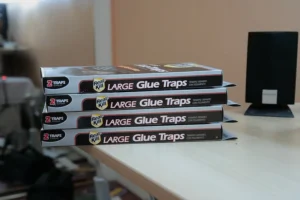
Target, Walgreens, CVS, Rite Aid, Dollar General, Dollar Tree, and Walmart Canada have all pulled them from shelves.
Some large employers and institutions have gone the same route internally.
JPMorgan Chase, American Eagle Outfitters, and Public Storage have all banned glue trap use in their own facilities.
So even in a country like the US or Canada, where glue traps remain technically legal everywhere, you may find them harder to actually buy than the law alone suggests.
What Happens If You Use a Banned Glue Trap Anyway?
This varies a lot depending on where the ban is in place, but the consequences are rarely trivial.
In England, using a glue trap without a license can lead to up to 51 weeks in prison, an unlimited fine, or both. Scotland’s penalties are similarly serious.
In Ireland, illegal glue trap possession has actually led to real prosecutions, with eight cases since 2008 alone.
In US cities with local bans, penalties usually take the form of fines rather than criminal charges, though the exact amount depends on the specific city ordinance.
The bottom line is the same almost everywhere though. Where a ban exists, it’s enforced with real consequences, not just a suggestion to be ignored.
Does New York City Actually Have a Glue Trap Ban?
Not yet, but it’s closer than a lot of people realize. In February 2026, New York City Council Member Harvey Epstein introduced Int. No.
531, a bill that would prohibit selling, offering for sale, or distributing glue traps anywhere in the city.
Violations under that bill would carry civil penalties of up to $500 per violation.
As of now, it’s still sitting with the Committee on Consumer and Worker Protection, waiting to move forward.
At the state level, two related bills are also in motion. One, sponsored in the Assembly, would go even further than the city bill.
It would ban adhesive traps from being shipped into New York State at all, covering both personal use and commercial distribution.
None of this is law yet.
It shows how much momentum has built up in just the past couple of years though. That’s especially true in a place that hasn’t traditionally led on this kind of animal welfare legislation.
Does a Glue Trap Ban Cover Insect Traps Too?
This is a common point of confusion, so it’s worth clearing up directly.
Almost every glue trap law on the books, in the UK, US cities, or elsewhere, is written specifically around rodents.
A typical legal definition describes a glue trap as a board with non-drying adhesive. It’s placed flat where a mouse or rat is likely to walk across it.
That’s different from most insect glue traps, which are usually thin cards or tubes hung vertically to catch flies, moths, or aphids.
So if you’re using a sticky trap to deal with insects in your kitchen or garden, that’s not the kind of device these bans are targeting.
The laws are written around rodents specifically, not sticky traps in general.
That said, some broader animal welfare laws, like the ones in Iceland or Norway, use language about unnecessary suffering that could technically apply more widely.
If you’re ever unsure, checking your specific local law is the safest bet.
What Should You Use Instead of Glue Traps?
If you’re dealing with mice or rats and glue boards aren’t a legal option where you live, or you’d simply rather avoid them, there are solid alternatives out there.
None of them carry the same welfare concerns.
- Snap traps kill quickly and are legal almost everywhere, including the UK, US, and Canada.
- Humane live-capture traps catch the rodent unharmed, letting you release it elsewhere.
- Sealing up entry points around your home stops the problem before it starts.
- Removing food sources, like securing bins and cleaning up crumbs, makes your space far less appealing to rodents.
- Working with a licensed pest control company is often the best call for a bigger infestation, since they know which methods are actually legal in your area.
Snap traps in particular have become the go-to replacement almost everywhere glue traps have been restricted.
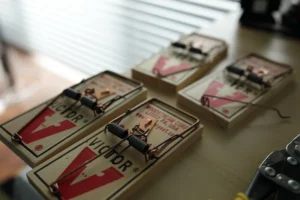
They’re cheap, widely available, and don’t come with the same legal or ethical baggage.
Why This Issue Is Moving So Fast Right Now
It’s worth stepping back and noticing just how quickly this has all happened. A decade ago, glue traps were barely a talking point outside animal welfare circles.
Now, multiple countries have full bans.
Several US states have bills in progress, and major retailers are pulling glue traps from shelves on their own, without waiting for any law to force their hand.
Part of this comes down to alternatives simply getting better and more available.
Snap traps and humane live-capture options have become cheaper and easier to find, which makes it a lot easier for lawmakers to justify a ban.
Part of it also comes down to visibility. Once one country or city takes the step, the next one tends to look a lot more reasonable by comparison.
That’s exactly the pattern we’ve seen play out across England, Wales, Scotland, and a growing list of US cities.
Conclusion
There’s no single answer to whether glue traps are illegal or banned, since it genuinely depends on where you are.
England, Wales, Scotland, Ireland, New Zealand, Iceland, and a growing number of other countries and regions have banned or heavily restricted them.
The United States and Canada haven’t passed anything at the federal level.
That picture is shifting fast though, with multiple cities, several states, and a long list of major retailers moving away from glue traps on their own.
If you’re dealing with a rodent problem, the safest bet regardless of your local law is to check exactly what’s allowed in your specific city or state.
Then lean toward alternatives like snap traps or humane live-capture traps.
They avoid the legal gray areas entirely, and they sidestep the animal welfare concerns that have driven this issue everywhere it’s shown up.

Hi, my name is Ezra Mushala, i have been interested animals all my life. I am the main author and editor here at snakeinformer.com.