
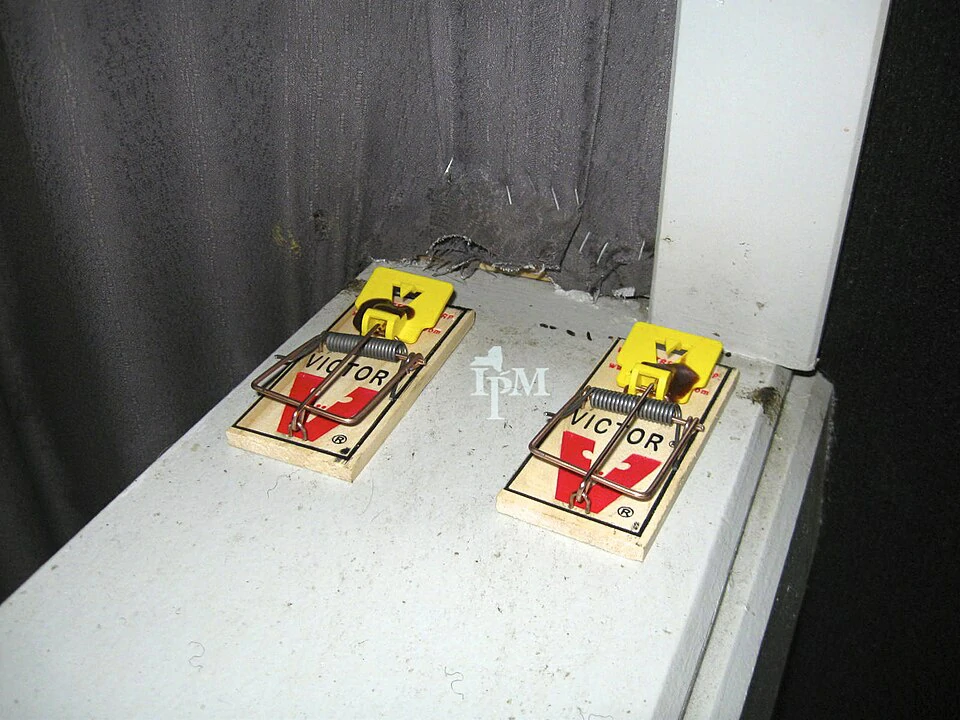
If you’ve ever stood in the hardware store aisle wondering whether you need ID to buy a mouse trap, you’re not alone.
Products like rat poison, glue traps, glue boards, and sticky traps can look like they might fall under some kind of restricted sale rule, similar to alcohol or spray paint.
So do you actually need to be a certain age to buy mouse traps, glue traps, or rat poison?
No, mouse traps of any kind, including snap traps, glue traps, glue boards, sticky traps, and electronic traps, aren’t age restricted in the US or Canada. Anyone can buy them at a hardware store, grocery store, or online, with no ID or age check required.
The one exception worth knowing about is rodenticide, meaning rat and mouse poison. Even that isn’t restricted by age though.
It’s restricted by a completely different system that has nothing to do with how old you are.
Why People Assume There’s an Age Restriction
It’s an easy assumption to make. A lot of household products have age restrictions tied to them in various states.
Spray paint, certain cleaning chemicals, tobacco, and alcohol all come with age rules depending on where you live.
Mouse and rat poison in particular looks dangerous enough on the packaging that it seems like it should work the same way.
Warning labels, skull icons, and phrases like “keep out of reach of children” all add to that impression.
However, none of that packaging language has anything to do with your age as the buyer.
It’s aimed at keeping the product away from children and pets after you’ve already bought it and brought it home.
Mouse Traps Themselves Have Zero Age Restrictions
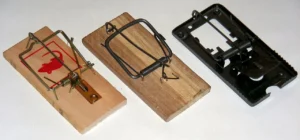
Physical traps, meaning snap traps, glue traps, glue boards, sticky traps, and electronic traps, are treated like any other household tool.
There’s no regulation anywhere in the US or Canada that ties their purchase to age.

You can buy a pack of snap traps or a box of glue boards the same way you’d buy a broom or a flashlight. No ID, no age verification, no purchase limit tied to how old you are.
This holds true whether you’re buying in person at a hardware store, a grocery store, a big box retailer, or online through a site that ships to your home.
Even large multi-packs, bulk boxes, or professional-grade traps sold to pest control companies don’t carry an age requirement.
The restriction, where one exists at all, is about the chemical products. It’s never about the mechanical ones.
The Real System Behind Restricted Products Isn’t About Age
This is the part most people don’t know, and it’s actually more interesting than a simple age rule.
In the US, the Environmental Protection Agency (EPA) classifies pesticides, which includes rodenticides like rat and mouse poison, into two categories: general use and restricted use.
General use pesticides are the ones sold on regular store shelves. Anyone can buy and use them, regardless of age, as long as they follow the instructions on the label.

Restricted use pesticides (RUPs) are a different story entirely.
These products can only be purchased and used by someone who holds a pesticide applicator certification, which involves training, testing, and ongoing education.
This certification system isn’t based on age at all, though federal rules do require certified applicators to be at least 18.
Even so, it’s really based on demonstrating you know how to handle a genuinely hazardous chemical safely. That’s a much higher bar than just being old enough.
Most Consumer Rat and Mouse Poison Isn’t Even Restricted Use
Here’s where it gets more specific to what you’d actually find at the store.
Most of the rat and mouse poison sold to regular consumers, the kind in a box at a hardware store or grocery store, is classified as general use, not restricted use.
This means it’s legal for anyone to buy, with no license, certification, or age check required.
That said, the EPA did make a significant change back in 2011. The agency restricted the sale of the most toxic types of consumer rat and mouse poison, along with most loose bait and pellet products.
The goal was reducing accidental exposure for kids and pets, not limiting who could buy it.
Since that change, consumer rodenticide has to be sold in tamper-resistant bait stations rather than loose pellets you scatter yourself.
This is a packaging and product design requirement, not a purchase restriction. It doesn’t involve checking anyone’s ID at all.
Where an Actual Age Requirement Might Show Up
While mouse traps and most consumer rat poison have no age restriction, there are a couple of related situations where age can actually matter.
If you’re buying rodenticide in bulk, meaning large commercial quantities rather than a small retail box, some states may require proof that you’re buying for a legitimate business purpose.
That process can involve age and identity verification, but it’s part of a business transaction rather than a simple age check at the register.
Jon Seidman CC BY-NC-SA 2.0
If you want to become a certified pesticide applicator yourself, most states set a minimum age around 18. This ties directly to the federal certification rules under 40 CFR 171.
Neither of these situations applies to someone just walking into a store to buy a box of mouse traps or a small box of consumer rat poison for their own home.
Do Any US States Have Their Own Rules?
Pesticide regulation in the US involves both federal EPA rules and individual state agriculture departments. So it’s worth knowing that some variation exists state to state.
States like California, Minnesota, and New York have their own restricted use pesticide lists and dealer requirements on top of the federal ones.
Still, these all revolve around the applicator certification system, not a consumer age check.
No state currently requires ID or age verification to buy a basic box of mouse traps, glue traps, glue boards, or consumer-grade rat and mouse poison off a store shelf.
What About Canada?
Canada regulates pesticides, including rodenticides, through the Pest Management Regulatory Agency (PMRA), which is part of Health Canada.
Similar to the US system, Canada does have a category of pesticides that require specific licensing or certification to purchase and apply.
These are mostly aimed at agricultural and commercial products, not anything you’d find on a home store shelf.
Consumer mouse traps and standard household rat and mouse bait, the kind sold at a typical hardware or grocery store, don’t require any age verification or license to buy in Canada either.
Glue Traps Specifically: Any Age Rules There?
Since glue traps, glue boards, and sticky traps often get grouped in with other pest control debates around cruelty and welfare, it’s worth clarifying something here.
None of that debate involves age restrictions either.
Glue traps are currently legal to buy and use across almost all of the US and Canada, with no age requirement attached to the purchase.
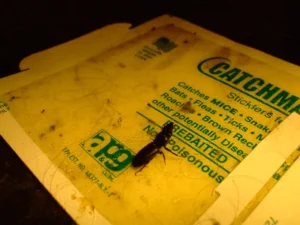
Some cities, including West Hollywood, Ojai, and Culver City in California, have banned the sale and use of glue traps entirely.
Several state and federal bills have been introduced too, aiming for wider bans. None of these proposed or existing bans are based on the buyer’s age though.
They’re based on animal welfare concerns instead. A mouse caught on a glue trap can take hours or even days to die from exhaustion, dehydration, or starvation, and that’s a completely separate issue from who’s allowed to buy the product.
Why This Confusion Comes Up So Often
Part of the reason this question gets searched so often probably comes down to how rodenticide packaging looks and reads.
Warning labels on rat and mouse poison are genuinely serious, and for good reason, since these products can be dangerous if a child or pet gets into them.
Phrases like “fatal if swallowed” or “keep out of reach of children” show up prominently on the box.
That kind of language naturally makes people think there must be some purchase restriction behind it.
A warning label on cold medicine or spray paint sometimes does come with an actual age requirement at checkout, so the assumption makes sense.
With rodenticide, though, the safety concern is handled differently. It’s handled through the product’s design (tamper-resistant bait stations) and the warning label itself, rather than through checking the buyer’s age at the register.
Are There Any Purchase Limits, Even Without an Age Check?
While age isn’t a factor, some rodenticide products do carry other purchase-related rules that aren’t tied to age at all.
Federal label requirements for certain rodenticide products specify minimum package sizes. A product can’t legally be sold in containers holding less than a set amount of bait, often around four pounds for some commercial formulations.
This exists to prevent the product from being repackaged or sold in a way that bypasses the tamper-resistant bait station requirements. It has nothing to do with limiting who can buy it.
For the average person buying a standard consumer box of mouse traps or bait station products at a regular store, none of this changes anything about how you shop.
You can walk in, pick up what you need, and check out like any other purchase.
What This Means If You’re Buying for the First Time
If you’re dealing with your first mouse problem and heading to the store, it helps to know exactly what to expect, since the process really is simple.
You can pick up snap traps, glue traps, electronic traps, or a box of bait stations, put them in your cart alongside your groceries, and check out normally.
No one at the register will ask your age, request ID, or question the purchase in any way, regardless of how many boxes you’re buying for personal use.
Buying online works the same way. Retailers ship these products the same as any other household item, without any age verification step during checkout.
What Actually Does Have an Age Restriction, For Comparison
It helps to see this next to household products that genuinely do carry age rules, so the contrast is clear.
Spray paint is age restricted in many US cities and states, often requiring buyers to be 18 or older, mainly to cut down on vandalism and graffiti rather than for safety reasons.
Certain cold and allergy medications containing pseudoephedrine require ID at the pharmacy counter due to their use in manufacturing methamphetamine, and purchases are tracked and limited by law.
Tobacco and alcohol obviously carry age restrictions everywhere in the US and Canada, enforced directly at checkout with ID checks.
Mouse traps and consumer rodenticide simply don’t fall into any of these categories.
There’s no history of misuse driving lawmakers to add an age check, and the safety concerns around these products are handled through packaging design instead.
Do Online Marketplaces Add Their Own Age Rules?
Since a lot of people buy mouse traps and rat poison online now, it’s worth checking whether retailers themselves add any extra restrictions beyond what the law requires.
Major retailers like Amazon, Walmart, and Home Depot sell mouse traps, glue traps, and consumer rodenticide without any age verification step during checkout.
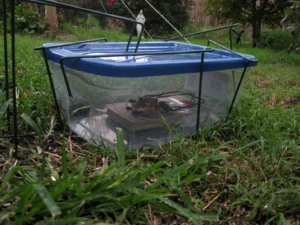
Tony Alter (CC BY 2.0)
You do need to be old enough to hold a valid payment method and shipping address, which functionally requires being an adult in most cases, but that’s a payment requirement rather than a product-specific age rule.
Some third party sellers on these platforms may add their own store policies, though this is rare for something as common as a mouse trap.
If you ever run into a purchase restriction while buying one online, it’s more likely a shipping or seller-specific issue than an actual pest control regulation.
Why Regulators Chose Packaging Design Over an Age Rule
It’s worth understanding the actual reasoning here, since it explains why this whole category works differently from something like spray paint or medication.
Age restrictions work well for products where the main risk comes from how the buyer might misuse them on purpose, like huffing spray paint or making methamphetamine from cold medicine.
Mouse traps and rat poison don’t really have that kind of intentional misuse problem. The real risk is accidental exposure, mainly to young children or pets who might get into a poorly stored product at home.
An age check at the register doesn’t actually solve that problem, since the person buying the product usually isn’t the one at risk.
A parent or pet owner buying rodenticide is still fully capable of storing it unsafely once it’s home, regardless of their own age.
That’s exactly why the EPA’s 2011 rule focused on tamper-resistant bait stations instead of a purchase restriction.
Making the product itself harder for a child or pet to physically access solves the actual risk, rather than adding a purchase step that wouldn’t have prevented the problem anyway.
It’s a design fix aimed at the real point of danger, which is the product sitting in someone’s home, not the moment it’s bought at the store.
This is really the core reason mouse traps and consumer rodenticide never picked up an age restriction, even though the warning labels can make them look like they should have one.
Conclusion
Are mouse traps age restricted? No, not in the US or Canada, and that applies across the board to snap traps, glue traps, glue boards, sticky traps, and electronic traps.
Anyone can buy them, at any age, with no ID or verification required.
Rat and mouse poison follows a similar rule for the vast majority of what’s sold to consumers, since most of it falls under the EPA’s general use category rather than restricted use.
The real restriction system that does exist, called restricted use pesticides, is based on professional certification and training, not age.
It mostly applies to industrial or agricultural-strength products you wouldn’t find on a regular store shelf anyway.
If you’re just dealing with a mouse problem at home, you can buy any trap type, and most consumer rodenticide, without worrying about age restrictions at all.
The warning labels you see on poison packaging are there to keep the product safe once it’s in your home, not to control who’s allowed to purchase it in the first place.
Next time you’re standing in that hardware store aisle wondering if you’ll need to show ID, you can relax and just focus on picking the right method for your situation instead.

Hi, my name is Ezra Mushala, i have been interested animals all my life. I am the main author and editor here at snakeinformer.com.