
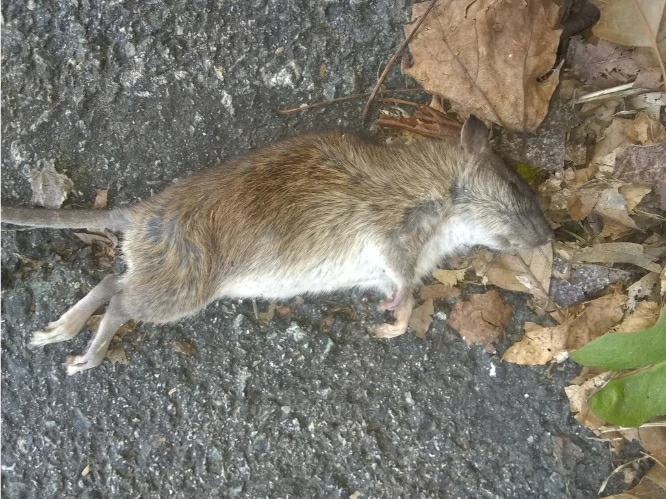
If you’ve got rats in your house or your yard, you probably just want them gone fast. So it makes sense to search for something that kills a rat the second it eats it. But is there actually a poison that works that fast?
No poison kills a rat the instant it eats it. Even the fastest rodenticides, like bromethalin and zinc phosphide, still take several hours to a couple of days. Anticoagulant poisons are even slower, often taking four days to two weeks.
That’s probably not what you wanted to hear. But it’s the truth, and it actually helps you make a better choice. Once you know how these poisons work and how long each one takes, you can pick the right one for your situation instead of chasing a myth.
There’s No Such Thing As An Instant Rat Poison
Every rat poison sold today has to work its way through the rat’s body before it causes death. That takes time, no matter which product you buy.
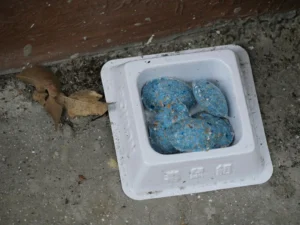
This is true even for products marketed as “fast acting” or “one dose kills.” Those labels mean the rat only needs to eat the poison once, not that it dies right after eating it.
So when people search for something “instant,” what they’re really looking for is the fastest option available. That title goes to two specific types: bromethalin and zinc phosphide.
Bromethalin Is One Of The Fastest Rat Poisons You Can Buy
Bromethalin works differently from most rat poisons. Instead of causing bleeding, it attacks the rat’s nervous system directly.
Once a rat eats it, bromethalin messes with how brain cells make energy. This causes swelling in the brain and spinal cord, which leads to loss of movement, then death.
Bromethalin usually kills a rat within 24 to 48 hours after it eats a lethal dose. If a rat eats a large enough amount, death can come sooner.
The upside is that a rat usually only needs to eat bromethalin once. It doesn’t need to come back to the bait over several days like it does with older poison types.
Zinc Phosphide Works Fast, But In A Rough Way
Zinc phosphide is another poison that works quickly. But it works in a way that’s honestly pretty intense.
When a rat eats it, the chemical reacts with acid in its stomach. This releases phosphine gas inside the rat’s body, and that gas is what actually kills it.
Death from zinc phosphide usually happens within a few hours to a day. That makes it one of the fastest options out there.
Because it’s so strong and fast, zinc phosphide is mostly used by pest control pros and on farms. You won’t usually find it sitting on a hardware store shelf.
Anticoagulant Rat Poisons Are Much Slower
Anticoagulants are the most common type of rat poison, the kind you’ve probably seen in brands like d-CON or Tomcat. But here’s the thing: they’re actually the slowest option, not the fastest.
These poisons block the rat’s ability to use vitamin K, which its body needs to clot blood. Without it, the rat slowly bleeds internally until it dies.
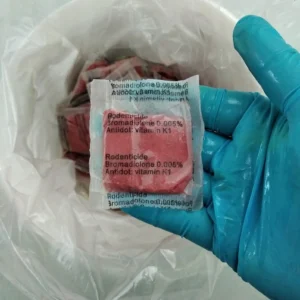
There are two generations of anticoagulants, and they work at different speeds. First-generation ones, like warfarin, usually need the rat to feed on the bait several days in a row before enough poison builds up.
Second-generation anticoagulants, like brodifacoum and bromadiolone, are stronger. A rat only needs to eat these once, but death still doesn’t happen fast.
Even with just one feeding, it typically takes four days to two weeks for the rat to actually die. That’s a long wait if you were hoping for something quick.
Why Rat Poison Isn’t Built To Work Instantly
This slower action isn’t a flaw. It’s actually built into how these poisons are meant to work.
Manufacturers don’t want rats dying right at the bait station. If a rat drops dead in seconds, other rats nearby will see it happen and avoid the bait completely.
Rats are naturally cautious animals. This kind of “bait shyness” can make an infestation much harder to clear out.
By delaying the effect, a rat has time to wander off and die somewhere away from the bait. This keeps other rats from linking the food source to what happened to their nest mate.
So in a strange way, the delay is the whole point. It’s what makes these poisons good at wiping out a rat population, instead of just scaring the survivors away from your traps for good.
What’s Actually Happening Inside The Rat’s Body?
It helps to understand what these poisons are actually doing once they’re inside a rat, not just how long they take. The mechanism is a big part of why the timing is so different between types.
With anticoagulants, the rat’s liver normally uses vitamin K to make proteins that help blood clot. These poisons block that process.
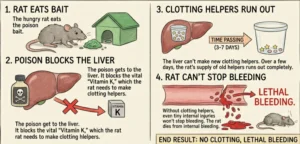
Small, everyday injuries, the kind a rat gets just from moving around and chewing, stop healing the way they should. Blood slowly pools inside the body until important organs stop getting enough oxygen.
That’s why anticoagulants take so long. It’s not one big injury killing the rat, it’s a slow buildup of many small ones that never seal shut.
Bromethalin works on the nervous system instead of the blood. It messes with the mitochondria, which are the tiny structures inside cells that make energy.
Brain cells need a steady supply of energy to work right, and when that supply gets cut off, fluid builds up in the brain and spinal cord.
This buildup is called cerebral edema, which just means swelling caused by fluid trapped in the brain. That swelling puts pressure on the nervous system, which leads to tremors, loss of coordination, then death.
Zinc phosphide takes the most direct route. Once it hits stomach acid, it turns into phosphine gas right there inside the rat.
That gas gets absorbed into the bloodstream and shuts down the rat’s ability to use oxygen at the cellular level, almost like a fast internal suffocation.
Comparing How Fast Each Type Of Rat Poison Works
Here’s a quick table to make the differences easy to see.
| Poison Type | Common Active Ingredients | Time To Death | Feedings Needed |
|---|---|---|---|
| Bromethalin | Bromethalin | 24 to 48 hours | Usually just one |
| Zinc Phosphide | Zinc Phosphide | A few hours to 1 day | Just one |
| Second-Generation Anticoagulants | Brodifacoum, Bromadiolone, Difethialone | 4 days to 2 weeks | Just one, but slow to act |
| First-Generation Anticoagulants | Warfarin, Diphacinone, Chlorophacinone | Several days to weeks | Several feedings in a row |
| Cholecalciferol | Vitamin D3 | 3 to 5 days | Usually one or two feedings |
As you can see, nothing here works in minutes. Even zinc phosphide, the quickest option, still takes hours to actually cause death.
What About Cholecalciferol, The Vitamin D Based Poison?
Cholecalciferol works completely differently from the others. It’s actually a form of vitamin D3, the same vitamin your own body needs in small amounts.
In large doses, though, vitamin D3 causes too much calcium to build up in the rat’s blood. This leads to kidney failure over the course of a few days.
Death from cholecalciferol usually takes three to five days. It sits in the middle, faster than first-generation anticoagulants, but slower than bromethalin or zinc phosphide.
One reason people like this option is that it doesn’t rely on blood-thinning. That changes how it affects pets if there’s ever an accidental exposure.
Does A Faster Poison Mean It’s A Better Choice?
Not really. Faster poisons like bromethalin and zinc phosphide come with their own tradeoffs.
Zinc phosphide, for example, is fast, but it’s also more risky to use around pets and kids. It affects mammals in general, not just rats, and it does so quickly and strongly.
Bromethalin doesn’t have a widely available antidote either. That makes accidental pet exposure harder to treat, since anticoagulant poisoning can at least be treated with vitamin K.
Anticoagulants, even though they’re slower, are often the safer overall choice for home use. They’re also the type most commonly sold to regular consumers.
So the best poison really depends on your situation. Think about how bad the infestation is, whether you have pets or kids, and how comfortable you are using something stronger.
Why You Might Not See Dead Rats Right Away
One thing that surprises people is not seeing dead rats after using poison, even after it should have worked. This actually makes sense once you know rat behavior.
Rats tend to look for hiding spots where they feel safe. This often leads them to die somewhere hidden, like inside a wall or under the floor.
This is one of the downsides of poison compared to snap traps. You often don’t get confirmation the rat is gone, and you might end up dealing with a bad smell later.
If you’re using poison indoors, it’s worth thinking ahead about where a dying rat might end up.
Safety Steps To Take With Any Rat Poison
No matter which poison you choose, a few basic safety steps go a long way.
Always use a tamper-resistant bait station, especially with pets or kids in the house. These let rats reach the bait while keeping other hands and paws away from it.
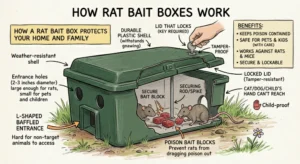
Place bait where rats actually travel, like along walls or in dark corners. Rats tend to stick close to walls rather than cross open spaces, so bait out in the open often gets ignored.
Keep track of which product and active ingredient you’re using. If a pet or child gets into it by accident, this info helps a vet or poison control act fast.
Check bait stations often and refill as needed. This also gives you a sense of how big the rat problem really is.
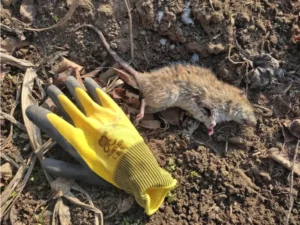
If you find a dead rat, wear gloves before picking it up. Double-bag it before you throw it away, so you avoid direct contact with anything it might be carrying.
When It Makes Sense To Call A Professional Instead
If you’re dealing with a big infestation, or speed really matters, it might be worth calling a pro instead of handling it yourself.
Pros have access to stronger products, including restricted ones like zinc phosphide, that aren’t sold to regular consumers in most areas.
They also know how to place bait based on where rats are actually nesting and moving. That often gets faster results than guessing on your own.
This is worth considering if you have pets or young kids at home. A pro can help you weigh the safety tradeoffs of each option based on your specific house.
Indoor Use Versus Outdoor Use
Where you’re placing the poison actually changes which option makes the most sense, not just how fast you want results.
Indoors, a slower anticoagulant is usually the safer bet. Since it takes days to work, a rat has time to wander back outside or into a wall void before it dies. That cuts down on the odds of a smell showing up in a living space.
Outdoors, faster options like bromethalin start to make more sense, especially in a barn, shed, or detached garage. There’s more room for a rat to die away from where people spend time, and the added safety concerns matter less if pets and kids don’t have regular access to that space.
If you’re dealing with an infestation in a house with a crawl space or basement, it’s worth thinking about airflow too. A rat that dies in a tight, poorly ventilated spot will cause a stronger smell for longer than one that dies somewhere more open.
Why Some Rats Don’t Respond To Poison At All
Every so often, poison just doesn’t seem to work, even after weeks of a rat clearly eating the bait. This isn’t as rare as you might think, and there’s a real reason behind it.
Some rat populations have developed resistance to certain anticoagulants, especially first-generation ones like warfarin. This happens through natural selection: rats with a genetic trait that makes them less sensitive to the poison survive and pass that trait on to their offspring.
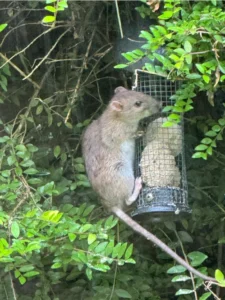
Over enough generations in an area with heavy poison use, a local rat population can end up mostly resistant to whatever’s been used on them the longest. This is more common in cities with a long history of pest control than in a house that’s never dealt with rats before.
If you’ve used the same poison for weeks without any results, switching to a different active ingredient, ideally from a different category entirely, is usually more effective than just adding more bait.
Conclusion
There really isn’t a rat poison that kills instantly, no matter what the packaging makes it sound like. The fastest options, bromethalin and zinc phosphide, still take anywhere from a few hours to two days.
Anticoagulant poisons, the most common type you’ll find in stores, are even slower. They often take four days to two weeks, but that delay is actually what keeps other rats from avoiding the bait.
If speed matters most to you, bromethalin or zinc phosphide are your best bets. Zinc phosphide is harder for regular people to buy, though, so bromethalin tends to be the more realistic fast option for home use.
For most households, a second-generation anticoagulant is a solid middle ground. It’s fast enough to matter, while still being one of the more manageable options to use safely around your home.
Whatever you pick, using it the right way matters just as much as how fast it works. A slower poison used safely and correctly will always beat a fast one used carelessly.

Hi, my name is Ezra Mushala, i have been interested animals all my life. I am the main author and editor here at snakeinformer.com.