
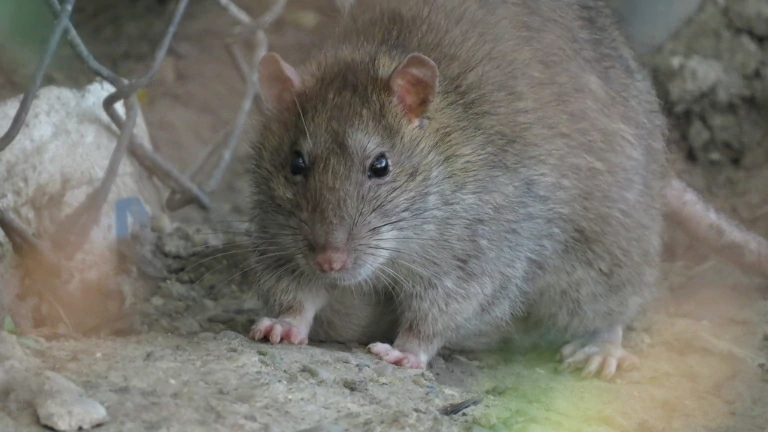
You’ve set out glue traps to catch the rats in your home, but somehow they keep getting away. You might find traps that look disturbed or partially stuck to, but no rat.
Or maybe you’ve seen evidence that rats are walking right past your traps without getting caught. This is frustrating, especially when you’re trying to solve a rat problem quickly. So why does a rat keep escaping your glue trap?
Rats can escape glue traps if the adhesive is old and has lost its stickiness, if the trap is too small for the rat’s size, if dust or debris has covered the glue, or if the rat is large and strong enough to pull free before getting fully stuck. Poor trap placement and low-quality traps also lead to escapes.
When rats avoid or escape your traps, it usually means something about your setup needs to change.
The good news is that you can fix most of these problems pretty easily once you know what’s going wrong.
Why Trap Quality Makes a Huge Difference
Not all glue traps are made the same, and cheap traps often let rats escape. The quality of the adhesive is what really matters when you’re trying to catch a rat.
Discount store traps usually have a thinner layer of glue or use a weaker formula. These might work fine for small mice, but a full-grown rat can sometimes pull free. The rat’s weight and strength are enough to overcome the weak adhesive.
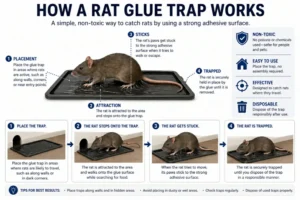
Professional-grade traps from pest control suppliers use much stronger glue and apply it in a thicker layer. These traps cost more, but they’re way more effective.
If you’ve been using cheap traps and having trouble, upgrading to better quality traps might solve your problem immediately.
The size of the trap matters a lot too. Small traps designed for mice don’t have enough sticky surface area to hold a rat.
When a rat steps on a trap that’s too small, only part of its foot gets stuck. The rat can then use its other legs to push against nearby surfaces and pull free.
Larger traps give you a much better chance of success. When more of the rat’s body touches the adhesive, escape becomes nearly impossible.
Look for traps specifically labeled for rats, not just general rodent traps.
How Old Glue Loses Its Stickiness
Glue traps don’t stay sticky forever, even though the adhesive is designed to last a long time. Several things can make the glue lose its holding power.
Dust is one of the biggest problems. If you set a trap in a dusty area like a garage or attic, the dust settles on the adhesive surface.
Even a thin layer of dust creates a barrier between the glue and the rat’s feet. The rat might step on the trap but won’t stick because the glue isn’t making direct contact.
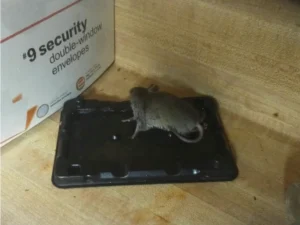
Humidity can affect some glue traps too. In really damp basements or crawl spaces, moisture in the air can make the adhesive less effective. Water droplets on the glue’s surface prevent it from sticking properly.
Temperature changes matter as well. Extreme cold can make some adhesives stiffen up and become less sticky. Heat usually doesn’t cause as many problems, but in really hot areas, cheap glue might become too runny.
If you’ve had traps sitting out for several weeks or months, they might have lost effectiveness just from age. Even though the glue is designed to last, exposure to air and environmental factors slowly degrades it.
Replace traps that have been sitting out for more than a month, especially if they’re in dusty or humid areas.
Where You Place Your Traps Affects Success Rates
Even the best glue trap won’t work if you put it in the wrong spot. Rats travel along specific paths in your home, and you need to catch them in these high-traffic areas.
Rats almost always run along walls rather than across open spaces. They feel safer when they can keep one side of their body touching a wall.
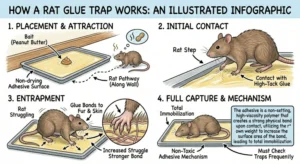
This means traps in the middle of a room are basically useless. Put your traps right up against walls where rats actually travel.
Look for signs of rat activity to find the best spots. Droppings, grease marks on walls, and gnaw marks all tell you where rats have been traveling.
Place traps in these active areas rather than just randomly around your house.
Corners are especially good spots because rats often turn in corners as they follow walls. A trap in a corner catches rats coming from two different directions.
Just make sure the trap is positioned so the sticky surface faces the direction rats are traveling from.
Rats like to travel in the same paths repeatedly. If you find evidence of rats in one area but your trap there isn’t catching anything, try moving it a few feet in either direction. The rat might be passing right next to your trap rather than over it.
Behind appliances, under sinks, and in pantries are all common rat travel routes. These areas offer food, water, and shelter, so rats visit them regularly. Don’t forget about spaces like the area behind your refrigerator or under your stove.
How Rats Learn to Avoid Traps
Rats are actually pretty smart animals, and they can learn to recognize and avoid dangers. If a rat has a bad experience with a trap, it might become “trap-shy” and avoid similar traps in the future.
When a rat barely touches a glue trap and manages to pull away quickly, it learns that these objects are dangerous. The rat will then be more careful around anything that looks or smells similar. This makes catching that specific rat much harder.
Some rats will actually watch other rats get caught. If you have multiple rats and one gets trapped, the others might see or hear it struggling. They learn from this and become more cautious about where they walk.

Rats also have a natural wariness of new objects in their environment. This is called neophobia. When you first put out a trap, rats might avoid it for several days just because it’s something new and unfamiliar.
They need time to get comfortable with its presence before they’ll walk over it.
To work around this, some people recommend leaving traps in place for a few days without activating them. For glue traps, this means leaving the protective paper on at first. Let the rats get used to walking on or near the trap.
Then remove the paper to activate the trap once the rats have stopped being cautious about it.
Why Rat Size and Strength Matter
Larger, stronger rats are more likely to escape glue traps than smaller ones. A big adult rat has more muscle power than the adhesive can handle in some cases.
When a large rat steps on a trap, it might get one or two feet stuck but still have two feet free. If the trap is small or the glue isn’t super strong, the rat can use its free legs to push against the floor or wall. With enough force, it can pull the stuck feet free.
Young rats and smaller females are usually easier to catch because they weigh less and aren’t as strong. If you’re catching smaller rats successfully but missing the big ones, you need either larger traps or stronger adhesive.
Norway rats are bigger and stronger than roof rats. If you’re dealing with Norway rats (the chunky brown ones), you need heavy-duty traps.
Standard traps might let these powerful rats escape.
Some rats are also just more aggressive and determined than others. A rat that panics and thrashes wildly might injure itself but could also break free from a weak trap. A calmer rat might stop struggling once it’s stuck, making the trap more effective.
Problems With How Traps Are Set Up
Sometimes the problem isn’t the trap itself but how you’ve set it up. Small mistakes in placement or positioning can let rats escape.
If you put a trap on an uneven surface, part of the sticky area might not be touching the ground properly. Rats can sometimes squeeze through gaps between the trap and the floor, especially if the trap is curled up at the edges.
Placing traps too close to furniture or walls can also cause problems. Rats are flexible and might be able to brace themselves against nearby objects to pull free. Leave a few inches of clear space around the sticky area so rats can’t push off against anything.
Some people make the mistake of putting too much bait on or near the trap. If the bait is sitting right on the sticky surface, a rat might be able to grab it and pull it off without actually stepping on the glue.
Put bait in the center of the trap so the rat has to fully commit and walk onto the adhesive to reach it.
Don’t put traps in areas where they’ll get knocked around. If you have pets or kids, they might accidentally disturb the traps. A trap that’s been flipped over or pushed against a wall won’t work right.
Make sure the protective paper is completely removed before you set the trap. It sounds obvious, but sometimes people accidentally leave part of the paper on, covering some of the adhesive. Check carefully to ensure the entire sticky surface is exposed.
When Rats Are Simply Walking Around Your Traps
If you’re finding your traps untouched with clear signs that rats are going around them, you’ve got a placement problem. The rats are smart enough to avoid the trap while still using their normal paths.
Look at exactly where you’ve put the traps versus where you’re seeing evidence of rat activity. Droppings right next to an unused trap mean the trap is slightly off from the actual travel route. Move it by even just a few inches to put it directly in the path.
Rats can sometimes sense that something is wrong with an area even if they can’t see the trap clearly.
If you’ve used cleaning products or other strong-smelling substances near the trap, the chemical smell might make rats suspicious. Try to put traps in areas you haven’t recently cleaned with harsh chemicals.
The lighting in an area can affect trap success too. Rats prefer to travel in darker areas where they feel hidden. If you put a trap in a brightly lit spot, rats might take a different route around it. Try to place traps in dimmer areas along walls.
Using multiple traps increases your chances of success dramatically. Don’t just put out one or two traps and hope for the best.
Use several traps in different locations along walls and in active areas. This gives you more chances to catch rats even if they avoid some of the traps.
How to Tell If a Rat Actually Escaped
Sometimes it’s hard to tell if a rat escaped from your trap or if the trap was never triggered in the first place. Looking at the trap carefully can give you clues.
If you see fur stuck to the glue, a rat definitely made contact. The amount of fur tells you how close you came to catching it. Just a few hairs mean the rat barely touched the trap. Larger clumps of fur mean the rat was stuck for a while before pulling free.
Disturbances around the trap are another sign. If the trap has been moved from where you placed it, or if there’s scratching on nearby surfaces, a rat probably got stuck and struggled to escape. The struggle might have dragged the trap across the floor.
You might also see blood or feces on or near the trap. Rats often poop when they’re scared, and they might injure themselves trying to pull free from the glue. These signs mean you had a rat stuck but it managed to escape.
Check for drag marks leading away from the trap location. A rat that’s stuck but not fully caught might drag the trap a short distance before breaking free. You might find the trap several feet from where you put it, with evidence of the struggle along the way.
If the trap looks completely undisturbed with no fur, no movement, and no signs of contact, the rat simply avoided it. This means you need to adjust your placement strategy rather than worrying about escapes.
What to Do When Traps Keep Failing
If you’ve tried everything and rats are still escaping or avoiding your traps, it’s time to change your approach completely.
Switch to a different type of trap. If glue traps aren’t working, try snap traps or electronic traps instead. Different traps work better in different situations, and some rats might be easier to catch with alternative methods.
Consider using multiple types of traps at the same time. Put out some glue traps, some snap traps, and maybe a live trap too. This covers more bases and gives you a better chance of catching smart or cautious rats.
Increase the number of traps you’re using. If you’ve been putting out two or three traps, try using ten or fifteen. More traps mean more chances to catch rats, and it’s harder for them to avoid all of them.
Change your bait strategy. Rats have food preferences, and what worked last week might not work this week. Try different baits like peanut butter, chocolate, dried fruit, or nuts. Rotate between different options to see what works best.
Look for entry points and seal them up. If rats keep coming in from outside, you’ll never completely solve the problem just by trapping. Find where they’re getting into your house and block those holes with steel wool, caulk, or metal sheeting.
Why Professional Pest Control Might Be Needed
Sometimes DIY trapping just isn’t enough, and that’s when it’s time to call in professionals. There’s no shame in admitting you need expert help with a difficult rat problem.
If you’ve been fighting rats for weeks or months without success, you’re wasting time and money on methods that aren’t working. Professionals have access to stronger traps, better monitoring techniques, and years of experience that helps them catch rats faster.
Large infestations are really hard to handle on your own. If you’re seeing rats regularly or finding lots of droppings, you probably have many rats living in your home. Catching them all yourself could take forever, while pros can deal with large numbers efficiently.
Pest control experts can also find and seal entry points that you might miss. They know exactly where to look for the small holes and gaps rats use to get inside. Sealing these entries is just as important as trapping the rats already in your home.
Some rats are particularly trap-shy and nearly impossible for homeowners to catch. Professional trappers have tricks and techniques for dealing with these smart, cautious rats. They know how to outsmart rats that have learned to avoid standard traps.
If you have health concerns about handling traps or dealing with dead rats, professionals take care of all that for you. You don’t have to touch anything or put yourself at risk of disease exposure.
Preventing Future Rat Problems
Once you’ve dealt with your current rat situation, take steps to make sure it doesn’t happen again. Prevention is way easier than constantly trapping rats.
Keep your home clean, especially the kitchen. Don’t leave food sitting out, and store pantry items in sealed containers. Take out trash regularly and use bins with tight lids.
Fix any water leaks in your home. Rats need water to survive, so eliminating water sources makes your home less attractive. Check under sinks, around toilets, and in basements for leaks.
Trim trees and bushes away from your house. Rats can use overhanging branches to access your roof and then find ways inside through vents or gaps. Keep vegetation at least three feet away from your home’s exterior.
Store firewood away from your house and keep it off the ground. Woodpiles provide shelter for rats, and if the pile is right against your house, rats can easily move from the pile into your home.
Inspect your home’s exterior regularly for new gaps or holes. Rats can squeeze through surprisingly small openings. Seal any holes you find with appropriate materials like steel wool, metal flashing, or expanding foam.
Conclusion
When rats keep escaping your glue traps, it’s usually because of issues with trap quality, placement, or environmental factors that reduce the adhesive’s effectiveness. Cheap traps, dusty conditions, and poor placement along rat travel routes are the most common problems.
Understanding rat behavior helps you outsmart them. These animals are cautious, intelligent, and can learn to avoid traps if they get a warning that something is dangerous. Using better traps, placing them strategically along walls, and keeping them clean dramatically improves your success rate.
If you’ve tried everything and rats are still outsmarting you, don’t hesitate to call professional pest control. Some rat problems are just too big or too complicated to handle alone, and experts can solve the issue much faster than you can on your own.
Remember that prevention is the best long-term solution. Even if you successfully trap all the rats in your home, more will come back unless you seal entry points and remove the things that attract them in the first place.

Hi, my name is Ezra Mushala, i have been interested animals all my life. I am the main author and editor here at snakeinformer.com.