
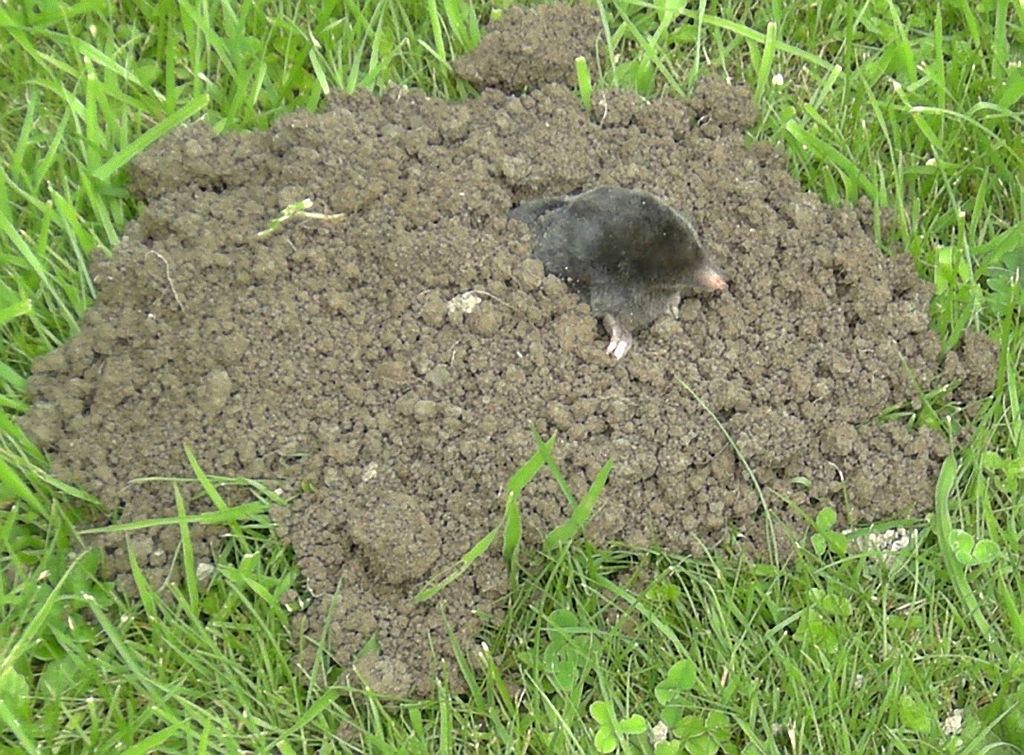
You’ve got moles tearing up your lawn with their tunnels and mounds, and you’re looking for a quick solution.
You have rat poison in your garage, and you’re wondering if you can just toss some in the mole tunnels to get rid of them. After all, poison works for rats, so why wouldn’t it work for moles? But does rat poison work for moles?
No, rat poison doesn’t work for moles. Moles are insect eaters (insectivores) that mainly eat earthworms, grubs, and other bugs. They won’t eat rat poison because it’s made from grains and seeds that moles have no interest in. Even if a mole accidentally ate some poison, most types of rat poison aren’t deadly to moles.
Rat poison is designed specifically for animals that eat grains, seeds, and plant-based foods. Moles are built completely differently and have totally different eating habits.
Using rat poison for moles is a waste of time and money, and it won’t solve your mole problem.
Why Moles Won’t Eat Rat Poison
Moles have a very specific diet that’s totally different from rats. Understanding what moles eat explains why rat poison won’t work for them.
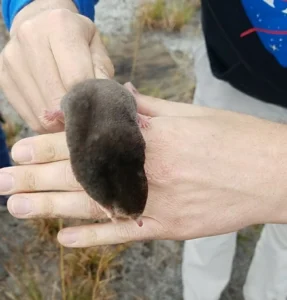
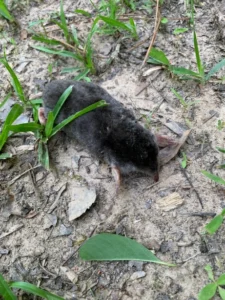
Moles are carnivores. They eat meat, not plants. Their diet is made up almost entirely of earthworms, which can make up 80% or more of what they eat. The rest of their diet includes beetle larvae (grubs), centipedes, millipedes, and other soil-dwelling bugs.
A mole needs to eat a huge amount of food every day. They eat roughly 70% to 100% of their body weight in worms and insects daily.
This is because their metabolism is extremely fast. They’re constantly burning energy as they dig through the soil looking for food.
Rat poison is made from grains, seeds, peanut butter flavoring, molasses, and other plant-based ingredients that attract rats.
To a mole, this stuff smells and tastes totally wrong. It’s not food to them. A mole would rather starve than eat grain-based poison.
Moles also can’t see very well. They rely mainly on their sense of smell and touch to find food. They feel for vibrations in the soil that indicate worms and grubs moving around.
A lump of rat poison sitting in their tunnel doesn’t move and doesn’t smell like food, so they’ll just push past it or dig around it.
Even if you somehow forced a mole to eat rat poison, most types wouldn’t kill it.
Anticoagulant rat poisons work by preventing blood from clotting, but moles process these chemicals differently than rats do. The dosage that kills a rat might not kill a mole.
How Moles Are Different From Rats
Understanding the differences between moles and rats makes it clear why rat poison won’t work. These animals are completely different in almost every way.
Moles live underground pretty much their entire lives. They rarely come to the surface. They dig extensive tunnel systems where they hunt for worms and insects.
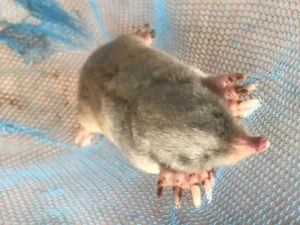
Their whole body is built for digging, with large front paws that work like shovels.
Rats, on the other hand, live above ground or in buildings. They nest in walls, attics, basements, and other structures.
They venture out to find food and water. Their bodies are built for running, climbing, and squeezing through small spaces.
Moles have a super high metabolism and need to eat constantly. They don’t hibernate in winter. They keep digging and eating all year round. They can only go a few hours without food before they start to weaken.
Rats can go longer without food. They’re opportunistic feeders who eat whenever they find food, but they can survive a day or more without eating if they need to.
The way these animals find and choose food is totally different too. Rats use their excellent sense of smell to locate food. They’re attracted to strong-smelling foods like peanut butter, cheese, bacon, and grains. They’ll investigate anything that smells like food.
Moles don’t rely much on smell for hunting. They feel for movement in the soil. When a worm or grub moves nearby, the mole senses the vibration and grabs it.
They’re not going to be attracted to poison that just sits there not moving.
What Actually Works for Killing Moles
If rat poison doesn’t work for moles, what does? There are several methods that actually work, though getting rid of moles isn’t easy.
Mole-specific poison is available, but it’s designed very differently from rat poison. Instead of grain-based blocks, mole poison usually comes in the form of fake worms or grubs.
These are shaped and scented to mimic real earthworms, which tricks the mole into eating them.
Brands like Talpirid make worm-shaped baits that contain bromethalin, a poison that affects the nervous system. When a mole eats these fake worms, it dies within 24 to 48 hours.
This type of bait is much more effective than rat poison because it actually appeals to the mole’s natural diet.
Mole traps are another effective option. There are several types, including scissor traps, harpoon traps, and choker loop traps.
These are placed in active mole tunnels and kill the mole when it passes through. Traps work well, but you need to learn how to set them correctly and find active tunnels.
Some people have success with natural deterrents like castor oil. You can buy castor oil-based mole repellents that you spray on your lawn.
The smell and taste irritate moles and can make them leave the area. However, this doesn’t kill the moles, it just moves them to your neighbor’s yard.
Removing the mole’s food source can help too. If you get rid of the grubs and worms in your lawn, the moles will leave because there’s nothing to eat.
You can use grub control products to kill beetle larvae, which removes part of the mole’s diet. But eliminating earthworms is harder and not great for your soil.
Why People Think Rat Poison Might Work
It’s understandable why people think rat poison might work for moles. Both are small animals that people consider pests.
Both dig holes and cause property damage. It seems logical that poison that kills one pest might kill another.
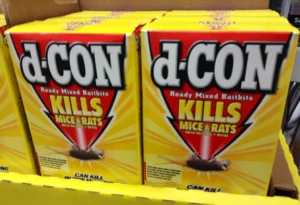
Hardware stores and garden centers often display rat poison and mole poison side by side in the pest control section.
This makes people think they’re interchangeable. But they’re actually designed for completely different types of animals.
Some people see mole tunnels near their house and assume the animals making them are rats.
Rats do sometimes dig burrows, and if you’re not sure what made the tunnels, you might use rat poison thinking you’re dealing with rats when you actually have moles.
There are also some old wives’ tales and internet myths about using rat poison for moles. People share tips online without actually testing them, and bad advice spreads.
Someone might say “I put rat poison in the mole tunnels and the moles went away,” but the moles probably left for a different reason and it was just a coincidence.
Another reason is that rat poison is often cheaper and easier to find than mole-specific products
. People want a quick, cheap solution to their mole problem, so they try using what they already have instead of buying the right product.
Problems With Using Rat Poison for Moles
Even though rat poison won’t kill moles, using it in your yard can create other problems. It’s not a harmless mistake.
Putting rat poison in mole tunnels can poison other animals. Earthworms might come in contact with the poison and absorb it.
Then birds, ground squirrels, or other animals eat the poisoned worms and get sick or die. This is called secondary poisoning.
Your pets could find the poison. Dogs and cats are curious and might dig into mole tunnels looking for the animals.
If they find rat poison in the tunnels, they might eat it. This can make them seriously ill or even kill them.
Children playing in the yard could come across the poison too. Kids dig in dirt, explore holes, and put their hands in their mouths. If there’s rat poison scattered in mole tunnels, it creates a real safety hazard.
The poison can also wash into your lawn and garden when it rains. This contaminates the soil and can harm beneficial insects, earthworms, and plants. Some types of rat poison contain chemicals that persist in the environment for a long time.
You’re also wasting money. Rat poison costs $15 to $30 per box, and if you’re using it on moles, you’re throwing that money away.
The moles won’t eat it, so you’ve accomplished nothing except creating potential hazards.
How to Know If You Have Moles or Rats
Before you try any pest control method, you need to know what kind of animal you’re dealing with. Moles and rats leave different signs, and identifying these signs helps you choose the right solution.
Mole damage looks like volcano-shaped mounds of dirt scattered across your lawn. These mounds appear when the mole pushes excess dirt up from its deeper tunnels.
You might also see raised ridges in your grass where the mole has dug shallow feeding tunnels just below the surface.
Rat burrows are different. They’re usually 2 to 4 inches in diameter with a smooth, clean entrance hole. The dirt around rat burrows is often packed down from repeated use. Rat holes are typically found near buildings, under bushes, or along fences.
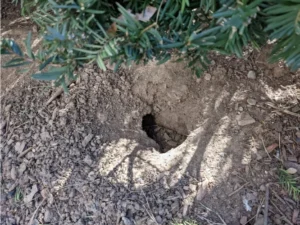
Moles make their tunnels in open lawn areas where earthworms are plentiful. Rats dig their burrows in sheltered spots near food sources and buildings.
The damage patterns are different too. Moles destroy lawns by tunneling, which kills grass and creates unsightly mounds. Rats damage buildings, chew through wires and wood, and contaminate food.
If your problem is mainly lawn damage with no signs of gnawing or food contamination, you probably have moles.
You can also look for droppings. Rat droppings are about 1/2 inch long, dark, and pellet-shaped. They’re usually found along walls and in areas where rats travel.
Moles rarely come to the surface, so you won’t see their droppings unless you dig up their tunnels.
Better Alternatives to Poison for Moles
If you want to get rid of moles without using poison at all, there are several alternatives worth trying.
Sonic or ultrasonic repellents claim to drive moles away with sound vibrations. You stick these battery-powered or solar-powered stakes in the ground, and they emit sounds that supposedly irritate moles.
Results with these devices are mixed. Some people swear by them, others say they don’t work at all.
Live mole traps catch moles without killing them. You place the trap in an active tunnel, and when the mole passes through, it gets caught in a cage.
You can then release the mole far away from your property. This is the most humane option, but it requires checking traps frequently.
Flooding tunnels with water sometimes works, but moles are good swimmers and can often escape. Plus, you need a lot of water to really flood an extensive tunnel system, and this can damage your lawn.
Some plants are said to repel moles. Daffodils, marigolds, and alliums supposedly keep moles away because they don’t like the smell.
Plant these around your garden borders, but don’t expect miracles. Moles might ignore them completely if the worm population is good.
Professional pest control companies have experience dealing with moles and can solve the problem more effectively than DIY methods.
They know how to locate active tunnels, set traps correctly, and use commercial-grade mole poison safely. The cost is higher, but it’s worth it if you’ve been battling moles for months without success.
Why Mole-Specific Products Cost More
You might notice that mole poison and traps cost more than rat poison. There’s a good reason for this price difference.
Mole products are specialty items. Not everyone has a mole problem, so stores don’t sell as much mole poison as they do rat poison. Lower sales volume means higher per-unit costs for manufacturers and retailers.
Mole poison is also more complex to make. Creating fake worms that look, feel, and smell like real earthworms requires special manufacturing processes.
The poison needs to be mixed into this worm shape in a way that keeps it stable and effective.
There’s less competition in the mole control market compared to the rat control market. Fewer companies make mole products, which means less price competition and higher retail prices.
Mole traps are precision tools that need to be manufactured carefully to work correctly.
A poorly made mole trap won’t catch moles, so companies invest in quality materials and design. This drives up the cost.
Even though mole products cost more, they’re worth it because they actually work. Spending $20 to $40 on effective mole poison or traps is better than wasting $15 on rat poison that won’t do anything.
Conclusion
Rat poison doesn’t work for moles because moles are insect eaters who won’t eat grain-based poison. Their diet consists mainly of earthworms and grubs, and they have no interest in the seeds, grains, and plant-based ingredients that make up rat poison.
Even if a mole somehow ate rat poison, most types wouldn’t kill it because moles process these chemicals differently than rats do.
Using rat poison for moles is a waste of money and creates hazards for pets, children, and wildlife.
If you want to get rid of moles, use mole-specific poison that’s shaped like worms, or use mole traps designed for underground pests.
These products are made to appeal to moles’ natural diet and hunting behavior.
The best approach is to correctly identify what type of pest you’re dealing with and then use the right product for that specific animal.
What works for rats won’t work for moles, and vice versa.

Hi, my name is Ezra Mushala, i have been interested animals all my life. I am the main author and editor here at snakeinformer.com.