
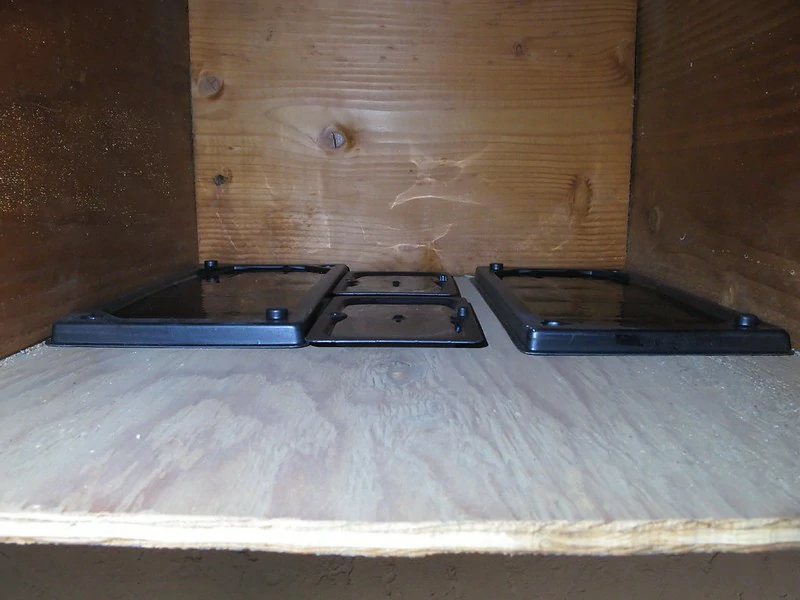
If you’re holding a Tomcat glue trap in the pest aisle, you might be wondering whether you need to add something tasty to it. So, are Tomcat glue traps pre-baited?
Yes, Tomcat glue traps come pre-baited. The glue is already scented to attract mice and rats, so you don’t need to add bait, and Tomcat’s own product description says baiting isn’t necessary or recommended.
That’s the quick answer, but a few details matter, like what happens if you add bait anyway and where the trap should go.
What Pre-Baited Means on a Tomcat Glue Trap
On many traps you’d see a little pad of food in the middle, but a Tomcat glue trap doesn’t work that way, because the scent is mixed into the glue.
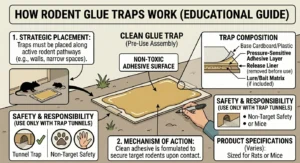
Tomcat calls its glue “pre-scented,” while store and distributor listings use the word “pre-baited.” They mean the same thing, which is that the trap is ready to lure a mouse the moment you open the package.
So when you get the trap home, there’s nothing to add, and all you do is peel off the clear film, set the trap where mice travel, and walk away.
That’s very different from a snap trap, where you have to put a dab of bait on the trigger yourself. We’ll compare the two a little later.
Keep in mind that “pre-baited” doesn’t mean there’s a piece of food on the board, because the lure is a scent mixed into the glue, not a snack you can see.
What Is the Scent in a Tomcat Glue Trap Made Of?
Tomcat doesn’t say exactly which scent it uses, so there’s no ingredient on the box that you can point to. What the label does mention is eugenol, which is added to make the glue stickier.
Eugenol (a natural oil found in cloves, and the reason cloves smell so warm and spicy) shows up in plenty of pest products. On a Tomcat trap, the label says it boosts stickiness, not that it’s the lure.
Some other brands scent their glue with peanut butter, since mice and rats go for foods that are high in fat and sugar. Tomcat just says its glue is pre-scented.
That means you can’t be sure what the scent smells like, and it’s smart to doubt any listing that claims to know. The important part is that the lure is already there when you open the pack.
Which Tomcat Glue Traps Are Pre-Baited?
Tomcat sells a few glue products, and the main ones are the mouse size glue traps, the glue boards with eugenol, and the rat size glue traps.
The mouse size traps and the glue boards usually come in 4 packs, and Tomcat says the boards catch mice without any bait. You can use a board flat, or fold it into a covered trap.
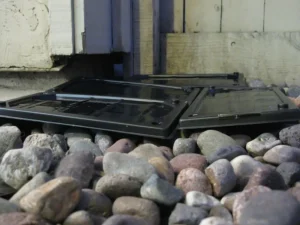
The rat size traps come in 2 packs and are bigger, at about 9 3/4 inches long and 4 5/8 inches wide. Tomcat says they also catch snakes, spiders, cockroaches, and scorpions.
Tomcat sells snap traps and other mouse products too, but those work differently, and the Press ‘N Set snap trap, for one, needs you to add the bait yourself.
Packaging changes from time to time, so check the box for words like “pre-scented” or “pre-baited” before you buy. It’s also worth reading the label for spacing and safety tips.
Can You Add Your Own Bait to a Tomcat Glue Trap?
You can, but it’s usually a bad idea. Tomcat’s product description says baiting is neither necessary nor recommended, and there’s a practical reason behind that.
Foods like peanut butter contain oils, and oils can weaken the glue’s grip so a mouse can pull free more easily. Pest supply companies (the ones that sell to professionals) warn about this all the time.
Crumbs and bait can also draw ants and roaches onto the board, and a board covered in bugs is a board that won’t catch a mouse.
If your traps aren’t catching anything, change the spot before you change the scent. Placement matters far more than bait, as you’ll see below.
How Mice Actually Find a Tomcat Glue Trap
Mice don’t usually go hunting for a trap. They run along walls and edges because they feel safer with something at their side, which has a fancy name, thigmotaxis (the habit of staying close to walls).
That’s why a board lying flat along a baseboard works so well. The mouse runs its usual route, steps onto the glue, and the scent may help a curious mouse take that last step.
Mice are also cautious about new objects, so a trap may sit untouched for a day or two, and a slow start doesn’t mean the trap is broken.
Why Mice Still Ignore Pre-Baited Glue Traps
Sometimes you’ll set a trap and nothing happens for days, even though you know mice are around. That can feel frustrating, but it usually comes down to a few simple things.
The most common reason is that the mouse has plenty of other food. If there are open boxes in the pantry, crumbs under the toaster, or a bowl of pet food on the floor overnight, a scented trap has a lot of competition.
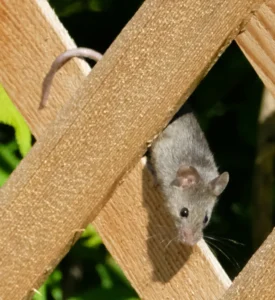
Mice are also wary of anything new (scientists call this neophobia, a fear of new things), so a fresh trap may get avoided.
The trap might also be in the wrong spot. If it’s out in the open, or on a wall the mice never use, the scent won’t matter much because the mouse never comes close enough to step on it.
Look for fresh droppings and gnaw marks to find the real routes, then move the trap there. If you still catch nothing after a week or two, it may be time to call a pro, since you might have more mice than you think.
How Do You Set Up a Tomcat Glue Trap the Right Way?
Start by opening the package and separating the traps. Then grab the card edge and pull the plastic film (the release paper) off in one quick motion, the way the label says.
Next, lay the trap flat against a wall or baseboard where you’ve seen droppings, gnaw marks, or a mouse, since mice follow those edges and that’s where the board belongs.
In tight spots, you can fold the board along the lines and slide the tab into the slit to make a covered trap. Tomcat suggests the covered style for areas with insect or scorpion activity.
If the area is dusty, lean a board against the wall and put the glue trap between the board and the wall. Dust can coat the glue, so the label tells you to protect it this way.
Keep glue traps out of wet areas too, since moisture can weaken the glue. Wear gloves while you place them (even thin disposable ones work) so you don’t end up with glue on your hands.
Where to Place Tomcat Glue Traps So They Catch Mice
Look for signs first, like droppings (small, dark pellets about the size of a grain of rice), gnaw marks, and nests made of shredded paper. Those tell you where the mice are traveling.
Then put traps in quiet spots along walls, behind objects, in dark corners, and anywhere you’ve found droppings. Think of spots like behind the fridge, under the sink, inside the pantry, or along a garage wall (anywhere a mouse can slip along unseen).
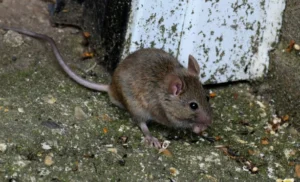
The label on the mouse size traps says to space them about 5 to 8 feet apart. So use several traps and not just one, since mice rarely come alone.
If you see a lot of activity, set two traps side by side, because a clever mouse may try to jump over a single trap.
Keep the long edge of each trap touching the wall. A gap gives a mouse room to slip past without stepping on the glue.
How Many Tomcat Glue Traps Do You Need?
There’s no single magic number, because it depends on how big the problem is and how large the space is. Still, a good rule is to put a trap every 5 to 8 feet along the walls where you’ve seen signs of mice.
For a small kitchen, that might mean 4 to 6 traps (along the main walls, behind the fridge, and under the sink). A garage or basement may need more, since there’s more wall to cover.
Think about it this way. One trap only covers a small patch of floor, and a mouse that never crosses that patch will never get caught.
It’s better to start with more traps than you think you need, because mice are small, quick, and good at finding a way around a single board.
A single 4 pack doesn’t go far in a big house, so plan on buying more than one. Once you stop catching mice, leave a few traps out for another week or two to make sure they’re really gone.
How Long Should You Leave a Tomcat Glue Trap Out?
Check your traps every day, because Tomcat’s directions say to, and a daily check also means a trapped animal doesn’t spend longer stuck than it has to.
If a trap hasn’t caught anything in 2 to 3 days, move it to a new spot where you’ve seen mouse activity. Since mice can be wary of new objects, a slow start isn’t unusual.
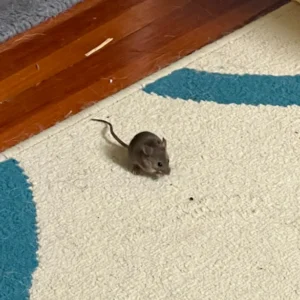
Replace a trap when it’s full, dusty, or has lost its grip (a board coated in dust or crumbs won’t hold much). Glue traps are made for one time use, and Tomcat tells you to throw away the whole trap.
When you find a mouse, wear gloves and wash your hands afterward, because rodents can carry germs like salmonella and hantavirus.
The label says to toss the trap and the rodent in the trash. However, if the mouse is still alive, call a vet or animal shelter instead, because a live animal in the trash faces a slow end.
Tomcat Glue Traps Aren’t Pet Proof
A Tomcat glue trap isn’t built to keep pets out, and some retail listings even mark it as not pet resistant. The label also tells you not to place traps where birds or other non-target animals can touch the glue.
Cats, small dogs, and curious kids can all get stuck, so put traps where they can’t go, like behind heavy appliances or inside a closet you can shut.
If your pet does get glue on its fur or paws, don’t pull it off. Cooking oil can loosen the glue, and a vet can help with the rest.
Tomcat’s label mentions mineral spirits, but you shouldn’t put a solvent on your pet’s skin without asking a vet first. Call a vet if your pet licks or chews a trap too.
Do Pre-Baited Glue Traps Work as Well as Snap Traps?
A pre-baited glue trap is the easy option, since you don’t have to bait anything. A snap trap like the Tomcat Press ‘N Set needs a dab of peanut butter or Tomcat Attractant Gel in its bait well.
Use a dab about the size of a pencil eraser. Both types can catch mice, and UC IPM (the University of California’s pest program) calls snap traps and glue boards the safest and most affordable traps for people.
The big difference is what happens to the mouse. A snap trap is meant to kill quickly, while a glue trap holds a mouse alive until it dies, which can take hours or even days.
That’s why many vets and humane groups prefer snap traps, and the CDC’s hantavirus advice points the same way.
If you want something ready to go with no bait, glue is easier. If you care about a quick end for the animal, a snap trap is the better pick.
What to Know About Ethics and Laws Before You Buy
Animal welfare groups and vets mostly oppose glue traps, because a stuck animal can suffer for a long time, and some places have gone further and banned them.
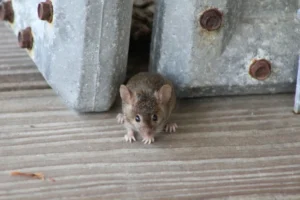
England limited public use in 2024, Wales and Scotland have bans, and Victoria in Australia bans them too. In the US, a few California cities (West Hollywood, Ojai, and Culver City) have banned them.
There’s no nationwide ban in the US or Canada, but rules keep changing, so check your city and state before you buy.
If you feel uneasy about glue, you have other choices. Snap traps, battery powered traps, and live traps all catch mice, and sealing up your home helps more than any of them.
Common Mistakes That Make Tomcat Glue Traps Fail
The first mistake is setting out just one or two traps, since a home with mice usually has more of them than you’d guess and you need several spread along the walls.
The second is putting a trap out in the open middle of a room. Mice hug the edges, so a board in the middle of the floor mostly gets ignored.
Another is using traps in dusty, damp, or greasy spots, where the glue loses its grip. Adding peanut butter or other food on top of the glue causes the same problem.
Some people also give up too early or leave a trap in one spot for weeks. If nothing shows up in 2 to 3 days, move it.
The biggest mistake is skipping the real fix. Seal gaps bigger than about a quarter inch (roughly the width of a pencil), store food in hard containers, and clean up crumbs, or new mice will keep coming.
Conclusion
Tomcat glue traps come pre-baited, which means the glue is already scented and you don’t need to add anything. Tomcat even says baiting isn’t necessary or recommended.
Adding food can weaken the glue, so it’s best to leave the trap alone and focus on placement. Set several traps flat against walls, check them daily, and move them if nothing shows up in a few days.
Keep them away from pets and kids, since they aren’t pet proof. And remember that glue traps are controversial and banned in some places, so check your local rules.
If you’d rather not use glue, a snap trap, a battery powered trap, or a live trap can do the job. Whichever one you choose, sealing up your home is what keeps mice from coming back.

Hi, my name is Ezra Mushala, i have been interested animals all my life. I am the main author and editor here at snakeinformer.com.