
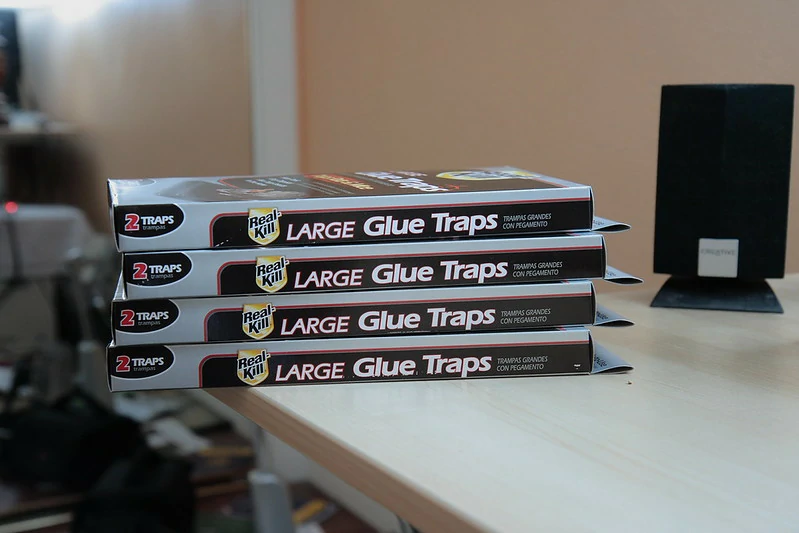
Glue traps for rats are sold in almost every hardware store, but vets and animal welfare groups keep calling them cruel. That leaves a lot of people wondering whether the criticism is fair. Are glue traps for rats inhumane?
Yes. Vets, welfare scientists, and animal groups rate glue traps for rats among the most inhumane pest control methods. A stuck rat can suffer extreme distress for hours, and the traps often catch other animals too.
That’s a strong answer, so it’s fair to ask where it comes from. The sections below look at the research, what a rat goes through, what pest control professionals say in return, and what you can do instead.
What Does “Inhumane” Actually Mean?
When scientists call something inhumane, they mean it causes suffering that’s either unnecessary or far longer than it needs to be. It isn’t just a feeling or an opinion, because researchers have ways to measure it.
They usually look at two things. One is how bad the suffering is (pain, fear, stress, injury), and the other is how long it lasts.
A method counts as humane when it either holds an animal gently or kills it quickly, with the animal losing consciousness (the ability to feel anything) almost right away.
Keep that definition in mind, because it explains why glue traps score so badly. They don’t kill quickly, and they don’t hold an animal gently.
Why Do People Still Buy Glue Traps for Rats?
If you’ve ever stood in the pest aisle with a rat in your house, the appeal is easy to see. A glue trap is cheap, there’s no spring to snap your fingers, and you don’t have to touch the rat.
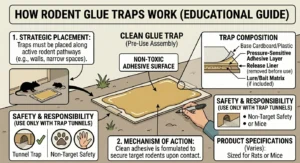
The packaging also helps. Words like “no poison” and “non-toxic” make a glue trap sound gentler than a snap trap, even though the glue has nothing to do with how the rat suffers.
Many people simply assume it’s the kinder choice.
That assumption is the problem. A snap trap, when it works, ends things in a split second, while a glue trap can leave a rat stuck for hours.
So it’s not that people are cruel. They just don’t see what happens after they walk away, and nobody explains it on the box.
A Rat Can’t Get Free Once Its Feet and Fur Touch the Glue
A glue trap is a flat board covered in a sticky coating that never dries. A rat steps on it, and its feet and fur stick right away.
Then it does what any scared animal does and struggles to get loose. The trouble is that the harder it fights, the more of its body touches the glue.
Georgia Mason, an animal welfare scientist who has studied rodent control for years, describes it simply. Any body part that touches the glue gets stuck, so the struggle itself makes things worse.
If nobody comes to deal with the rat, it stays there. Some end up with their face or nose pressed into the glue, and that can cause suffocation.
Rats are strong and smart, so they don’t give up quickly. That’s part of why the suffering lasts so long.
A Stuck Rat Goes Through Pain, Fear, and Thirst for Hours
Picture what it’s like to be stuck in place with no way out. For a rat, that means fear from the first minute, plus pain as skin and fur tear against the glue.
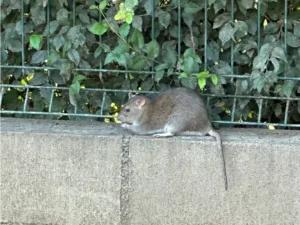
Rats are social animals, and they can feel both good and bad experiences. A trapped rat is also in the open, with no burrow to hide in and no way to run.
As the hours pass, thirst and hunger set in. The rat can also get too cold or too hot, depending on where the board is.
Welfare groups say some animals injure themselves badly while trying to escape. Others wear themselves out until they can’t move.
None of this is quick. That’s the main reason experts point to glue traps when they talk about the worst ways to handle a rat problem.
Do Rats Really Feel Pain the Way You Do?
Scientists say rats are sentient, which means they can have both good and bad experiences. Their bodies also have pain systems that work a lot like ours, which is why rats are used in so much pain research.
If you’ve ever met a pet rat, you already know this. Pet rats are the same species as the Norway rats that get into basements.
They bond with their owners, learn tricks, and get scared and stressed just like other animals.
That doesn’t mean rats aren’t a real problem, because they chew wires, spread germs, and damage homes.
It just means the method matters. The same rat that gnaws your wiring can still suffer, and a quick end is very different from hours of fear.
What Does the Research Say About Glue Traps and Rats?
Several studies and reviews have looked at this, and they reach the same place. In 2003, welfare scientists Georgia Mason and Kate Littin reviewed rodent control methods and said sticky boards raise very serious welfare concerns.

In 2022, a team from the University of Oxford led by Sandra Baker asked 15 experts to rate six common ways of killing rats. The panel included vets, wildlife managers, and animal welfare scientists.
Their result was blunt. Being caught on a glue trap was rated as an extreme impact lasting hours, and they said it should be a last resort.
A 2013 review done for the Canadian Association for Humane Trapping reached a similar view. It said the evidence shows glue traps don’t meet the standards for humane restraint or for humane killing.
Not one of these reviews found a way to make glue traps comfortable for the animal. The best they could say is that the suffering is shorter when someone checks the board quickly.
Vets and Animal Welfare Groups Want Glue Traps Gone
You’ll find the same message from groups that deal with animals every day. The British Veterinary Association says glue traps seriously harm animal welfare, and it wants them banned.
The RSPCA in Australia opposes them too, because they cause pain that can’t be avoided. It points out that boards don’t kill quickly, and that animals often aren’t found until long after they’re stuck.
In Canada, the BC SPCA has asked the province to ban selling and using them. It says the traps cause severe pain and suffering to rodents and other animals.
These groups don’t agree on everything. But on glue traps, their views are close to identical.
Glue Traps Also Hurt Other Animals
A glue board can’t tell a rat from anything else that steps on it. Small birds, lizards, bats, squirrels, and even pet cats and small dogs have been found stuck on them.
Imagine a board set along the wall of a shed. A rat might avoid it, but a bird that flies in through an open door can land right on it.
The RSPCA in Australia also points out a problem people rarely think about. A dead animal stuck to a discarded board can attract other animals, which then get stuck as well.
That means the harm doesn’t stop when you throw the trap away. A board in an open bin can keep catching animals for days.
Is It Better to Use a Glue Trap Indoors Than Outdoors?
Indoors is a little better, but it’s still a gamble. Outside, a board can catch birds, lizards, and squirrels, and rain, heat, or cold can make things even worse for any animal on it.
UK animal welfare experts say glue traps should never be used outdoors, or anywhere other people or animals can reach them.

Even inside, a board on the floor can catch a pet, so keep it where your cat or dog can’t go.
A strong rat can also drag a small board into a wall or under a shelf, and then you can’t reach it to check on it.
That’s a serious problem, because a hidden animal can suffer for days.
If you decide to use one anyway, check it often and have a plan ready before you set it, so you can act the moment something is stuck.
Don’t wait until the weekend.
How Long Does It Take a Rat to Die on a Glue Trap?
There’s no single number, because it depends on the rat, the weather, and how long the board sits there. Animal welfare groups say it can take hours, and sometimes days.
The Oxford study rated the time on the trap as extreme for hours, and that was in a case where someone then killed the rat quickly. Without that step, the suffering goes on longer.
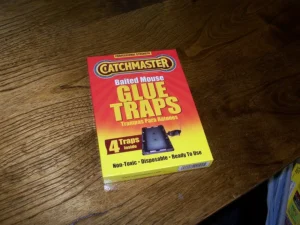
Death usually comes from exhaustion, thirst, being too cold or too hot, injury, or suffocation. None of those is quick or gentle.
Even the pest control industry sets rules about this. One UK code of practice says glue boards should be checked at least every 12 hours, and that checking more often is better.
A check every 12 hours tells you how long an animal could be stuck even when everything goes right. For a homeowner who forgets, it can be a lot longer.
Pest Control Professionals Say Glue Boards Have a Narrow Place
Not everyone in pest control wants glue traps gone. A UK trade group for pest technicians has said it doesn’t actively use them, but it opposed a total ban.
Its reasoning is about public health. In the group’s view, glue boards may be needed in rare cases, such as when there’s a real health risk and nothing else has worked, or when rats have stopped dying from poison.
Even that group said glue boards can cause suffering. It said they should be a last resort, and that boards should be checked often.
Another UK pest control group looked at the Oxford study and said it wasn’t perfect, but it was useful. It also said glue boards and snap traps scored fairly in that study.
So the debate isn’t really about whether glue traps cause suffering. Almost everyone agrees they do. The argument is about whether anything else works in the few cases where nothing else has.
Is Rat Poison Any Kinder Than a Glue Trap?
Not really. The same Oxford study found that rat poisons did just as badly, or worse.
Three kinds of baits (anticoagulants, cholecalciferol, and non-toxic cellulose baits) were rated as a severe to extreme impact lasting days. That’s longer than the hours rated for a glue trap.
Anticoagulants are poisons that stop the blood from clotting, so the rat slowly bleeds inside. Cholecalciferol is a form of vitamin D that becomes poisonous in high doses.
Poison also has a risk glue traps don’t. A pet or a wild animal that eats a poisoned rat can get sick too, which is called secondary poisoning.
So if you’re trying to pick between the two, neither one is a good choice. Both should be last resorts.
Snap Traps and Sealing Up Your Home Are the Most Humane Options
The same study found that snap traps could be the most humane way to kill a rat, as long as the trap is good. A well-made trap knocks the rat unconscious almost instantly.
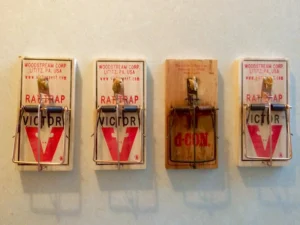
The key word is “well-made.” Results vary a lot between traps, which is why the researchers want snap traps tested and regulated.
The even better choice is to keep rats out in the first place. Mason and Littin said preventing rats from getting in is humane, and it’s probably used far less than it should be.
You can start with the gaps. A rat can squeeze through a hole about the size of a quarter, so look around pipes, vents, and the garage door.
Plug holes with steel wool and caulk, or use metal mesh, because rats chew through soft materials. Also store food in glass or hard plastic, keep trash lids tight, and bring pet food and bird seed inside at night.
If you still need a trap, pick a sturdy snap trap and set it along a wall where rats run. Check it every day, and replace it if it keeps failing.
Electric traps are built to kill quickly, and live traps catch a rat unharmed, though you’ll need a plan for what comes next. For a big problem, call a pro first.
How Do You Pick and Set a Good Snap Trap?
Not every snap trap is equal, and a bad one can hurt a rat without killing it. Buy from a known brand, look for a sturdy trap built for rats (not mice), and skip old or loose ones.
Rats can be wary of new things. Many pros leave the trap unset for a day or two so the rat gets used to it before it goes live.
Set the trap along a wall, where rats like to run, with the bait end touching the wall. Peanut butter works well, and a tiny dab is enough.
A covered trap box also helps keep kids and pets away. Check your traps every day.
If a trap fails once or twice, switch to a stronger one. A trap that doesn’t kill quickly is the exact problem you were trying to avoid.
Wear gloves when you empty a trap. Spray the rat and the trap with disinfectant, seal them in a bag, and wash your hands, which is the same advice the CDC gives for handling dead rodents.
Can Glue Traps Ever Be Used Humanely?
Mostly, no. The Canadian review found that glue traps don’t meet humane standards for holding or killing an animal, even under good conditions.
Mason has pointed out that when scientists reviewed glue traps, they were generous and assumed trained professionals would check them often. Most boards sold to the public aren’t used that way.
The British Veterinary Association takes a middle position. If professionals are still allowed to use glue traps, it says governments should limit them tightly, with licenses and strict rules.
That’s roughly what England now does. It’s also why people who care about animal welfare say the safest rule is to avoid them completely.
If you ever do use one, the best you can do is limit the damage. That means a covered board, in a spot no other animal can reach, checked several times a day.
Some Places Have Banned Glue Traps Because of the Suffering
The research hasn’t stayed in journals. It’s part of why England, Wales, and Scotland now stop the public from using glue traps on rodents.
Several Australian states, including Victoria, Tasmania, the ACT, and New South Wales, have banned them too. A few California cities, including West Hollywood, Ojai, Culver City, and Ventura, have done the same.
In most of the US and Canada they’re still legal. That means you can buy one at a store even though experts say it’s inhumane.
If you’re not sure about your area, check your city’s rules before you buy. Laws are changing quickly.
We’ve covered the rules in more detail in our post on whether glue traps for rats are illegal.
What Should You Do If You Find a Rat Stuck on a Glue Trap?
First, don’t leave it. The longer it stays there, the more it suffers, so deal with it right away.
Put on thick gloves, because a scared rat can bite hard and wild rats can carry germs. Wear a mask too if the area is dusty or has a lot of droppings.
Don’t pull the rat off the board. That can tear its skin and fur, and it makes the pain much worse.
The kindest choices are to call a vet or a local humane group and ask what they can do quickly. Many vets will put an animal down gently, and a phone call is worth making.
If it’s a different animal, like a bird or a lizard, slowly drip cooking oil around the glue to loosen it. Then call a wildlife rehabilitator.
Afterward, wash your hands well. Put the board in a sealed bag so nothing else gets stuck on it later.
Conclusion
So, are glue traps for rats inhumane? By almost every scientific and veterinary measure, yes. A stuck rat can suffer extreme distress for hours, and sometimes longer.
Research from Oxford and other groups ranks glue traps and poisons among the worst ways to deal with rats. Vets and welfare groups in the UK, Australia, and Canada say the same.
Glue traps also catch other animals, and a discarded board can keep catching them. That’s a lot of harm from a trap that costs a few dollars.
A much better plan is to seal up your home and use a good snap trap if you need one. If you’re ever unsure, ask a pest control company to start with those two steps.

Hi, my name is Ezra Mushala, i have been interested animals all my life. I am the main author and editor here at snakeinformer.com.