
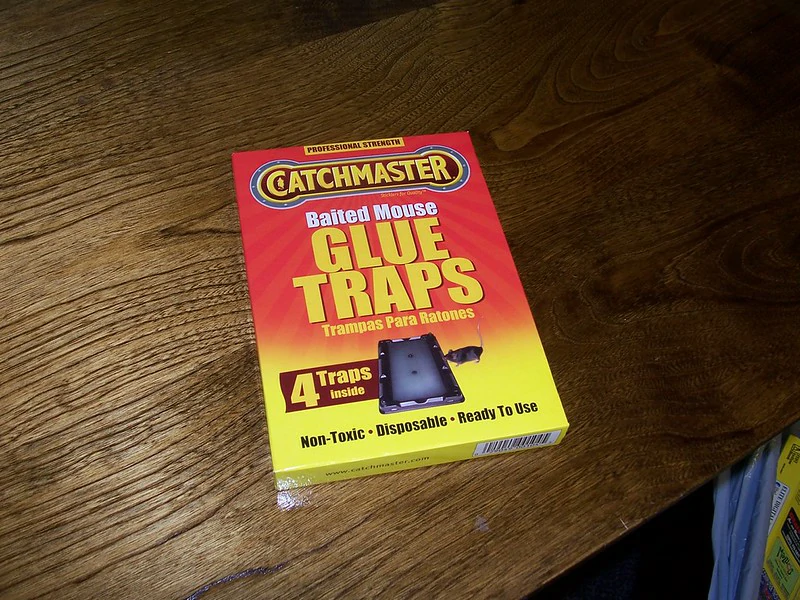
Hearing something heavy scurry across the attic at night is enough to make anyone want it gone fast, and a glue trap can look like the easiest way to do that.
But rats are bigger, stronger, and a lot warier than mice, so how effective are glue traps for rats?
Glue traps can catch rats, but they’re less reliable than they are for mice, and they’re a poor choice for most rat problems. A big rat can pull free or drag the board away, and one that stays stuck can suffer for a long time. Snap traps work better.
Rats are strong enough to beat a lot of glue boards, and that’s only part of the problem. The rest has to do with how rats behave, what a stuck rat goes through, and what else you might catch by accident.
How Can You Tell You Have Rats And Not Mice?
The easiest clue is the droppings (the small pellets animals leave behind), since rat droppings are a lot bigger.
Mouse droppings look like small grains of rice, while Norway rat droppings are more like capsules, about three quarters of an inch long.
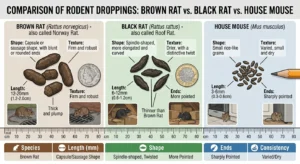
Roof rat droppings are a little smaller, and you’ll notice they have pointed ends.
Look for greasy smudges along walls too, since rats rub against the same spots every night and leave dark marks.
You might also find gnawed food boxes, shredded paper nests behind boxes or in drawers, and burrows under trash cans or compost piles.
Noise is another clue. Scratching and thumping in the attic at dusk often points to roof rats, while Norway rats tend to stay low.
Rats need bigger traps, bigger boards, and a different plan than mice, so it’s worth getting this right before you buy anything.
Not sure? Take a photo of the droppings next to a coin, and a pest pro can usually tell you what you’re dealing with.
Why Do Rats Move Into Homes In The First Place?
Rats move in for the same three reasons almost every time: food, shelter, and a safe place to nest.
Your house can offer all three, especially when the weather cools off and the outdoors gets less comfortable.
Pet food left out overnight, open trash cans, bird feeders, and fallen fruit are all easy meals.
Clutter in garages, sheds, and attics gives them somewhere to hide, and woodpiles against the house give them a ready-made burrow.
A small gap is all they need to get in, and once they’re inside, a warm wall or attic makes a great place to nest.
That’s why trapping alone never fixes a rat problem for long. Until you take away the food and close the gaps, new rats can take the old ones’ place.
So as you read the trapping tips below, think about what’s drawing the rats in, too.
Why Are Rats So Much Harder To Trap Than Mice?
Rats and mice might look alike, but they act very differently when something new shows up in their space.
Norway rats (the stocky ones that burrow under foundations and woodpiles) are really cautious about new objects. Scientists call this neophobia (a strong fear of anything new).
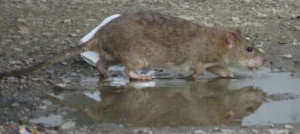
A new trap in the middle of their usual path can make a rat steer clear of that spot. A mouse, on the other hand, will often walk right up and investigate it.
That’s why pest pros often pre-bait for rats, which means leaving a baited trap unset for a couple of nights so the rat gets used to it.
Rats are also much bigger. A fully grown Norway rat can weigh close to a pound, and that’s a lot of muscle pulling against a thin layer of glue.
So a trap that does fine on a mouse can fail on a rat, and the reasons come from both size and behavior.
Keep both of those in mind as we go, because they explain almost everything else in this post.
Rat Glue Boards Can Catch Rats, But Only Under The Right Conditions
Yes, a glue board can catch a rat. Some pest control crews even use them as monitors (traps put out just to see where rats are walking).
You’ll find the boards made for rats are bigger and stickier than the ones made for mice.
A mouse board doesn’t have the size or the hold to handle a rat that’s fighting to get away, so never use one on a rat.
There’s one thing glue boards have going for them. Rats may be less wary of a flat board than they are of a snap trap.
That’s one reason people still reach for them, and it’s why a board can sometimes catch a rat that has ignored every other trap.
However, the conditions have to be just right. The board needs to sit in a dry spot with no dust, right along a path the rat already uses.
Put one out in a damp basement or a dusty attic, and the glue can lose its grip before a rat ever steps on it.
Can A Rat Pull Itself Free From A Glue Trap?
Often, yes. A big Norway rat that only gets a foot or a patch of fur stuck has plenty of strength to pull loose.
Rats are also strong enough to drag a light board along behind them, and that’s a big problem if the rat takes it into a wall or under a floor.
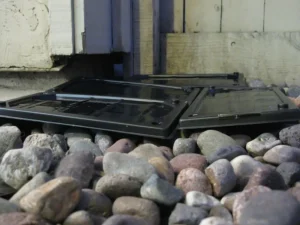
That’s a nasty surprise. A rat that dies inside a wall can leave a smell that’s hard to track down and even harder to get rid of.
Some rats get away on their own, too. They can tear loose and leave fur or skin behind, and then they learn to steer clear of that spot.
Rats can also just hop right over a board. A cautious rat may leap clear across the glue and keep on going.
That’s why a lot of pest control crews put out several boards in a row instead of just one, so a rat has a hard time avoiding all of them.
A bigger board helps a little, but it doesn’t change the basic problem. A strong rat that’s only half stuck can still win.
Roof Rats And Norway Rats Don’t Move The Same Way
There are two main kinds of rats in most of the US and Canada, and they live in very different parts of a building.
Norway rats are stocky and burrow along foundations, under trash, and in woodpiles. Indoors, they mostly stick to basements and ground floors.
Roof rats (the leaner, climbing kind) have a tail that’s longer than their head and body, and they like attics, rafters, and the tops of walls.
That matters for glue boards, because a board on the basement floor will never meet a roof rat in the attic.
For roof rats, you need traps in spots above the ground, like ledges, shelves, pipes, and overhead beams. A glue board up there can slide or fall, and it may catch a bird too.
For Norway rats, traps belong close to walls, behind objects, in dark corners, and near droppings.
Figure out which rat you’ve got first. Droppings, nests, and where you hear the noise will usually tell you.
Do Glue Traps Work Better Than Snap Traps On Rats?
Not usually. Snap traps are the safest, most effective, and cheapest way to trap rats, and that’s the advice you’ll see from most pest experts.
A good snap trap works in a split second, so the rat doesn’t spend hours fighting to get free.
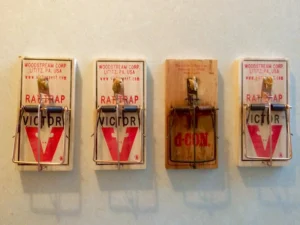
It also keeps the rat where you can find it, instead of letting it drag a board off into a wall.
The catch is that you have to use a trap made for rats. A mouse trap is too small, and a weak trap can hurt a rat without killing it.
So buy sturdy traps made for rats, and set them carefully so they spring the way they should.
Think of glue boards as a backup at best, for a rat that won’t go near a snap trap you’ve set.
Even then, set the board where it can’t catch pets or wildlife, and check it more than once a day.
A Rat Stuck On A Glue Trap Can Suffer For A Long Time
A rat that steps on a glue board doesn’t just stop. It panics, squeals, and throws its whole body into the fight, and that only sticks it down harder.
In one study that ranked how much distress six common rat control methods cause, glue traps scored the worst for catching rats.
Rats caught this way can take hours to die, or longer if nobody checks the board.
That’s why a glue board for rats needs checking very often, and it’s one reason a lot of countries have restricted them.
Glue traps aren’t meant to kill, so a rat can be alive and awake for a long time. That’s a hard thing for most people to deal with.
A rat that’s still alive can also bite hard. We’ll get to that in a bit.
Glue Traps Catch Plenty Of Animals That Aren’t Rats
A glue board can’t tell a rat from anything else that walks across it, and that’s a real problem outdoors and in sheds or garages.
Birds, small snakes, lizards, bats, and frogs have all been found stuck on boards meant for rodents.
Pets can get stuck too, and a dog or cat with glue on its fur is a messy, stressful job to clean up.
If it happens, rub cooking oil or baby oil into the glue to loosen it, then wash with soap and water. Call your vet if your pet licked the glue or seems unwell.
If you do use a board, keep it where only rats can reach it, like inside a covered box with small openings, and keep it far from kids and pets.
Outdoors, a cover helps keep birds and other wildlife off the board. Even so, an open board is a risk to anything small that walks by.
Is It Safe To Handle A Rat On A Glue Trap?
Not without some care. Rats can carry germs that make people sick, and a rat that’s stuck and scared may bite.

Germs like salmonella (a germ that causes stomach illness) and leptospirosis (a bacterial illness spread through animal urine) can be in their droppings and urine.
Rats can also spread rat-bite fever (an illness you can get from a bite or a scratch). So never reach for a stuck rat with bare hands.
The CDC lists all three among the illnesses people can catch from rodents.
Wear thick gloves, and spray the rat, the board, and the area around it with disinfectant or a mix of 1 part bleach to 9 parts water.
Let it soak for about 5 minutes, then put everything in two sealed plastic bags before it goes in the outdoor trash.
Take off your gloves carefully and wash your hands well with soap and water. And don’t sweep or vacuum dry droppings, since that can put germs in the air.
What Should You Do If A Rat Is Still Alive On The Trap?
This is the part that catches most people off guard, so it’s smart to have a plan before you ever set a board.
A live rat is strong, scared, and quick to bite, so don’t try to pick it up or pull it off with your hands.
Call animal control or a pest control company instead. Some will come out for a live rat on a board.
If you can’t reach anyone, your vet can usually tell you what to do over the phone.
Whatever you do, wear thick gloves and long sleeves, and wash up well afterward.
And if a pet or a child is nearby, keep them well away until the rat is gone.
That’s one more reason to skip the glue board in the first place. A snap trap doesn’t leave you with this problem.
Are Glue Traps Legal Where You Live?
In most of the US and Canada, you can still buy glue traps for rats at hardware stores and online, but that’s starting to change.
A few US cities, including West Hollywood and Ojai, California, have banned them.
England only lets licensed pest controllers use them, and Wales and Scotland have banned them outright.
New Zealand, Ireland, and the Australian state of Victoria have banned or tightly restricted them too.
Rules change fast, so call your city or county animal control office before you buy one.
Some pest control companies skip glue boards altogether, so it’s worth asking which traps they use.
Snap Traps Set The Right Way Catch Rats Faster
If you want to catch a rat, start with a snap trap that’s made for rats, not mice.
Set it close to a wall, with the trigger end facing the wall, since Norway rats like to run along edges.

Put traps in dark corners, behind objects, and near droppings. For roof rats, place them on ledges, pipes, and beams.
Rats are wary of new things, so try pre-baiting (leaving a baited trap unset for two or three nights so the rat gets comfortable with it).
Once the bait’s disappearing, set the trap with a very small dab of bait, so the rat has to work at it.
Peanut butter works well for most rats, and roof rats often like nuts or dried fruit.
Use more traps than you think you need, and set them in a row along the wall where the rats run.
Check them every morning, and keep them where kids and pets can’t reach.
Sealing Entry Points Matters More Than Any Trap
Traps only catch the rats that are already there. If you don’t close up how they got in, more will keep coming.
Rats can squeeze through a hole about half an inch wide, so even a small gap near a pipe or vent can be an open door.
Check around pipes, vents, the roofline, garage doors, and the spots where wires and cables enter your home.
Seal gaps with metal mesh (a tough wire screen), cement, or sheet metal, since rats can gnaw through wood, plastic, and soft materials.
Next, cut off their food. Keep trash cans tightly lidded, store pet food and birdseed in sealed containers, and pick up fallen fruit.
Move woodpiles and clutter away from your walls, since Norway rats love to burrow and nest in them.
For roof rats, trim any tree limbs that come within 3 feet of your roof, and cut back vines that climb your walls.
What About Poison And Electric Traps?
Rat poison (also called bait) is the other tool people reach for, and it’s a risky one.
Poison can hurt pets, kids, and wildlife like hawks and owls that eat a poisoned rat, and a rat that dies in a wall can stink for weeks.
If you ever use bait outside, seal your home first so poisoned rats don’t wander indoors to die.
Poison also usually takes days to work, so it’s a poor fit for a rat that’s already in your kitchen.
Electric traps (the kind that zap a rat with a quick jolt) are another choice for indoors. They cost more than snap traps, but the rat stays inside a closed box.
Whichever you pick, traps are usually the better bet for a home, since they don’t leave poison lying around.
When Should You Call A Pest Control Professional?
If you hear rats in your attic or walls night after night, or you’re finding droppings in more than one room, it’s time to call.
A pro can tell whether you’ve got Norway rats or roof rats, find the gaps you missed, and set traps where they’ll count.
That’s a big deal, because a trap in the wrong spot won’t catch anything.
Ask what methods they plan to use before you say yes. A good company should talk about sealing entry points and trapping, and not jump straight to poison.
And if you find a nest or lots of droppings in a closed space like an attic, let a pro handle the cleanup, or wear gloves and wet everything down before you touch it.
Rat problems rarely fix themselves, so the sooner you act, the easier it’ll be.
Conclusion
So, how effective are glue traps for rats? They can catch some, especially a rat that’s wary of snap traps, but they’re less reliable than they are for mice.
A big rat can pull free or drag the board into a wall, and one that stays stuck can suffer for a long time.
They also catch animals you never meant to hurt, and the rules around them are getting tighter.
For most homes, a snap trap made for rats, set along a wall, does a better job.
Pair it with sealed gaps and a tidy yard, and you’ll fix the problem instead of just chasing it.
Do that, and you’ll hear a lot less scratching in the walls at night.

Hi, my name is Ezra Mushala, i have been interested animals all my life. I am the main author and editor here at snakeinformer.com.