
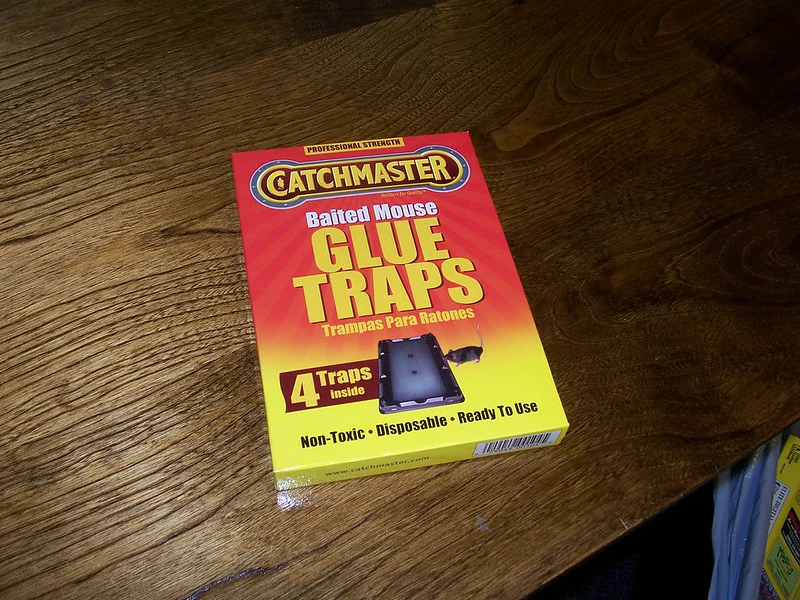
Glue traps, also known as glue boards or sticky traps, have long been a common way to deal with mice and rats.
A sticky board goes down along a wall, and whatever walks across it gets stuck in place.
For years, they sat on hardware store shelves across Scotland without much scrutiny. That’s no longer the case, and the law has shifted in a big way recently.
So if you’re dealing with a rodent problem in Scotland right now, you’re probably wondering: are glue traps illegal in Scotland, or are glue traps banned in Scotland specifically?
Yes, glue traps are illegal in Scotland. As of July 1, 2026, it’s a criminal offence to use, supply, or possess a glue trap under the Wildlife Management and Muirburn (Scotland) Act 2024. This applies to the general public, and there’s currently no legal way for an ordinary person to use one.
That’s about as clear-cut as UK animal welfare law gets.
Let’s look at exactly what the law covers, why it took so long to actually come into force, and what the penalties look like if you’re caught breaking it.
For anyone who dealt with mice using a glue trap in the past, this is a real shift in how Scotland handles pest control.
It’s not just a small tweak to existing rules.
The Law Behind Scotland’s Glue Trap Ban
Scotland’s glue trap ban comes from the Wildlife Management and Muirburn (Scotland) Act 2024, a piece of legislation that covers a lot more than just glue traps.
The Act was passed by the Scottish Parliament on March 21, 2024, and received Royal Assent a little over a month later, on April 30, 2024.
Jon Seidman CC BY-NC-SA 2.0
Most of the Act deals with grouse moor management and wildlife trapping more broadly, following recommendations from an independent review known as the Werritty Report.
Buried within that broader legislation is a section specifically banning glue traps.
It makes it an offence to use a glue trap to kill or take any animal, including simply restraining it.
It’s also an offence to set one in a way likely to cause injury to any animal that touches it.
Unlike England’s approach, which came from a standalone piece of legislation focused solely on glue traps, Scotland folded its ban into this wider wildlife management law.
Why Did It Take So Long for Scotland’s Ban to Actually Start?
This is a genuinely interesting wrinkle in Scotland’s story, and it’s worth understanding if you’ve seen conflicting dates floating around.
The Act itself passed back in 2024, but the sections banning glue traps didn’t actually come into force until July 1, 2026, more than two years later.
That gap wasn’t due to any lack of political will.
The holdup came from a UK-wide law called the Internal Market Act 2020.
Generally, this prevents individual nations within the UK from restricting the sale of goods that are legal elsewhere in the UK.
Since glue traps remained legal to sell in Northern Ireland, this law technically blocked Scotland from banning their sale on its own.
The UK Government eventually resolved this by introducing a specific exclusion.
The United Kingdom Internal Market Act 2020 (Exclusions from Market Access Principles: Glue Traps) Regulations 2026 was made on January 29, 2026, and came into force on February 20, 2026.
That cleared the legal roadblock.
The Scottish Government confirmed shortly after, in March 2026, that the ban on use, supply, and possession would finally commence on July 1, 2026.
How Does This Connect to the Rest of the Act?
It’s worth remembering that the glue trap ban didn’t arrive on its own. It’s one piece of a much bigger piece of wildlife legislation.
The Wildlife Management and Muirburn (Scotland) Act 2024 also introduces a licensing scheme for killing certain birds, starting with red grouse.
It brings in new rules around snares and other wildlife traps too, along with expanded powers for Scottish SPCA inspectors to investigate wildlife crime.
Understanding this context helps explain why the glue trap provisions took the shape they did.
Lawmakers were building an entire framework around humane, regulated wildlife management, not writing a single-issue law focused only on rodents.
That broader framing is part of why Scotland’s approach to glue traps ended up stricter in some ways than England’s.
It fits into a wider push toward tighter wildlife protection overall, not just a narrow rule about rodents.
What Exactly Became Illegal on July 1, 2026?
The ban covers more ground than a lot of people expect, so it’s worth breaking down exactly what’s now against the law in Scotland.
- Using a glue trap to kill or take any animal, including simply restraining it, is illegal. This covers the most obvious scenario: setting a trap down to catch a mouse or rat.
- Setting a glue trap in a way likely to cause injury to any animal is also illegal, even if catching an animal wasn’t your intention. This closes a potential loophole where someone might claim they didn’t mean to catch anything.
- Supplying or offering to supply a glue trap is illegal too. This effectively bans the sale of glue traps within Scotland, not just their use.
- Possessing a glue trap without a reasonable excuse is illegal as well. This is the part that surprises people most, since it goes further than England’s and Wales’s laws, which mainly focus on use rather than simple possession.
- Causing or permitting someone else to use, supply, or possess a glue trap is also covered.
This means employers and landlords can be held responsible too, not just the person directly using the trap.
Does the Ban Apply to Insect Glue Traps Too?
This is a common point of confusion, so it’s worth clearing up directly.
The law specifically excludes invertebrates, meaning insects and similar creatures aren’t covered by this ban.
The legal definition of a glue trap under the Act covers any trap designed or capable of catching an animal, other than an invertebrate, using an adhesive substance.
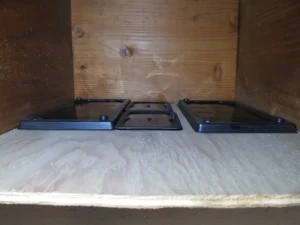
That definition is broad enough to include homemade glue traps too, not just store-bought ones.
So if you’re using a sticky trap specifically for flies, moths, or other insects, that’s not affected by this law.
The ban is aimed squarely at traps that could catch mammals, birds, reptiles, or amphibians, mice and rats being the most common targets by far.
What Are the Penalties for Breaking Scotland’s Glue Trap Law?
The penalties here are genuinely serious, and they match the penalties already in place under the Wildlife and Countryside Act 1981 for similar wildlife offences.
On summary conviction, meaning a case heard without a jury, someone found guilty can face up to 12 months in prison, a fine of up to £40,000, or both.
On conviction on indictment, meaning a more serious case heard with a jury, the penalties increase further.
That can mean imprisonment for up to 5 years, an unlimited fine, or both.
These aren’t symbolic penalties either.
They’re identical in scale to penalties for other serious wildlife crimes in Scotland, which reflects how seriously lawmakers ended up treating this issue.
Is There Any Legal Way to Use a Glue Trap in Scotland?
Technically, yes, but the door is narrow and the details are still being worked out in practice.
The Act allows Scottish Ministers to create a licensing scheme authorizing specific people to use, supply, or possess glue traps under certain conditions.
This authorization can only be granted when it’s necessary to protect public health, and only when no other method of rodent control is available.
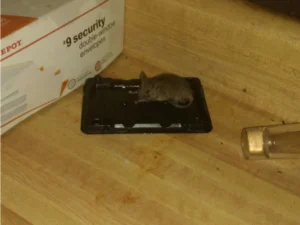
Think of a scenario like a hospital or food storage facility dealing with a serious rodent problem where other methods genuinely aren’t practical.
That’s the kind of narrow situation this exception is meant to cover, not an everyday household mouse problem.
As of now, industry groups like the British Pest Control Association have said they still need clearer guidance on exactly how this professional licensing route will work day to day.
The principle exists in the law, but the practical rollout is still catching up.
What Counts as a “Reasonable Excuse” Under Scottish Law?
This phrase shows up throughout the legislation, and it’s worth understanding since it’s the main built-in flexibility in an otherwise strict law.
The offences under this Act don’t apply if a person has a reasonable excuse for using, setting, supplying, or possessing a glue trap.
Lawmakers included this specifically so the law wouldn’t unfairly criminalize people caught in situations outside their control.
One example given directly in the Act’s own explanatory notes involves a pest control technician being told by a workplace superior to use a glue trap.
The intention isn’t to punish an employee following orders in that kind of situation.
That said, whether something actually counts as a reasonable excuse isn’t decided by the person claiming it.
It’s ultimately a decision for the police and Scotland’s Crown Office and Procurator Fiscal Service, meaning it’s assessed case by case rather than guaranteed in advance.
How Does Scotland’s Ban Compare to England and Wales?
Scotland’s law shares the same basic goal as England’s and Wales’s bans, but it’s structured differently in a few key ways worth knowing.
England’s Glue Traps (Offences) Act 2022 focuses mainly on banning use, with a licensing exception for professionals through Natural England.
It doesn’t ban simple possession the way Scotland’s law does.
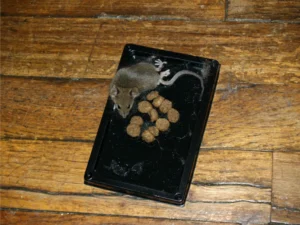
Wales took the most complete approach, banning use entirely under the Agriculture (Wales) Act 2023.
Wales didn’t build in the same kind of professional licensing carve-out that England and Scotland both allow.
Scotland’s law sits somewhere in between, but arguably goes furthest in one specific respect.
By banning supply and possession outright, not just use, Scotland closes off more of the ways someone could end up using a glue trap in the first place.
Are Glue Traps Still Being Sold in Scottish Shops?
Given how recently the ban came into force, this is worth addressing directly. Laws banning sale don’t always clear shelves overnight.
Retailers were expected to stop supplying glue traps in Scotland from July 1, 2026 onward, in line with the new law.
Similar bans in England tell a cautionary story though. Old stock can sometimes linger on shelves or online listings for a while after a ban technically starts.
If you come across glue traps for sale in Scotland after that date, it doesn’t mean they’re legal to buy and use.
The retailer supplying them would actually be committing an offence themselves. That’s true whether or not enforcement has caught up with every individual shop yet.
Does This Affect Visitors and Vacation Rentals in Scotland?
This is worth knowing if you own or manage a holiday let in Scotland, or if you’re visiting and staying somewhere with a rodent problem.
The law applies to anyone in Scotland, not just permanent residents.
If you’re managing a vacation rental and dealing with mice, the rule doesn’t bend for property managers.
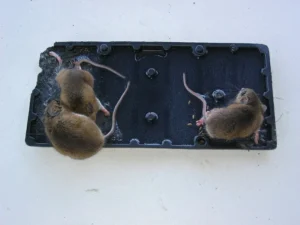
Using a glue trap is just as illegal for you as it would be for someone who lives there full time.
This matters more than it might seem.
Rural properties and older buildings, both common among Scottish holiday lets, tend to have more rodent issues than newer city apartments.
If you manage a property like this, it’s worth updating your pest control approach now.
Don’t wait until you spot a mouse and reach for whatever’s already under the sink.
Does the Ban Affect Pet Owners Differently?
Pet owners have an extra reason to care about this law, even setting aside the legal risk.
Glue traps were never selective about what they caught, and Scotland’s ban reflects that directly.
Cats in particular were commonly reported getting stuck in glue traps meant for rodents.
This often required a vet visit to safely remove the adhesive from fur, paws, or a cat’s face.
Now that glue traps are illegal across the board in Scotland, that specific risk to pets should decline naturally over time.
As the traps become harder to find, fewer households will have old ones lying around to begin with.
If you’re a pet owner in Scotland who still has a glue trap left over from before the ban, it’s worth disposing of it properly rather than storing it away.
Beyond the legal risk of simple possession, there’s no upside to keeping something both illegal and potentially dangerous to your own animals sitting in a cupboard.
Most local councils accept this kind of item at household waste sites, so it’s a quick fix once you know it needs doing.
What Should You Use Instead of Glue Traps in Scotland?
If you’re dealing with mice or rats and need a legal option, there are several alternatives that don’t carry the same risk.
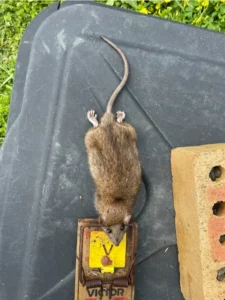
- Snap traps remain fully legal in Scotland and kill quickly rather than leaving an animal to suffer.
- Humane live-capture traps catch a rodent unharmed, letting you release it elsewhere.
- Sealing entry points around your home stops mice and rats from getting in to begin with.
- Removing food sources, like securing bins and cleaning up crumbs, makes your home less appealing to rodents.
- Calling a licensed pest control professional is often the safest route for a bigger infestation, since they’ll know exactly what’s legally allowed under Scotland’s current rules.
Snap traps in particular have become the standard replacement across Scotland, much as they have in England and Wales.
They’re widely available, affordable, and fully within the law, which makes the switch fairly painless for most households.
Conclusion
Glue traps are now clearly illegal in Scotland.
As of July 1, 2026, using, supplying, or possessing one without a reasonable excuse or professional authorization is a criminal offence under the Wildlife Management and Muirburn (Scotland) Act 2024.
The ban took longer to come into force than the underlying law suggested.
That delay traced back to a UK-wide legal technicality around the Internal Market Act, but that obstacle has since been cleared.
The penalties for breaking the law are steep, matching those for other serious wildlife offences in Scotland.
If you’re dealing with a rodent problem, the safest path forward is to skip glue traps entirely.
Snap traps, humane live-capture traps, and basic prevention steps like sealing up entry points will handle the problem without putting you on the wrong side of Scottish law.

Hi, my name is Ezra Mushala, i have been interested animals all my life. I am the main author and editor here at snakeinformer.com.