
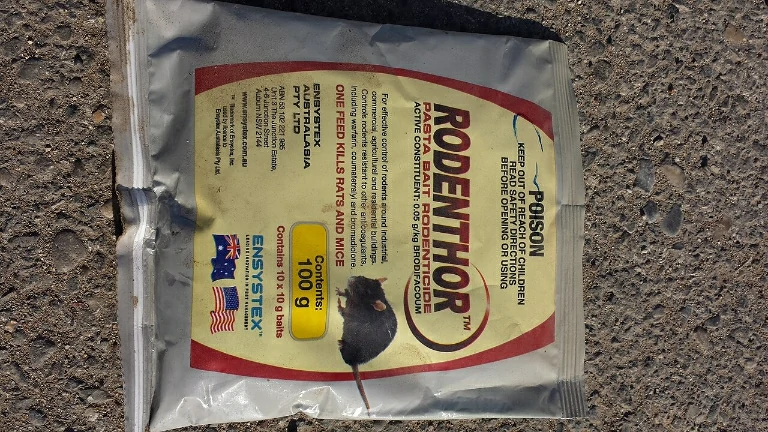
Rat poison isn’t just one thing. Some products kill by stopping blood from clotting. Others work in a completely different way, by attacking the nervous system instead.
Bromadiolone and bromethalin are two of the most common active ingredients you’ll find in rat poison across the US and Canada. They don’t work anywhere near the same way.
So what’s the real difference between bromadiolone and bromethalin, and which one actually works better?
Bromadiolone stops a rat’s blood from clotting, causing death from internal bleeding over several days. Bromethalin attacks the nervous system instead, causing brain swelling that can kill in as little as one to two days. Bromethalin works faster, but it has no antidote, which makes accidental exposure in pets more dangerous to treat.
Both are effective at killing rodents, but they’re built around completely different biology. That difference matters a great deal if you have pets, since how each poison works changes what a vet can actually do if your dog or cat gets into it.
Bromadiolone Is an Anticoagulant, Which Means It Targets Blood Clotting
Bromadiolone belongs to a group of rat poisons called second-generation anticoagulants. This same group includes brodifacoum, difenacoum, and difethialone.
It works by blocking an enzyme called vitamin K epoxide reductase. That enzyme’s job is to recycle vitamin K so the body can keep using it.
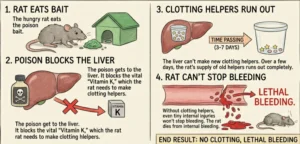
Vitamin K is needed to make several clotting factors, the proteins responsible for helping blood clot after an injury. Without it, those clotting factors stop being produced.
As the existing supply of clotting factors runs out, the blood gradually loses its ability to clot.
Eventually, even minor internal bleeding that would normally heal on its own starts to build up instead.
This process typically takes four to seven days to become fatal in a rat. It’s slow by design, since a delayed effect stops rats from associating their sickness with the bait they ate days earlier.
Bromethalin Is a Neurotoxin, Which Means It Targets the Brain
Bromethalin works nothing like bromadiolone. It’s classified as a non-anticoagulant rodenticide, and it doesn’t touch the blood clotting system at all.
Once ingested, bromethalin gets converted in the body into a more active compound called desmethylbromethalin. This is the form that actually causes the damage.
Desmethylbromethalin messes with how cells in the brain and spinal cord produce energy. Specifically, it breaks down a process inside the cell’s mitochondria, the small structures that generate the energy a cell needs to function.
Without that energy supply working correctly, the sodium and potassium pumps in nerve cells stop working properly. This causes fluid to build up in the brain and spinal cord, a condition called cerebral edema.
The swelling puts pressure on nervous system tissue, leading to symptoms like tremors, seizures, and paralysis, depending on how much was ingested and how quickly it happened.
Why Bromethalin Works So Much Faster
One of the clearest differences between these two poisons is speed. Bromadiolone takes several days to kill because it depends on the body’s existing clotting factors slowly running out.
Bromethalin can act much faster in some cases. At high doses, symptoms in animals can show up within just a few hours, and death can occur within one to two days.
At lower doses, bromethalin can still cause a slower, chronic form of poisoning that develops over roughly a week, with symptoms like weakness, wobbliness, and hind leg paralysis instead of sudden seizures.
This dose-dependent pattern is part of what makes bromethalin trickier to predict compared to bromadiolone, where the general timeline stays fairly consistent regardless of how much was eaten.
Table: How Bromadiolone and Bromethalin Compare
Seeing these two poisons side by side makes the practical differences much clearer, especially if you’re trying to understand the risk to a pet.
| Feature | Bromadiolone | Bromethalin |
|---|---|---|
| Category | Anticoagulant | Non-anticoagulant (neurotoxin) |
| What it targets | Blood clotting | Central nervous system |
| Time to death in rats | Around 4 to 7 days | As fast as 1 to 2 days at high doses |
| Antidote available | Yes, vitamin K1 | No specific antidote exists |
| Treatment approach | Vitamin K1, sometimes a blood transfusion | Decontamination and supportive care only |
| US consumer availability | Restricted to professionals since 2011 | Still sold in some consumer products |
| Most sensitive pets | Small dogs, cats through secondary exposure | Cats especially, also small dogs |
That “no specific antidote” row for bromethalin is worth sitting with for a moment, since it’s the single biggest practical difference between these two poisons. Everything else is secondary to that one fact once a pet is actually exposed.
Why the Lack of an Antidote for Bromethalin Matters So Much
With bromadiolone, and anticoagulant rodenticides in general, there’s a clear fix. Vitamin K1 replaces what the poison blocks, and clotting ability gradually returns.
Bromethalin doesn’t have that option. According to the Merck Veterinary Manual, no antidote exists for bromethalin poisoning, and the key to a good outcome is early, aggressive decontamination before symptoms even start.
This usually means inducing vomiting or giving activated charcoal as soon as possible after exposure, ideally within the first hour or two.
Once symptoms show up, treatment shifts to supportive care.
This can include IV fluids, medication to control seizures, and in some cases a treatment called intravenous lipid emulsion therapy, which can help pull the toxin out of fatty tissue in the body.
None of these treatments reverse the poisoning directly the way vitamin K1 does with anticoagulants. They manage symptoms and give the body a chance to recover on its own, which makes timing even more critical than usual.
Cats Are Especially Sensitive to Bromethalin
Species and body size affect how dangerous each poison is, but this matters more with bromethalin than with bromadiolone.
Research shows cats are considerably more sensitive to bromethalin than dogs are, with a much lower lethal dose relative to body weight.
A small amount that might only cause mild symptoms in a dog can be far more serious for a cat.
Dogs are still considered moderately sensitive, and smaller dogs face a higher relative risk than larger ones for the same reason seen with most rodenticides. It takes less poison, relative to body size, to cause serious harm.
Guinea pigs, interestingly, are almost entirely resistant to bromethalin due to a difference in how their bodies process the compound. This doesn’t apply to dogs, cats, or most other common household pets, though, so it isn’t something to rely on for safety.
Why Bromethalin Is Still Sold to Consumers When Bromadiolone Isn’t
This is one of the more important practical differences for anyone shopping for rat poison at a regular store, since it changes what you’re likely to bring home without even realizing it.
Bromadiolone, along with the other second-generation anticoagulants, was restricted from general consumer sales by the EPA back in 2011. These products are now mainly limited to licensed pest control professionals.

Bromethalin wasn’t included in that restriction, since it isn’t an anticoagulant and doesn’t carry the same wildlife secondary poisoning concerns that drove the anticoagulant restrictions in the first place.
Because of this, bromethalin has actually become more common in store-bought rat poison in recent years.
Many popular consumer products switched to bromethalin specifically because it remained legal to sell directly to homeowners.
This is worth knowing, since it means the rat poison sitting on a hardware store shelf today is more likely to be the poison without an antidote than the one with one.
Which One Is Actually More Dangerous to Pets?
This is a harder question than it sounds, since “more dangerous” depends on what you’re measuring.
Bromadiolone has a clear, effective treatment if caught in time, but it requires ongoing vitamin K1 therapy for weeks and carries real risk if treatment starts too late or stops too early.
Bromethalin acts faster and has no antidote, which puts more pressure on catching the exposure immediately, before any symptoms even develop.
In practical terms, many veterinary toxicologists consider bromethalin exposures more stressful to manage precisely because there’s no reliable way to reverse the poisoning once it’s underway. Early action matters with both poisons, but it matters even more with bromethalin.
There’s also a dosage factor worth considering. Bromethalin generally requires a larger amount, relative to body weight, to cause serious harm compared to some anticoagulants.
This doesn’t make it safer overall, though, since the total lack of an antidote tends to outweigh that difference in practice.
A vet would still much rather be treating a bromadiolone exposure than a bromethalin one, given the choice, simply because there’s an actual reversal treatment available for one and not the other.
What to Do If Your Pet Gets Into Either One
Because the two poisons are treated so differently, knowing which one your pet was exposed to changes what happens next at the vet’s office.
If you catch your pet eating bait, or find chewed packaging, bring the packaging with you to the vet if at all possible. This lets them identify the exact active ingredient and concentration right away.

Don’t wait to see if symptoms develop before calling your vet or a pet poison hotline. With bromethalin in particular, the window for effective decontamination can close within just an hour or two.
If your vet confirms bromadiolone or another anticoagulant, expect a treatment plan built around vitamin K1, likely continuing for several weeks with follow-up bloodwork.
If it’s bromethalin, expect a stronger focus on early decontamination and close monitoring for neurological symptoms, since there’s no medication that directly reverses the poisoning once it’s taken hold.
Why Bromethalin Was Developed in the First Place
Bromethalin wasn’t the first rat poison. It was actually created specifically to solve a problem that anticoagulants like bromadiolone ran into over time.
By the 1970s, some rat populations had built up genetic resistance to warfarin and other early anticoagulants.
Since these poisons all worked through the same vitamin K blocking mechanism, resistance to one often meant partial resistance to similar compounds too.
Researchers wanted a poison that worked through a completely different pathway in the body, one that resistant rats wouldn’t have any natural defense against.
Bromethalin fit that need. Since it attacks the nervous system instead of blood clotting, it doesn’t share any cross-resistance with anticoagulants like bromadiolone or brodifacoum.
A rat that’s fully resistant to bromadiolone has no special protection against bromethalin at all, since the two poisons don’t have anything in common at the biological level.
This is actually one of the reasons pest control professionals sometimes rotate between anticoagulants and bromethalin in areas with known resistance problems.
Using two totally different mechanisms makes it much harder for any single resistance trait to spread and make an entire pest control strategy less effective.
Recognizing the Symptoms of Each Type of Poisoning
Since these two poisons affect completely different systems in the body, the warning signs they cause don’t look anything alike either.
With bromadiolone, early signs tend to be subtle: general weakness, pale gums, and reduced energy. As bleeding progresses, you might notice bruising, swelling, coughing, or blood in your pet’s urine or stool.
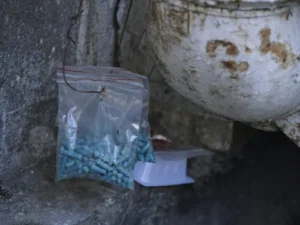
These signs build up gradually over several days, which matches the slow, mechanical process happening in the blood behind the scenes. It’s a quiet kind of sickness, at least on the outside, right up until it isn’t.
Bromethalin symptoms look completely different, and depending on the dose, they can be far more sudden and dramatic. At higher doses, animals may show tremors, muscle twitching, seizures, and extreme sensitivity to touch or sound.
At lower doses, the pattern shifts toward weakness, an unsteady or drunken-looking gait, and hind leg weakness that can progress toward paralysis over several days.
Because bromethalin symptoms can escalate so quickly at higher doses, any sign of tremors, seizures, or sudden loss of coordination after a possible rodenticide exposure should be treated as a true emergency, not something to monitor at home.
Conclusion
Bromadiolone and bromethalin are both effective rat poisons, but they kill through completely different mechanisms.
Bromadiolone blocks the body’s ability to use vitamin K, leading to fatal bleeding over several days, while bromethalin damages the nervous system directly, sometimes within just a day or two.
Bromadiolone has a clear treatment path using vitamin K1, giving vets a reliable way to reverse the poisoning if it’s caught in time. Bromethalin has no antidote at all, which makes fast action after exposure even more important than usual.
Because bromethalin remains available in many consumer rat poison products while bromadiolone is now restricted to professional use, it’s worth checking the label on anything you buy.
Knowing which active ingredient you’re dealing with, before an emergency happens, can make a real difference in how quickly a vet can respond if your pet ever gets into it.
Whichever poison you end up using or coming across, the same basic rule applies either way. Fast action beats waiting to see what happens, especially with a poison that gives your vet no room to reverse the damage once it’s already started.

Hi, my name is Ezra Mushala, i have been interested animals all my life. I am the main author and editor here at snakeinformer.com.