
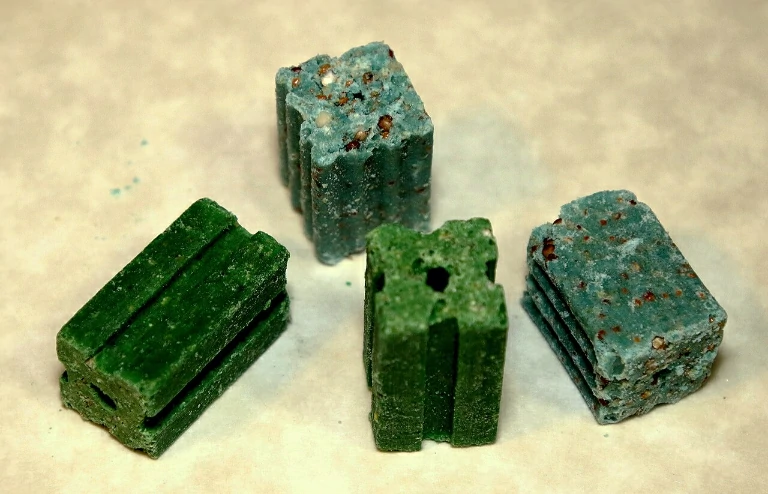
Cyanide has a reputation that precedes it. It shows up in old detective novels, spy movies, and true crime stories as the poison of choice.
So it’s not surprising people wonder if it’s what’s actually inside the bait box under the sink. Does rat poison contain cyanide?
No, the rat poison sold in stores today doesn’t contain cyanide. Modern rat poison almost always uses anticoagulants, chemicals that stop blood from clotting properly, as the active ingredient instead. Cyanide compounds were used in some older pest control products, but they aren’t part of any current mainstream consumer rodenticide.
This mix-up is understandable, since rat poison and cyanide share a certain cultural reputation as fast, dangerous ways to kill something.
The actual chemistry tells a different story, and it’s worth understanding what’s really in that box before you assume the worst about what’s actually inside it.
What’s Actually in Rat Poison Today
The Environmental Protection Agency groups rodenticide active ingredients into three main categories, and cyanide isn’t one of them.
First generation anticoagulants, like warfarin, chlorophacinone, and diphacinone, were the earliest widely used rat poisons of this type. They work by blocking your body’s ability to use vitamin K, which your blood needs to clot properly.
Second generation anticoagulants, like brodifacoum, bromadiolone, difenacoum, and difethialone, are stronger and stay in the body longer. These are the most common active ingredients in professional-grade bait today.
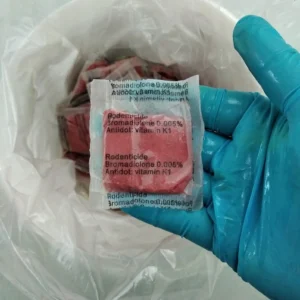
Non-anticoagulant rodenticides make up the third category. This includes bromethalin, cholecalciferol, and zinc phosphide, each of which works through a completely different mechanism in the body than an anticoagulant does.
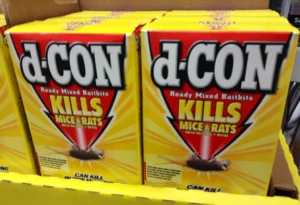
None of these eleven EPA-registered active ingredients are cyanide compounds. If you check the label on a bait box, block, or pellet bought from a hardware store, grocery store, or pest control company today, you won’t find cyanide listed anywhere on it.
Labels are required to list the active ingredient and its percentage by weight, so this isn’t something you have to guess about. It’s printed right on the package, usually near the front where the EPA registration number also shows up.
Where the Cyanide Confusion Actually Comes From
The idea that rat poison contains cyanide isn’t completely made up, it’s just outdated by close to a century in most cases.
Historically, calcium cyanide and hydrogen cyanide gas were used as rodenticides, particularly as fumigants for controlling rodents in burrows, ships, and large agricultural storage areas.
Britannica specifically lists hydrogen cyanide among older fumigant rodenticides used alongside other gases like sulfur dioxide and methyl bromide.
These weren’t baits you’d set out in a kitchen. They were typically treatments using cyanide gas, used by professionals in enclosed or underground spaces.
That’s a completely different application than the bait blocks and pellets sold today.
Cyanide compounds like this fell out of common use for rodent control decades ago. They were replaced first by acute poisons like strychnine and zinc phosphide, and later by the anticoagulants that dominate the market now.
Old movies, books, and even some outdated pest control folklore never quite caught up with that shift. That’s part of why the association still lingers in people’s minds even though it isn’t what’s actually sold today.
There’s a second source of confusion worth mentioning too.
Hydrogen cyanide is naturally present in trace amounts in a surprising number of everyday things, including cigarette smoke and certain plant seeds. This sometimes gets referenced online in ways that make it sound more connected to modern rat poison than it actually is.
That trivia is accurate on its own, but it has nothing to do with what’s inside a bait station you’d buy today.
Why Anticoagulants Replaced Older, Faster-Acting Poisons
There’s a genuinely interesting reason rat poison moved away from fast-acting toxins like cyanide toward the slower anticoagulants used now, and it comes down to rat behavior.
Rats are famously cautious eaters. If a rat eats something and gets sick or dies quickly, other rats in the area learn to avoid that food source, sometimes called bait shyness.
Anticoagulants work slowly on purpose. A rat that eats anticoagulant bait doesn’t get sick right away, so it keeps returning to the same food source over the following days.
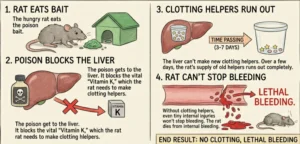
This delay makes the poison far more effective at controlling an entire population rather than just one animal.
This delayed action is actually the reason anticoagulants took over the market, not a coincidence. A fast, obvious poison like cyanide can end up being less effective at large-scale rodent control, even though it kills quickly, because surviving rats learn to stay away.
There’s also a practical manufacturing and safety angle behind the shift.
Cyanide compounds are difficult to store and handle safely at scale, and their fast action makes accidental human or pet poisoning far more dangerous to manage in the moment.
Anticoagulants, by comparison, are easier to formulate into stable bait blocks and pellets. Their slower action gives far more room to treat an accidental exposure before it becomes life threatening.
Is Anticoagulant Rat Poison Safer Than Cyanide Would Be?
For accidental human exposure, yes, generally.
Cyanide blocks your cells’ ability to use oxygen, and it can cause serious symptoms within minutes of a significant exposure. It’s also absorbed quickly through ingestion, inhalation, and even through the skin in liquid form.
Anticoagulant rat poison works on a much slower timeline. Since it targets blood clotting rather than cellular oxygen use, symptoms from a meaningful exposure typically take days to show up, not minutes.
That delay gives far more room for treatment before things become serious.
There’s also a specific antidote for anticoagulant rodenticide poisoning, vitamin K1, which doctors can use effectively even after symptoms show up.
Cyanide poisoning requires a different, more time-sensitive treatment approach, and treatment options are more limited outside of a hospital setting.
None of this makes anticoagulant rat poison harmless, since it’s still genuinely dangerous in large amounts. It’s simply a different, and in most accidental exposure situations, more manageable kind of danger than cyanide would present.
It’s worth being clear about one more thing here too. “More manageable” doesn’t mean “not serious.”
Anticoagulant rodenticide poisoning still sends people to emergency rooms every year, particularly children who get into bait accidentally. It’s still treated as a genuine medical emergency once ingestion is confirmed or suspected.
Does Any Rat Poison Sold Today Contain Cyanide?
For household and most professional use, no.
If you’re buying rat poison from a hardware store, grocery store, or a licensed pest control company in the US, Canada, the UK, or Australia, you’re getting an anticoagulant or another EPA-approved compound.
There are extremely limited, highly specialized fumigation contexts, like certain large-scale agricultural or shipping applications, where fumigants made with cyanide have historically had niche industrial use.
These are heavily regulated, require licensed applicators, and bear no resemblance to anything sold as consumer rat poison.
If you ever come across an old, unmarked container of rodent poison in an attic, barn, or inherited property, it’s worth treating it with extra caution regardless of what you assume is inside.
Older formulas sometimes used ingredients that are no longer legal, and without a readable label, there’s no reliable way to know what you’re actually looking at.
If you find something like this, the safest move is to avoid opening or handling it directly. Contact your local waste management authority or a pest control professional about proper disposal rather than trying to identify the contents yourself.
What This Means for Pets
Dogs and cats are actually more commonly affected by rat poison than people are, mostly because they’re more likely to eat something they find rather than just brush against it.
Since modern rat poison is almost always an anticoagulant rather than cyanide, the same slower timeline applies to pets too.
A dog or cat that eats rat poison typically won’t show symptoms right away, sometimes not for several days. That’s exactly why any known or suspected exposure should be treated urgently even if the animal seems fine at first.
This delayed onset is actually a bit of a double-edged sword for pet owners.
It gives more time for treatment to work if you catch the exposure early. But it also means a pet that seems completely normal the day after eating bait may still be in real danger.
If you suspect a pet has eaten rat poison, contact your veterinarian or an animal poison control hotline right away rather than waiting to see if symptoms develop.
Vets can often induce vomiting or give treatment that’s far more effective before symptoms start than after.
What Rat Poison Looked Like in the Past
It’s worth taking a slightly longer look at rat poison’s history, since it explains a lot about why the cyanide idea has stuck around in the public imagination.
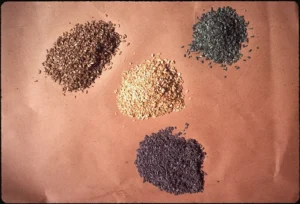
In the early 1900s, rodent control relied on a mix of harsh, fast-acting poisons. This included arsenic, strychnine, phosphorus paste, and in some specific contexts, fumigants made with cyanide used in ships, silos, and burrows.
These early products had no real antidote and were extremely dangerous to handle, both for the people applying them and for anyone who accidentally came into contact with them afterward.
Regulations at the time were minimal, and accidental poisonings, especially in children, were a serious and recurring problem.
Over the following decades, warfarin emerged as a major shift in rodenticide chemistry. It offered effective rodent control with a real, working antidote and a much more manageable safety profile for accidental human exposure.
This started the transition toward the anticoagulant products that dominate the market today.
What to Do If You’re Worried About Rat Poison Exposure
Regardless of which type of rat poison you’re dealing with, the response to a suspected exposure follows the same basic steps.
If someone swallowed rat poison, don’t induce vomiting unless Poison Control or a doctor specifically tells you to. Call Poison Control right away at 1-800-222-1222 in the US, and have the product packaging or label on hand if you can.
If it got on the skin, wash the area thoroughly with soap and water and remove any contaminated clothing. If it got in the eyes, rinse gently with clean water for several minutes.
Knowing the actual active ingredient matters here, since it helps medical professionals give the right treatment quickly. This is exactly why keeping the original packaging, or at least a photo of the label, is genuinely useful if you ever need to make that call.
Time also matters here in a way that’s easy to overlook. Because anticoagulant symptoms take days to show up, it’s tempting to assume that a lack of immediate symptoms means everything is fine.
Poison Control would still rather hear from you the same day an exposure happens than have you wait to see whether symptoms show up first.
Conclusion
Rat poison sold today doesn’t contain cyanide. The active ingredients you’ll actually find, whether it’s warfarin, brodifacoum, bromadiolone, or a non-anticoagulant like bromethalin or zinc phosphide, work through entirely different mechanisms than cyanide does.
The cyanide association comes from old fumigant use that fell out of practice decades ago, along with cyanide’s broader cultural reputation as a dramatic, fast-acting poison.
Neither of those things is what’s actually sitting in a bait station today.
If you’re ever unsure what a product contains, the label will tell you. That information matters if you ever need to call Poison Control or get medical help.
Understanding what you’re actually dealing with is always more useful than assuming the scariest possible answer.

Hi, my name is Ezra Mushala, i have been interested animals all my life. I am the main author and editor here at snakeinformer.com.