
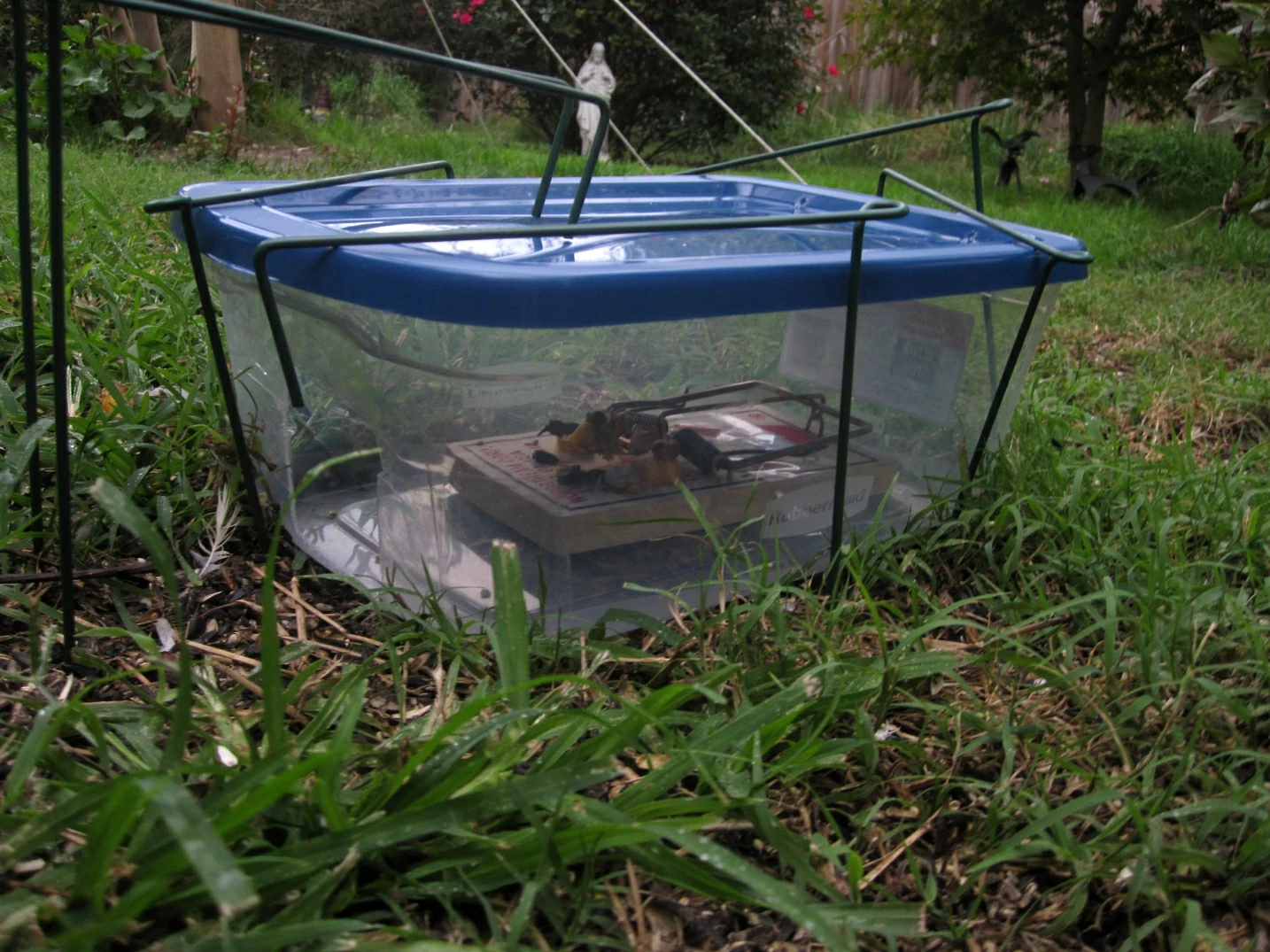
If you’re shopping for a live rat trap but you’ve never seen one before, it can be hard to know what you’re looking for on store shelves or online.
Live rat traps come in several different designs, and knowing what they look like helps you pick the right one for your situation. What does a live rat trap look like?
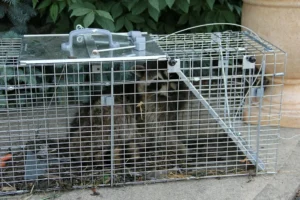
Most live rat traps look like small metal or plastic cages, typically 12 to 18 inches long, with a spring-loaded door on one end. They’re rectangular or cylindrical, with ventilation holes or bars on the sides, and a trigger plate inside that closes the door when a rat steps on it.
There are several different styles of live rat traps, and each one has a distinct appearance. Let’s look at the most common types and what makes them recognizable.
The Classic Cage Trap Design
This is what most people picture when they think of a live rat trap. It looks like a small cage, similar to what you might use to transport a pet hamster.
The trap is rectangular, usually about 12 to 18 inches long, 5 to 7 inches wide, and 5 to 7 inches tall. It’s made from metal wire or metal mesh.

One end of the cage has a door that lifts up like a garage door or slides to the side. When the trap isn’t set, this door is open.
The sides and top of the cage are made from wire bars or mesh. These allow air to circulate and let you see inside the trap.
Materials Used in Cage Traps
Most cage traps are made from galvanized steel wire. This material is strong, rust-resistant, and rats can’t chew through it.
The wire is usually about the thickness of a coat hanger. The gaps between the wires are small, maybe half an inch, so rats can’t squeeze through.
Some cheaper traps use plastic instead of metal. These are lighter and less expensive, but they’re not as durable.
You’ll also find traps made from powder-coated steel. The coating protects against rust and makes the trap easier to clean.
What the Door Looks Like
The door is the most distinctive feature of a cage trap. It’s a flat piece of metal or mesh that covers the entrance.
When you set the trap, the door is held in an open position by a small hook or lever. This is part of the trigger mechanism.

The door has a spring attached to it. You can usually see the spring on the outside of the trap, near the top or side of the door frame.
When the trap triggers, the spring pulls the door closed quickly. The door then locks in place with a latch or catch so the rat can’t push it back open.
The Trigger Plate Inside
If you look inside a cage trap, you’ll see a flat metal plate on the floor near the back of the cage. This is the trigger plate.
The plate is usually rectangular and covers most of the width of the trap. It’s connected to the door mechanism by a metal rod or lever.

When a rat steps on this plate, it pushes down slightly. This releases the hook holding the door open, and the door slams shut.
The trigger plate is often a different color than the rest of the trap, making it easy to spot. It might be copper-colored or a different shade of metal.
Tube-Style Live Traps
Tube traps look completely different from cage traps. They’re cylindrical, like a pipe or tunnel, instead of rectangular.
These traps are usually 10 to 16 inches long and 3 to 5 inches in diameter. They’re made from metal, hard plastic, or sometimes clear plastic.
Both ends of the tube have doors or openings. One end is where you put the bait, and the other end is where the rat enters.
When the rat walks far enough into the tube, a door closes behind it. The rat can’t back out because the door is now blocking its path.
Clear Plastic Tube Traps
Some tube traps are made from clear or translucent plastic. This lets you see if there’s a rat inside without opening the trap.
Clear traps are helpful because you can check them from a distance. You don’t have to get close or handle the trap to see if you’ve caught something.

The plastic is thick and hard, similar to the material used in storage containers. It’s strong enough that rats can’t chew through it easily.
These traps often have ventilation holes drilled along the sides. The holes are small circles, just big enough for air but too small for a rat to escape through.
Multi-Catch Trap Appearance
Multi-catch traps are designed to catch several rats at once. They’re bigger than single-catch traps, often 18 to 24 inches long.
They look like large rectangular boxes made from metal mesh or solid metal with ventilation holes. There’s usually a main chamber where rats collect.
The entrance is often on top of the trap. Rats climb a ramp or walk through a one-way door to get inside.
Some multi-catch traps have multiple compartments inside. You can see the dividers if you look through the mesh or ventilation holes.
One-Way Door Mechanisms
Many live traps use one-way doors. These doors are easy to recognize because they’re designed to swing in only one direction.
The door is usually cone-shaped or funnel-shaped. The wide part faces outward (where the rat enters), and the narrow part faces inward.
When the rat pushes through from the outside, the door swings open easily. But when the rat tries to push from the inside, the door won’t budge.
You’ll often see these doors in tube traps and multi-catch traps. They’re made from spring steel wire that naturally wants to return to the closed position.
Size Differences Based on Rat Type
Traps designed for Norway rats (the most common type) are usually larger than traps designed for roof rats.
Norway rat traps are typically 16 to 18 inches long because these rats are bigger and need more space.

Roof rat traps or mouse traps might be smaller, around 10 to 12 inches long. Make sure you buy the right size for the rats you’re dealing with.
If you’re not sure what kind of rat you have, go for a larger trap. It’s better to have a trap that’s too big than one that’s too small.
Color and Finish
Most commercial live rat traps are silver or gray because they’re made from galvanized steel or stainless steel.
Some traps have a black or dark gray powder coating. This coating helps prevent rust and makes the trap blend in better if you’re using it outdoors.
Green or brown traps are less common but might be marketed for outdoor use. The color helps them blend into natural environments.
Clear plastic traps are transparent or slightly tinted. The plastic might have a blue, green, or gray tint to it.
Handle and Carrying Features
Most cage traps have a handle on top so you can carry them without getting close to the trapped rat.
The handle is usually made from the same wire as the rest of the trap. It’s shaped like an arch or a loop.
Some traps have two handles, one on each end. This makes it easier to carry heavy traps or traps with multiple rats inside.
Tube traps might not have a handle. Instead, you carry them by gripping the tube itself, keeping your hands away from the entrance and exit.
Viewing Windows and Indicators
Some modern traps have viewing windows or clear panels. These are small sections of clear plastic built into the sides of the trap.
This feature lets you check if there’s a rat inside without having to lift or move the trap. It’s convenient and safer.
Electronic traps might have LED indicator lights on the outside. When the light turns on, it means a rat has been caught.
These lights are usually red or green, and they’re positioned on top or on the side of the trap where you can easily see them.
Ventilation Holes and Air Circulation
All live traps need ventilation so the rat can breathe. In cage traps, the wire bars provide plenty of air circulation.
Solid-sided traps have small holes drilled into the sides, top, and sometimes the bottom. These holes are usually circular and about a quarter-inch in diameter.

The holes are spaced evenly across the surface of the trap. There might be 20 to 50 holes depending on the size of the trap.
You’ll never see a completely solid trap with no ventilation. That would be inhumane and could kill the rat from heat or lack of oxygen.
Bait Placement Areas
Looking at a trap, you can usually see where you’re supposed to put the bait. In cage traps, there’s often a small cup or platform at the back.
This cup might clip onto the trigger plate or attach to the back wall of the cage. It holds sticky bait like peanut butter in place.
In tube traps, the bait area is usually at the closed end of the tube. You put bait there and the rat has to walk all the way through to reach it.
Some traps have built-in bait stations that look like small metal or plastic cups. Others just have a flat area where you smear the bait directly.
Safety Locks and Latches
Once the door closes, there’s usually a latch or lock that keeps it shut. This prevents the rat from pushing the door open from the inside.
The latch might be a simple hook that clips over a loop of wire. Or it might be a sliding mechanism that locks the door in place.
Some traps have safety locks that you have to manually engage after the door closes. This prevents accidental reopenings.
You can see these latches on the outside of the trap, usually near the door. They’re designed to be easy for humans to operate but impossible for rats.
Base and Stability Features
The bottom of most cage traps is flat and stable. Some traps have small rubber feet on the corners to prevent sliding.
These feet also protect floors from scratches if you’re using the trap indoors. They’re small round or square bumps made from rubber or plastic.

Tube traps might roll if you’re not careful. Some come with a stand or base that holds the tube steady.
The base is usually a separate piece that the tube sits in. It keeps the trap from rolling around or falling over.
Size Comparison to Common Objects
If you’re trying to picture how big a rat trap is, compare it to everyday objects. A typical cage trap is about the size of a shoe box.
It’s longer than a shoebox but roughly the same height and width. This makes it easy to fit in tight spaces or behind furniture.
Tube traps are about the size and shape of a large water bottle or thermos. You can hold one in one hand comfortably.
Multi-catch traps are bigger, closer to the size of a small briefcase or toolbox. They’re bulkier and need more space.
Weight of Different Trap Types
Empty cage traps usually weigh between 1 to 3 pounds, depending on whether they’re metal or plastic.
Metal traps are heavier but more durable. Plastic traps are lighter but might not last as long.
Tube traps are lighter, often less than a pound for plastic versions. Metal tube traps might weigh 1 to 2 pounds.
Multi-catch traps are the heaviest because they’re larger. They can weigh 3 to 5 pounds empty, and more when they contain rats.
Packaging and How They’re Sold
When you buy a trap in a store, it usually comes in a cardboard box with pictures and instructions printed on it.
The box shows what the trap looks like and often includes photos of it in action or diagrams explaining how it works.
Some traps are sold hanging on a pegboard hook in the hardware store. These might come in plastic packaging instead of boxes.
Online, you’ll see photos from multiple angles showing the trap with the door open, closed, and from the side. These help you understand the size and design.
Assembled vs. Unassembled Traps
Most commercial live traps come fully assembled and ready to use. You just take them out of the box and set them up.
Some cheaper traps or homemade kits might require assembly. You’d need to put pieces together using screws or clips.
If a trap needs assembly, the packaging will say so clearly. It’ll include instructions and all the necessary hardware.
Fully assembled traps are more convenient, while unassembled traps might be cheaper and take up less space during shipping.
Comparing Live Traps to Kill Traps
Live traps look completely different from snap traps or electric traps. Snap traps are flat wooden or plastic boards with a spring-loaded bar.
Electric rat traps look like enclosed boxes with a small entrance hole. You can’t see inside them like you can with cage traps.
Glue traps are flat cardboard or plastic trays with sticky surfaces. They don’t look like traps at all until you read the label.
Live traps are the most recognizable because they’re designed to contain a live animal. The cage structure makes this obvious.
Conclusion
Live rat traps typically look like small metal or plastic cages, about 12 to 18 inches long, with a spring-loaded door on one end and wire bars or mesh on the sides.
Other common designs include tube-style traps that look like cylinders with doors on each end, and multi-catch traps that resemble larger boxes with ventilation holes.
Most traps are silver, gray, or black, made from galvanized steel, stainless steel, or hard plastic. They have visible trigger plates inside, handles on top, and ventilation features.
When shopping for a live rat trap, look for sturdy construction, smooth-operating doors, and clear instructions. Quality traps are durable, reusable, and designed to catch rats humanely without causing harm.

Hi, my name is Ezra Mushala, i have been interested animals all my life. I am the main author and editor here at snakeinformer.com.