
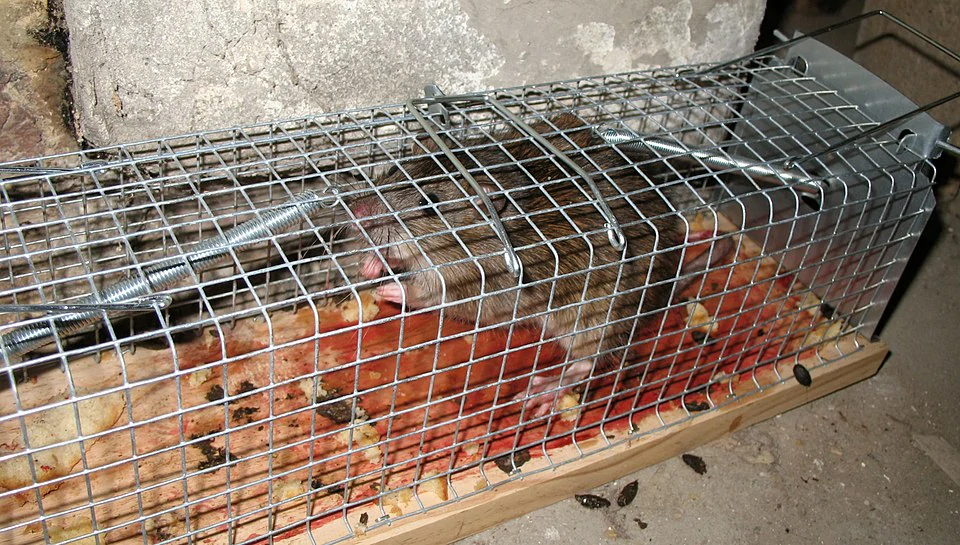
Live cage traps are a humane way to catch rats without killing them. They’re basically metal boxes with a spring-loaded door that closes when a rat steps on the trigger inside.
But if you’ve never used one before, the mechanism can look confusing. There are hooks, springs, and trigger plates, and you’re not quite sure how they all work together. How do you set a rat cage trap so it actually catches something?
To set a rat cage trap, open the door completely and lock it in place with the metal rod or hook provided. Place bait at the back of the trap behind the trigger plate. When a rat walks in to get the bait and steps on the trigger, the door releases and springs shut, trapping the rat inside.
The process is simpler than it looks, and once you’ve done it once or twice, you’ll be able to set a trap in under a minute. Let’s walk through the exact steps and some important tips.
Understanding How Cage Traps Work
Before you set the trap, it helps to understand the basic mechanism. This makes the setup process make more sense.
A cage trap has three main parts: the cage itself (usually wire mesh or metal bars), a spring-loaded door, and a trigger plate inside.
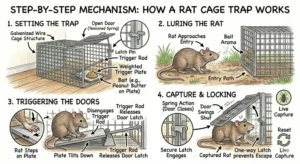
The trigger plate is a small metal platform near the back of the trap. When a rat steps on it or pushes it down, it releases the door.
The door is held open by a hook or rod that’s connected to the trigger mechanism. When the trigger activates, the hook releases and a spring pulls the door shut.
Once the door closes, it locks in place. The rat can’t push it back open from inside.
Different brands use slightly different mechanisms, but they all work on this same basic principle: bait draws the rat in, the rat triggers a release, the door shuts.
What You’ll Need Before Setting the Trap
You don’t need much to set a cage trap, but having everything ready before you start makes the process easier.
First, you need the trap itself. Make sure it’s clean and in good working condition. Check that the door swings freely and the spring isn’t rusty.
You’ll need bait. Peanut butter is the best choice for most situations. Have it ready before you start setting the trap.
Gloves are a good idea if the trap has been used before. You want to minimize your scent on the trap, and old traps might have bacteria.
A flashlight helps if you’re setting the trap in a dark area like a basement or crawl space.
If you’re setting the trap outside, you might want something to protect it from weather, like a tarp or a box to put over it.
Have a plan for what you’ll do with the rat once you catch it. You can’t just leave it in the trap indefinitely.
Step-by-Step: Setting the Trap
Let’s go through the actual process of setting a rat cage trap. We’ll use the most common single-door design as an example.
Step one: Place the trap on a flat, stable surface. Make sure it won’t tip over or rock when a rat walks inside.
Step two: Open the door all the way. It should swing up and back over the top of the trap.
Step three: Look for the metal rod or hook that holds the door open. This is usually attached to the door itself.
Step four: Hook this rod onto the trigger mechanism inside the trap. The exact method varies by brand, but there’s usually a notch or catch that the rod hooks into.

Step five: The door should now be held open by tension. It wants to close, but the hook is preventing it.
Step six: Place your bait at the very back of the trap, behind the trigger plate. Make sure the rat will have to walk all the way in to reach it.
Step seven: Carefully move your hands away from the trap. Don’t bump the trigger or the whole thing will snap shut on nothing.
The trap is now set. When a rat steps on the trigger plate, the hook releases and the door slams shut.
Setting Two-Door Cage Traps
Some cage traps have doors on both ends. These work basically the same way but require a couple extra steps.
With a two-door trap, you can choose to set one door or both doors. Setting both increases your chances of catching a rat.
Open both doors all the way and hook them both to their respective trigger mechanisms.
Place bait in the very center of the trap, not at either end. You want the rat to walk all the way to the middle from whichever end it enters.
Two-door traps are good for rats that like to have an escape route. They’re less suspicious of a tunnel they can see through than a box with only one opening.
The downside is that setting two doors takes longer and there’s more that can go wrong. A bump in the wrong place can release both doors at once.
Common Mistakes When Setting Cage Traps
A lot of people mess up their first few attempts at setting a cage trap. Here are the most common errors.
The biggest mistake is not putting the bait far enough back. If the bait is near the entrance, rats can sometimes grab it without stepping on the trigger.
Another mistake is bumping the trigger while setting the trap. This makes the door slam shut before you’ve even placed the trap, and you have to start over.
Some people put too much bait in the trap. A rat that’s full won’t work as hard to reach food farther back, reducing the chances it’ll trigger the trap.
Not securing the trap on a stable surface is another problem. If the trap rocks or tips when the rat walks in, the rat might jump out before the door closes.
Forgetting to check if the door actually locks when it closes is a critical error. Some old or damaged traps have doors that bounce back open. Test this before you set the trap for real.
Finally, people sometimes set the trap in the wrong location. The trap itself might be perfect, but if it’s not where rats are traveling, it won’t catch anything.
Where to Place Your Set Trap
Location matters just as much as proper setup. A perfectly set trap in the wrong spot won’t catch anything.
Rats travel along walls and edges. They don’t like being out in the open. Place your trap right up against a wall.
Position it so the entrance faces along the wall, not out into the room. Rats running along the baseboard should encounter the trap entrance naturally.
Look for signs of rat activity: droppings, gnaw marks, greasy rub marks on walls, or chewed food packages.
Good locations include: behind appliances, under sinks, in corners of basements or garages, along fence lines outside, near trash cans or compost bins.
Don’t put the trap in high-traffic areas where people or pets will disturb it. Rats won’t investigate a trap in a noisy, active spot.
In outdoor settings, try to put the trap under some kind of cover. A bush, a porch, or under a deck works well. This gives rats a sense of security.
How to Tell If Your Trap Is Set Correctly
Before you walk away from a set trap, do a quick check to make sure everything is right.
Gently shake or tap the trap. The door should stay open and not fall on its own. If it does, the hook isn’t properly engaged.
Look at the trigger mechanism. There should be visible tension. If the trigger plate is loose or floppy, something isn’t connected right.

Check that the bait is positioned correctly. It should be at the very back, forcing the rat to walk all the way in.
Make sure nothing is blocking the door’s path. Leaves, sticks, or debris can prevent the door from closing all the way.
Test the trigger by gently pushing it with a stick (from outside the trap, not from inside where you might get your hand caught). The door should snap shut immediately.
Once you’ve verified everything works, reset the trap and place it in its final location.
Safety Considerations When Setting Traps
Cage traps are much safer than snap traps, but there are still a few things to watch out for.
The door can close with significant force. Keep your fingers clear of the door area when the trap is set.
If you’re testing the trap, use a stick, not your hand. The door won’t break bones, but it can pinch painfully.
Old traps can have sharp edges or rust. Wear gloves when handling them, especially if you’re setting a trap that’s been in a garage for years.
If you have pets, make sure they can’t get into the trap. A curious cat or small dog could trigger it and get trapped inside.
Kids should never handle set traps. Teach them not to touch traps at all, and keep traps in areas kids can’t access.
Wash your hands after handling traps, especially used ones. Rats can carry diseases, and old traps might have bacteria on them.
Dealing with Trap-Shy Rats
Some rats are smart enough to avoid traps, especially if they’ve seen other rats get caught before.
If you’ve had a trap set for several days without catching anything, the rats might be trap-shy.
Try pre-baiting. Leave the trap in place with bait inside but prop the door open so it can’t close. Let rats eat from it safely for a few days.

Once they’re comfortable going in and out, set the trap normally. They’ll walk in like usual, but this time the door will close.
You can also try different trap locations. A trap-shy rat might avoid one spot but investigate a trap placed somewhere else.
Covering the trap with a towel or newspaper can make it less obvious and scary-looking. Leave the entrance uncovered so rats can still get in.
Using really attractive bait can overcome caution. If the food is tempting enough, even a suspicious rat will eventually take the risk.
How Often to Check Your Traps
You need to check cage traps frequently, even more often than snap traps.
A rat trapped in a cage is alive and stressed. It can survive for a day or two without food, but it’ll be suffering the entire time.
Check traps at least twice a day: once in the morning and once at night. Rats are most active at dawn and dusk.
If you catch a rat, deal with it immediately. Don’t leave it in the trap for hours while you figure out what to do with it.
In hot weather, check even more often. A rat in a cage trap in direct sunlight can die from heat stress in just a few hours.
If you can’t commit to checking traps at least twice daily, cage traps aren’t the right choice for you. Use snap traps instead, or hire a professional.
Resetting the Trap After a Catch
Once you’ve caught a rat and removed it from the trap (or relocated it if that’s your plan), you need to reset the trap.
First, clean the trap. Use soap and water to wash out any urine, droppings, or other mess the rat left behind.
Rinse it thoroughly and let it dry. You don’t want soap smell lingering on the trap.
Some people disinfect the trap with a diluted bleach solution (one part bleach to ten parts water). If you do this, rinse extremely well afterward.

Once the trap is clean and dry, put fresh bait in and set it up again exactly like you did the first time.
If you caught a rat in a certain location, chances are there are more rats using that same path. Keep the trap in the same spot.
Continue trapping until you’ve gone at least a week without catching anything. This usually means you’ve gotten them all.
Troubleshooting: Why Your Trap Won’t Catch Rats
You’ve set the trap correctly, put it in a good spot, and used the right bait, but you’re still not catching anything. What’s wrong?
First possibility: there might not be as many rats as you think. Sometimes people see one rat multiple times and think they have an infestation.
Second: the rats might be finding easier food elsewhere. Remove all other food sources to make your trap the best option.
Third: your bait might not be fresh. Replace it every few days. Old, dried-out peanut butter doesn’t smell as strong.
Fourth: the trap might be making noise when rats approach. A creaky door or rattling metal can scare them off. Oil any squeaky hinges.
Fifth: your scent might be on the trap. Rats have a good sense of smell and they’re suspicious of human scent. Wear gloves when setting traps.
Sixth: the trigger might be too sensitive or not sensitive enough. Adjust it if possible, or try a different trap.
Using Multiple Cage Traps
If you’ve got a serious rat problem, one trap won’t be enough. You’ll need several traps to catch rats efficiently.
Set traps in multiple locations where you’ve seen rat activity. More traps mean more chances to catch rats.
Space them out along walls and in different rooms. Don’t cluster them all in one spot.

You can set three to five traps without it being too much work to manage. More than that and you’ll spend all day checking traps.
Stagger the placement. If rats are avoiding one trap, they might walk right into another one a few feet away.
Keep track of which traps are catching rats and which aren’t. Move unsuccessful traps to better locations.
Buy traps that are all the same design so you don’t have to remember different setting mechanisms for each one.
Frequently Asked Questions:
How to Set a Wire Cage Rat Trap?
To set a wire cage rat trap, place bait at the far end of the trap, lift the door until it locks in the open position, hook the door rod to the trigger plate to create tension, and position the trap along walls where rats travel. When a rat steps on the trigger plate while reaching for the bait, the door releases and slams shut behind them.
How to Set a Wire Cage Rat Trap?
To set a wire cage rat trap, place bait at the far end of the trap, lift the door until it locks in the open position, hook the door rod to the trigger plate to create tension, and position the trap along walls where rats travel. When a rat steps on the trigger plate while reaching for the bait, the door releases and slams shut behind them.
Conclusion
Setting a rat cage trap is straightforward once you understand the mechanism. Open the door fully and hook it to the trigger inside the trap, place bait at the very back behind the trigger plate, and position the trap along walls where rats travel.
When a rat steps on the trigger to reach the bait, the door springs shut and traps it inside.
Check your traps at least twice a day, clean them between uses, and place them in locations where you’ve seen actual rat activity. With the right setup and placement, cage traps are an effective and humane way to catch rats.
The key is patience and persistence. It might take a few days for rats to investigate a new trap, but once they do, a properly set cage trap will catch them reliably.

Hi, my name is Ezra Mushala, i have been interested animals all my life. I am the main author and editor here at snakeinformer.com.