
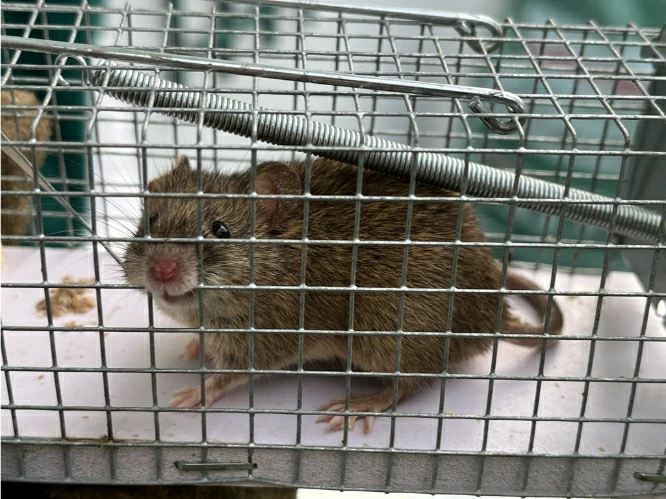
Live traps (cage traps) offer a more humane alternative to snap traps when you’re dealing with rats. Instead of killing the rat, these traps catch and hold it so you can release it somewhere else.
But once you’ve caught a rat, you can’t just leave it there indefinitely. The animal needs food, water, and eventually freedom. How long can a rat survive in a live trap?
A healthy rat can survive in a live trap (cage trap) for about 24 to 48 hours without water, and up to a week without food. However, stress, heat, and poor ventilation can reduce this time significantly. In hot conditions or small, poorly ventilated traps, a rat might die from stress or heat exhaustion in as little as 4 to 8 hours.
The clock starts ticking the moment the trap closes. You need to check your traps regularly and deal with any caught rats quickly.
Leaving a rat too long in a trap isn’t just inhumane. It can also lead to a dead rat inside your trap, which creates a whole new set of problems.
Why Water Matters More Than Food
Rats can go surprisingly long without food. In the wild, they’re used to periods where food is scarce, and their bodies are adapted to handle it.
But water is a different story. Rats need water constantly, especially because they’re so active and have fast metabolisms.

A rat without water will start to show signs of severe dehydration within 24 hours. After 48 hours, dehydration becomes life-threatening.
The first symptoms are lethargy and weakness. The rat will stop moving around as much and will seem less alert.
After that comes organ failure. The kidneys start shutting down first, followed by other vital organs. Death usually occurs within 2 to 3 days without water.
How Stress Speeds Up Dehydration
When a rat gets caught in a trap, it doesn’t just sit there calmly waiting. It’s terrified. It’ll try to escape, running around inside the trap, biting at the bars, and generally panicking.
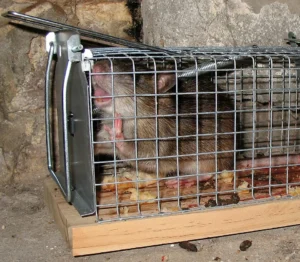
All this activity uses up water fast. The rat is breathing heavily, its heart is racing, and it’s burning through its energy reserves.
Stress also causes the rat to urinate and defecate more, which makes dehydration happen even faster.
In a calm environment with cool temperatures, a rat might make it 48 hours without water. But in a stressful trap situation, that time gets cut down to 24 hours or less.
Temperature Makes a Huge Difference
If you’ve set a trap in a hot attic during summer, a rat might not survive more than 8 to 12 hours. The heat combined with stress and no water is a deadly combination.
Rats can’t sweat like humans do. They regulate their temperature by staying in cool places and by spreading saliva on their fur. In a hot, enclosed trap, they can’t do either.

Heat exhaustion sets in quickly. The rat’s body temperature rises, and it starts panting. This uses up even more water through respiration.
Eventually, the rat’s organs start shutting down from the heat. Death can happen within half a day in extreme conditions.
Cold temperatures are less immediately dangerous, but they still cause problems. A rat in a cold trap uses more energy trying to stay warm, which mea
ns it needs more food and water to survive.
How Trap Size and Ventilation Affect Survival
Small, cramped traps are worse for rats than larger ones. In a tiny trap, the rat can’t move around much, which adds to its stress.
More importantly, small traps often have poor air circulation. The rat can actually use up the available oxygen if the trap is too enclosed.
Combine poor ventilation with the rat’s rapid breathing from panic, and you can have a situation where the rat suffocates or at least becomes severely oxygen-deprived.
Larger traps with good ventilation give the rat more breathing room (literally). They’re still stressful, but at least the rat isn’t struggling to breathe on top of everything else.
Signs That a Trapped Rat Is in Distress
When you check on a trapped rat, you can tell how it’s doing by watching its behavior. A rat that’s still healthy will be active, trying to escape, and moving around the trap.
A rat that’s becoming dehydrated will be less active. It might be lying down or moving very slowly. Its eyes might look sunken and its fur might appear dull or rough.
If the rat is barely moving at all, breathing heavily, and not responding when you approach, it’s in serious trouble. This rat needs water immediately or it’s going to die soon.
Heavy breathing, open-mouth panting, and a wet appearance (from spreading saliva to cool down) are signs of heat stress.
What Happens After 24 Hours
At the 24-hour mark, most rats are still alive but starting to suffer. They’re dehydrated, stressed, and exhausted from trying to escape.
Their energy levels are dropping, and they’re becoming weaker. They might still try to escape when you approach, but their efforts will be less frantic.
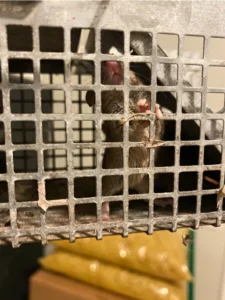
This is really the maximum time you should ever leave a rat in a live trap. Beyond this point, you’re risking serious harm to the animal.
After 48 hours, you’re getting into dangerous territory. The rat is severely dehydrated and might be suffering from organ damage.
By 72 hours, many rats won’t survive even if you release them. The damage from dehydration and stress is too severe.
Young Rats vs. Adult Rats
Baby rats and juveniles can’t handle being trapped as long as adults. They have faster metabolisms and smaller body reserves.
A young rat might only survive 12 to 18 hours without water, compared to 24 to 48 hours for an adult.
Young rats also panic more and stress out faster, which speeds up dehydration even more.
If you catch what looks like a young rat, you need to deal with it even more quickly than you would an adult.
Pregnant or Nursing Rats
Pregnant rats need extra water and food to support their developing babies. They won’t last as long in a trap as a non-pregnant rat.
Nursing mothers are in even worse shape. They’re producing milk, which requires a lot of water. A nursing rat might only survive 12 to 18 hours without water.

If you catch a rat and it has visible nipples or looks pregnant, you need to act fast. There might also be babies somewhere nearby that will die without their mother.
Can You Give Water to a Trapped Rat?
If you can’t release a rat right away, you might be wondering if you can give it water while it’s still in the trap.
The answer is yes, if your trap allows it. Some live traps have small openings where you can slide in a water bottle cap or small dish.
This isn’t a long-term solution, but it can buy you some time if you can’t deal with the rat immediately.
Just be careful when opening the trap or inserting anything. Rats can bite through small openings, and a desperate, scared rat might try to attack.
The Legal Side of Keeping Rats Trapped
In many areas, there are actually laws about how long you can keep an animal in a trap. These laws are designed to prevent unnecessary suffering.
Some states require you to check live traps every 12 hours. Others say 24 hours. A few don’t have specific requirements, but that doesn’t mean it’s okay to leave a rat trapped for days.

There are also laws about where you can release trapped rats. In most places, you can’t just let them go in a park or nature preserve.
And in some areas, it’s actually illegal to relocate rats at all. You’re supposed to euthanize them instead.
What About Rats That Die in the Trap?
If you don’t check your trap often enough, you might find a dead rat instead of a live one. This creates several problems.
First, there’s the smell. A dead rat starts decomposing quickly, especially in warm weather. Within 24 to 48 hours, the smell can be really bad.
Second, the dead rat can attract other pests. Flies will lay eggs on the carcass, leading to maggots. Other rats might even be attracted to investigate.
Third, you’ve defeated the whole purpose of using a live trap. The rat suffered and died anyway, and you still have to dispose of a dead animal.
How Often Should You Really Check Live Traps?
The absolute minimum is every 24 hours, but that’s pushing it. Twice a day (every 12 hours) is much better.
If you’re in a hot climate or it’s summer, you should check even more often. Every 8 hours isn’t too much in these conditions.

Think about your schedule when you set the trap. Don’t set a trap at 8 PM if you won’t be able to check it until 6 PM the next day. That’s 22 hours, which is too long.
Set the trap when you know you’ll be around to check it regularly.
What to Do When You Find a Live Rat
First, don’t panic. The rat is more scared than you are. Approach calmly and cover the trap with a towel or cloth. This helps calm the rat down.
Decide quickly what you’re going to do. Are you releasing it, relocating it, or taking it to someone who can euthanize it?
If you’re releasing it, do it far from your house (at least a mile away if local laws allow). Rats have excellent navigation skills and can find their way back.
Choose a release site with water, shelter, and food sources. Releasing a rat in an open field with no resources is basically a slow death sentence.
If the rat seems sick, injured, or extremely dehydrated, it might not survive release. In that case, the humane thing is euthanasia, not release.
Signs a Rat Won’t Survive Release
If the rat is barely moving and doesn’t try to escape when you open the trap, it’s in bad shape. This rat has been trapped too long.
Sunken eyes, labored breathing, and inability to stand are all bad signs. The rat might die shortly after release even if you provide water.

In these cases, you have two choices: take the rat to a vet for euthanasia, or if you’re able, euthanize it yourself quickly and humanely.
Releasing a rat that’s this far gone is just prolonging its suffering. It won’t survive in the wild in this condition.
Can Rats Hurt Themselves Trying to Escape?
Yes, they absolutely can. Rats will bite at the bars of a trap, sometimes breaking their teeth or injuring their mouth.
They’ll throw themselves against the walls of the trap repeatedly, which can cause bruising or internal injuries.
Some rats will chew on their own feet or tail out of stress and desperation. This is a sign of extreme distress.
The longer a rat is in a trap, the more likely it is to hurt itself. This is another reason why quick action is so important.
Multiple Rats in One Trap
Some traps can catch more than one rat. If you find multiple rats in a single trap, the survival time goes down for all of them.
More rats means more competition for whatever oxygen is available. It also means more panic and stress.
Rats might fight each other when trapped together, leading to injuries. Dominant rats might hurt weaker ones.
If you catch multiple rats, you need to deal with the situation even faster than you would for a single rat.
What About Overnight?
A lot of people set traps in the evening and plan to check them in the morning. That’s usually okay as long as we’re talking about 8 to 10 hours, not 12 or more.
But if you set a trap right before going to bed and don’t check it until after you get home from work the next day, that’s too long.
Plan your trap-setting around when you can actually check it. If you work long hours, set the trap when you get home, not before you leave.
Or set it early in the morning on a day off, so you can check it that evening and the next morning.
Alternatives If You Can’t Check Often
If your schedule doesn’t allow for frequent trap checks, live traps might not be the right choice for you.
Electronic traps kill quickly and don’t require immediate attention. You can check them once a day without worrying about animal suffering.
Snap traps are similar (though they have their own issues, as we covered in another article).
Professional pest control is another option. They’ll handle the traps and all the checking for you.
Conclusion
A rat can technically survive in a live trap for up to 48 hours without water, but that doesn’t mean it should.
After 24 hours, the rat is suffering from dehydration, stress, and exhaustion. In hot conditions or poor ventilation, that time drops to as little as 8 to 12 hours.
If you’re using live traps, you need to commit to checking them at least every 24 hours, preferably every 12 hours.
The whole point of live traps is to be more humane. But if you’re not checking them regularly, they can actually cause more suffering than a quick-kill trap. Set them responsibly, check them often, and deal with caught rats as quickly as you can.

Hi, my name is Ezra Mushala, i have been interested animals all my life. I am the main author and editor here at snakeinformer.com.