

You’ve got a rat problem but you don’t want to cause unnecessary suffering to the animals. Maybe you’re uncomfortable with the idea of snap traps breaking their necks, or you’ve heard horror stories about rats suffering on glue traps for days.
You’re wondering if there’s a better way to deal with rats without being cruel. Can you get humane rat traps?
Yes, humane rat traps are widely available. Live catch traps (also called cage traps or box traps) catch rats alive without harming them, allowing you to release them elsewhere. Electronic traps that kill instantly are also considered humane because they cause death in seconds rather than prolonged suffering.
Humane doesn’t necessarily mean catch-and-release. It means minimizing pain and suffering, whether that’s by catching rats alive or by killing them as quickly as possible.
What Makes a Rat Trap Humane?
Understanding what counts as humane helps you choose the right trap for your situation.
A humane trap either catches the rat alive without injury, or kills it so quickly that the rat doesn’t have time to suffer. The key is avoiding prolonged pain, fear, or distress.

Live catch traps are humane because they don’t hurt the rat at all. The rat walks into a cage or box, triggers a door mechanism, and gets trapped inside unharmed. You can then decide what to do with it.
Instant kill traps are considered humane if they work properly. A trap that kills in under a second doesn’t give the rat time to feel pain. Electronic traps and well-designed snap traps fall into this category when they function correctly.
Traps that cause slow death or prolonged suffering aren’t humane. Glue traps are widely considered the least humane option because rats can be stuck for hours or days, struggling and suffering the whole time.
Poison baits aren’t usually considered humane either. Most rat poisons cause internal bleeding that takes several days to kill the rat. The rat feels sick and weak during this time before finally dying.
The reliability of the trap matters too. A snap trap that works 95% of the time but occasionally just injures the rat and leaves it suffering isn’t truly humane. Humane traps need to work consistently.
Live Catch Traps: How They Work
Live catch traps are the most obviously humane option since they don’t harm the rat at all.
These traps are usually metal cages or plastic boxes with a door on one or both ends. The rat walks in to get bait, steps on a trigger plate, and the door snaps shut behind it. The rat is now trapped but completely unharmed.
The trigger mechanism is designed to be sensitive enough to catch even lightweight rats. As soon as the rat puts weight on the plate, the door releases. The rat can’t escape because the door only opens inward or is completely blocked once it closes.
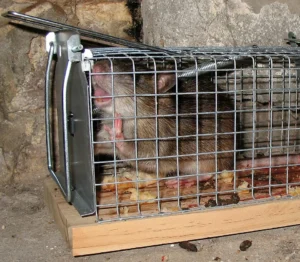
Most live catch traps are fairly small, designed to hold one rat at a time. They’re usually about 10 to 12 inches long and a few inches wide and tall. This size works for both mice and rats without being unnecessarily large.
Some live catch traps have clear plastic or mesh sides so you can see if you’ve caught something without opening the trap. This is helpful because you don’t want to release a caught rat accidentally while checking the trap.
Ventilation holes keep the rat from suffocating if it’s in the trap for a while. Good live catch traps have plenty of air holes so the rat can breathe comfortably even if you don’t check the trap for several hours.
The trap should be solid enough that the rat can’t chew through it or break out. Metal traps are more durable than plastic ones. Rats have very strong teeth and can gnaw through thin plastic given enough time.
Electronic Traps: Quick Kill Technology
Electronic traps kill rats instantly using high-voltage electricity, making them a humane alternative to traditional snap traps.
The rat enters a tunnel or box that contains metal plates on the floor and ceiling. When the rat’s body makes contact with both plates at once, it completes an electrical circuit and receives a powerful shock.
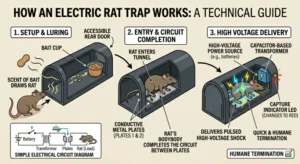
The shock is strong enough to stop the rat’s heart immediately. Most manufacturers claim their traps kill in under 3 seconds, with many killing in under 1 second. This is fast enough that the rat doesn’t have time to suffer.
The trap uses batteries, usually four C or D batteries. The batteries provide enough power for dozens of kills before needing replacement. Some models can kill up to 50 rats on one set of batteries.
An indicator light tells you when the trap has caught something. This is important because you need to remove dead rats promptly. You don’t want a dead rat sitting in the trap for days.
The design prevents the rat from escaping once it enters. The tunnel is just big enough for a rat to walk through, and once it’s far enough inside to trigger the plates, there’s no room to turn around.
Safety features prevent accidental shocks to humans and pets. Most traps won’t activate unless the tunnel entrance is closed or unless sensors detect something inside. You still need to be careful, but they’re designed with safety in mind.
Multi-Catch Live Traps
These traps can catch multiple rats alive without resetting, which is useful if you have a serious rat problem.
The trap is a larger box or cage with one-way doors. Rats can push their way in through swing doors or small openings, but they can’t push back out. Multiple rats can be caught in the same trap over several days.
The one-way doors usually work on a simple hinge or spring mechanism. The rat pushes against the door to enter, it swings open, and then it closes behind the rat. The door doesn’t open from the inside.
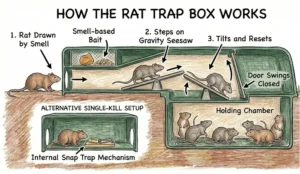
These traps need to be checked frequently, at least once a day. Multiple rats trapped together for too long can fight, injure each other, or die from stress and lack of water. Daily checks keep this from happening.
Some multi-catch traps can hold 10 or more rats at once. This makes them efficient if you’re dealing with a large infestation. You can catch many rats without having to reset the trap after each catch.
The traps are usually made from heavy-duty galvanized metal to withstand outdoor conditions and prevent rats from chewing through. They’re more expensive than single-catch traps but worth it for serious rat problems.
You’ll need to provide water if rats might be in the trap for more than a few hours. Some people put a small water bottle or dish inside to keep trapped rats hydrated until they can be released or dealt with.
Are Snap Traps Ever Humane?
Traditional snap traps can be humane if they’re designed well and used correctly, but they’re less reliable than electronic traps.
A good snap trap kills by breaking the rat’s neck or spine instantly. When the bar comes down across the rat’s head or body with enough force, death is immediate. The rat doesn’t have time to feel pain.
The problem is that snap traps don’t always work perfectly. Sometimes the trap catches just a leg or tail, leaving the rat injured and suffering. Sometimes the trap doesn’t hit hard enough to kill instantly.
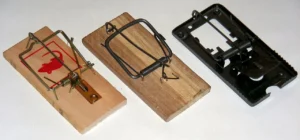
Larger, heavy-duty snap traps designed specifically for rats are more humane than smaller mouse traps used on rats. Rat-sized traps have stronger springs and larger kill bars that are more likely to result in instant death.
Proper placement affects how humanely the trap works. If the trap is positioned correctly and the rat approaches from the right direction, the kill is more likely to be instant. Poor placement can result in partial catches that don’t kill.
Using the right bait and trap sensitivity helps too. If the trap is too sensitive, it might snap before the rat is in the right position for a clean kill. If it’s not sensitive enough, the rat might eat the bait without triggering the trap.
Many people consider modern electronic traps more humane than snap traps simply because they’re more consistent. A well-functioning electronic trap kills the same way every time, while snap traps have more variables.
What About Glue Traps?
Glue traps are widely considered the least humane option and should be avoided if you care about animal welfare.
The rat gets stuck and can’t escape, often for hours or even days. During this time, it struggles violently, trying to free itself. The struggling causes exhaustion, stress, and sometimes injuries.
Rats stuck on glue traps can break their own bones trying to pull free. They might rip off skin or pull out fur in their attempts to escape. Some rats will chew off their own legs to get free, which is horrific.
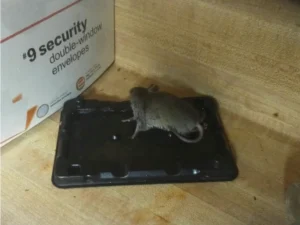
Death on a glue trap usually comes from exhaustion, dehydration, or stress rather than from any quick mechanism. A rat might be alive and suffering on the trap for 24 hours or more before it finally dies.
Some people try to make glue traps more humane by checking them very frequently and euthanizing caught rats immediately. But this defeats the purpose of using glue traps in the first place and creates an unpleasant task of having to kill the rat yourself.
Animal welfare organizations and many pest control professionals don’t recommend glue traps. Organizations like the Humane Society actively campaign against their use because of the suffering they cause.
If you care about treating rats humanely, avoid glue traps completely. There are better options that don’t involve prolonged suffering.
The Ethics of Catch and Release
If you use live catch traps, you need to think about what you’ll do with the rats you catch.
Releasing rats near your home means they’ll probably just come back. Rats have good homing instincts and can find their way back from surprisingly long distances. You need to take them at least a few miles away.
Releasing rats in random outdoor areas just makes them someone else’s problem. The rat still needs food and shelter, and it will likely move into the nearest building or home it can find.

Released rats might not survive in unfamiliar territory. If they’re released in an area where other rats have already established territories, they might be attacked or driven away. They might not find food and water quickly enough.
Some areas have laws against relocating wild animals, including rats. You might be breaking the law by catching rats and releasing them elsewhere. Check your local regulations before using this approach.
Many people who use live catch traps end up euthanizing the rats themselves rather than releasing them. They prefer this to snap traps or poison because they can control exactly how and when the rat dies, making sure it’s quick.
The most common DIY euthanasia method is drowning. You submerge the entire cage in water for several minutes until the rat is dead. This isn’t as humane as electronic traps but it’s faster than poison or glue traps.
Where to Buy Humane Rat Traps
Humane rat traps are easy to find both online and in stores.
Hardware stores like Home Depot and Lowe’s carry live catch traps and electronic traps. They’re usually in the pest control aisle alongside snap traps and poison baits. The selection varies by store but most carry at least a few options.
Pet stores sometimes carry humane traps, particularly live catch types. These might be marketed for catching and relocating small animals rather than specifically for rats, but they work the same way.
Online retailers like Amazon have the widest selection. You can find dozens of different live catch traps, electronic traps, and multi-catch traps. Reading reviews helps you figure out which ones actually work well.
Pest control supply companies sell professional-grade humane traps that are often more durable than consumer versions. These cost more but they’re built to last and work more reliably.
Some specialty stores focus on humane pest control and carry products specifically chosen for their effectiveness and animal welfare standards. These stores might cost more but their product selection is curated for people who care about humane treatment.
Prices range from about $10 for basic plastic live catch traps to $50 or more for high-end electronic traps. Multi-catch traps and professional-grade models can cost even more.
How Well Do Humane Traps Actually Work?
Humane traps can be just as effective as traditional traps if you use them correctly.
Live catch traps work very well if you bait them properly and place them in the right locations. Rats are attracted to the bait, enter the trap, and get caught. The success rate is similar to snap traps when used by experienced people.

Electronic traps are extremely effective when they work properly. They catch and kill rats reliably with very few failures. The main limitation is that they’re designed for one rat at a time, so you need to check and empty them regularly.
Multi-catch traps are excellent for serious infestations. Their ability to catch multiple rats without resetting makes them more efficient than single-catch traps when you’re dealing with many rats.
The biggest factor in trap effectiveness is user error, not the trap design itself. Placing traps in the wrong locations, using poor bait, or not checking traps frequently enough will reduce success regardless of what type you use.
Humane traps take the same amount of effort to use as inhumane ones. You still need to figure out where rats are traveling, choose good bait, and check traps regularly. The trap being humane doesn’t make it automatically easier or harder to use.
Some people find that rats are more willing to enter live catch traps than snap traps because there’s no dead rat smell to scare them away. Each rat you catch doesn’t make the trap smell like death the way snap traps do.
Conclusion
Yes, you can absolutely get humane rat traps. Live catch traps let you catch rats alive and unharmed so you can release them elsewhere (though you’ll need to think carefully about where and whether that’s legal in your area). Electronic traps kill rats in seconds, which is fast enough to be considered humane.
The key is avoiding methods that cause prolonged suffering. Skip glue traps and slow-acting poisons if you care about treating rats humanely. Choose traps that either don’t hurt the rat at all or kill it so quickly that there’s no time for suffering.
Humane traps work just as well as traditional traps when used correctly. Place them where rats travel, use good bait, check them frequently, and maintain them properly. The trap being humane doesn’t make it any less effective at catching rats.
Remember that the most humane approach is preventing rat problems in the first place. Seal entry points, remove food sources, and make your property less attractive to rats. The best trap is the one you never need to use.

Hi, my name is Ezra Mushala, i have been interested animals all my life. I am the main author and editor here at snakeinformer.com.