
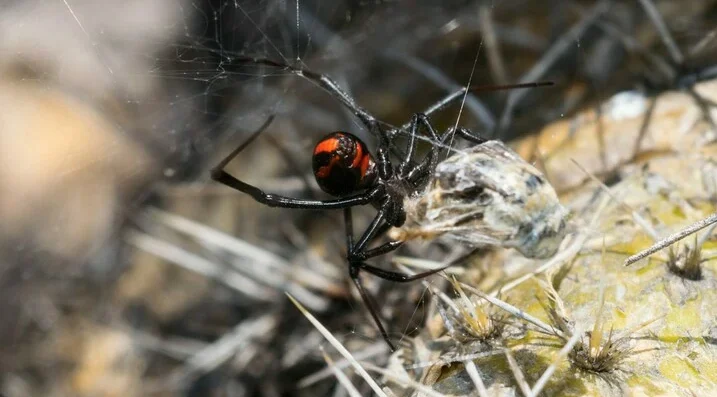
Sticky glue traps catch anything that crawls across them, and spiders end up stuck on them all the time. But are glue traps inhumane for spiders?
Glue traps can be inhumane for spiders. A stuck spider can’t get free, and it may struggle for a long time before it dies. Nobody knows how much spiders feel, but a slow death on glue is still a concern.
Spiders get caught because a glue trap can’t tell a spider from any other bug. And since most spiders help your home by eating pests, catching them often does more harm than good.
How Do Spiders End Up On Glue Traps?
It usually happens by accident. You set a sticky trap along the baseboard for roaches or crickets, and a spider wanders across it on its way to hunt.
Spiders walk a lot more than you’d think, especially the hunting kinds (the ones that don’t rely on webs) that roam your floors at night looking for insects to eat.
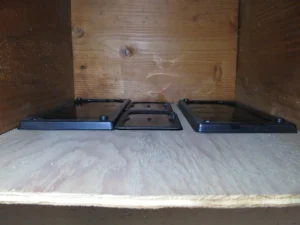
Wolf spiders and jumping spiders don’t build webs to catch their food (they chase it down instead), so they cover plenty of ground.
Even web builders like the common house spider leave their corners now and then, usually when they need a new spot to settle in.
Put a sticky trap in their path, and it catches them as easily as it catches a beetle or a cricket.
Some boards are even sold for spiders, and the label often names the brown recluse or the black widow, so it’s no surprise that so many spiders get caught.
Spiders Walk Right Into Traps Meant For Other Bugs
Sticky traps catch anything that crawls, and they have no way to pick and choose between a pest and a helpful hunter.
That’s why a trap set for roaches can end up holding spiders, crickets, beetles, and even a small centipede (a long bug with lots of legs).
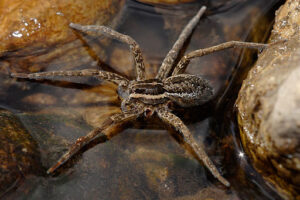
Pest control pros know this, and they use it. They read a sticky trap like a report card on what’s moving around your home.
If you keep finding spiders on a trap, that’s a clue that your home probably has plenty of bugs for them to eat.
So the spiders aren’t really the problem, because they’re just a sign of one.
The trouble is that the trap can’t tell a helpful hunter from an unwelcome guest, so it holds both the same way.
What Happens To A Spider Stuck On A Glue Trap?
A spider has eight legs, and that works against it on glue, because once a few legs stick, it can’t pull the rest free.
The struggle makes things worse, since every twist presses another leg or another part of the body into the glue.
A stuck spider can’t eat or drink, and it can’t get back to its web or its hiding spot.
Many spiders can drop a leg to escape a predator (a trick called autotomy, which means letting go of a body part on purpose). However, one leg usually isn’t enough when glue holds the whole body.
Spiders can go a long time without food, sometimes weeks, and although a stuck spider won’t last forever without water, it could still be alive for a day or more.
A mother wolf spider carries her egg sac on the back end of her body, and later her babies ride on her back. If she gets stuck, her young can get stuck with her.
Either way, it’s a slow ending, and that’s the heart of the problem.
Can Spiders Actually Feel Pain?
Here’s the honest answer: nobody knows for sure. Spiders have been studied far less than insects like cockroaches, so there’s much less evidence to go on.
We do know spiders react to harm. In one early study on pet tarantulas, the spiders pulled a leg away from a hot surface, and painkillers like morphine changed that reaction.
That reaction is called nociception (the body’s way of sensing something harmful), and most animals have it.
However, sensing harm isn’t the same as feeling pain, and that’s where experts still argue.
A spider’s body plan is very different from ours, with a brain made of fused clusters of nerve cells (called ganglia) in the front of the body.
That doesn’t prove spiders can’t feel pain, but it makes the question harder to answer.
A big 2022 review found strong evidence for pain in insects like cockroaches and flies, but it didn’t cover spiders, since they’re arachnids and not insects.
So for spiders, the honest answer is “maybe,” and the evidence is thinner than it is for roaches.
The Science On Spider Pain Is Thin, So Caution Makes Sense
When the evidence is thin, you have to decide how much risk you’re comfortable with.
A glue trap isn’t a quick death, so if a spider can feel anything, the suffering could last for hours or even days.
Meanwhile, catching a spider in a cup takes a few seconds and costs nothing, and that big gap in effort is why many people lean toward the gentle option when they aren’t sure.
Most animal welfare laws leave out spiders and other creatures without a backbone, so this one is up to you.
Using a glue trap doesn’t make you a bad person. It just means the question deserves a real answer instead of a shrug.
Most Spiders Are Harmless And Actually Help Your Home
Plenty of people think spiders are dangerous, but most of them aren’t.
The jaws of most house spiders are too small to bite a person, and spiders can’t spread diseases the way mosquitoes and flies can.
Most spiders do have venom (the liquid they use to stop their prey). It’s made for small meals like flies, not for hurting people.
What they do is eat other bugs, including flies, mosquitoes, ants, and sometimes even cockroaches, so when you kill a spider, you may be getting rid of a free pest controller.
Spiders you see out in the open during the day are unlikely to bite, since the ones that bite tend to stay hidden.
Even the long legged spider in your bathroom corner (usually a cellar spider) is probably doing you a favor.
If webs bother you, a broom or a vacuum takes them down in seconds. Spiders usually rebuild, but at least nobody gets hurt.
Are Some Spiders Dangerous Enough To Need Traps?
A few are, and in the US the two to know are the black widow and the brown recluse.
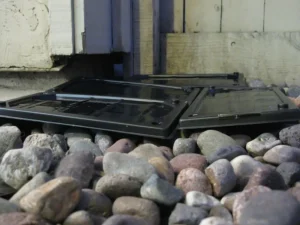
Black widows (shiny and black, with a red hourglass on the belly) hide in woodpiles and sheds, and only the larger females can really hurt you.
Brown recluses mostly live in the middle and southern US. They hide in dark, quiet, cluttered spots like closets and storage boxes (cardboard ones especially).
Most bites happen when someone handles a stored item that a spider is hiding in, which is why a cluttered closet is the risky spot.
If you think you’ve been bitten by either one, call Poison Control in the US at 1-800-222-1222 or get medical help right away.
For brown recluses, pest experts do use sticky traps, mostly to keep track of how many spiders you have, and the traps can give some control too.
Even so, a glue trap is a tool for a real recluse problem, and you don’t need one for every spider in the house.
If you do have a true infestation, call a pest professional, since recluses can be hard to get rid of even for the pros.
Are Glue Traps For Spiders Legal?
Yes, glue traps for spiders and other bugs are legal in most places. The bans you may have heard about mostly target traps for mice and rats.
England’s 2024 ban, for example, covers glue traps used to catch rodents, and sticky traps made for insects aren’t part of it.
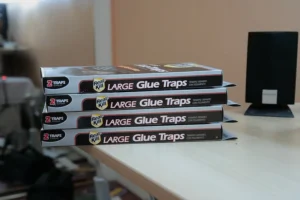
However, England’s rule is about any glue trap set in a way that a rodent could get caught in it. So a board sold for “mice and insects” could still be a problem there.
Rules also change and vary from city to city, so if you live somewhere with a ban, check your local rules before you buy.
Spiders aren’t rodents, so a trap made for insects and spiders is fine in most places, although a legal answer isn’t always the kind one.
Glue Traps Don’t Solve A Spider Problem
Even if you’re fine with glue traps, they won’t fix the real reason spiders are in your home.
Spiders come in for the bugs or slip in through gaps around doors and windows, so if you catch one, another takes its place as long as the bugs are still there.
A trap also only catches the spiders that happen to walk across it, while the rest stay tucked in corners, cracks, and boxes.
Pest experts say regular cleaning, tight screens, and less clutter do more than any trap, and they don’t usually recommend pesticides for spiders.
Think of a glue trap like a net full of holes. It catches a few, but it misses most.
Do Glue Traps Catch Other Animals Too?
They do, because a sticky trap treats every living thing the same.
Crickets, beetles, and moths get stuck all the time, and so do small lizards and geckos (the little house kind) if you live somewhere warm.
Picture a tiny gecko hurrying along the baseboard at night. It steps on the trap, and now you have a much bigger problem than spiders.
Traps left outside are worse, since they can catch helpful bugs like bees and ladybugs, and sometimes even small birds.
Glue boards made for mice have a bad reputation for catching birds and even cats, and the RSPCA and other welfare groups have pushed for bans because of it.
Pets can get into trouble too, since a curious cat or dog can end up with glue on a paw or nose.
So keep traps indoors and out of reach, and check them every day.
What Works Better Than Glue Traps For Spiders?
The good news is that the best fixes are simple, cheap, and kind.
Start with the bugs, since spiders follow their food, and cutting down on flies, ants, and roaches means fewer spiders over time.
Swapping your outdoor bulbs for yellow ones helps too, since yellow light attracts fewer insects, and fewer insects means fewer spiders hanging around your door.
Seal the gaps by checking your window and door screens for tight seals, and filling small cracks around pipes and frames.
Clean the corners by vacuuming webs and egg sacs (the small silk balls that hold spider eggs) every week or two, and knock outdoor webs down with a broom or a hose.
Cut the clutter, especially if you live where brown recluses are common, because plastic storage bins with tight lids beat cardboard boxes.
Keep woodpiles, leaves, and junk away from the house, since black widows love sheltered, undisturbed spots.
Skip the sprays, because most only work when they hit a spider directly, and pest experts don’t generally recommend them for spiders.
How To Move A Spider Outside Without Hurting It
All you need is a clear cup and a stiff piece of paper or card.
Move slowly, and place the cup over the spider. Then slide the card under the cup so the spider can’t escape.
Carry it outside, and let it go a few feet from your door, ideally near a shrub or a woodpile where it can hide.
If a spider jumps (jumping spiders do this), don’t panic, because they’re harmless and they just like to leap.
If you can’t tell what kind of spider it is and you live where black widows or brown recluses are common, don’t touch it. Use the cup and card, or call a pro.
A vacuum also works if the spider is somewhere hard to reach. It’s not gentle, but it’s quick.
What Should You Do If A Spider Is Stuck On A Trap?
It’s a rough thing to see, especially if the spider is still moving.
If it’s small and still strong, you may be able to free it by dripping a little cooking oil onto the glue around its legs. Go slow, and don’t pull, because you could tear off a leg.
If it’s badly stuck or already weak, many people choose a quick end instead of letting it linger.
Some people seal the whole trap in a bag and put it in the freezer. Others pick something fast, like a firm press with a thick wad of paper towel.
Neither method is proven to be kinder. What matters is that the spider isn’t left stuck for days.
If you don’t know the species, don’t touch it with bare hands, because a black widow or a recluse can bite. Use gloves or a tool, and wash your hands afterward.
Then change the plan, and check traps every day or switch to the cup and card.
How To Use Glue Traps Without Catching Spiders You Don’t Want
If you still use glue traps, you can cut down on spider catches. It just takes a little planning.
Only set traps where you have a real pest problem, like roaches or crickets, and skip the dark corners where spiders like to hunt.
Use fewer traps, since every extra trap is another chance to catch something you didn’t mean to.
Check traps every day, so a stuck spider doesn’t sit there for long and you can free it early.
Try traps with a cover or a tent shape (a roof over the glue), since they may keep bigger bugs and animals from walking in.
Keep unused boards sealed and out of reach of kids and pets. And once the pest problem is gone, put the traps away for good.
Conclusion
Glue traps can be inhumane for spiders. A stuck spider can’t escape, and it may suffer for a long time.
Nobody knows for sure how much spiders feel, since they’ve been studied much less than insects like roaches. However, the risk is real enough that many people choose a gentler way.
Glue traps for spiders are legal in most places, and brown recluse experts do use them to keep track of spiders. They just don’t fix the reason spiders came in.
If you want a kinder fix, cut down the bugs, seal the gaps, clean the corners, and use a cup and card for any spider you spot.
Most spiders are harmless, and many of them are working for you. You can leave them to it.

Hi, my name is Ezra Mushala, i have been interested animals all my life. I am the main author and editor here at snakeinformer.com.