
Glue traps are built to hold a mouse in place, not to kill it, and that leaves a lot of people wondering what really happens next. So, do mice die on glue traps?
Yes, mice usually die on glue traps if no one frees them. A stuck mouse can survive until it dies of dehydration (loss of body water), which usually takes about two to four days. Some die sooner from exhaustion or suffocation.
That’s the short version, but the details matter, because how a mouse dies on a board says a lot about glue traps. This post walks through the causes, the timing, and what to do if you find one.
Most Mice Stuck on a Glue Trap Do Die, but Some Escape
A glue trap holds a mouse in place, so if nobody finds it and frees it, the mouse will usually die there.
However, death doesn’t come right away. Animal welfare groups and scientific reviews describe a slow process that usually takes a few days.
Some mice do get free. A strong mouse may pull loose early on, leaving patches of fur and skin behind on the board.
Others get rescued by people who find them in time, which is why wildlife clinics see small animals with glue stuck to their bodies. A mouse that pulls free isn’t out of danger, though, and we’ll get to that below.
What Actually Kills a Mouse on a Glue Trap?
There isn’t one single cause, because a glue trap doesn’t kill with poison or force. A mix of problems builds up the longer the mouse stays stuck.
Most often, a mouse on a glue trap dies of dehydration, which means its body runs out of water. One major US animal protection group says exhaustion and dehydration together are the usual cause.
Some mice die of suffocation. This can happen if glue blocks their nose or prevents them from breathing properly.
Cold can play a part too, especially in a garage or basement.
InjInjuries can also become serious when a mouse struggles to get free or damages itself in the process.
How Long Does It Take for a Mouse to Die on a Glue Trap?
A mouse stuck on a glue trap can survive until it dies of dehydration (when its body runs out of water). That usually takes about two to four days.
A stuck mouse can’t reach food or water, so it can’t get the moisture it normally gets from its food. The clock starts the moment it’s stuck.
Lab guidelines treat weight loss of around 15 percent as a sign an animal is in serious trouble. A mouse without water can pass that line in about two days.
It can go faster than that in a warm, dry spot, because the mouse loses water more quickly. Panic and hard struggling speed it up too.
Some mice die sooner than that, from suffocation or injuries, especially if the glue covers their nose and mouth.
Researchers have also found signs of severe stress in mice after just three to five hours on a glue trap. This shows how quickly the animals can become distressed.
No matter the exact number, death isn’t quick. It takes days, not seconds.
Why Dying on a Glue Trap Is Different From Dying in a Snap Trap
A snap trap that works properly hits the mouse hard and fast, and death can be nearly instant. That’s the main reason animal welfare scientists call snap traps the more humane option.
However, snap traps aren’t perfect. A cheap trap, or one set in the wrong spot, can catch a mouse by a leg or its body, and that can mean pain and a slow death too.
That’s why placement and quality matter. Set traps with the trigger end against a wall, and pick a sturdy trap of good quality instead of the flimsiest one on the shelf.
Rodent poison is slower and harder to keep track of. Many poisons take days to work, and poisoned mice can die inside walls, where you can’t find them.
Poison also puts pets and wildlife at risk, since cats, dogs, and owls can get sick from eating a poisoned mouse.
So glue sits in the middle on timing, slower than a snap trap but quicker than some poisons. It adds fear, struggle, and injury along the way, which is why experts rank it so low.
What Happens to a Mouse That Pulls Free From a Glue Trap?
A mouse that gets loose has still been through a lot. It may have torn skin, missing fur, and sticky glue all over its body.
Once unstuck, even a mouse that looks fine can be hurt in ways you can’t see, or need treatment for dehydration and exhaustion, according to an animal protection group.
A vet who has treated glue trap victims said the animals are often very sick from weakness, injury, and swallowing glue.
Many escaped mice hide in walls or under appliances to recover, and some probably die there. That’s one reason you might smell a dead mouse days later without ever seeing the trap that started it.
So a mouse leaving the board doesn’t mean things ended well. It often just moves out of sight.
Why Some Pest Controllers Say Death Comes Faster Than You’d Think
Not everyone describes it the same way. A pest controller in British Columbia told local news that glue boards can speed up death, because a stuck mouse may use its nose for leverage and suffocate.
He also said some mice stress themselves to death when they can’t move. Welfare groups agree stress and suffocation happen, though they see both as part of the harm.
The same news story quoted the BC SPCA, which said animals can suffer for hours or days before dying of exhaustion, starvation, dehydration, exposure, or suffocation.
So the two sides agree on more than you’d think: death comes from exhaustion, stress, thirst, or suffocation, and it isn’t instant. They differ mostly on how long it takes and whether that’s acceptable.
Some makers advertise that their traps work the moment a mouse steps on them. That’s true for catching the mouse, but not for ending its life.
Animal welfare groups use a simple standard: the animal should die or go unconscious in about a minute or less. A glue board can’t meet that.
Why So Many People Still Buy Glue Traps
Glue traps are cheap, easy to find, and simple to use, so they look like a quick fix. You just put a board down and walk away.
They also don’t use poison, which feels safer if you have kids or pets. You don’t have to touch a spring either, and that appeals to people who hate setting snap traps.
Labels like nontoxic and pet safe add to the appeal, even though they only describe the glue and not what happens to an animal that gets stuck.
Many people also don’t know what happens after a mouse is caught, because the packaging rarely explains it. By the time they find out, the animal is already stuck.
If you’ve been using glue traps, you’re far from alone, and switching is easy. Snap traps often cost about the same or less, and they work much faster.
What Does a Dead Mouse on a Glue Trap Mean for Your Home?
Finding a dead mouse on a glue board can feel like a win, but it often means there are more mice around. A female mouse can have several litters a year, so one mouse can quickly turn into a family.
Look for other signs: droppings that look like dark grains of rice, gnaw marks, greasy rub marks along walls, shredded paper or fabric for nests, and scratching noises at night.
Check behind the stove and fridge, inside cabinets, and in the attic or basement. Mice usually nest close to a food source.
A dead mouse can smell bad fast, and it can draw flies, so pick up the board soon. It may also have fleas or mites that leave the body as it cools.
How to Remove and Throw Away a Dead Mouse Safely
Put on rubber or plastic gloves, and let some fresh air into the room for a while before you start.
Spray the mouse, the board, and the area around it with a disinfectant. A mix of one part bleach to nine parts water works too, and it should soak for about five minutes.
Don’t sweep or vacuum droppings, because that can kick germs into the air. Wipe them up with paper towels instead.
Use paper towels to lift the board with the mouse, and seal everything in a plastic bag. Put that bag inside a second bag before it goes in the outdoor trash.
Then clean the spot again with disinfectant, take off your gloves, and wash your hands with soap and water for at least 20 seconds.
What to Do With an Empty or Unused Glue Trap
An empty glue board can still catch the wrong animal, so don’t leave it lying around. Birds, lizards, pets, and wildlife can stumble onto one.
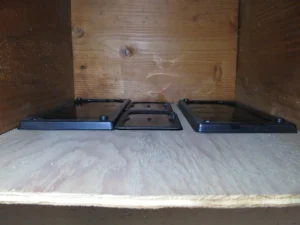
If you decide to stop using them, wear gloves and fold each board in half with the glue side in, so nothing else can touch it. Seal it in a bag before it goes in the trash.
Don’t toss boards in the yard, a compost pile, or an open bin, where animals can walk into them. For a large stack of unused boards, check your local waste rules.
Do Glue Traps Even Solve a Mouse Problem?
Glue traps can catch a few mice, but they don’t fix the reason mice came in. One animal protection group says they may catch one animal or a few, but they aren’t a lasting fix.
If mice can still get in and there’s still food around, new mice will move in to take the place of the ones that died.
Research also suggests glue boards aren’t always better at catching mice than regular traps. One scientific paper from the 1990s found that snap traps worked better on house mice.
Dust, cold, and damp can make glue less sticky too, so a board that’s been sitting in a garage or basement may not hold anything at all.
The most reliable fix is to find out how the mice are getting in and shut those doors.
What Should You Do If You Find a Mouse Still Alive on a Glue Trap?
First, don’t throw the board in the trash with the mouse on it, and don’t try to drown it. Both would add to its suffering.
Call a vet, a wildlife rescue, or animal control and say you have an animal stuck on a glue trap.
Some vets will end a mouse’s suffering quickly for little or no cost, and a rescue can tell you who nearby will.
If you choose to free it yourself, wear thick gloves, work a little cooking oil into the glue, and go slowly so you don’t tear its skin. Once it’s free, it may still need a vet’s care.
A frightened mouse can bite, so keep your face and hands away from its mouth.
Snap Traps and Prevention Work Better Than Glue
If you want a method that works fast and gives the mouse a quick end, snap traps are the standard pick. Set them along walls, with the trigger end next to the wall, where mice run.
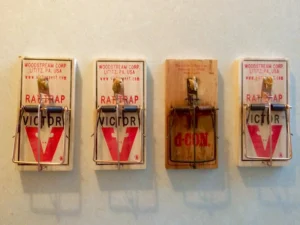
Use several traps at once, and bait each one with a small dab of peanut butter pressed in firmly, so a mouse has to tug at it.
Check traps every day, and wear gloves when you handle them. If you have kids or pets, put traps in enclosed stations (small boxes that keep fingers and paws out).
Electronic traps are another choice, since they kill fast and hold the mouse in a closed box.
Prevention does the heavy lifting over time, so seal gaps, store food in tight containers, and keep your trash covered.
If you’d rather get help, a licensed pest controller who starts with prevention can usually find the entry points you missed.
How Often You Should Check Any Kind of Trap
If you use any trap, check it often. A trap you forget about can leave an animal suffering, and a dead mouse left too long can cause smells and spread germs.
For glue boards, even the pest control industry says to check every 12 hours, and some experts say that’s still too long.
For snap traps, check once a day, ideally in the morning. That way a mouse that wasn’t killed outright won’t be left in pain, and a dead mouse doesn’t sit around.
For live traps (small cages or boxes that catch a mouse without hurting it), check every few hours, since a frightened mouse gets thirsty and hungry fast.
Write the times on a calendar or set a phone reminder so you don’t lose track. It sounds small, but it’s the part people forget most.
Ways to Handle Mice Without Killing Them
If you’d rather not kill mice, the best method is to keep them out in the first place. Once a mouse can’t get in, you don’t need any trap at all.
Live traps are the next choice. Check them every few hours, and release the mouse outdoors, far from your home, where local rules allow.
Release is tricky, however, because a mouse dropped in unfamiliar territory may not survive for long. For that reason, many experts see prevention as the kinder choice.
Be careful with gadgets that promise to scare mice away. A New Zealand government review of rodent control methods found no good evidence that sound and electromagnetic devices work.
Strong smells such as peppermint oil are popular, but they tend to fade fast and rarely keep mice away for long.
A cat isn’t a plan either. Some cats hunt mice and some don’t, and a mouse problem can easily outlast a cat’s interest.
How to Tell Whether Your Mouse Problem Is Gone
Getting rid of the mice you can see isn’t the same as solving the problem. Watch for signs over the next two to three weeks, since mice can slip back in through the same gaps.
Fresh droppings are the easiest clue. They’re dark and soft when new, and they turn dry and gray as they age, so new ones mean mice are still around.
Clean up old droppings first (wearing gloves and following the steps above), so any new ones stand out.
Listen at night for scratching in walls and ceilings. Look for new gnaw marks on boxes, wires, or food packaging.
If you want to be sure, put a small piece of cardboard in a spot where you saw signs, and check it each morning for droppings or marks.
If signs keep showing up after a few weeks, call a licensed pest controller, since there may be an entry point you haven’t found.
Conclusion
So, do mice die on glue traps? Yes, if nobody finds and frees them, mice usually die on glue traps, and it usually takes about two to four days.
They die from dehydration, stress, and sometimes suffocation, which is a long way from a quick death.
Some mice pull free, but they’re often hurt, and they can still die later out of sight.
If you find a mouse stuck on a board, call a vet, a wildlife rescue, or a pest control company instead of guessing.
For the future, seal the gaps, keep food stored tight, and use snap traps in closed stations if you need a trap, so you can skip glue completely.

Hi, my name is Ezra Mushala, i have been interested animals all my life. I am the main author and editor here at snakeinformer.com.