
Ohio winters send a lot of mice looking for a warm place to stay, and plenty of people reach for glue traps. So, are glue traps legal or illegal in Ohio?
Glue traps are legal in Ohio. There’s no statewide law that bans them, though some cities and counties may have their own rules.
That doesn’t make them a good choice, though, since health agencies advise against them and they can catch pets and wildlife. Here’s what to know before you set one down.
Glue Traps Are Legal in Ohio
You can buy a glue trap at an Ohio hardware store. You can also use one in your home without breaking a state law.
That goes for homeowners, renters, landlords, and farmers alike, and it also goes for pest control companies, which use them in some homes and businesses.
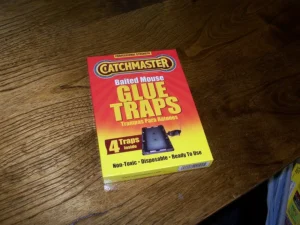
A glue trap (also called a glue board) is a flat piece of cardboard or plastic covered in very sticky glue. A mouse or rat steps on it and can’t pull itself loose.
Legal, however, only tells you what you’re allowed to do, not what works best, and we’ll get to that shortly.
Does Ohio Have Any State Law Against Glue Traps?
No. Ohio doesn’t have a statewide law that bans glue traps, so you’re free to buy and use them at the state level.
That doesn’t mean there are no local rules. Cities and counties can pass their own, so it’s smart to check your city and county rules before you buy.
Ohio’s wildlife agency, the Ohio Department of Natural Resources (ODNR), handles rules for wild animals in the state. Rats and house mice aren’t native wildlife, which is why they’re treated differently from animals like raccoons and squirrels.
If you’re a landlord or you manage a building, it’s worth checking your lease terms and any local health codes too.
Which US Cities Have Banned Glue Traps?
Glue trap bans in the US have mostly come from cities, not states. West Hollywood, California became the first city in the country to ban them, and its ban started in May 2023.
Ojai, California followed in 2024, and lawmakers in states like New York and New Hampshire have considered statewide bills.
Florida is a partial exception. Its wildlife commission approved a rule that bans glue traps outdoors from December 31, 2026, though they’re allowed inside enclosed buildings.
So if you’ve got friends or family in other states, don’t assume their rules match yours. What’s fine in Columbus could be banned in a California city.
Is There a Federal Law Against Glue Traps?
No. There’s no federal law that bans glue traps for rodents, so nothing at the national level stops you from buying one.
Congress has looked at the idea. In January 2024, Representative Ted Lieu introduced the Glue Trap Prohibition Act, which would have banned selling and using glue traps for rodents.
That bill proposed fines of up to $1,000 for individuals and up to $5,000 for businesses, but it didn’t become law.
It’s a sign of where the conversation is heading, since groups like the Humane Society and PETA backed it.
Are Glue Traps Legal for Pest Control Companies in Ohio?
Yes, they’re legal for pest control companies too, since nothing in Ohio law singles out professionals.
That doesn’t mean every company uses them, though. Many prefer snap traps, bait stations, and sealing up entry points, and a good one will explain why if you ask.
University extension guides usually treat glue boards as a backup, something to consider in homes and other sensitive places where poison isn’t a good idea.
So if a company wants glue boards in your home, ask why. Extension guides say glue boards should be checked daily, so ask how often they’ll come back.
Why the CDC Tells People Not To Use Glue Traps
The US Centers for Disease Control and Prevention (CDC) says not to use glue traps for rodent control around the home.
Instead, it recommends traditional snap traps, and it says to save poison or bait stations for infestations that don’t go away.
One reason is that a scared mouse stuck on a board can urinate, and that spreads germs around your home. A rodent stuck for hours also leaves droppings you’ll have to clean up.
Picture finding a live mouse stuck to a board in your pantry, right next to your cereal. You’d have to deal with the mouse and the mess, both at once.
That’s not a great position to be in, especially if you’ve got kids or pets in the house.
Do Glue Traps Work as Well as Snap Traps?
Not usually. Most university extension guides call snap traps the better choice, and some suggest using glue boards only in places where other options aren’t safe.
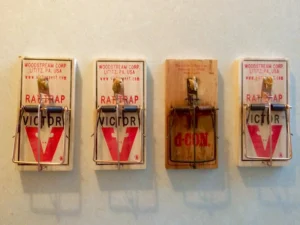
A University of Nebraska study from 2018 compared them. Snap traps caught mice about 56% of the time, while glue traps caught only about 8%.
The University of Kentucky’s extension service also notes that snap traps with a bigger trigger catch noticeably more mice than older designs.
Glue boards have another weakness. In a dusty garage, basement, or attic, they can pick up dust and lose their stickiness.
Rats add one more problem, because they’re bigger and stronger, and they can be very cautious around anything new. A glue board in their path may just get ignored for days.
What Glue Traps Do to Mice and Rats
A mouse that touches a glue board gets stuck by its feet, and the harder it struggles, the more of its body sticks.
One university extension guide describes mice becoming tangled in the glue and soon dying of suffocation.
An animal stuck for a long time can die of thirst, hunger, or exhaustion, and some injure themselves badly while trying to get loose.
Many people never plan for that part. You set the board expecting a quick fix, and you come home to a live animal that’s scared and hurt.
If that’s a moment you’d rather avoid, a snap trap is a much quicker option.
Glue Traps Can Catch Ohio Wildlife and Pets
A glue trap can’t tell a mouse from anything else, so birds, chipmunks, lizards, squirrels, and snakes have all been caught on them in the US.
In Ohio, think about the places people put glue traps: garages, sheds, barns, porches, and basements. All of them are spots where a curious cat, a stray chipmunk, or a small songbird can wander in.
A garage with the door open on a warm day is a perfect example, because a wren can hop in looking for bugs and land on the board instead.
Dogs and cats get stuck too, usually on a paw, a nose, or a patch of fur. Then you’ve got a panicked pet and a very sticky mess.
That’s the main reason many wildlife groups push for bans. You can’t control what walks across the board.
What To Do if Wildlife or a Pet Gets Stuck on a Glue Trap in Ohio
If a wild animal is stuck, don’t try to pull it off, because that can tear skin, fur, or feathers. Get it to a licensed wildlife rehabilitator as soon as you can.
The ODNR Division of Wildlife keeps a list of licensed rehabilitators on its website, and your local vet can also point you to one.
While you wait for help, put the animal in a box with air holes and keep it warm, dark, and quiet.
If you can’t get help right away, wear gloves and gently work a little cooking oil into the glue where it touches the animal. Use as little as you can.
If it’s a snake and you’re not sure what kind, don’t touch it. Call a wildlife rehabilitator or animal control for help.
If it’s your own pet, call your vet right away, since they can remove the glue safely and check for injuries you can’t see.
Which Rodents Cause Trouble in Ohio Homes?
Three main kinds show up in Ohio homes: house mice, deer mice, and Norway rats.
House mice are the most common, and they’re small, gray-brown animals that can live year-round in homes, apartments, and restaurants.
Deer mice (and their close cousins, white-footed mice) are more common in rural areas. They have white bellies, big ears, and a habit of moving into garages, cabins, and sheds.
Norway rats are bigger and heavier. They’re more common in cities and around farms, and they like to dig burrows near foundations, under sheds, and along drain lines.
Knowing which one you’ve got changes your plan. Mouse traps are too small for a rat, and a rat trap set for a mouse can be hard to trigger.
Why Do Mice Move Into Ohio Homes Every Fall?
When the temperature drops, mice look for a warm, safe place with food, and your home checks all three boxes.
A female house mouse can have 5 to 10 litters a year, with about 5 or 6 babies in each one. That’s how a small problem can turn into a big one by winter.
They don’t need much room to get in. A mouse can squeeze through a hole about 1/4 inch wide (roughly the width of a pencil).
A rat needs a bigger gap, around 1/2 inch. That’s still smaller than most people expect.
So the first cold snap is often when you start hearing scratching in the walls at night.
What Are the Best Alternatives to Glue Traps in Ohio?
Snap traps are the top choice for most homes, and the CDC and several university extension services recommend them.
Look for snap traps with a larger plastic trigger, since the University of Kentucky says those catch significantly more mice than older designs with small metal triggers.

Multiple-catch traps are another option for mice. They can hold several mice without being reset, but they don’t work on rats.
Electronic traps are a clean choice indoors. They’re built to kill quickly with a shock, and you can tip the mouse out without touching it, and you can reuse them over and over.
The CDC doesn’t recommend live traps, because a scared mouse can urinate inside them. If you still choose one, wear gloves and clean the trap well afterward.
Whatever you use, check every trap at least once a day.
How To Set Snap Traps the Right Way
Place each snap trap perpendicular to the wall, with the trigger end touching the wall, because mice and rats usually run along edges.
Use a pea-sized dab of chunky peanut butter as bait. Press it into the trigger so the animal has to work at it.
Set traps in pairs, close together, in places where you’ve seen droppings, gnaw marks, or nesting material. Two traps side by side catch more than one alone.
For rats, use rat-sized traps, and try pre-baiting (putting bait on the trap without setting it) for a few days. Rats are cautious, and this helps them get comfortable.
Check your traps every day, and keep resetting them until you stop seeing signs of activity.
When you throw one out, wear gloves and use a sealable bag turned inside out to pick up the mouse. Then wash your hands well.
What About Poison Baits and Bait Stations?
Poison should be your last resort, and the CDC says to save it for infestations that don’t go away.
The risk is that pets, kids, and wildlife can get sick from the bait, or from eating a mouse or rat that ate it. Hawks and owls that hunt rodents in Ohio can be hurt this way too.
If you do use bait, look for tamper-resistant bait stations, which are built so kids and pets can’t reach the bait. Always follow the label.
A mouse that eats poison can also die inside a wall, which means a smell that can last for days or weeks. That’s one more reason many people stick with snap traps.
How To Seal Your Ohio Home Before Winter
Trapping alone won’t fix a mouse problem if new ones keep coming in, so the most lasting fix is to block the gaps.
Walk around your house in early fall. Look for holes near the foundation, pipes, dryer vents, utility lines, and garage doors.
Fill small gaps with steel wool or copper mesh, then seal over it with caulk. Rodents chew through foam and plastic, so skip those.
Older homes with stone or brick foundations and basements often have more gaps than newer ones. Check basement windows and the spot where the garage door meets the floor.
Add a rubber seal along the bottom of the garage door if you can see daylight under it, because if light can get through, a mouse can too.
What Attracts Mice and Rats to Your Yard and Garage?
Food, water, and shelter are what they’re after, so take away as many of those as you can.
Store pet food, birdseed, and grass seed in hard containers with tight lids, not in bags on the garage floor.
Use trash cans with tight lids, and clean up spilled birdseed under feeders, since seeds on the ground are a free meal for mice and rats.
Stack firewood off the ground and away from the house, and clear out clutter and piles of leaves along your walls.
Fix leaky pipes and outdoor taps, since rodents need water as much as food.
How To Clean Up Safely After Mice or Rats
Mice and rats leave droppings, urine, and nesting material, and you shouldn’t clean those up like normal dust.
The CDC says not to sweep or vacuum dry droppings, because that can send tiny particles into the air that you could breathe in. In some parts of the US, those particles can carry germs like hantavirus.
Instead, air out the room for about 30 minutes first. Then put on rubber or plastic gloves, spray the droppings with a disinfectant or a bleach mix, and let it soak before you wipe it up with paper towels.
Put the paper towels, droppings, and any dead mice in a sealed bag, then put that bag in your outside trash. Wash your gloves, then your hands, with soap and water.
If the mess is big, or it’s in a crawl space or attic, it may be smarter to hire a professional.
What To Look For When You Hire a Pest Control Company in Ohio
Ask what methods the company plans to use, including whether they use glue boards. You’re allowed to say no.
If poison is part of the plan, ask about the license. The Ohio Department of Agriculture handles pesticide licensing in the state.
Ask whether they’ll find and seal the entry points, since a company that only sets traps will probably be back next month.
Tell them about any pets, kids, or wildlife around your home so they can pick the safest options.
Get the plan, the number of visits, and the price in writing before you agree to anything.
Could Glue Trap Rules Change in Ohio?
Rules on glue traps can change at the state, county, and city level, so it’s smart to stay informed.
Other states have looked at the issue. Lawmakers in Massachusetts have filed bills to ban glue traps several times since 2015, and New Hampshire and New York have also considered the idea.
Florida’s outdoor rule shows how a state agency can act even without a new law.
If you want to follow it, check the Ohio Legislature’s website and your local news, because rules can change quickly once a bill gets attention.
Conclusion
Glue traps are legal in Ohio, and there’s no statewide law against them.
But legal doesn’t mean it’s the best option. The CDC advises against them, they catch pets and wildlife by accident, and they don’t work as well as snap traps.
If you’ve got mice or rats, set snap traps the right way, seal the gaps in your home, and clean up food and clutter.
If an animal gets stuck on a glue trap, don’t pull it off. Get it to a vet or a wildlife rehabilitator as soon as you can.
Rules can change, and some cities and counties have their own, so check your local rules before you buy a glue trap.

Hi, my name is Ezra Mushala, i have been interested animals all my life. I am the main author and editor here at snakeinformer.com.