
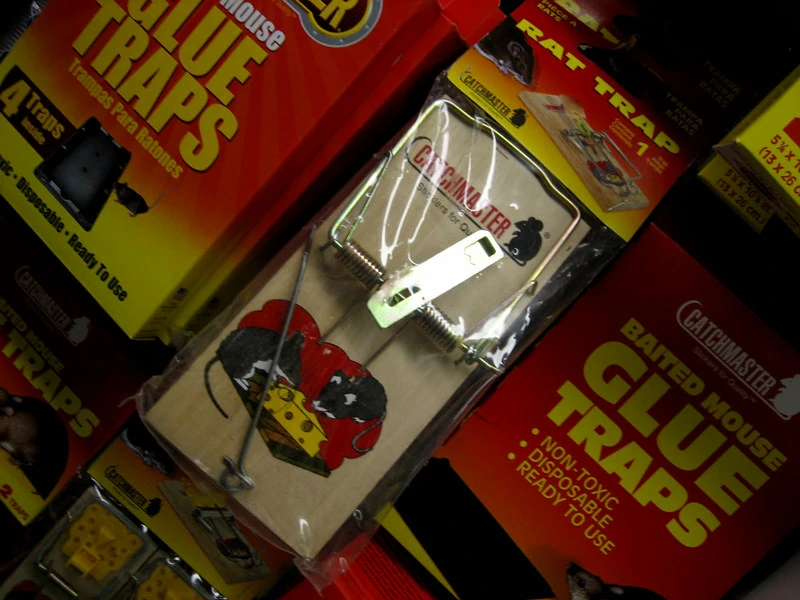
Florida’s rules on glue traps depend on where you use them, which makes the answer a little tricky. So, are glue traps legal or illegal in Florida?
Glue traps are legal in Florida when you use them inside an enclosed building. Florida’s wildlife rules ban them outdoors, and that ban applies from December 31, 2026.
So the short version is that it depends on where the trap goes. Here’s how the rules work, and what they mean for your home.
Glue Traps Are Legal Indoors in Florida
Florida’s trapping rules allow glue traps inside enclosed buildings. Using one in your kitchen, pantry, or attic doesn’t break a state rule.
Those rules come from the state’s wildlife agency (the Florida Fish and Wildlife Conservation Commission, or FWC), which writes Florida’s trapping regulations.
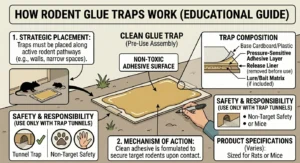
The FWC defines a glue trap as a device with adhesive that’s made to catch and hold an animal alive. Devices made to catch flies don’t count.
There’s no federal ban on glue traps either, so the rules come down to where you live and how you use them.
The big limit is outdoor use, and that’s where Florida’s rules get much stricter.
What Does Florida’s Outdoor Glue Trap Ban Say?
In February 2026, the FWC approved a big update to its wildlife trapping rules, and one of the changes is a ban on using glue traps outdoors.
The ban applies from December 31, 2026. The date was first set for July 1, but it was pushed back to give people more time to get ready.
Under the rule, glue traps can’t be placed outdoors, with one exception: inside enclosed vehicles, trailers, and tractors.
Inside enclosed buildings, they’re allowed, and that’s the part that matters most for most homeowners.
Before that date, Florida’s older rules allowed glue traps on land. That makes this a real change for anyone who used them outdoors.
The FWC says the changes bring Florida in line with national best practices, which aim to make trapping humane and aimed at the right animal.
The update also adds a yearly registration and free training requirement for most people who trap wildlife.
Can You Use a Glue Trap Inside Your Florida Home?
If you’ve got mice or rats in your house, nothing in the rule stops you from using a glue board inside it.
That includes the rooms in your home, and an attic should count too, since it’s part of the building.
The gray areas are the spots that aren’t fully closed in, like a screened lanai, an open carport, a patio, or a garage with the door open.
The rule doesn’t spell out those spots. The safest move is to treat them as outdoors and use another kind of trap.
If you’re not sure whether the registration rule applies to you, it’s worth a quick call to your local FWC office. That’s especially true if you handle pests for a business or a rental property.
Why Is Florida Banning Glue Traps Outdoors?
The short answer is that a glue trap can’t tell what’s walking across it, and Florida has a lot of wildlife that wanders into yards, garages, and sheds.
Outdoors, a rat is only one of the animals that might step on the board. Birds, snakes, lizards, and even tortoises can end up stuck.
That’s what the FWC’s best practices are trying to prevent, since they focus on traps that catch the right animal and cause as little suffering as possible.
Some Florida animal advocates welcomed the change, calling glue traps one of the cruelest ways to kill an animal.
Keep in mind that the ban is only about outdoor use. The FWC didn’t ban glue traps inside buildings, which is why they’re a legal choice indoors.
Florida Wildlife Has Already Been Caught on Glue Traps
This isn’t just a theory. Wildlife rescuers in Florida have pulled real animals off glue traps.
A screech owl was brought to the Clinic for the Rehabilitation of Wildlife (CROW) after getting stuck on a glue trap in Cape Coral.
A month later, staff were still working to get all the glue out of its feathers.
The clinic’s rehab manager said an animal stuck like that loses its ability to get away and can end up starving to death.
Staff at the Florida Wildlife Hospital and Sanctuary in Palm Shores rescued a snake from a glue trap at a church.
They’ve also taken in a gopher tortoise that wandered into a garage looking for a place to nest. That’s a protected species in Florida, and it was freed and released near where it was found.
Then there was a Carolina wren that got stuck on a hanging fly glue trap. Despite the staff’s best efforts, the bird died the next day.
Stories like these help explain why the FWC drew the line at outdoor use.
Does the Florida Rule Cover Sticky Fly Traps?
Not exactly. The FWC’s definition of a glue trap leaves out devices made to catch flies, so the sticky fly strips you hang up aren’t covered the same way.
However, that doesn’t mean they’re harmless. The Carolina wren in Palm Shores is a good reminder that birds can get stuck on them too.
If you use sticky fly strips, hang them where birds and lizards can’t reach them, and don’t put them outdoors near feeders or trees.
If you’re not sure whether another kind of sticky trap counts (like one for roaches), keep it indoors to be safe.
Are Glue Traps Legal for Pest Control Companies in Florida?
Yes, indoors, but pest control companies have their own set of rules to follow. In Florida, the state Department of Agriculture and Consumer Services (FDACS) is the agency that deals with licensing for pest control.
The FWC says businesses that remove mice and rats from structures should contact FDACS before doing that work, since rats and mice are handled differently from native wildlife.
The outdoor ban doesn’t list an exception for licensed companies, so it applies to them too.
So if a company offers to put glue boards around the outside of your home, that’s worth questioning.
Is There a Federal Ban on Glue Traps in the US?
No. There’s no federal law that bans glue traps, so the rules are left up to states and cities.
Members of Congress have introduced bills to ban selling and using glue traps for rodents, like the Glue Trap Prohibition Act.
At the local level, West Hollywood, California became the first city in the country to ban glue traps, and its ban started in May 2023.
So if you’re moving between states, don’t assume the rules are the same. What’s fine in one place can be banned in the next.
The CDC Advises Against Using Glue Traps
The US Centers for Disease Control and Prevention (CDC) says not to use glue traps for rodent control around the home.
Its advice is to use traditional snap traps instead, and to save poison or bait stations for infestations that don’t go away.
One reason is that a rodent caught alive can get scared and urinate, and that can spread germs around your home.
Think of a frightened mouse stuck to a board for hours in your pantry. Every drop of urine and every dropping it leaves is something you have to clean up.
Rodents can carry germs that make people sick, so you don’t want extra mess in your kitchen. Wear gloves and clean with a disinfectant after any trapped rodent.
What Does a Glue Trap Actually Do to a Rat or Mouse?
A glue trap is basically a sticky board. When a rat or mouse steps on it, the glue grabs its feet, and the more the animal pulls, the more of its body gets stuck.
Because the glue doesn’t kill, the animal can stay alive for a long time. It can die from thirst, hunger, or exhaustion, and that can take days.
Rats can even tear off skin and fur while trying to escape. It’s one of the reasons glue boards are such a hard thing to find on the floor in the morning.
That’s also why so many people struggle with what comes next. You walk into your kitchen and find a live, terrified animal, and now you have to decide what to do.
What To Do if an Animal Gets Stuck on a Glue Trap in Florida
If a wild animal is stuck, don’t try to remove it yourself. CROW’s rehab manager says to get it to a wildlife rescue as soon as you can.
You can find a licensed wildlife rehabilitator through the FWC website, or ask your local vet for a referral.
Cover the animal loosely with a towel, put it in a cardboard box with air holes, and keep it somewhere warm, dark, and quiet while you make the call.
Don’t pull on the animal, because that can tear skin, feathers, or scales.
If it’s a snake and you don’t know what kind, don’t touch it. Call a wildlife rescue or animal control right away.
If it’s your own pet, call your vet right away. They’ll know how to get the glue off safely and check for injuries you can’t see.
If it’s a rat or mouse and you can’t reach help, a little cooking oil rubbed gently on the glue can loosen the hold. Use as little as you can, since too much can mess with an animal’s fur.
What Are the Best Alternatives to Glue Traps in Florida?
Snap traps are the best place to start, and they’re what the CDC recommends for rodents around the home.
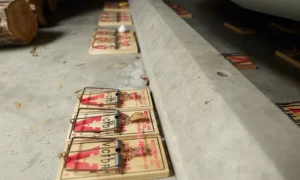
Set them flat against a wall with the trigger end facing it, since rats and mice like to run along edges.
Use a pea-sized dab of peanut butter as bait. Chunky peanut butter works especially well.
Rats are cautious, so it can take several days before they go near a new trap. Pre-baiting (putting bait out without setting the trap) helps them get comfortable.
In a 2018 University of Nebraska study, snap traps caught mice about 56% of the time, while glue traps caught only about 8%.
Electronic traps are another option. They’re built to kill quickly with a shock, and you can tip the animal out without touching it.
Poison is another route, but in Florida it’s risky for pets and wildlife, including owls and hawks that eat poisoned rats.
Whatever you pick, wear gloves when you handle traps or dead rodents. Then wash your hands well.
Which Rodents Are Most Common in Florida Homes?
Florida has three main troublemakers: roof rats, Norway rats, and house mice.
Roof rats (also called black rats) are the climbers. They’re slim, with long tails, and they love to nest up high in attics, rafters, and even palm trees.
If you hear scratching overhead at night, a roof rat is often the cause.
Norway rats are heavier and stay closer to the ground. They dig burrows under slabs, sheds, and piles of junk.
House mice are the smallest of the three, and they can squeeze through gaps about the width of a pencil.
Knowing which one you’ve got changes where you put traps. Roof rat traps often belong up high, along beams or pipes, while Norway rat traps go on the floor along walls.
Florida’s warm weather also means rodents can breed all year, so a small problem can grow fast.
How To Keep Rats and Mice Out of Your Florida Home
The best way to avoid trap trouble is to stop rodents from getting in. A simple way to remember it is “seal up, trap up, clean up.”
Start by sealing gaps, since a mouse can get through a hole about 1/4 inch wide and a rat can get through one about 1/2 inch.
Check around AC lines, pipes, vents, soffits (the underside of your roof edge), and the gap under your garage door.
Use steel wool, metal mesh, or cement, because rodents chew right through foam and plastic.
Roof rats use trees and wires like highways. Trim branches and palm fronds so they stay a few feet away from your roof.
Pick up fallen fruit from mango, orange, and avocado trees, because rats love an easy meal.
Keep pet food inside, use trash cans with tight lids, and clean up bird seed that spills under feeders.
In your garage and shed, store things in hard plastic bins instead of cardboard boxes, since rodents love to nest in cardboard.
What To Check Before You Hire a Pest Control Company in Florida
Make sure the company is licensed, and you can look them up through FDACS before you sign anything.
Ask what traps they use, and say no to glue boards if you don’t want them. Indoors they’re legal, but you don’t have to agree to them.
Ask about Florida’s outdoor ban, too. A good company should already know that glue traps can’t be used outdoors.
Ask how often they’ll come back to check the traps and whether they’ll seal entry points, because trapping alone rarely solves the problem.
Tell them about any pets, kids, and wildlife in your yard so they can pick the safest traps and bait stations.
Get the plan and the price in writing, so there are no surprises later.
What Should You Do With Glue Traps You’ve Set Outdoors?
If you’ve got glue boards outside, pick them up. That includes porches, patios, yards, gardens, and anywhere that isn’t fully closed in.
Fold each board in half with the sticky side in, and throw it away so nothing else can get stuck on the glue.
Then swap in snap traps or electronic traps, and start sealing gaps in the meantime.
If you run a business, farm, or rental property in Florida, check the full FWC rule so you know what applies to you.
The FWC’s trapping rules page has the details, and it’s worth a read.
Conclusion
Glue traps are legal in Florida when you use them inside enclosed buildings.
But Florida’s wildlife rules ban them outdoors from December 31, 2026, with a few exceptions like enclosed vehicles and trailers.
Even where they’re legal, glue traps aren’t a great choice, because they can catch pets and wildlife, they can cause a slow death, and the CDC advises against them.
If you’ve got rats or mice, snap traps, sealed gaps, and cleaned-up food are the best way to fix the problem.
And if an animal gets stuck, get it to a vet or wildlife rescue right away.
Rules can change, so check the FWC website for the current rules before you buy.

Hi, my name is Ezra Mushala, i have been interested animals all my life. I am the main author and editor here at snakeinformer.com.