
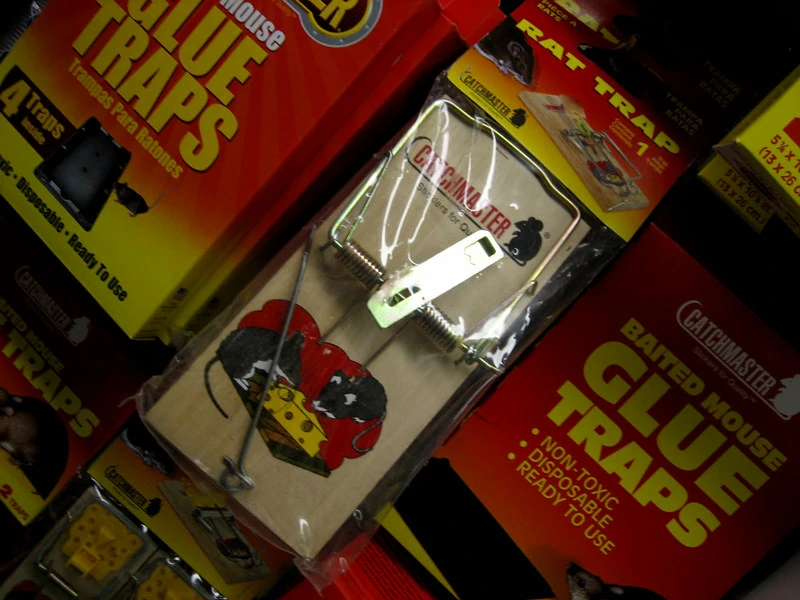
Glue traps look about as simple as a pest control tool can get, just a flat board with some sticky stuff on it, yet they catch mice, bugs, and sometimes much more.
That has a lot of people wondering what makes them work so well. So why are glue traps so effective?
Glue traps work because the glue sticks with just a light touch, and pests like mice and cockroaches walk along walls in the dark, right where a board is waiting. There’s no trigger to fail and no bait to ignore. However, they’re not foolproof.
The science behind that is more interesting than you’d think, and it explains both why these traps catch so much and why they sometimes fail. Let’s start with the glue itself.
How Does The Glue On A Glue Trap Actually Work?
The glue on a glue trap is called a pressure-sensitive adhesive (the same kind of glue that’s on tape and sticky notes).
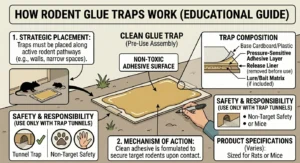
Pressure-sensitive means it grabs hold as soon as something presses against it, even lightly.
It doesn’t need water, heat, or a chemical to switch on. It’s ready the second you take the wrapper off.
Scientists describe this kind of glue as viscoelastic (which just means it’s both thick like honey and stretchy like a rubber band).
That mix is what makes it work. The thick part lets the glue flow into tiny gaps in a foot or a patch of fur, and the stretchy part keeps it from letting go.
Most glue boards use a version that stays tacky (sticky) all the time. That’s why a fresh board grabs the moment something touches it.
The Glue Stays Sticky Without Any Setup
Most pest traps need to be set, baited, or armed before they’ll work, but a glue board is ready the moment you open the package.
There’s no spring that can jam, no trigger that can be too stiff, and no door that can fail to close.
That’s a big part of why you’ll hear people call them reliable. If an animal touches the glue, the trap has done its job.
Many glue boards use what’s called a hot melt adhesive (a glue that’s melted and spread onto the board, then cools into a sticky layer).
Once it cools, it stays tacky at room temperature, so you don’t have to do anything to wake it up.
The whole board is a target, too. Instead of needing a mouse to step on one small plate, a glue board works anywhere the animal’s feet land.
Together, that makes a glue trap about as simple and forgiving as pest control gets.
Why Do Mice And Rats Walk Right Into Glue Traps?
The short answer is that mice and rats like to walk along walls, and a glue board set against a wall sits right in their path.
Scientists have a name for this habit, thigmotaxis (the urge to stay close to walls and other surfaces).
Staying close to a wall helps an animal feel safer, since it’s harder for a predator to sneak up from every direction.
In one lab test, rats spent about 37 seconds in squares with two walls around them, and less than 2 seconds in squares with no walls at all.
That’s a huge gap, and it shows how strongly rodents prefer to hug the edges of a room.
You’ve probably seen this at home. A mouse that runs across a kitchen usually runs along the baseboard (the strip of trim where the wall meets the floor), not through the middle of the floor.
A glue board laid flat against the wall catches them right where they like to travel.
Mice And Rats Rely On Touch More Than Sight In The Dark
Mice are mostly active at night, and they depend on their whiskers to find their way around in the dark.
Their whiskers sweep back and forth many times a second, brushing against walls and objects like a pair of busy fingers.
In one study, mice kept track of the walls of a tunnel using only their whiskers.
Rats do something similar. They follow walls and tap their snouts against the ground as they go, almost like they’re feeling their way forward.
That’s useful in the dark, but it also means a flat, quiet object like a glue board may not stand out the way a bulky trap would.
Rats may even be less wary of a flat board than they are of a snap trap.
So a trap that’s flat, silent, and sitting right on their route has a real edge.
Why Are Flat Boards So Hard For Pests To Avoid?
A flat board has no moving parts to make noise and nothing that sticks up to bump a whisker.
A mouse has to notice it and decide to turn around, and that can be hard to do when it’s running fast in the dark.
Glue boards also fit in places no other trap can. You can slide one behind a fridge, under a sink, or along the back of a cupboard.
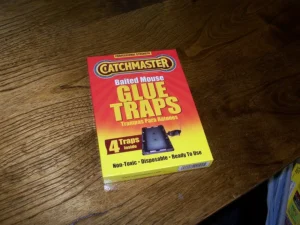
Their low profile can help them blend in with the floor, so pests walk onto them without slowing down, especially in dim corners where they can’t see much.
That’s especially true in tight spots, where a mouse has nowhere else to go.
However, a board only works if the animal walks across it, so placement is everything.
Put it where pests already travel, and it works hard. Put it somewhere random, and it just sits there.
Where Should You Put A Glue Trap For The Best Results?
Since pests follow walls, the best spot is right up against one, with the long edge of the board touching the baseboard.
Look for signs first. If you find droppings, gnaw marks, or greasy smudges along a wall, that’s where a board belongs.
Behind the fridge, under the sink, and along the back of a pantry are all good places to try, since pests like dark, quiet corners.
You’ll catch more if you use several boards instead of one, spaced a few feet apart along the same wall.
Keep boards out of the open and away from heat, pets, and kids.
And check them every day. A board you forget about can turn into a sad, smelly mess.
Moving a board to a new spot after a few quiet days can make a big difference too, because pests often use one path and ignore the spot right beside it.
Glue Boards Catch Crawling Insects And Spiders Too
Mice and rats aren’t the only ones that hug walls. Cockroaches and ants also stay close to surfaces when they’re looking for food or shelter.
That’s why the same kind of glue board catches roaches, spiders, crickets, and other crawling pests along baseboards and in corners.
Crawling pests have to cross the glue to get where they’re going.
Fly strips and window traps work in a different way, since they hang in the air and catch bugs that land on them.
Moth traps and fruit fly traps often add a scent that draws the insects in.
Pest control companies use all of these to find out what’s living in a building and where.
A small, stuck insect on a board is often the first sign that a bigger problem is hiding nearby, so it’s worth checking the area around it.
Why Do Pest Control Pros Use Glue Boards As Monitors?
Pest pros call these traps monitors (traps put out to find pests, not just to catch them).
Many pest control companies set boards in a home or business, then come back after a few days to see what’s stuck on them.
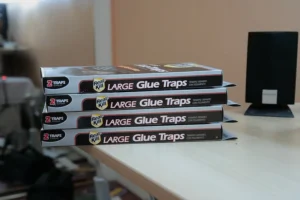
The boards show which pests are there, how many there are, and which spots they use most.
That tells a pro where to put stronger tools, like snap traps or sealing work, so the effort goes where it counts.
It’s like a map made of glue. The more bugs on one board, the busier that spot is.
You can do the same thing for insects at home, with a few boards along the walls in your pantry, basement, or garage.
Check them often, and replace any that get dusty or full.
Scent And Bait Can Make Glue Traps Work Even Better
A lot of boards come with a scent built into the glue, and the most common one is peanut butter.
That scent gives mice a reason to walk onto the board, because it smells like food.
Some boards use other scents, like banana for mice, or special lures for flies and moths, which gives each pest a reason to walk across the glue.
You can also dab a little peanut butter on the center of a board yourself.
Unlike a snap trap, though, a glue board doesn’t need much bait, because the animal only has to touch it.
Too much bait can even get in the way, since a mouse can nibble at it from the edge and walk off.
A small dab in the middle is enough to pull a mouse across the glue.
Why Are Glue Traps So Cheap And Easy To Use?
A glue trap is basically a piece of cardboard or plastic with a layer of glue, so it costs very little to make.
That’s why you can buy a handful of boards for a few dollars, and why so many people reach for them first.
They’re also easy to use. You don’t need to learn how to set a spring, and there’s no poison to measure out.
Glue boards are quiet, too, and they don’t snap shut on your fingers.
Put it all together, and you can see why glue traps are one of the most common pest tools on store shelves.
Easy and cheap doesn’t always mean best, though, and we’ll get to the downsides in a moment.
Glue Traps Work Best On Small, Light Pests
The glue only has to hold as long as the animal can’t pull free, so size matters a lot.
A mouse weighs about an ounce or less, which means a thin layer of glue can hold it down.
A fully grown rat can weigh close to a pound, so it can tear loose or drag a board away.
That’s why glue boards are far more effective on mice, insects, and small lizards than on big rats.
Small, light animals can’t pull hard enough to get free, so every move just sticks them down more, a bit like a fly struggling in a spider’s web.
A big, strong animal that only gets a foot stuck has a much better chance of escaping.
Do Glue Traps Work On Every Mouse?
No, and that surprises a lot of people. A field study at Purdue University found that many wild mice backed off the first time they touched a glue trap.
Some of those mice learned to avoid glue traps, and a few even found ways to neutralize (make harmless) the glue in busy runways (the paths mice use over and over).
In that same test, other kinds of traps caught mice at a much higher rate than glue boards did.
Mice that stay put in a busy path, moving by feel in the dark, are the ones most likely to get caught.
So glue traps can be very effective in the right spot, but they won’t catch every mouse.
If a board stays empty for days, move it or try a different kind of trap, since the pests may be using another route.
Dust, Heat, And Cold Can Wear Down The Stickiness
The same science that makes glue traps work also explains why they stop working.
Heat can soften this kind of adhesive and weaken how well it holds, and one brand lists its melting point at about 171°F (77°C).
Humidity and temperature also change how a pressure-sensitive adhesive behaves, so a board might grab harder in one room than another.
Dust and dirt are the biggest enemies. A thin layer on the glue keeps feet from touching it, and the board loses its grip.
Cold weather can make the glue stiff, so it doesn’t flow around a foot as easily, and a stiff board can let a light animal pull loose.
A garage in winter or an attic in summer can be rough on a glue board.
Keep boards in a cool, dry place until you use them, and swap them out when they get dusty.
How Often Should You Check And Replace A Glue Trap?
Check your boards at least once a day, since an animal that’s stuck can suffer, and a dead one can start to smell.
Wear gloves when you handle one, and wash your hands afterward, because pests can carry germs.
Replace a board when it’s full, dusty, wet, or covered with crumbs and hair, even if it hasn’t caught anything.
If it’s been sitting in a hot garage or a damp basement, swap it for a fresh one, since the glue may have lost its grip.
Keep spare boards in a cool, dry place so they’re ready to go when you need them.
Write the date on the edge with a marker, and you’ll always know how long a board has been out.
Being Effective Doesn’t Make Glue Traps The Best Choice
A trap that catches things isn’t always the right trap for you, and glue boards come with some big downsides.
Animals stuck on a board can panic and suffer for hours before they die.
Glue boards also can’t tell a mouse from a lizard, a bird, or a pet, so they catch plenty of animals you never meant to hurt.
Rules are changing too. England, Wales, Scotland, Ireland, New Zealand, and the Australian state of Victoria have banned or tightly restricted them, and a few US cities have done the same.
In most of the US and Canada they’re still legal, but check your local rules first.
Snap traps (the classic spring kind) usually work better and end an animal’s life much faster, and they’re just as cheap.
What Works Better Than Glue Traps For Long-Term Control?
The honest answer is that no trap works for long if pests can keep getting into your home.
Sealing gaps is the best first step. Mice can squeeze through openings about a quarter inch wide, and rats can fit through holes about half an inch wide.
Use metal mesh (a tough wire screen), cement, or sheet metal for the job, since pests can gnaw through soft materials like foam and plastic.
Next, remove what’s drawing them in. Keep food in sealed containers, take out the trash often, and fix any leaks.
For catching what’s already inside, snap traps made for the right pest are a fast, affordable choice, and they don’t leave an animal stuck for hours.
Set them along walls, where pests already travel, and check them every day.
That combo of sealing, cleaning up, and trapping solves problems that glue boards alone never will, because it deals with why the pests showed up.
When Should You Call A Pest Control Professional?
If you keep catching pests but they keep coming back, something bigger is going on.
A pro can find the entry points and food sources you missed, and tell you which pest you’re really dealing with.
That matters because the right trap for a mouse is the wrong trap for a rat.
Ask what methods a company plans to use, and look for one that talks about sealing and prevention before it talks about traps.
Large rats, roof rats in your attic, or lots of droppings in more than one room are all good reasons to make the call.
The sooner you get help, the less time pests have to settle in.
Conclusion
So, why are glue traps so effective? Because the glue sticks the moment anything touches it, and pests walk along walls right into it.
There’s no trigger to fail, no bait to ignore, and a whole board for an animal to step on, which makes it hard for a pest to get past without touching it.
However, they aren’t foolproof. Mice can learn to avoid them, big rats can pull free, and dust, heat, and cold can ruin the glue.
They also catch animals you never meant to hurt, and the animals that get stuck can suffer for hours.
For long-term control, seal the gaps, clean up the food, and use snap traps made for the pest you’re facing.
Do that, and you won’t need to count on glue to solve your pest problem.

Hi, my name is Ezra Mushala, i have been interested animals all my life. I am the main author and editor here at snakeinformer.com.