
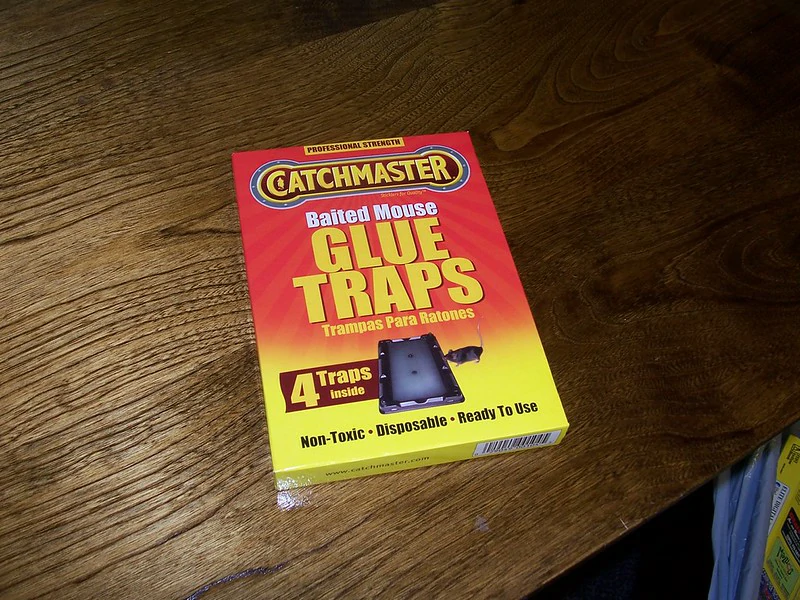
Open a pack of Catchmaster roach traps and the first thing you might notice is a sweet smell. That makes a lot of people wonder if they’re supposed to add something extra, like a dab of peanut butter or a crumb of bread.
It’s a fair question, because some glue traps come bare while others come loaded with scent. So, do Catchmaster glue traps need bait?
No, Catchmaster glue traps don’t need bait. Their mouse, roach and insect traps come with a food scent already mixed into the glue, so you can peel off the cover, set the trap down, and let it work.
The scent isn’t strong enough to pull roaches across a room, though. That’s why where you put the trap matters more than what’s on it.
In this post, you’ll learn what’s in the glue, what the science says about bait, and when adding your own makes sense (and when it doesn’t). You’ll also see what to do if your trap keeps coming up empty.
Do Catchmaster Glue Traps Come With Bait Already In Them?
Yes, most of them do, since Catchmaster says its roach and insect traps come already baited, with a food attractant mixed right into the glue.
The product pages for the mouse and insect glue boards say it plainly: the traps are baited, and no extra bait is necessary. The same goes for the 12 pack of home pest traps that big hardware stores sell.
The 150RI roach trap has a sweet vanilla scent in its glue, while the 288I monitoring boards come baited with food grade molasses (a thick, sweet syrup made from sugar cane).
The spider and insect traps are scented too, with a special formula meant to draw in roaches, spiders, and other crawling bugs that wander past.
There are a few unscented Catchmaster traps, though, mostly in the mouse line, so it’s worth reading the label on your pack before you decide anything.
If you can smell something sweet or nutty when you open the pack, that’s the bait doing its job. You don’t need to add anything to it.
One quick tip: leave your traps in the pack until you’re ready to use them, because once you peel off the cover, the glue and the scent are open to dust and air.
The Scent In Catchmaster Traps Is Usually Sweet Or Nutty
Roaches aren’t picky eaters, so the scents in glue traps are built around foods they already like. Sweet things, starchy things, and greasy things all do the trick.
That’s why you’ll see molasses, vanilla, and peanut butter on trap packs. A lab test that included older Catchmaster models described them as baited with peanut butter and molasses.
Peanut butter is a favorite in pest control for a reason: it’s sticky, it smells strong, and it’s packed with the fats and sugars that roaches go for.
The scent doesn’t have to smell good to you, only to a roach. Roaches pick up smells with their antennae (the long feelers on their heads), and they’re very good at it.
Brownbanded cockroaches even go for starchy things like the glue on stamps and envelopes, which shows just how little it takes to get a roach interested.
Over time, the scent fades like any other smell. Catchmaster doesn’t say how long it lasts, but it does say its traps stay effective for about two to three months in good conditions.
How Strong Is The Scent, And How Far Does It Reach?
Here’s the part most people don’t expect: the scent only works from a very short distance.
Tests on German cockroaches have found that they aren’t drawn to food smells or trap scents from more than a few centimeters away, which is only about an inch or two.
So a trap can’t pull a roach out of a wall or across a kitchen. It can only nudge a roach that’s already walking right next to it.
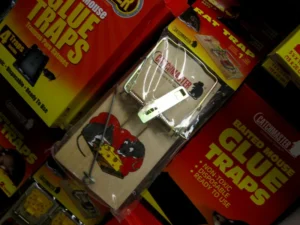
Pest experts say the same thing about roach baits in general. They don’t attract roaches over long distances, so you have to put them close to where roaches hide or walk.
That’s good news in one way, because it means your trap isn’t calling roaches in from the neighbors or the yard.
It also means placement is a big deal. A trap with a great scent in the wrong spot will catch nothing, while a plain trap in the right spot can catch plenty.
Studies Disagree On Whether Bait Really Helps Traps Catch More Roaches
You’d think a baited trap would always beat a bare one, but the research is mixed.
In one Purdue University lab test, every bait the team tried caught more roaches than an unbaited trap. Bread with a splash of beer did best by far, catching about 34 times more roaches, while peanut butter roughly doubled the catch.
Another team tested lures in real homes and on a pig farm, and they found that store bought lures did no better than bare traps. Peanut butter, however, worked well in the pig barns.
A review of this research a few years ago summed it up in plain terms: highly effective roach lures just aren’t sold in stores yet.
So where does that leave you? The scent in a Catchmaster trap probably helps a little, but it isn’t magic.
Most of the roaches that end up on a trap are there because the trap sits on their route, not because a smell dragged them in from far away.
Should You Add Your Own Bait To A Catchmaster Trap?
For most people, no, because the trap already has a scent, and extra food can make a mess without adding much.
Still, some lab tests show that fresh bait can boost catches, so if you’re curious, here’s how to try it without wrecking the trap.
Use a tiny amount, like a pea sized dab of peanut butter or a small piece of bread near the center of the trap.
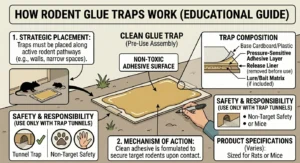
Don’t smear it over the glue, because food on the sticky surface covers the glue, and covered glue won’t hold a roach.
Use fresh bait, and swap it out when it dries up or gets moldy. In the Purdue tests, bread and beer dried out or went moldy fast when it sat out in the open.
Keep baited traps well out of reach of pets, since a trap with peanut butter on it can be a lot more tempting to a dog or cat.
And skip the poison. Don’t mix insecticide into the glue or the bait, since these traps aren’t made for that.
If you try bait and nothing changes after a few days, take it off and move the trap instead, because location is almost always the real issue.
Cleaning Up Food Makes Your Traps And Baits Work Better
Here’s a twist that surprises people: a clean kitchen helps your traps catch more roaches, not fewer.
Roaches will eat almost anything, from crumbs and grease to pet food, cardboard, and even soap, so a trap’s scent has to compete with everything else on the menu.
If your kitchen has crumbs under the toaster and a greasy stovetop, a roach has no reason to walk toward a scented trap. In a spotless kitchen, that same trap suddenly looks like the best meal around.
Lab tests back this up, since trap catches went up when roaches were short on food and water.
So wipe the counters, store food in sealed containers, and don’t leave pet food out overnight.
Fix leaky pipes and dripping faucets too, because roaches need water just as much as food, and they’ll hang around any damp spot.
These steps help your traps, and they help roach bait work faster, since roaches eat bait much more readily when there’s no other food around.
Place Catchmaster Traps Where Roaches Already Travel
If the scent only works from an inch or two away, then your real bait is the location, and a trap should sit right on a roach highway.
Roaches like to travel along walls and edges, so lay the trap flat where the floor meets the wall. Corners are even better, since roaches gather there when they’re searching for food.
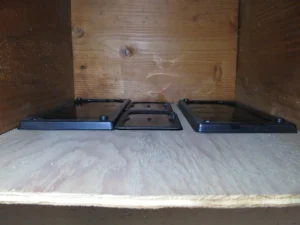
Good spots include behind the fridge and stove, under the sink, inside cabinets near the pipes, and under the bathroom vanity. Put a few near the doors that lead outside too.
Look for signs first: small dark specks or smears (roach droppings), shed skins, and egg cases all point to a hot spot, and a flashlight at night can help you find them.
Droppings matter for another reason, since they contain a natural scent called an aggregation pheromone (a signal that makes roaches gather). A trap near droppings sits right where roaches already like to be.
Skip dusty, greasy, or damp spots, because they can coat the glue and weaken it. Catchmaster also says to keep traps away from heating vents and sunny windows.
How Many Traps Do You Need If The Bait Is Already Built In?
Since the bait is already built in, the number of traps you use is what really changes your results, because more traps cover more roach routes.
The label on the 288I monitoring boards suggests one trap per room, or one per 100 square feet, which is fine for a quick check.
For an actual roach problem, you’ll want more than that. Try one trap in each corner of the kitchen, plus a few behind the fridge, under the sink, and near the trash can.
A small apartment might need six to ten traps at first, and a bigger house will need more. It sounds like a lot, but the extra traps show you where the roaches really are.
Number each trap, or draw a quick map, so you can see which spots catch the most.
Once you know the hot spots, you can move extra traps there and put roach bait close by.
If a trap catches nothing for a week in a good spot, move it somewhere new. That’s easier than guessing, and it only takes a minute.
Do Catchmaster Traps Work Without Bait?
Yes, they do. Even a bare sticky trap catches roaches, because the glue does the real work.
In the Purdue tests, a trap with no bait at all still caught plenty of roaches. The baited versions did better in some cases, but the plain trap held its own.
A roach doesn’t need to smell anything to get stuck, because it just needs to walk onto the sticky surface, and traps along walls and edges give it plenty of chances.
The shape of the trap helps too. Roaches love tight spaces where surfaces touch them on both sides, so a low tunnel can look like a cozy hiding spot all on its own.
That’s why a trap with the scent worn off can still catch roaches for a while. It’s also why a fresh trap in a bad spot can sit there empty.
If your trap isn’t catching anything, the bait is rarely the problem. Check the spot, the dust on the glue, and the age of the trap first.
Glue Trap Bait And Roach Bait Are Not The Same Thing
This is where a lot of people get mixed up, because the word bait means two different things in pest control.
On a glue trap, bait is just an attractant, which is a smell or a food that draws a roach closer. It doesn’t harm the roach at all, and the glue does the catching.
Roach bait, like gels and bait stations, is a different product that mixes a food with a slow acting insecticide, so roaches eat it and die later.
Glue traps catch a few roaches and show you where they are. Roach bait kills the roaches you never see, including the ones hiding deep in the walls.
That’s why the two work so well together: the trap shows you where to put the gel, and the gel does the heavy lifting.
Most roach baits take a week or more to work, so give them time. Keep both traps and baits out of reach of kids and pets, and put gel in small dabs where roaches hide.
When Should You Replace A Trap Instead Of Adding Bait?
If a trap has been out for days and caught nothing, adding bait usually isn’t the fix. Start by asking if the trap is still good.
Catchmaster says to replace a trap when you can see dust on the glue, when the glue feels less tacky, or after two to three months. A trap that’s lost its grip won’t catch much, no matter how good it smells.
Check your traps every day for the first few days, then about once a week. Write the date on the back so you know how long each one has been out.
If a trap is in a dry, dust free spot, it’s still fresh, and it’s still empty, move it. Try a corner, a gap behind an appliance, or the spot where you last saw a roach.
Put a second trap beside it, and make it a different style if you can, since flat traps and tunnel traps catch roaches a little differently.
And remember that an empty trap isn’t always a problem. After a few days in a good spot, it might just mean you don’t have many roaches there.
Conclusion
So, do Catchmaster glue traps need bait? No, they don’t, because their roach and insect traps come with a food scent already in the glue.
That scent only works from an inch or two away, though, so it can’t pull roaches across the room. Placement matters far more than any bait.
You can add a tiny dab of fresh peanut butter if you’re curious, but it isn’t needed. Just keep it off the glue and away from pets.
Set your traps flat along walls and corners, near droppings, and behind appliances. Replace them when they get dusty or lose their stickiness.
And remember that a glue trap only finds roaches. To get rid of them, use gel bait or boric acid where the traps show you the hot spots, and clean up and seal the gaps.

Hi, my name is Ezra Mushala, i have been interested animals all my life. I am the main author and editor here at snakeinformer.com.