
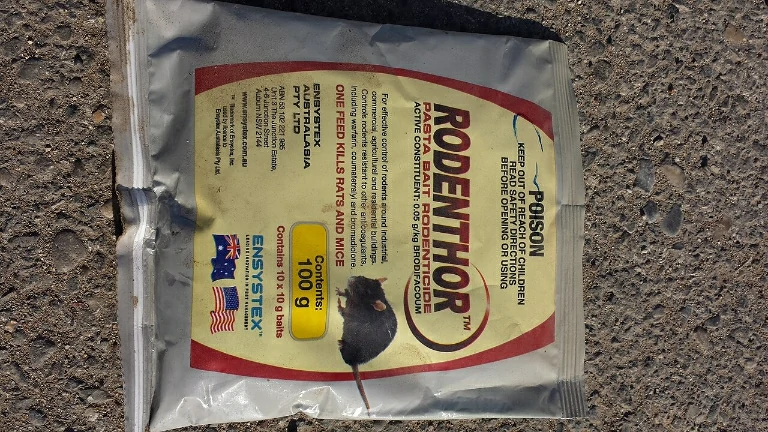
If you’ve read about rat poison, you’ve probably come across the term internal bleeding at some point. It gets mentioned a lot, but not always explained clearly.
Understanding exactly how this happens matters, whether you’re using rat poison at home or worried about a pet or child getting into it.
So does rat poison actually cause internal bleeding, and if so, how?
Yes, most rat poison causes internal bleeding, and it’s actually the main way these products kill rodents. The most common type, called anticoagulant rodenticide, blocks the body’s ability to make clotting factors. Without those factors, small injuries can’t heal, and bleeding builds up over days.
That said, not every rat poison works this way. Some use completely different methods that don’t involve bleeding at all.
Let’s break down how the poisons that cause bleeding actually work, and what that looks like in a body.
How Anticoagulant Rat Poison Actually Works
Most rat poison sold today falls into a category called anticoagulants. That word just means something that stops blood from clotting properly.
Your body, and a rat’s body, relies on a set of clotting factors made in the liver to form clots and stop bleeding. Making those clotting factors requires vitamin K.
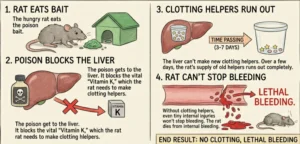
Anticoagulant rodenticides block an enzyme the body needs to recycle vitamin K and keep using it. Without that recycling process, the body’s usable vitamin K supply runs out fairly quickly.
Once that supply is gone, the liver can’t make new clotting factors anymore. Existing ones eventually get used up too, since the body constantly needs them for small, everyday repairs.
That’s where the internal bleeding comes in. Tiny blood vessels get damaged all the time through completely normal wear and tear.
Normally, clotting factors patch these up before you’d ever notice. Without them, these small injuries just keep bleeding instead of sealing shut.
Why the Bleeding Takes Days to Start
One of the more unsettling parts of how this poison works is the delay. A rat that eats a lethal dose doesn’t start bleeding right away.
The body has an existing stockpile of clotting factors already circulating when the poison is eaten.
Depending on the poison and dose, that stockpile can last anywhere from about a day to several days.
During that window, everything looks and feels completely normal. There’s no immediate sign anything is wrong.
Once that stockpile runs out, and the body can’t replace it, bleeding starts showing up.
This typically happens somewhere between three and eight days after eating a lethal dose, depending on the poison involved.
This delay is actually intentional from a design standpoint. If a poison killed instantly, surviving rats would quickly learn to avoid the bait.
Since the cause and effect are separated by several days, rats never make that connection, and the bait stays effective.
What Internal Bleeding From Rat Poison Actually Looks Like
Internal bleeding doesn’t always look dramatic from the outside, at least not at first. It often starts subtly before becoming more obvious.
Early signs can include unusual bruising that shows up without any clear injury to explain it. Small, unexplained bruises appearing all over the body is a classic warning sign.
Bleeding from the gums or nose, without any injury causing it, is another common early symptom.
Blood showing up in urine or stool is a serious sign that bleeding is happening internally, not just at the surface.
In more severe cases, bleeding can happen into body cavities, like the chest or abdomen, or even inside the skull. This is where things become genuinely life threatening.
Because blood pressure can drop sharply when someone loses enough blood internally, weakness, paleness, rapid heartbeat, and even collapse can follow if the bleeding isn’t caught and treated in time.
Does This Happen to Humans Too, Not Just Rodents?
Yes, the exact same mechanism applies to humans, since our clotting system works the same basic way rats’ does.
This is actually why anticoagulant rodenticides are dangerous to people, not just the rodents they’re designed for. The chemistry doesn’t discriminate between species.
In practice, a small accidental exposure, like a child putting a pellet in their mouth then spitting it out, usually isn’t enough to cause serious bleeding.
It typically takes a larger or repeated dose to cause real harm in a person.
Still, medical case reports exist of people developing serious internal bleeding after either intentionally or repeatedly consuming anticoagulant rodenticides, sometimes without realizing what they’d actually eaten.
One documented case involved a man who developed unexplained bleeding after unknowingly eating meat from animals that had ingested rat poison. His symptoms were eventually traced back to brodifacoum exposure.
How This Affects Pets Specifically
Dogs and cats are actually the most common victims of accidental anticoagulant rodenticide exposure, more so than children in most reported cases.
This happens because pets often find bait more accessible than kids do, and because many pets will eat almost anything that smells or tastes appealing to them.
The same delayed bleeding pattern applies. A dog that eats rat poison today typically won’t show any symptoms for three to five days afterward.

This delay is actually part of why pet poisoning cases can be so dangerous.
Owners often don’t realize anything happened until symptoms show up days later, by which point real internal bleeding may already be underway.
Vets diagnosing this usually look for symptoms like lethargy, pale gums, unexplained bruising, coughing, or difficulty breathing, since bleeding into the lungs or chest cavity is a serious possibility.
Secondary poisoning is also a real risk here. A pet that eats a rodent that was itself poisoned can absorb enough of the chemical to get sick too.
This typically requires eating several poisoned rodents though, rather than just one.
Is There a Way to Reverse the Bleeding?
The good news is that anticoagulant rodenticide poisoning does have a real, effective antidote: vitamin K1.
Since the poison works by blocking the body’s ability to use vitamin K, giving vitamin K1 directly restores the missing piece.
This lets the body start making working clotting factors again.
Treatment usually also involves blood tests to check clotting times.
In more severe cases, doctors may use blood transfusions or plasma to replace what’s already been lost.
For humans, this typically means a hospital stay with monitoring.
Clotting times need to be tracked over days or even weeks, depending on which specific poison was involved.
For pets, a vet will usually run similar bloodwork.
They may keep an animal on oral vitamin K1 for several weeks too, since some of these poisons stay active in the body for a long time.
The key factor in a good outcome is catching it early. The sooner treatment starts, the less internal bleeding has a chance to build up before it’s brought under control.
Not Every Rat Poison Causes Bleeding
It’s worth being clear that internal bleeding isn’t universal across every type of rat poison, even though it’s the most common mechanism by far.
Bromethalin, a non-anticoagulant option, works completely differently. It damages the nervous system instead, causing swelling in the brain and spinal cord rather than bleeding anywhere in the body.
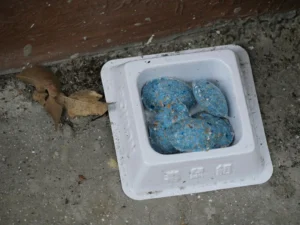
Zinc phosphide works differently too. It reacts with stomach acid to release toxic gas, and it doesn’t involve blood clotting at all.
Cholecalciferol, the vitamin D3 poison, causes dangerously high calcium levels rather than bleeding, which can lead to organ damage through a completely separate pathway.
So if you’re trying to figure out what symptoms to expect or watch for, knowing which specific poison was involved genuinely matters.
Treatment and symptoms both depend heavily on which category it falls into.
What This Means If You’re Concerned About Exposure
If you think you, a family member, or a pet may have been exposed to rat poison, acting quickly matters more than waiting to see what happens.
For humans, call Poison Control right away. In the US, that number is 1-800-222-1222, and in Canada, contact your regional poison control center.
For pets, contact your vet or an animal poison control hotline immediately, and try to bring the product packaging along if you’re heading to a clinic.
Try to identify exactly which product was involved, since this directly affects what kind of monitoring or treatment is needed.
Don’t wait for bleeding symptoms to show up before seeking help.
Given how long these poisons can take to cause visible effects, getting ahead of it gives doctors or vets a much better chance of stopping serious blood loss before it happens.
Conclusion
Rat poison does cause internal bleeding, and for the most common type, anticoagulant rodenticides, that’s the entire mechanism behind how they kill.
By blocking the body’s ability to use vitamin K, these poisons stop new clotting factors from being made.
That eventually leads to uncontrolled bleeding from everyday, otherwise minor injuries inside the body.
This process takes days to show up. That’s part of what makes it effective as a poison, and also what makes it so dangerous if a human or pet is accidentally exposed.
Symptoms often don’t show up until real damage is already underway.
Not every rat poison works this way though. Bromethalin, zinc phosphide, and cholecalciferol all use completely different mechanisms that don’t involve bleeding at all.
If you’re ever dealing with a suspected exposure, knowing which specific product was involved makes a real difference.
Getting help quickly, rather than waiting for symptoms, gives you the best shot at a good outcome. Vitamin K1 is a genuinely effective antidote for poisons that work this way.
But it only works if treatment starts before the damage becomes too severe.

Hi, my name is Ezra Mushala, i have been interested animals all my life. I am the main author and editor here at snakeinformer.com.