
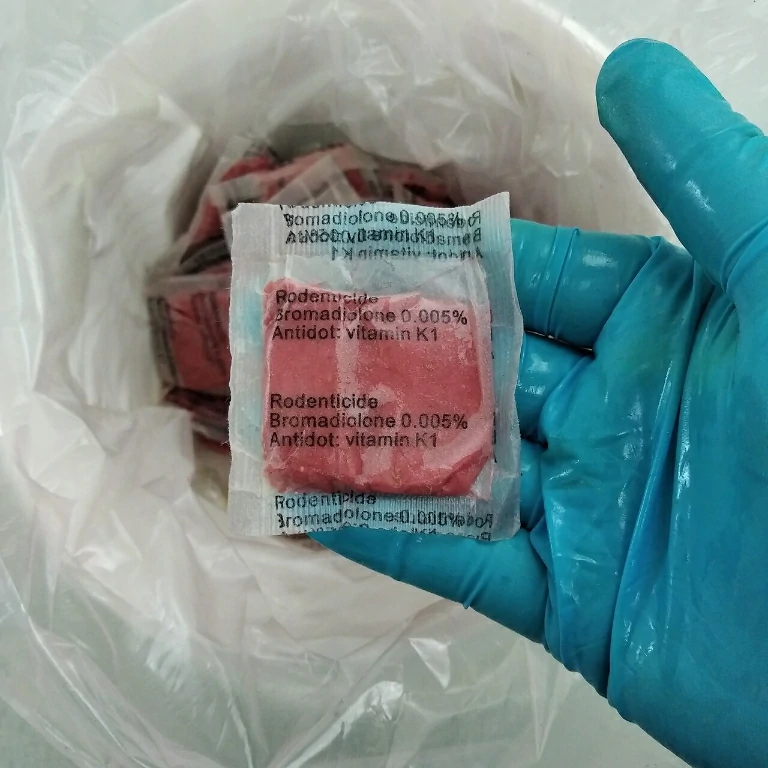
Warfarin is one of the most recognizable names in rat poison, and it’s been used to kill rats for over 70 years.
But warfarin is also a common prescription medication that millions of people take every day to prevent blood clots and strokes.
How can the same chemical be both a life-saving medicine and a deadly rat poison? Why is warfarin used in rat poison?
Warfarin is used in rat poison because it prevents blood from clotting, causing rats to die from internal bleeding. The same anticoagulant properties that make warfarin useful for preventing blood clots in humans make it deadly to rats when they consume it in much higher doses over several days.
The story of warfarin is actually pretty interesting. It started as a mystery disease killing cattle, became a powerful rat killer, and then turned into one of the most prescribed drugs in human medicine.
Understanding why warfarin works so well against rats helps explain both its effectiveness and its risks.
The Discovery of Warfarin Came From Dying Cattle
In the 1920s, farmers in North America noticed their cattle were dying mysteriously after eating moldy sweet clover hay.
The cows would bleed to death from minor injuries or sometimes just start bleeding internally for no obvious reason.
Something in the spoiled hay was preventing their blood from clotting.
A scientist named Karl Paul Link at the University of Wisconsin spent years figuring out what was killing the cattle. In 1940, his team isolated the compound responsible, a substance called dicoumarol that formed when sweet clover spoiled.
This compound interfered with vitamin K, which the body needs to make blood-clotting proteins.
Link’s team then created a more potent synthetic version of dicoumarol and called it warfarin (WARF for Wisconsin Alumni Research
Foundation, plus -arin from coumarin, the parent compound). Initially, they developed it specifically as a rat poison, and it went on the market in 1948.
How Warfarin Kills Rats
When a rat eats warfarin, the chemical gets absorbed into its bloodstream and travels to the liver.
There, it blocks an enzyme called vitamin K epoxide reductase. This enzyme normally recycles vitamin K so the body can keep using it to make clotting factors.
Without this enzyme working properly, the rat runs out of vitamin K. And without vitamin K, the liver can’t make the proteins needed for blood clotting (factors II, VII, IX, and X).
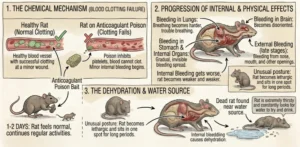
The rat’s blood loses its ability to clot properly.
Over the next few days, the rat develops internal bleeding. Even tiny blood vessels that normally wouldn’t be a problem start leaking.
Blood seeps into the rat’s organs, muscles, body cavities, and brain. The rat becomes weaker as it loses blood internally.
Death usually occurs three to seven days after the rat starts eating warfarin bait.
The delayed effect is actually a benefit for pest control because rats don’t connect eating the bait with getting sick, so they don’t develop bait shyness.
Why Is Warfarin Called Rat Poison?
The name “warfarin” became so strongly associated with rat poison that many people don’t realize it’s also a medicine. When doctors prescribe warfarin to patients for blood clot prevention, some patients are shocked to learn they’re taking “rat poison.”
This happened because warfarin’s first commercial use was as a rodenticide.
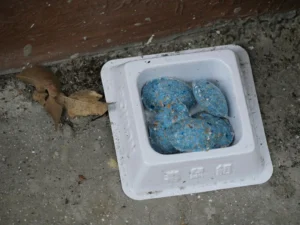
It was sold under brand names like D-Con for killing rats and mice, and it was incredibly successful. For decades, warfarin-based products were the standard for rodent control.
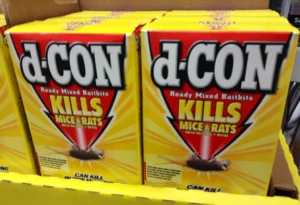
The association is so strong that even today, when someone hears “warfarin,” they often think “rat poison” before they think “blood thinner medication.”
This can create anxiety for patients who need warfarin therapy but are uncomfortable with taking something they associate with killing pests.
Interestingly, warfarin wasn’t used as human medicine until years after it became established as rat poison. A U.S. Navy recruit who tried to commit suicide by taking rat poison survived after being given vitamin K.
This incident, along with other research, showed that warfarin could be controlled and potentially useful in medicine.
Warfarin as Medicine: The Same Chemical, Different Dose
In 1954, warfarin was approved for use in humans as an anticoagulant medication. Doctors prescribe it to prevent blood clots in people with conditions like atrial fibrillation, artificial heart valves, or a history of deep vein thrombosis.
The dose makes all the difference.
Patients typically take 1-10 milligrams of warfarin per day, carefully calibrated to thin their blood just enough to prevent dangerous clots without causing bleeding problems.
Doctors monitor patients with regular blood tests to make sure the dose is right.
Rats eating warfarin bait consume much larger amounts over several days. The concentration in rat poison is designed to be lethal when eaten repeatedly.
A rat might consume 50-100 times the human therapeutic dose in just a few days.
The same chemical that saves human lives by preventing strokes and heart attacks kills rats through uncontrolled internal bleeding. It’s all about the dose and the intent.
Why Warfarin Works Well for Rat Control
Warfarin has several properties that make it effective for killing rats. First, it requires multiple feedings over several days to be lethal.
This is actually an advantage because rats are neophobic (afraid of new things) and will often only eat small amounts of new food at first.
With warfarin, the rat can take several small meals without immediately getting sick. By the time symptoms appear, the rat has already consumed a lethal dose.
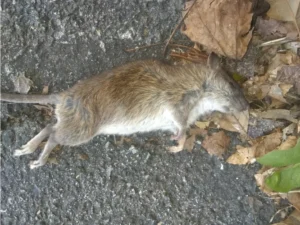
Other rats in the colony don’t see their companion die right after eating the bait, so they don’t learn to avoid it.
Second, warfarin is relatively slow-acting. The three to seven day delay between consuming the poison and dying means rats don’t connect the bait with danger.
Faster-acting poisons can create bait shyness, where surviving rats learn to avoid that food source.
Third, there’s an antidote. Vitamin K1 reverses warfarin’s effects. This makes warfarin safer than some other rat poisons if pets or children are accidentally exposed.
If caught early, warfarin poisoning can be treated successfully.
The Problem With Warfarin Resistance
After decades of widespread use, some rat populations have developed genetic resistance to warfarin. These resistant rats have mutations that let them eat warfarin without the same effects.
Their bodies either need much more warfarin to be poisoned, or they’re completely immune.
Resistance first appeared in Scotland in the 1950s, just a few years after warfarin came into widespread use.
Since then, resistant rat populations have been found across Europe, the United States, and other countries where warfarin has been heavily used.
When you use warfarin in an area with resistant rats, you kill the susceptible ones but the resistant ones survive and breed.
Over time, the entire population becomes resistant and warfarin stops working. This forced the development of more potent second-generation anticoagulants.
Products containing brodifacoum, bromadiolone, and difethialone were created specifically to overcome warfarin resistance. These second-generation anticoagulants are much more potent and work even on warfarin-resistant rats.
Second-Generation Anticoagulants vs. Warfarin
While warfarin requires multiple feedings over several days to be lethal, second-generation anticoagulants like brodifacoum can kill a rat after a single feeding.
They’re much more potent and persist in the rat’s body for weeks instead of days.
This extra potency makes second-generation anticoagulants more effective against resistant rats, but also more dangerous to pets and wildlife.
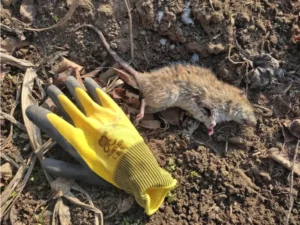
The poison accumulates in the rat’s liver and tissues, so when a hawk eats a poisoned rat, it gets a concentrated dose.
Warfarin is considered less environmentally harmful than second-generation anticoagulants because it breaks down faster in the rat’s body and is less likely to cause secondary poisoning in predators.
However, its effectiveness is limited in areas with resistant rat populations.
Some pest control professionals now recommend rotating between different types of rodenticides to prevent resistance from developing.
Others are moving away from anticoagulants altogether and using different types of poison or non-chemical methods.
How Warfarin Bait Is Formulated
Rat poison containing warfarin isn’t just pure warfarin. It’s mixed with other ingredients to make it attractive to rats and safe to handle.
The bait typically contains only 0.025% to 0.1% warfarin by weight. The rest is food-based material that rats find appealing.
Common bait bases include grains, seeds, peanut butter, fish meal, or cheese flavorings. These ingredients smell and taste good to rats, encouraging them to eat the bait. Some products also include sweeteners or other flavor enhancers.
The bait comes in different forms: blocks, pellets, meal, or paste. Blocks are hard cakes that rats gnaw on. Pellets are small pieces that rats can carry away.
Meal is a loose powder that rats eat on the spot. Paste is a soft bait used in places where dry baits don’t work well.
Manufacturers also add bittering agents to some products to discourage children and pets from eating the bait if they find it. These agents taste extremely bitter to humans and many animals, though rats apparently don’t mind them.
Why Does Warfarin Take Days to Work?
The delayed action of warfarin is key to its effectiveness, but it can also frustrate people trying to control rats. You put out bait, rats eat it, but they don’t die right away. It feels like nothing’s happening.
The delay occurs because the rat’s body has existing stores of vitamin K and clotting factors. When the rat first eats warfarin, these existing stores keep working.
It takes several days of eating warfarin-containing bait for the rat’s vitamin K stores to be depleted and for existing clotting factors to break down.
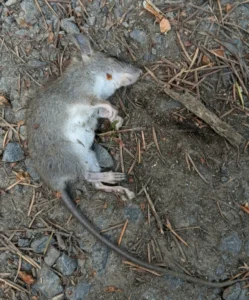
Only after these reserves are exhausted does the rat start experiencing bleeding problems. By that time, the rat has consumed enough warfarin that even if it stops eating the bait, it’s already received a lethal dose.
This is why it’s important to keep bait available for at least two weeks, even if you don’t see rats eating it every day. Rats need to eat the bait multiple times over several days to consume enough to be lethal.
Treating Warfarin Poisoning in Pets
If your dog or cat eats warfarin rat poison, there’s an effective treatment. Your vet will give them vitamin K1, which bypasses the enzyme that warfarin blocks and allows blood clotting to resume. Treatment usually continues for three to four weeks.
The key is catching the poisoning early. If you see your pet eat rat poison or suspect they’ve been exposed, get them to the vet immediately.
Don’t wait for symptoms to appear. Early treatment, ideally within a few hours of exposure, gives the best chance of full recovery with no complications.
Your vet might induce vomiting to remove any undigested bait from the stomach. They’ll give activated charcoal to absorb any poison in the digestive system.
Then they start vitamin K1 therapy and monitor your pet’s blood clotting ability with regular tests.
If treatment is delayed and the pet has already started bleeding internally, they may need blood transfusions in addition to vitamin K1.
This is much more serious, expensive, and doesn’t always have a successful outcome.
The Cost of Warfarin-Based Rat Poison
One reason warfarin-based rat poisons remain popular is cost. Because warfarin has been around for so long and is no longer under patent, it’s cheap to manufacture.
Products containing warfarin are often the least expensive rat poisons available.
You can buy warfarin-based rat bait for just a few dollars per pound, making it accessible for homeowners on a budget. In contrast, newer second-generation anticoagulant products or non-anticoagulant poisons can cost two to three times as much.
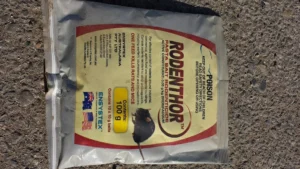
However, the low cost can be misleading if you’re dealing with resistant rats. You might spend months buying cheap warfarin bait that isn’t working, when you could have spent more up front on a different product that would have solved the problem.
Also, the cost of treating pet poisoning far exceeds any savings from cheap rat bait. A $5 box of warfarin bait can lead to $1,500 in emergency vet bills if your dog gets into it.
Warfarin in Different Countries
Warfarin’s availability and use varies by country. In the United States, warfarin-based rat poisons are still widely available for consumer use, though some states have restrictions. I
n Europe, regulations on rodenticides have become stricter due to environmental concerns.
Some European countries have banned or severely restricted warfarin and other anticoagulant rodenticides for consumer use.
Professional pest control operators can still use them under controlled conditions, but homeowners can’t buy them.
The United Kingdom has seen significant warfarin resistance in rat populations, leading to heavy reliance on second-generation anticoagulants.
This in turn has led to environmental problems with wildlife poisoning, prompting new regulations.
Canada allows warfarin-based products but requires them to be sold in child-resistant packaging and limits the amount consumers can buy at one time.
Australia has similar regulations aimed at reducing accidental poisonings.
Alternatives to Warfarin for Rat Control
If you’re dealing with warfarin-resistant rats or want to avoid anticoagulants altogether, you have several options.
Bromethalin is a neurotoxin that kills rats by causing brain swelling. It works faster than warfarin and there’s no resistance issue yet.
Cholecalciferol (vitamin D3) kills rats by causing kidney failure and calcium buildup in organs. It’s less toxic to predators than anticoagulants because it doesn’t accumulate in the rat’s body the same way.
Zinc phosphide is a fast-acting acute poison that releases toxic gas in the rat’s stomach. It works after a single feeding and doesn’t cause secondary poisoning issues, but rats can develop bait shyness if not all rats in the area are killed.
Non-chemical methods include snap traps, electronic traps, and exclusion (sealing entry points to prevent rats from getting in).
Many pest control professionals now recommend integrated pest management that combines traps, exclusion, and habitat modification rather than relying solely on poison.
Conclusion
Warfarin is used in rat poison because it effectively kills rats through internal bleeding by preventing blood clotting. The same anticoagulant properties that make it useful as human medicine make it deadly to rats at higher doses. I
ts delayed action prevents bait shyness, and the availability of an antidote (vitamin K1) makes it safer than some alternatives if pets are exposed.
However, warfarin’s effectiveness has declined due to resistant rat populations in many areas. Second-generation anticoagulants were developed to overcome this resistance, though they come with greater environmental risks.
The association between warfarin and rat poison remains strong in public consciousness, sometimes causing concern for patients prescribed the medication.
Whether you’re using warfarin-based rat poison or considering alternatives, understanding how it works helps you make informed decisions about pest control.
And if you’re taking warfarin as medication, remember that dose makes the poison – the small, controlled amounts prescribed by doctors are there to help you, not harm you.

Hi, my name is Ezra Mushala, i have been interested animals all my life. I am the main author and editor here at snakeinformer.com.