

Rats are some of the most persistent pests you’ll ever deal with. They chew through walls, contaminate food, and multiply faster than you can imagine.
When you’re dealing with a rat problem, you might start looking for safe, natural solutions that won’t put your family or pets at risk. One home remedy that pops up online is using flour to kill rats. But does flour kill rats?
Flour alone doesn’t kill rats. Plain flour is just a food source that rats will eat without any harmful effects. However, some people mix flour with other substances like baking soda or plaster of Paris to create homemade rat poisons, though these methods aren’t reliable or humane.
While flour by itself won’t harm rats, it’s often used as a base ingredient in DIY rat poison recipes. These mixtures are meant to attract rats with the familiar smell and taste of flour, while the other ingredients supposedly cause internal problems.
But before you start mixing up batches in your kitchen, you need to understand why these methods often fail and what actually works.
Why Plain Flour Won’t Kill Rats
Flour is basically just ground-up wheat, and rats can eat it without any problems. In fact, they’ll probably enjoy it as a free meal.
Rats are opportunistic eaters that will consume grains, seeds, and flour-based products whenever they find them.

When you put out plain flour, you’re not solving your rat problem. You’re actually making it worse by giving them an easy food source.
Well-fed rats breed faster and stick around longer because they’ve found a reliable place to eat.
The Flour and Baking Soda Method: Does It Work?
One of the most common DIY rat poison recipes involves mixing flour with baking soda. The idea is that rats can’t burp or pass gas, so when the baking soda reacts with their stomach acid, it creates gas that builds up and supposedly kills them.
People usually mix equal parts flour and baking soda, sometimes adding sugar to make it more attractive.
But here’s the problem. This method isn’t very effective, and there’s little scientific evidence to back it up. Rats are smart animals with excellent senses of smell and taste.

Many rats will avoid eating large amounts of anything that contains baking soda because it doesn’t smell or taste right to them.
Even if a rat does eat the mixture, the amount of gas produced often isn’t enough to kill them. Rats have survived much worse in sewers and garbage dumps.
They might feel uncomfortable or sick, but they’ll likely recover and learn to avoid that food source in the future.
Flour and Plaster of Paris Is A Dangerous Mix
Another recipe you’ll find online mixes flour with plaster of Paris (the white powder used for making casts and molds).
When mixed with flour and eaten, the plaster is supposed to harden in the rat’s stomach after the rat drinks water, causing a blockage that kills them.

This method is cruel and inhumane. If it works at all, the rat dies slowly and painfully over several days. It’s not a quick or merciful death, and in many places, causing unnecessary suffering to animals (even pests) can violate animal cruelty laws.
Also, this mixture poses serious risks to pets and children. If your dog or cat eats plaster of Paris mixed with flour, they could suffer the same painful blockage.
Kids who get into it could face serious health problems too.
Why Are Homemade Rat Poisons Risky?
When you make your own rat poison at home, you can’t control the dosage or predict the results. Commercial rat poisons are formulated to work at specific doses and include safety measures like bittering agents (substances that taste extremely bitter to discourage pets and kids from eating them).
Homemade mixtures don’t have these safeguards. You don’t know if you’re using enough of the active ingredient to actually kill the rat, or if you’re using so much that it becomes dangerous to everything else in your home.
There’s also the problem of placement. When you put out homemade rat poison, you can’t prevent other animals from eating it.
Squirrels, birds, neighborhood cats, and your own pets might all be attracted to a flour-based mixture. You could accidentally poison an animal you never meant to harm.
What Actually Kills Rats Effectively
If you really want to get rid of rats, you need to use proven methods. Commercial rat poisons (called rodenticides) are specifically designed to kill rats and mice. They come in different types, and each works differently.
Anticoagulant poisons are the most common. These prevent blood from clotting, causing internal bleeding that kills the rat over several days.
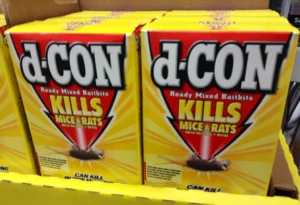
The most widely used anticoagulants include warfarin, bromadiolone, and brodifacoum. Rats eat the poison multiple times over several days, and the cumulative effect eventually kills them.
Non-anticoagulant poisons work differently. Bromethalin attacks the nervous system, causing brain swelling. Cholecalciferol (vitamin D3) causes calcium levels in the blood to spike, leading to kidney failure. Zinc phosphide releases toxic gas when it hits stomach acid.
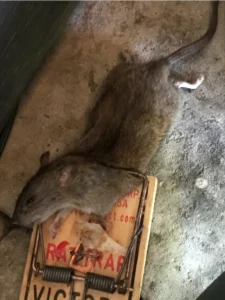
Traps are another effective option. Snap traps kill rats instantly when set up correctly. Electronic traps deliver a high-voltage shock that kills in seconds.
Live traps catch rats alive so you can release them far from your home (though this often just makes them someone else’s problem).
The Real Problem With Using Flour for Rat Control
The biggest issue with trying to kill rats with flour-based mixtures is that it wastes time. While you’re experimenting with homemade recipes, the rats are breeding.
A single female rat can have up to 12 babies every three weeks, and those babies can start breeding when they’re just five weeks old.
By the time you realize your flour mixture isn’t working, you could have ten times as many rats as when you started. What began as two or three rats in your attic can turn into a full-blown infestation in just a few months.

Rats also cause damage while you’re waiting for your homemade solution to work.
They chew through electrical wires (which can start fires), gnaw holes in walls and insulation, and contaminate food and surfaces with their droppings and urine.
Every day you spend trying ineffective methods is another day of damage to your home.
What Health Risks Do Rats Bring to Your Home?
Beyond the property damage, rats carry diseases that can make you and your family sick. They spread hantavirus through their droppings and urine.
When these dry out and become airborne dust, you can breathe them in and get infected. Symptoms include fever, muscle aches, and severe respiratory problems.
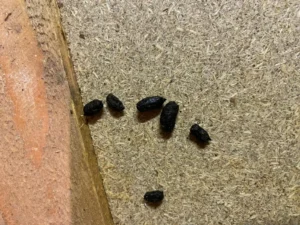
Rats also carry leptospirosis, a bacterial infection spread through their urine. If you come in contact with contaminated water or soil, the bacteria can enter your body through cuts, your nose, mouth, or eyes.
Leptospirosis causes high fever, severe headaches, muscle pain, and can lead to kidney or liver failure if not treated.
Salmonella is another concern. Rats pick up these bacteria from the filthy places they travel through, then spread it across your countertops, dishes, and food.
Food poisoning from salmonella causes severe stomach cramps, diarrhea, and vomiting that can last for days.
Their fleas and mites can also infest your home, biting you and your pets. In rare cases, rat fleas can even carry plague bacteria, though this is extremely uncommon in modern urban areas.
Better Alternatives to Flour-Based Rat Control
If you want to avoid commercial poisons, there are other options that actually work. Snap traps baited with peanut butter, dried fruit, or bacon are highly effective when placed along walls where rats travel.
Rats tend to run along edges rather than crossing open spaces, so trap placement matters more than the bait you use.
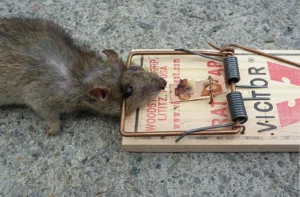
Electronic traps are more expensive but extremely effective. The rat walks in, steps on a metal plate, and receives a lethal shock. There’s no mess, no suffering, and no chance of the rat escaping. You just empty the chamber and reset the trap.
Exclusion is the best long-term solution. This means sealing up every hole, crack, and gap that rats use to get into your home. Rats can squeeze through openings as small as a quarter, so you need to be thorough.
Use steel wool and caulk for small gaps, hardware cloth for larger holes, and metal flashing around pipes and vents.
Remove food sources by keeping trash in sealed containers, storing pet food in airtight bins, and cleaning up fallen fruit from trees. Don’t leave pet food out overnight, and fix any leaky pipes or faucets since rats need water to survive.
When to Call a Professional Exterminator
Sometimes DIY methods just aren’t enough. If you’ve tried traps and exclusion but still see signs of rats (droppings, gnaw marks, greasy rub marks along walls, or scratching sounds at night), it’s time to call in professionals.
Exterminators have access to stronger poisons and professional-grade equipment that isn’t available to homeowners.
know where to place bait stations for maximum effectiveness, and they understand rat behavior well enough to predict where the rats are nesting and traveling.
Professional pest control companies also offer guarantees. If the rats come back within a certain time period, they’ll retreat your home for free.
This gives you peace of mind that the problem is actually solved, not just temporarily managed.
Large infestations absolutely require professional help. If you’re seeing rats during the day (they’re normally nocturnal), hearing constant scratching and squeaking, or finding droppings throughout your home, you’re dealing with a serious problem that’s beyond DIY solutions.
The Cost of Ignoring a Rat Problem
Putting off rat control because you’re trying to save money with flour mixtures can cost you much more in the long run. Rats cause thousands of dollars in damage to homes every year.
They chew through drywall, insulation, and wooden beams. They destroy stored items in attics and basements.
The electrical damage alone can be catastrophic. Rats love chewing on wires because it keeps their constantly growing teeth worn down.
Exposed wires can short out and start fires. According to some estimates, rats and mice cause about 25% of house fires attributed to “unknown causes.”
Then there’s the cost of treating diseases. A single trip to the emergency room for hantavirus or leptospirosis can cost thousands of dollars, even with insurance.
If you need hospitalization, the bills can reach tens of thousands.
Home values also take a hit. If you try to sell a house with an active rat infestation, you’ll either need to disclose it (which will scare off buyers or drastically lower offers) or pay for professional treatment before listing.
Either way, rats cost you money when it’s time to sell.
Understanding Rat Behavior Helps Control Them
Rats are neophobic, which means they’re afraid of new things in their environment. When you first put out traps or bait stations, rats will often avoid them for several days or even weeks. They need time to get used to seeing these new objects before they’ll interact with them.
This is why pre-baiting sometimes works better than immediately setting traps. Put out unset traps with bait for a few days. Let the rats get comfortable eating from them. Then set the traps and you’ll catch more rats more quickly.
Rats also follow the same paths night after night. They create runways along walls, behind appliances, and through attic insulation.
Once you identify these paths (look for greasy smudge marks and droppings), you know exactly where to place your traps and bait stations for maximum effectiveness.
They’re social learners too. If one rat gets sick from eating something, other rats in the colony will avoid that food source. This is called bait shyness, and it’s why some rat poisons work better than others.
Single-dose poisons that kill quickly can create bait shyness if they don’t kill all the rats. Multi-dose anticoagulants work better because rats don’t connect the food with getting sick until it’s too late.
Conclusion
Flour by itself won’t kill rats, and the homemade poison recipes that use flour as a base ingredient are unreliable, inhumane, and potentially dangerous to pets and children.
While these DIY solutions might seem like a cheap and natural alternative to commercial rat poisons, they waste valuable time while your rat problem gets worse.
If you’re dealing with rats, your best options are proven methods like snap traps, electronic traps, commercial rodenticides used according to label directions, and exclusion to prevent new rats from entering. For serious infestations, professional pest control is worth every penny.
Don’t let rats destroy your home and put your family’s health at risk while you experiment with flour mixtures that don’t work. Take action with methods that actually eliminate rats quickly and effectively.
The sooner you address the problem with real solutions, the less damage you’ll suffer and the faster you’ll get your home back.

Hi, my name is Ezra Mushala, i have been interested animals all my life. I am the main author and editor here at snakeinformer.com.