
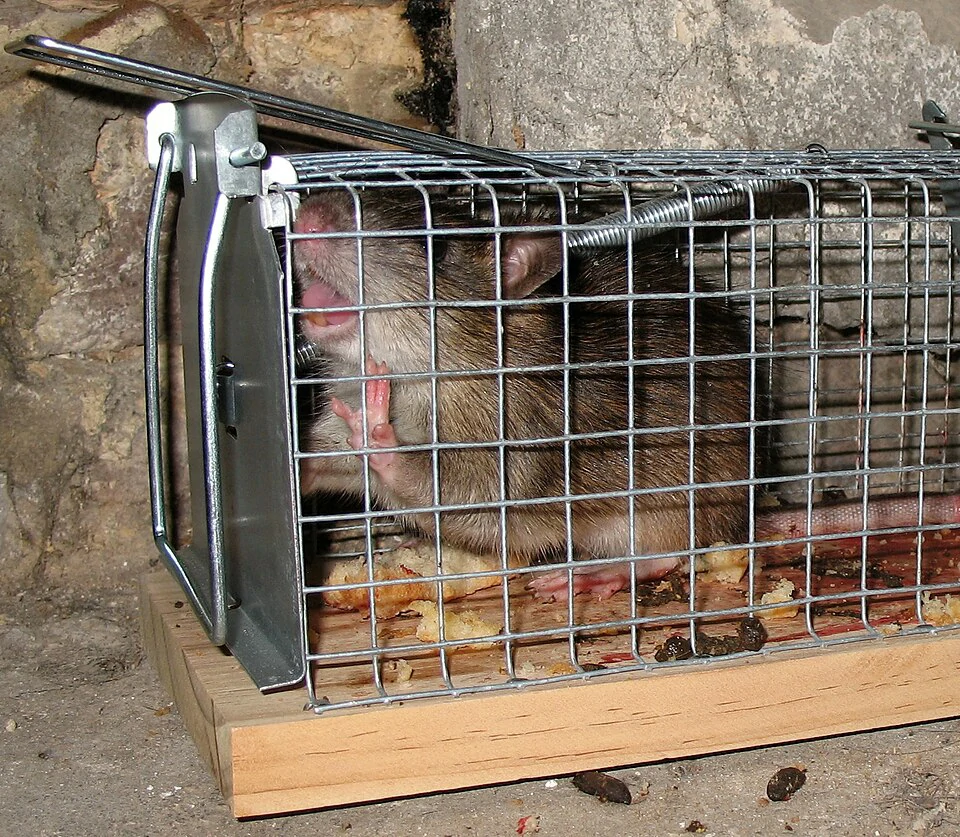
Not everyone wants to kill rats. Maybe you’re against killing animals, or you’re worried about kids and pets finding dead rats, or you just want a more humane option. Whatever your reason, you might be wondering what your options are for rat traps that don’t kill.
Live catch traps are rat traps that don’t kill. These include cage traps, box traps, and multi-catch traps that capture rats alive so you can release them elsewhere. They work by luring rats inside with bait, then trapping them behind a door that closes when triggered.
These humane traps let you deal with rats without killing them. However, they come with their own challenges and considerations. Understanding how they work and what’s involved helps you decide if they’re the right choice for your situation.
How Live Catch Traps Work
Most live catch traps are cage-style traps with a spring-loaded door. The rat enters to get bait, steps on a trigger plate, and the door snaps shut behind them. The rat is trapped inside but unharmed. You then have to decide what to do with the captured rat.
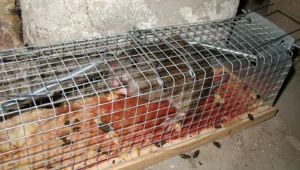
Box traps work similarly but use solid walls instead of wire. These can be less stressful for the rat because they can’t see out as easily. The enclosed space might feel safer, which can make rats more willing to enter in the first place.
Multi-catch traps can capture several rats at once. These usually have a one-way door that lets rats enter but not exit. Multiple rats can accumulate inside before you need to empty the trap. This is helpful for larger infestations.
Types of Humane Rat Traps
Single-catch cage traps are the most common. These are wire cages, usually 12 to 18 inches long, with a door that snaps shut. They catch one rat at a time and you need to reset them after each catch. These cost around $15 to $40 depending on size and quality.
Plastic box traps look like small houses with a door. Rats enter through one end, trigger a mechanism, and a door closes behind them. These are good for people who don’t like the look of wire cages. They cost about $20 to $50.
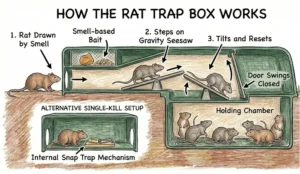
Multi-catch traps are larger boxes that can hold 10 to 30 rats. They’re better for serious infestations where single-catch traps would be too slow. However, they’re more expensive (usually $60 to $150) and require more frequent checking to prevent overcrowding.
The Reality of Releasing Rats
Here’s the hard truth: releasing rats isn’t as simple as catching them. In many places, it’s actually illegal to release trapped rats into the wild.
They’re considered invasive pests, and relocating them just makes them someone else’s problem. Check your local laws before planning to release rats.

Even where it’s legal, rats don’t survive well in unfamiliar territory. They don’t know where food and water are, where to hide from predators, or what other rats control the area. Most relocated rats die within days or get killed by resident rats defending their territory.
Rats can also carry diseases that spread to wildlife and other rat populations. Releasing a diseased rat into a new area can spread illness to animals that weren’t exposed before. This makes releasing rats ethically questionable even if it’s legal.
What Are Your Options After Catching a Rat?
If you can’t release them, the most humane option after catching a rat is to euthanize it quickly and painlessly.
Carbon dioxide is considered one of the most humane methods. You can create a CO2 chamber using dry ice, though this requires research to do correctly.
Some people take trapped rats to veterinarians who will euthanize them humanely for a fee. This costs money (usually $10 to $30 per rat), but ensures the rat doesn’t suffer. If you’re catching multiple rats, this gets expensive quickly.
Another option is keeping the rat as a pet. Domestic rats make good pets if you have the setup for them. However, wild rats are much more aggressive and scared than pet store rats. They rarely tame down and don’t make good pets in most cases.
Where Should You Place Live Catch Traps?
The same rules apply as with kill traps. Place them along walls where rats travel, near food and water sources, and in areas where you’ve seen droppings or other rat signs. The trap entrance should face along the wall, not away from it.

Live catch traps are bigger than snap traps, so they’re more obvious to rats. Place them in corners or against walls where rats naturally slow down and investigate. This increases the chance they’ll enter the trap out of curiosity.
Avoid placing them in areas where trapped rats will be stressed by noise, light, or activity. A rat trapped in a loud, bright area can injure itself trying to escape. Put traps in quiet, dim areas where possible.
Best Baits for Live Catch Traps
The same baits that work for kill traps work here. Peanut butter is always a good start. Smear it on the trigger plate or at the back of the trap. Make sure rats have to fully enter to reach it.
Whole foods work better in live traps than in snap traps. Try pieces of fruit, nuts, or vegetables. Rats can see and smell these better, and they’re more confident entering a trap for a substantial meal than for a smear of peanut butter.
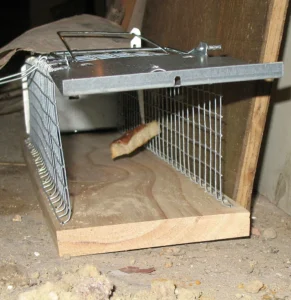
Nesting material like cotton balls, paper strips, or fabric scraps works well, especially during breeding season. Rats gathering material for nests will enter traps readily to collect these items.
How Often Should You Check Live Catch Traps?
You need to check live catch traps at least twice a day, ideally more. A rat trapped for too long without food and water will suffer from stress, dehydration, and starvation. Checking every 4 to 6 hours is best if you can manage it.
Trapped rats can also injure themselves trying to escape. They might break teeth chewing on wire, damage their nose and paws, or hurt themselves thrashing around. The sooner you find them, the less likely they are to get hurt.
In hot weather, check even more frequently. Rats can die from heat stress in just a few hours if the trap is in direct sunlight or a hot area. In cold weather, they can die from hypothermia. Temperature extremes make frequent checking critical.
Handling Trapped Rats Safely
Never open a live trap without a plan. Rats can jump out quickly and might bite if they’re cornered. Always wear thick gloves when handling traps with rats inside. Their bites can carry diseases and they have strong jaws.

If you’re relocating the rat (where legal), cover the trap with a cloth to keep the rat calm during transport. The darkness reduces stress. Take it far from your property (at least 5 miles if relocation is legal) so it doesn’t come back.
For euthanization, transport the trap carefully to minimize stress. Don’t shake or jostle it. Keep the rat calm until the end. Unnecessary stress is cruel even if you’re planning to euthanize.
Do Live Traps Work as Well as Kill Traps?
Live traps can be just as effective at capturing rats as kill traps, but they require more work. You need to check them constantly, deal with live rats, and reset them after each catch. This is more time-consuming than snap traps where you just dispose of the body and reset.
Some rats are actually more willing to enter cage traps than enclosed zappers or suspicious snap traps. The open wire design lets them see through, which can feel less threatening. This means cage traps might catch cautious rats that avoid other trap types.
However, if you’re dealing with a large infestation, live traps are impractical. Catching and dealing with 20 or 30 rats one at a time is exhausting. At that point, kill traps or professional help makes more sense.
Are Live Traps More Humane?
This is debatable. While you’re not killing the rat directly, capture itself is stressful. The rat experiences fear and panic while trapped. If you’re not checking frequently enough, they suffer from stress, hunger, thirst, and temperature extremes.

If you release them, they face a difficult life in unfamiliar territory with low survival rates. If you euthanize them, you’ve just delayed their death, not prevented it. Some argue that quick-kill traps are actually more humane because death is instant with no prolonged suffering.
The most humane approach is probably prevention. Seal entry points, remove food sources, and make your property unattractive to rats. This solves the problem without trapping or killing at all. When prevention fails, every trapping method has ethical considerations.
Problems People Run Into With Live Traps
The biggest problem is rats not entering the trap. They’re naturally suspicious of large, obvious objects. Pre-baiting helps. Leave the trap unset with bait inside for several days so rats learn it’s safe. Then set the trap once they’re visiting regularly.
Catching the same rat multiple times happens when you’re releasing near your property. Rats have strong homing instincts and will return if released too close. This wastes your time and stresses the rat repeatedly. If you must release, go at least 5 miles away.
Kids and pets can also trigger live traps. Unlike snap traps that might hurt them, cage traps just trap them. While this isn’t dangerous, it’s annoying and stressful for the animal. Place traps where only rats can access them.
Can You Make Your Own Live Trap?
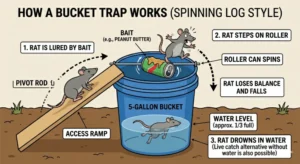
Yes, and DIY live traps can work well. The classic bucket trap uses a bucket, a spinning rod across the top, and a ramp. Rats walk up the ramp, try to cross the spinning rod to reach bait, and fall into the bucket. They can’t climb out of a deep enough bucket.
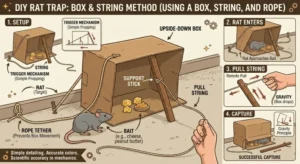
Another DIY option is a box trap with a door propped open by a stick attached to a bait trigger. When the rat takes the bait, the stick falls and the door closes. This takes some engineering but works on the same principle as commercial traps.
DIY traps are cheaper than buying commercial ones, but they require time and skill to build properly. They also might not be as reliable. If you’re only dealing with one or two rats, the DIY route makes sense. For serious infestations, buy commercial traps.
Using Live Traps Indoors vs. Outdoors
Indoor live traps need to be checked even more frequently. A rat trapped in your house makes noise and can attract attention from pets and kids. The stress of being indoors (with household noises and activity) is also higher for the rat.
Outdoor live traps face different challenges. Weather is a bigger concern. Rain can flood traps, heat can kill rats, cold can cause hypothermia. You need weatherproof traps or protected placement locations.
Outdoor traps might also catch non-target animals like squirrels, birds, or even cats. This is frustrating and stressful for both you and the animal. Place traps where only rats are likely to go, and check frequently so non-target catches can be released quickly.
Are There Alternatives to Trapping Entirely?
Ultrasonic repellents claim to drive rats away with high-frequency sounds humans can’t hear. Results are mixed. Some people swear by them, others say they don’t work at all. They’re worth trying if you want to avoid trapping, but don’t expect miracles.

Natural repellents like peppermint oil or ammonia-soaked rags can deter rats temporarily. However, they don’t solve serious infestations.
Rats get used to smells and will return once they realize there’s no actual danger. These work best combined with other methods.
The best alternative is prevention. Seal every hole larger than a quarter inch, remove all food and water sources, and eliminate hiding spots. Make your property so unappealing that rats leave on their own. This takes work but solves the problem without any trapping.
When Professionals Are Worth Calling
If you’re morally opposed to killing rats but can’t handle the work of live trapping and relocation, professionals can help. Some pest control companies specialize in humane removal and will handle everything from trapping to legal disposal or relocation.
They know the local laws about rat relocation and have legal channels for dealing with trapped rats. This takes the ethical and legal burden off you. It costs more than DIY, but you’re paying for peace of mind and expertise.
For serious infestations, professionals are almost always necessary. Catching 30 rats one at a time with live traps while more rats breed is impossible for most homeowners. Pros have better equipment and strategies for large-scale removal.
Conclusion
Rat traps that don’t kill do exist, and they work when used correctly. Live catch traps humanely capture rats alive, letting you avoid killing them directly. However, they require frequent checking, careful handling, and you still need to decide what to do with captured rats.
The reality is that relocating rats often isn’t legal or ethical due to poor survival rates and disease spread. This means most people using live traps still end up euthanizing rats, just in a different way. True humane rat control focuses on prevention rather than trapping.
If you want to use live traps, be prepared for the extra work and responsibility. Check traps every few hours, handle rats safely, and have a clear plan for what you’ll do with captured animals. Done properly, live trapping can solve your rat problem without the killing methods you want to avoid.

Hi, my name is Ezra Mushala, i have been interested animals all my life. I am the main author and editor here at snakeinformer.com.