
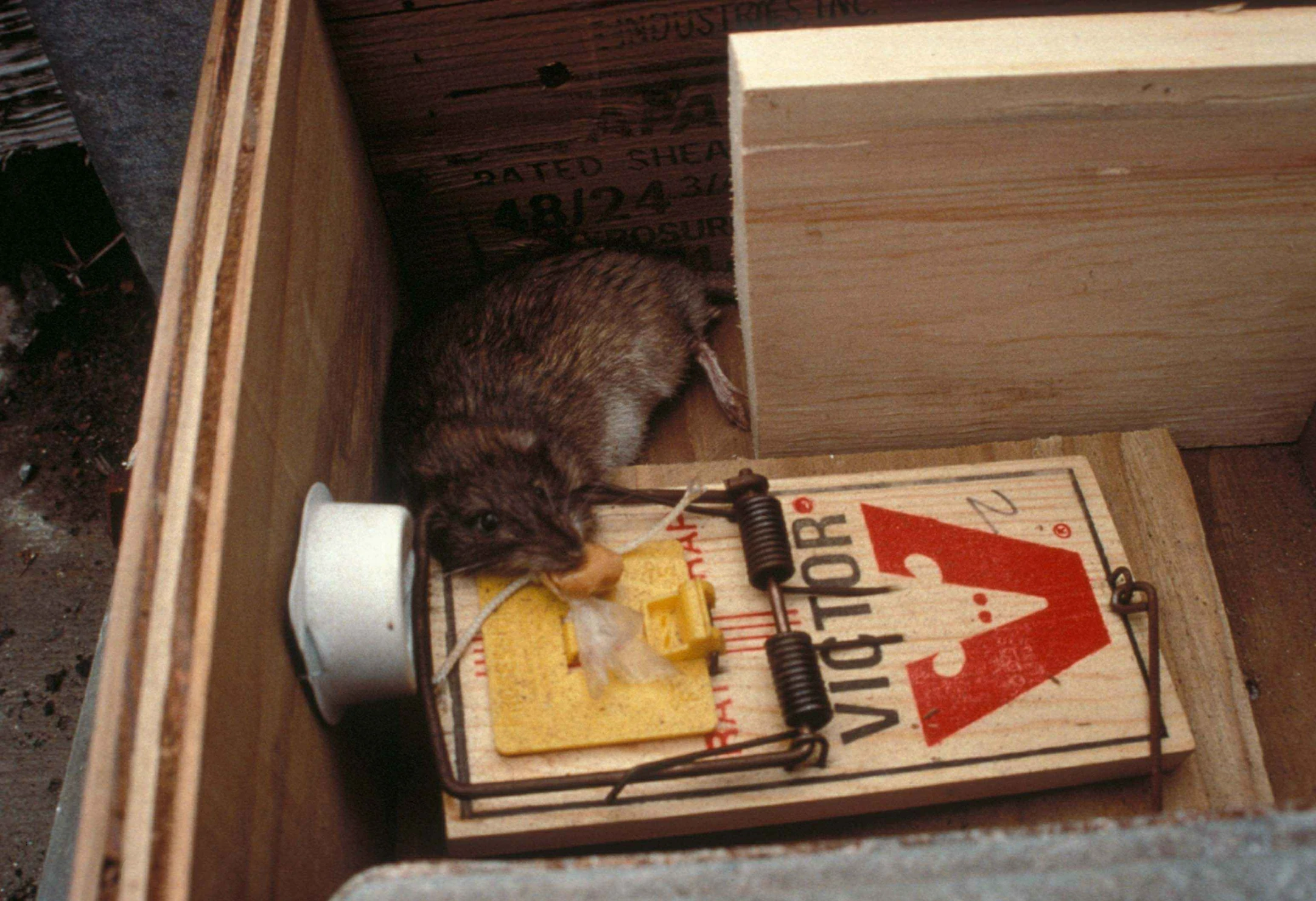
Finding a rat caught in your snap trap but still alive is one of the worst situations you can face when dealing with a rodent problem.
You check your trap expecting to find it either empty or with a dead rat, but instead there’s a live rat trapped and suffering. This creates an immediate problem that you need to handle quickly and humanely. Why didn’t the snap trap kill the rat?
A snap trap fails to kill a rat when the metal bar hits the wrong part of the rat’s body (like the leg or tail instead of the head or neck), when the trap is too small or weak for the rat’s size, or when the trap malfunctions and closes with less force than needed for an instant kill.
When a snap trap doesn’t kill a rat immediately, you’re left with an injured animal that’s in pain and distress. This situation needs to be resolved quickly for both your sake and the rat’s.
Why the Kill Bar Missed the Vital Area
The most common reason a snap trap doesn’t kill a rat is because the bar didn’t hit the right spot.
Snap traps are designed to hit the rat’s head or neck area. When the bar comes down on the skull or cervical spine with full force, it causes instant death. The rat doesn’t suffer and the problem is solved immediately.
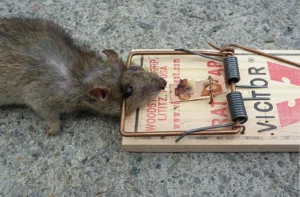
But rats approach traps from different angles. If a rat comes at the trap sideways or from behind, the bar might catch its leg, hip, or tail instead of its head. These injuries can be severe but not immediately fatal.
The rat’s body position matters too. If the rat was reaching for bait with just one paw while keeping most of its body away from the trap, only that paw might get caught. Or if the rat was running across the trap quickly, the bar might hit its back legs or rear end instead of its front end.
Small rats (like juveniles) can sometimes fit under the bar in ways that adult rats can’t. The bar might pin them down without hitting any vital areas, leaving them trapped but alive.
The speed of the rat’s reaction also plays a role. Rats have incredibly fast reflexes. If a rat senses the trigger moving and tries to jump back, it might partially escape but still get caught by a leg or tail as the bar comes down.
Wrong Size Trap for the Rat
Using a trap that’s too small or not powerful enough for the size of rat you’re dealing with causes failed kills.
Mouse traps and rat traps are very different. A mouse trap has a much weaker spring and a thinner kill bar. If you try to use a mouse trap on a rat, even if the bar hits the rat’s head, it might not have enough force to kill instantly. The rat could be seriously injured but still alive.
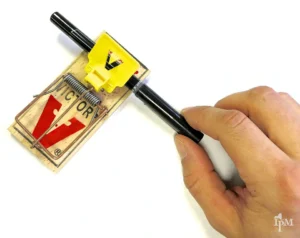
Young rats or small rat species might get caught in mouse traps, but adult Norway rats or roof rats are too big and tough. These rats can weigh 7-18 ounces, and their skulls are thick and strong.
Some cheaper rat traps use springs that aren’t strong enough. If you buy the absolute cheapest traps available, they might save you a dollar or two but they won’t have the power needed to kill quickly and humanely.
The kill bar thickness matters too. Traps with thin wire bars can cause severe injuries without actually killing the rat because the force is concentrated on a small area but doesn’t have enough mass behind it.
Trap Placement Issues That Cause Partial Catches
Where and how you position your trap directly affects whether it kills or just injures.
If a trap is placed perpendicular to a wall (which is correct) but the trigger end isn’t facing the wall, rats might approach from the side. The rat walks alongside the trap instead of over it, and if the trap triggers, the bar catches the rat’s side or leg instead of its head.
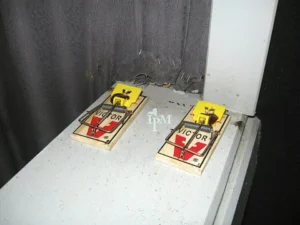
Traps placed on uneven surfaces can malfunction. If the trap rocks or tilts when the rat steps on it, the kill bar might come down at the wrong angle. It needs a flat, stable surface to work properly.
Traps that are too far from the wall give rats too much room to maneuver. Rats prefer to stay close to walls where they feel safer. If your trap is 6 inches away from the wall, the rat might walk between the wall and the trap, triggering it without actually being in the kill zone.
Obstacles near the trap can interfere with the bar’s movement. If the trap is under a cabinet or shelf and there isn’t enough clearance above it, the bar might hit the obstacle and lose force before it hits the rat.
Worn Out or Defective Traps
Traps don’t last forever, and old or damaged traps are much more likely to fail.
The spring loses tension over time. If you’ve used the same trap many times, or if it’s been sitting in storage for years, the metal spring can lose its stiffness. A weak spring means a slower, less powerful snap that might not kill.
Rust or corrosion on the moving parts causes friction. When the kill bar or trigger mechanism is rusty, it doesn’t move as smoothly or quickly. This delay can give the rat time to react, or it can reduce the force of impact.
Bent or damaged kill bars won’t hit with proper force. If a trap has been dropped, stored improperly, or if the bar got bent from a previous catch, it might not come down straight. A crooked bar can glance off the rat instead of delivering a solid hit.
Wooden bases can crack or split. When the wood base is damaged, the metal parts aren’t held securely. The whole trap might shift or collapse when it’s triggered, causing a weak or misdirected strike.
Manufacturing defects happen too. Even brand new traps can have problems like improperly tempered springs, misaligned parts, or weak materials. This is more common with very cheap traps from unknown brands.
The Rat Was Too Large or Strong
Sometimes you just have a rat that’s too tough for a standard trap.
Extra large rats (some Norway rats can exceed 18 ounces) have thick skulls and strong neck muscles. A standard rat trap might hurt them but not kill them instantly. These rats need heavy-duty traps with extra strong springs.

Well-fed rats are generally bigger and stronger than hungry, stressed rats. If you live in an area with plenty of food sources, the rats might be healthier and harder to kill.
Male rats are usually larger than females. During breeding season, male rats are at their biggest and most robust. They’re also more aggressive and confident, which might make them approach traps in ways that don’t result in a clean kill.
Older, experienced rats have survived this long by being tough. They’ve probably avoided predators, survived near-misses with traps, and developed thick skin (literally). These rats are the hardest to kill humanely with a snap trap.
How to Handle a Live Rat in a Trap
If you find yourself with a live rat caught in a trap, you need to act quickly and humanely.
Don’t try to free the rat. It’s injured, in pain, and terrified. If you open the trap, it might bite you in self-defense, and rat bites can carry serious diseases. Plus, an injured rat released into your home will just suffer longer.
The most humane option is to complete the kill quickly. This is hard to hear, but it’s the right thing to do. You can place the trap (with the rat still in it) inside a large plastic bag, then use a heavy object to deliver a quick blow to the rat’s head. This should be done with one quick, forceful strike.

Another option is to place the trap and rat into a container with a lid, then use carbon dioxide to euthanize the rat. Dry ice in a separate container inside the larger container will release CO2 as it sublimates. This takes 15-30 minutes but is considered humane.
If you absolutely cannot bring yourself to do this, call animal control or a pest control professional immediately. Explain the situation and ask them to come handle it. Don’t leave the rat suffering for hours because you’re uncomfortable.
Never try to drown the rat, hit the trap repeatedly, or use methods that prolong suffering. The rat is a living creature that deserves a quick end to its pain, even though it was a pest in your home.
Preventing Failed Kills in the Future
Once you’ve dealt with the situation, you need to make sure it doesn’t happen again.
Buy high-quality traps from reputable brands. Victor, Tomcat, and JT Eaton make reliable rat traps with strong springs. Yes, they cost a few dollars more, but they work much better.
Make sure you’re buying actual rat traps, not mouse traps. Check the packaging and look at the size. Rat traps should be 6-8 inches long with thick metal bars and very stiff springs.
Replace traps after 5-10 uses. The springs weaken and the mechanisms get gunked up with blood and debris. Fresh traps work better.
Set traps correctly. The trigger end should face the wall, the trap should be perpendicular to the wall, and it should be placed on a flat, stable surface. The rat should have to walk over the trigger plate to reach the bait.
Use the right amount of bait. Too much bait lets the rat lick it off without fully committing to the trap. Too little bait might not be tempting enough. A dab of peanut butter about the size of a pea is usually perfect.
Check traps frequently. You should check your traps at least twice a day (morning and evening). This minimizes the time any rat spends suffering if a trap fails to kill instantly.
Why Trap Placement Is So Important
Getting the trap position exactly right makes a huge difference in whether you get a clean kill.
Rats run along walls with their bodies close to the wall surface. They use their whiskers to sense the wall and feel safe with a solid surface on one side. This predictable behavior is what you need to use.

Place your trap perpendicular to the wall, not parallel. The long edge of the trap base should be against the wall, with the trigger end (where the bait is) facing the wall. This forces the rat to walk over the trigger as it travels along the wall.
Position the trap where you see signs of rat activity. Look for droppings, grease marks on the wall, or gnaw marks. These signs tell you where rats are actually traveling.
Put traps in corners where two walls meet. Rats often pause or slow down in corners, giving the trap a better chance of catching them properly.
Don’t place traps where children, pets, or anyone else might accidentally trigger them. Under sinks, behind appliances, and in attics are usually safe spots. If kids or pets can access an area, use a trap box or covered trap for safety.
The Problem with Cheap Traps
Budget traps might seem like a good deal, but they cause more problems than they solve.
Dollar store traps and no-name brands often use inferior materials. The springs are made from cheaper metal that doesn’t hold tension well. The wooden bases crack easily. The trigger mechanisms are imprecise.
These cheap traps might work a few times, but they fail more often than quality traps. When they do fail, you end up with suffering animals and you still have a rat problem.
The few dollars you save on the trap aren’t worth it. You’ll either need to buy more traps because they break, or you’ll waste time dealing with failed catches and trap-shy rats that learned to avoid your ineffective traps.
Quality traps from established brands cost $3-8 each. Cheap traps might cost $1-2 each. That difference is tiny compared to the frustration and inhumane situations that cheap traps create.
Professional pest control companies use quality traps exclusively. There’s a reason for that. They need reliable tools that work the first time, every time.
Alternative Trapping Methods
If snap traps keep failing, you might want to try different approaches.
Electronic rat traps are more reliable for instant kills. The rat enters a box, steps on a metal plate, and receives a high-voltage shock that kills it in seconds. These cost $30-60 but they work very well and are considered humane.
Live traps catch rats without killing them. The rat enters a cage to get bait, and a door closes behind it. You then have to decide what to do with the live rat (releasing it far from your property or euthanizing it yourself). These cost $15-40.
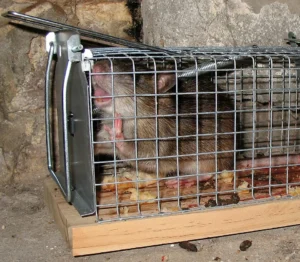
Multi-catch live traps can catch several rats in one device. These are useful if you have multiple rats, but again, you have to handle live rats afterward.
Glue traps are controversial because rats stick to them and die slowly from stress, dehydration, or injury as they try to escape. Many people consider these inhumane, and some areas have actually banned them. Most pest control experts don’t recommend them.
Poison baits (rodenticides) kill rats but they can take several days to work, and rats often die in walls or other hard-to-reach places, causing odor problems. There are also risks to pets and children.
Signs Your Traps Aren’t Working
You need to recognize when your current approach isn’t effective.
If you find sprung traps with no rat more than twice, something is wrong. Either your trap placement is off, your traps are too weak, or the rats are learning to avoid them.
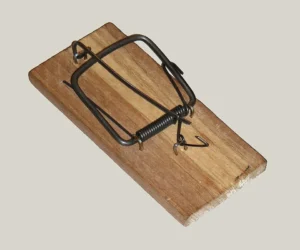
Finding injured rats that are still alive is a clear sign your traps aren’t strong enough or aren’t positioned correctly. One failed kill might be bad luck, but multiple failures mean you need different traps or a different strategy.
If bait keeps disappearing without triggering the trap, the rats are learning to steal food without getting caught. You need to secure the bait better or change your bait type.
Seeing fresh rat signs (droppings, gnaw marks) but no trap activity means the rats are avoiding your traps entirely. They might be using different routes or they’ve learned that traps are dangerous.
When your rat problem continues for more than 2-3 weeks despite active trapping, it’s time to either change your methods or call professionals.
When to Call a Professional
Some situations are beyond what most homeowners can or should handle themselves.
If you keep finding live rats in traps, you need professional help. They have access to better traps, different methods, and the experience to solve the problem efficiently.
Large infestations (more than 3-4 rats) are usually too much for DIY methods. The rats breed faster than you can trap them, and the problem gets worse.
If you’re not comfortable handling dead or injured rats, don’t force yourself. Professionals deal with this every day and they won’t be bothered by it.
When rats have gotten into your walls or ceiling and you can’t access them to set traps properly, professionals have tools and techniques to reach those areas.
If you have children, elderly people, or pets in the home and you’re worried about trap safety, professionals can use methods that are safer for your situation.
Conclusion
A snap trap fails to kill a rat when the metal bar hits the wrong part of the rat’s body, when the trap is too weak for the rat’s size, when the trap is worn out or defective, or when the trap placement causes the rat to approach from the wrong angle.
Finding a live rat in your trap is a situation that needs immediate attention. The most humane thing you can do is end the rat’s suffering quickly, either by completing the kill yourself or by calling someone who can do it right away.
To prevent this situation in the future, invest in quality rat traps from reputable brands, replace worn traps regularly, place traps correctly with the trigger end facing walls, and check your traps at least twice daily. If you continue to have failed kills, consider switching to electronic traps or calling a professional pest control service.
The goal isn’t just to get rid of rats, it’s to do so as humanely and effectively as possible. Using the right tools and methods accomplishes both objectives.

Hi, my name is Ezra Mushala, i have been interested animals all my life. I am the main author and editor here at snakeinformer.com.