
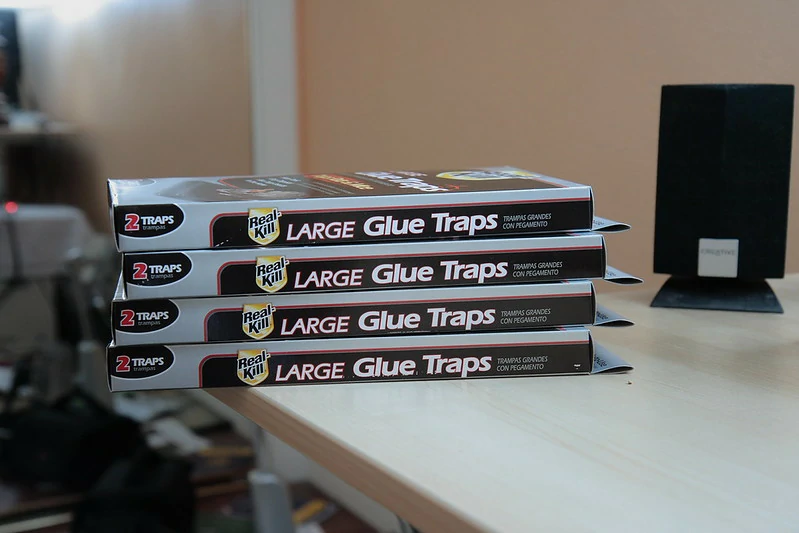
If you’ve got mice in your house and a dog or cat that’s curious about everything, picking a trap gets complicated fast. So are glue traps pet safe?
No, glue traps aren’t pet safe. The glue isn’t poisonous, but a curious cat or dog can get stuck, panic, and hurt itself. Pets can also lick the glue or get at a mouse stuck on the board.
That said, the glue itself won’t poison your pet, and that’s a big difference from rat poison. However, the real risk is the stickiness, and it’s much bigger than most people realize until a pet is actually stuck.
Is the Glue on a Glue Trap Toxic to Dogs and Cats?
No, the glue on a standard glue trap isn’t toxic to dogs or cats. The poison control team at the ASPCA says glue traps themselves contain no poison.
That means a pet that sniffs, steps on, or even licks a little of the glue isn’t likely to be poisoned. It’s a thick, rubbery adhesive made to stick, not to kill.
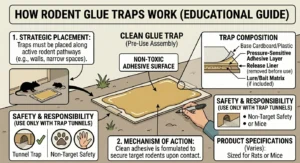
However, there’s one catch. Some people add rat poison to glue boards on their own, and that turns a sticky trap into a real danger for a curious pet.
Rat poison (called rodenticide, which just means a chemical made to kill rodents) can make a dog or cat very sick. Never add it to a trap, and never leave it where a pet can reach it.
So if you buy a standard glue trap and use it as it comes, poison isn’t the problem. The problem is what a sticky board can do to a pet that gets caught on it.
Think of it like a pet walking into a giant piece of flypaper. The glue won’t poison it, but it can still panic, hurt itself, and end up in real trouble.
That’s the part you’ll want to understand before you put one down.
Glue Traps Aren’t Poisonous, But They Still Aren’t Safe for Pets
A glue trap can’t tell a mouse from a paw, a nose, or a tail. Whatever touches the glue sticks, and the harder an animal pulls, the more of its body gets stuck.
For a mouse, that’s the whole point of the trap. For your dog or cat, it can turn a normal, curious sniff into a scary and painful mess.
Most pets don’t understand what’s happening when they get stuck. They panic and jerk around, which is why a small spot of glue can turn into a big one in seconds.
A pet can lose fur, tear skin, or hurt a paw while trying to pull free. A pet that gets stuck on its face or mouth can have trouble breathing or eating, and that makes it an emergency.
Pets can also bite or scratch out of fear, even if they’re normally sweet. That means you can get hurt while you’re trying to help.
So the question isn’t whether the glue is toxic. It’s whether your pet could get close enough to get stuck, and in most homes the answer is yes.
Why Cats and Dogs Get Stuck on Glue Traps
Cats and dogs are naturally curious, and they use their noses and paws to figure out new things. A flat board on the floor is exactly the kind of thing they’ll check out.
Many glue boards also have a food scent built in, and peanut butter is a popular one. That smell is meant to pull in mice, but it can pull in your dog just as easily.
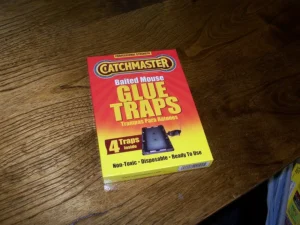
Cats add one more problem, because a cat that hears or smells a mouse nearby will often chase it. A cat that’s focused on a mouse isn’t watching where it steps.
Dogs tend to sniff low along baseboards (the strip where the wall meets the floor), under furniture, and behind appliances. Those are the exact spots where most people put glue traps.
Puppies and kittens are at even more risk, since they explore everything with their mouths and paws. A young pet will grab, bite, and paw at a trap without thinking twice.
A pet that spends time in the garage, basement, or shed can also run into traps you forgot about. That’s one reason it helps to keep track of where you set each one.
And even a trap placed in a spot you thought was safe can get dragged out by a determined dog or pushed around by a cat. Pets are surprisingly good at finding things you tried to hide.
What Happens When a Pet Gets Stuck on a Glue Trap?
It usually starts with a paw or a bit of fur, and then things get worse fast. A pet that feels something sticky on its foot will often shake, kick, and roll around to get it off.
Every move spreads the glue to more fur and skin. Before long, the trap can be stuck to a leg, a side, or even the pet’s face.
The glue can also rip out fur and tear skin if it’s pulled off the wrong way. That’s painful, and it can leave sore patches that need care from a vet.
A stressed pet may cry, hide, or lash out, and it may start licking at the glue to try to clean it off. Licking spreads the glue to its mouth and makes things harder to fix.
If the glue touches your pet’s eyes, nose, or mouth, it’s time to get help quickly. Don’t try to wipe those areas yourself, since you could make it worse.
Most pets that get stuck on a paw or a patch of fur do fine once the glue comes off the right way. The key is staying calm and acting fast, and we’ll walk through how below.
Small Pets Like Kittens, Ferrets, and Reptiles Face the Biggest Risk
Any pet can get stuck, but small ones are in the most danger. A glue board can hold a whole kitten, a hamster, or a ferret much more easily than it can hold a big dog.
Kittens and puppies are small, curious, and not very careful, so they’re often the first to find a trap. A small body can end up fully stuck, and that can turn dangerous very quickly.
Ferrets are fast and love to squeeze into tight spaces (like behind the couch or under the fridge), which makes them a real concern if they roam your house. Pet rats, hamsters, and guinea pigs can also end up stuck if they get loose.
Lizards like leopard geckos and bearded dragons are at risk too, since their skin can tear when glue is pulled off. Pet birds that fly around the house (like budgies and cockatiels) can land on a board and get stuck.
Long-haired cats and dogs have a different problem. The glue grabs more fur, and getting it out can take a lot more time and patience.
Older pets that don’t move well may also have a hard time pulling free, so they need your help even sooner.
If you have any of these pets at home, it’s best to skip glue traps altogether.
How to Get a Glue Trap Off Your Pet
If your pet gets stuck, stay calm, because a scared pet picks up on your panic. Talk softly, and keep other pets and kids away so nobody gets scratched or bitten.
Cover the exposed glue with torn paper towel or shredded paper so your pet doesn’t get stuck to more things. This also keeps the glue off your hands, your clothes, and the couch.
Then coat the stuck spot in vegetable or mineral oil, and let it sit for five to ten minutes. The ASPCA says this helps loosen the glue’s grip, and butter will work in a pinch.
After that, work the glue off slowly with gentle massaging, and don’t pull. If bits of fur are still stuck, you can carefully clip the stuck hair away, as long as you’re sure you won’t cut the skin.
Wash the area with soap and water to get the oil off (dish soap works well). Then keep an eye on your pet so it doesn’t lick at the spot.
Skip harsh cleaners (like paint thinner or nail polish remover) on your pet’s skin or fur, since some of those can be more toxic than the glue itself.
If the glue is stuck to your pet’s skin, face, eyes, or mouth, don’t try to fix it yourself. Call your vet or an emergency clinic right away.
And if you ever aren’t sure what to do, calling your vet is always the safest move. They’d much rather hear from you early than late.
Can Your Pet Get Sick From Licking or Eating a Glue Trap?
A little lick of glue usually isn’t a big deal, since the glue isn’t poisonous. Your pet might drool or have a mild upset stomach, but serious problems are unlikely.
Swallowing a lot of glue, or chewing up the board, is a different story. Pieces of cardboard or plastic can block a pet’s gut (the long tube that carries food through the body), and that’s a problem for a vet to handle.
Dogs are the main concern here, since some dogs will chew up almost anything. A dog that eats part of a trap is worth a quick call to your vet or a pet poison hotline.
Signs of trouble include vomiting, a swollen or sore belly, no interest in food, and acting tired or off. If you see any of these after your pet got into a trap, call your vet the same day.
Also keep in mind what was on the trap. If a mouse was stuck on it, your pet may have swallowed more than just glue.
That’s why it helps to figure out exactly what your pet got into, and to bring the trap packaging or a photo to the vet if you can.
Mice Stuck on Glue Traps Can Be a Problem for Pets Too
A mouse stuck on a glue trap is still a mouse, and it can carry germs and parasites. A curious dog or cat that sniffs, licks, or eats it can pick those up.
Mice can carry salmonella (a germ that causes stomach cramps, diarrhea, and fever), and they can also carry worms like roundworms. Both can pass to pets, and some can pass to you.
If a mouse ate rat poison earlier, your pet can get poisoned by eating it. That’s called secondary poisoning, and it can be dangerous for dogs, cats, and even owls.
A frightened mouse can also bite or scratch a pet’s nose, which can lead to an infection.
A live mouse on a glue trap may squeak and thrash, and that’s exactly what makes cats and dogs go after it. That’s why a stuck mouse can draw your pet straight to the trap.
That’s a good reason to check traps often and deal with any mouse right away. The CDC also says to keep traps out of reach of kids and pets and to wash your hands after handling them.
Is There a Safe Way to Use Glue Traps Around Pets?
Honestly, there’s no way to make a glue trap completely safe if you have pets. The best you can do is make it much harder for a pet to reach.
If you decide to use one anyway, put it where your dog or cat can’t go. Good spots include behind a heavy fridge or stove, or in a room with a closed door that your pets never enter.
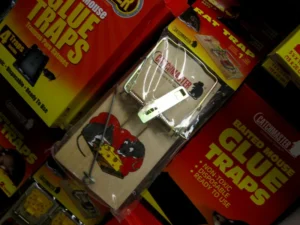
Some traps come with a covered tunnel or box that gives a mouse a way in but keeps bigger noses out. It helps, but a determined dog or cat can still knock it over or tear it open.
Never use glue traps in a room where your pet sleeps, eats, or plays. And don’t use them in a garage or shed where an outdoor cat or a stray can wander in.
Check the trap at least once a day, and take it away as soon as you catch something. The longer a trap sits there, the bigger the chance that a pet finds it.
Also check your local rules before you buy one. A few cities in California ban them, and glue traps are banned or limited for the public in England, Scotland, Wales, and parts of Australia.
Even with all of this, a different kind of trap is the safer pick for most homes with pets.
Safer Ways to Get Rid of Mice When You Have Pets
The best fix for a home with pets is to stop mice from getting in, and to use traps that pets can’t reach. That way you aren’t trading one problem for another.
Start by sealing up gaps with steel wool or copper mesh and caulk. A mouse can squeeze through a hole about the width of a pencil (roughly a quarter inch), so check around pipes, vents, and doors.
Next, take away their food by keeping pantry items in hard plastic or glass containers. Pet food needs to be sealed up too, and you should pick up your pet’s bowl at night.
For traps, snap traps are usually the first pick for health agencies, as long as you keep them out of reach. Put them inside a covered box or tunnel, or against a wall behind furniture that pets can’t squeeze into.
You can also buy snap traps with a built-in cover that keeps paws and noses out. Check them every day.
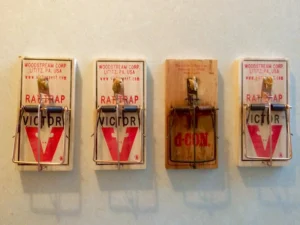
Electronic traps are another good option, since they trap the mouse inside a closed chamber. You can empty them without touching the mouse, and your pets can’t reach the part that does the work.
Skip rat poison, even if it seems easier. Poison bait can hurt your pets, and a poisoned mouse can hurt them too if they find it.
If mice keep coming back, call a licensed pest control company and tell them you have pets. They can pick the safest plan for your home.
When Should You Call the Vet About a Glue Trap?
Call your vet if your pet is stuck on its skin, face, eyes, nose, or mouth, or if the glue is covering a big part of its body. Don’t try to fix those on your own.
Also call if your pet is bleeding, has torn skin, can’t walk well, or seems to be in a lot of pain. Those need a real exam.
If your pet swallowed part of a trap, call right away, even if it seems fine. Problems in the gut can take hours to show up.
Vomiting, refusing food, a sore belly, or acting very tired are signs that something’s wrong. Don’t wait and see if those signs show up after your pet got into a trap.
If it’s after hours, find your nearest emergency vet clinic (many are open all night), and keep their number handy. In the US and Canada, you can also call a pet poison hotline for advice when you’re not sure.
When you call, tell them what kind of trap it was and what your pet touched. A photo of the box can help a lot.
Most pets recover fully once the glue is off and any wounds are treated. The sooner you get help, the better.
Conclusion
So, are glue traps pet safe? No, because even though the glue isn’t poisonous, pets can get stuck, hurt themselves, and spread the mess everywhere.
Dogs, cats, and small pets like kittens, ferrets, and geckos are all at risk. A mouse stuck on a board can also bring your pet right to the trap.
If a pet does get stuck, stay calm, cover the glue, and use oil to loosen it. Call your vet if it’s on the skin, face, or mouth.
The safer plan is to seal up gaps, store food, and use covered snap traps or electronic traps out of your pet’s reach.
That way you can deal with the mice without worrying about your pets.

Hi, my name is Ezra Mushala, i have been interested animals all my life. I am the main author and editor here at snakeinformer.com.