
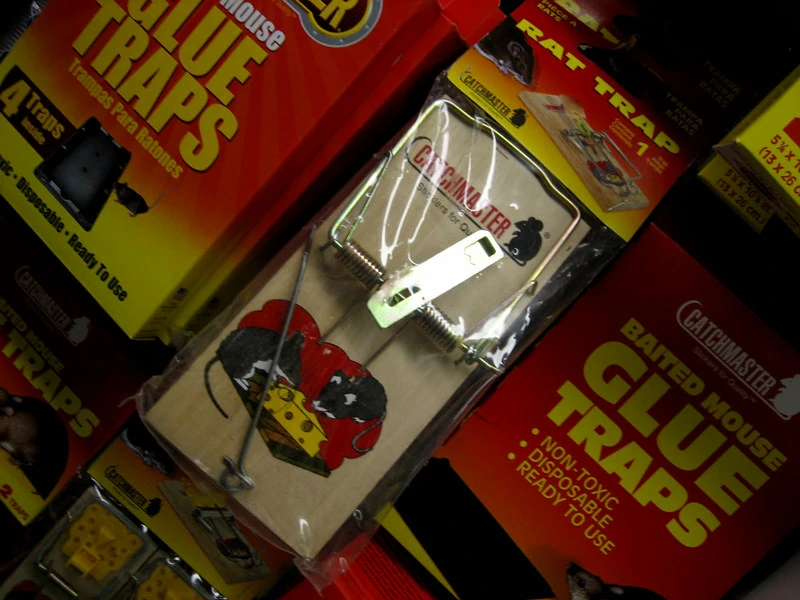
Glue traps are still sold at hardware stores, grocery stores, and online, but a growing number of cities want them gone. So are glue traps legal or illegal in the US?
Glue traps are legal in most of the US, but a handful of cities have banned them, all in California so far. There’s no federal or statewide ban yet, though lawmakers in several places are pushing for one.
That answer is changing fast. Five cities have passed bans since 2023, and more are being debated right now, so it pays to check your local rules before you buy.
Glue Traps Are Still Legal in Most of the US
No federal law bans glue traps, and no state has banned them either. That means you can still buy and use them legally in most of the country.
You’ll find them at hardware stores, home centers, and pest control shops, and they’re sold online everywhere. Some big chains have stopped stocking them, but that’s a business choice and not a legal rule.
In general, simple traps aren’t regulated the way poisons and sprays are. That’s a big reason why so few laws say anything about glue boards.
However, that doesn’t mean you can use them anywhere you want, since cities can pass their own rules and a few already have.
Protected wildlife is another thing to think about, since many native songbirds are covered by federal law and a glue trap can catch them by accident.
Are Glue Traps Banned in the US?
Not nationwide, and not in any state yet. The bans that exist today are local, passed by city councils in California.
In January 2024, Representative Ted Lieu introduced the Glue Trap Prohibition Act (House Bill 7018) in Congress. It would ban the sale and use of rodent glue traps across the country, but it hasn’t become law.
New York lawmakers have introduced bills too, and some would ban glue traps in government buildings. Another would ban making, selling, and using sticky rodent traps statewide, but none has passed as of this writing.
So if you’re asking whether glue traps are banned in the US, the honest answer is only in a few cities. A ban across a whole state or the whole country would be a big change.
Lawmakers keep bringing it up, though, and the list of cities has grown every year since 2023.
US Cities Where Glue Traps Are Illegal
Right now, five US cities have banned glue traps, and all five are in California. Here’s the list as of October 2026.
| City | State | What’s Banned | When It Passed | Good to Know |
|---|---|---|---|---|
| West Hollywood | California | Sale and use | April 2023 | The first US city to ban glue traps |
| Ojai | California | Sale and use | March 2024 | City officials said small insect traps raise the same concerns as big rodent boards |
| Culver City | California | Sale and use | October 2025 | Takes effect 30 days after the council adopts it |
| Ventura | California | Sale and use | March 2026 | The largest city on the list so far |
| Laguna Beach | California | Sale and use | April 2026 | Passed unanimously as part of the council’s consent agenda |
Based on the latest reports, every citywide ban in the US is in California. No state, and no city outside California, has joined the list yet.
If you live in one of these cities, you can’t legally buy glue traps in town or set them in your home. That includes pest control companies working on your property.
A Quick Timeline of US Glue Trap Bans
The first US ban came in April 2023, when West Hollywood passed a rule against selling and using glue traps. It was the first city in the country to do it, and it got a lot of attention.
Ojai followed in March 2024, a couple of months after Representative Ted Lieu introduced the federal bill in Congress. Then there was a gap until Culver City passed its ban in October 2025.
Ventura came next in March 2026, and Laguna Beach followed just a month later in April 2026 (the fifth city on the list). Animal welfare groups helped push most of these bans, and each one started with someone talking to a city council.
Other countries moved earlier than the US did. England passed its law in 2022, and several other countries had already banned glue traps by then.
Some Places Ban Glue Traps Only on Government Property
A few cities have banned glue traps only in their own buildings and operations, which means private homes and businesses can still use them.
Animal welfare groups say those places include Cartersville in Georgia, Eugene in Oregon, and Washington, DC. These rules cover city workers, not regular residents.
Plenty of private companies have also dropped glue traps. PETA says CVS, Walgreens, Target, Dollar General, and Dollar Tree no longer sell them, and that more than 100 airports have stopped using them.
Those are voluntary choices, so they don’t change what’s legal. But they do make glue traps harder to find in stores.
Where Glue Trap Bans Are Being Considered Right Now
Several places are debating bans at this very moment. None of these has passed yet, so glue traps stay legal in all of them for now.
| Place | What’s Proposed | Status (October 2026) |
|---|---|---|
| Ann Arbor, Michigan | A ban on rodent glue traps, while snap traps, live traps, and insect glue boards would stay legal | The city council is weighing it |
| New York City | Int. 531-2026 would ban selling glue traps, with fines of up to $500 per violation | Introduced in February 2026 |
| New York State | Bills to ban glue traps in government buildings, plus a separate bill for a statewide ban on making, selling, and using them | Not passed |
| San Francisco | City animal welfare officials have called for a ban on rodent glue traps | Under discussion |
| US Congress | The Glue Trap Prohibition Act (House Bill 7018) | Introduced in January 2024, not passed |
Any of these could change quickly. A single council vote can turn a debate into a law, so it’s worth keeping an eye on your own city.
What Does a Glue Trap Ban Actually Cover?
Not every ban is the same, so the details matter. Some cover only rodent glue traps, while others cover every glue trap no matter the size.
Ann Arbor’s proposal would still allow glue boards made for insects and spiders. The federal bill is aimed at rodent glue traps too, which would leave small insect traps and fly strips alone.
Ojai took a wider approach. City officials there said small glue traps for ants, flies, and cockroaches raise the same animal welfare concerns as big rodent boards.
Bans can also cover selling, using, or both. In most of the California cities, you can’t buy them in town and you can’t set them either.
If you live in a city that’s passed a ban, read the actual ordinance (the local law). A quick call to your city clerk or animal control office can clear things up fast.
Why Are Cities Banning Glue Traps?
Most of the reasons come back to the same few points. Animals can suffer for hours or days, the traps catch the wrong animals, and they don’t fix the cause of the problem.
City officials in places such as Culver City point to stuck animals that die slowly from thirst, hunger, or exposure, since the glue doesn’t kill quickly. They also point to birds, lizards, bats, and small pets that get stuck by accident.
Health is part of it too. Stuck animals keep producing urine and droppings, which can spread germs (such as hantavirus and salmonella) onto the board and the floor around it.
Veterinary groups agree on the animal welfare side. The BC SPCA says the Canadian and American veterinary medical associations don’t consider glue traps an acceptable way to kill vertebrate animals.
And pest experts add that glue traps don’t stop more mice and rats from moving in. As long as there’s food and a way inside, new animals will take the place of the ones you catch.
Why Some Pest Pros Still Defend Glue Traps
Not everyone in the pest control world wants glue traps gone. A pest guide from Texas A&M says rodent glue traps can give effective control when a knowledgeable pro uses them.
Some pros point to tight spots where a snap trap won’t fit, and to places where poison isn’t safe to use around kids and pets. They say a glue trap can be a useful tool in the right hands.
Animal welfare groups push back hard on that. They say most people aren’t trained to deal with a live, frightened animal, and the traps catch other animals no matter who sets them.
That’s part of why the debate hasn’t settled. It’s also why different cities and countries have drawn the line in different places.
What Happens If You Use a Glue Trap Where It’s Banned?
In a city with a ban, selling or using glue traps is against local law, and you can be fined. The size of the fine depends on the city.
New York City’s proposal, for example, would set civil penalties of up to $500 per violation for selling them. Other cities set their own amounts.
Enforcement varies, and a city may go after sellers first. Still, you can’t count on that, so it’s best to just follow the rule.
Pest control companies have to follow the same laws. If you hire a pro in a city with a ban, they can’t use glue traps on your property either.
And if you live in a place where they’re still legal, you can use them. That doesn’t mean they’re the best choice, though.
Do Glue Trap Bans Apply to Online Sales?
That’s a gray area, and it depends on how the law is written. City bans usually cover selling and using glue traps inside the city, so a package at your door can be harder to police.
Still, using a glue trap in a city with a ban is against the law no matter where you bought it. So buying one online won’t protect you from a fine.
Some bills try to close that gap. The statewide New York bill, for example, says no sticky rodent traps could be shipped into the state.
If you live in a city with a ban, the safest move is to skip glue traps completely and use another method.
How to Find Out If Glue Traps Are Banned Where You Live
Start with your city’s website and search for “glue traps” in the municipal code. Many cities post their laws online, and the search usually takes just a minute.
If nothing comes up, call your city clerk or animal control office and ask. You’ll usually get a direct answer.
Check your county too, since some counties have their own pest and animal rules. Then look at your lease, condo rules, or HOA rules, because a landlord or association can ban glue traps even where the law allows them.
Local news is useful as well. New bans usually get covered when a council votes, and animal welfare groups often announce them.
If you hire a pest control company, ask them directly. A good company will know the local rules and tell you what they use instead.
Remember that rules change. A ban that’s only being debated today could pass next month, so check again before you buy.
Are Glue Traps Legal in Canada?
Yes, glue traps are still legal across Canada, and you can buy them in many stores. There’s no federal ban and no provincial ban.
That could change in British Columbia. In September 2024, members of the Union of BC Municipalities voted to ask the province to ban selling, buying, and using glue traps.
The provincial government’s answer was that it supports humane rodent control but has no legal way to restrict glue boards right now. They aren’t covered as pesticides under its pest management law.
It also said snap or electronic traps are the best option because they work well and kill rodents quickly.
Cities and towns in Canada can pass their own bylaws, so check with your local government. So far, we haven’t found a Canadian city with a ban.
Where Glue Traps Are Banned Outside North America
If you’re reading this from the UK or Australia, the rules may be very different where you live. Many countries have gone further than the US.
| Place | Status |
|---|---|
| England | Banned for the public under a 2022 law, with licensed users the only exception |
| Scotland and Wales | Banned or limited |
| Ireland and Iceland | Banned |
| New Zealand | Banned |
| Germany, Norway, and the Netherlands | Banned, according to animal welfare groups |
| Australia | Banned in Victoria, Tasmania, and the ACT; New South Wales banned setting them in 2025, but they’re still legal to sell there |
| India | Banned in most states and territories |
These details come mostly from animal welfare groups and local news, so check your government’s website for the exact rules. They can change, and some have exceptions.
Are Glue Traps for Insects Legal Too?
Mostly yes. Sticky traps for insects, such as roach monitors, fruit fly cards, and fly strips, are legal in almost all of the US.
The bans that have passed so far are mainly about rodent glue traps, though some city laws are written to cover every glue trap. The proposed federal bill targets rodents too.
Pest pros still use sticky monitoring traps for roaches, and university pest programs recommend them for finding out where roaches are hiding.
Other places have gone further. Victoria, Tasmania, and the ACT require insect glue traps to be safe for wildlife, so lizards and small animals don’t get stuck.
If you want to use insect traps, keep them out of reach of pets and wildlife, and throw them away once they’re full.
Can Pest Control Companies Still Use Glue Traps?
In most of the US, yes. A licensed pest control company can use glue traps wherever they’re legal, and many pros still use them as monitors.
In the five California cities with bans, pros can’t use them. In England, only licensed users can.
More and more companies skip glue traps anyway. They lean on snap traps, sealed entry points, and cleanup instead, because those work better.
If you hire a company, ask what they use and why. A good one will have a clear answer.
What to Use Instead Where Glue Traps Are Banned
Snap traps and electric traps are the main options. City officials in Ojai point to both because they have a higher chance of killing a rodent right away.
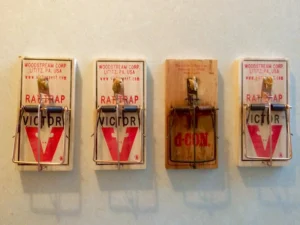
British Columbia’s government says the same thing. It called snap and electronic traps the best option because they work well and kill quickly.
Sealing up entry points, storing food in tight containers, and cleaning up crumbs and clutter go a long way too. Without that, more animals will keep moving in.
Common Myths About Glue Trap Laws
One common myth is that glue traps are illegal everywhere. That isn’t true, since they’re still legal in most of the US and Canada.
Another is that a ban in one city covers the whole state. It doesn’t, because every US ban so far was passed by a single city council.
Some people think pest control companies are exempt from city bans. In most cases they aren’t, and they have to follow the same rules you do.
Others assume a ban covers every sticky trap, including the ones for roaches and flies. Some do, but many only cover rodent glue traps, so read the local rules.
Finally, plenty of people believe that if a store is allowed to sell something, it must be a good idea. Stores sell legal products all the time, and that doesn’t make them the best tool for the job.
What Should You Do If an Animal Gets Stuck on a Glue Trap?
If a pet, a bird, or a wild animal gets stuck, treat it as an emergency. Call a vet or a wildlife rehabilitator (a person trained to care for hurt wild animals) right away.
Wear gloves, keep the animal calm, and try not to pull on it, since pulling can tear skin, fur, or feathers. Humane Society International says warm cooking oil can help loosen the glue, but it’s best done with advice from an expert.
If it’s a mouse or rat you set the trap for, ending its suffering quickly is the kind thing to do. A vet or your local animal control office can tell you the fastest and kindest way.
If this ever happens to you, take it as a sign to switch to snap traps or electric traps next time.
Will More Cities Ban Glue Traps?
It looks that way. Five California cities passed bans in about three years, and the pace picked up in 2025 and 2026.
Cities such as Ann Arbor and New York City are debating bans right now, and a bill is sitting in Congress.
Still, a ban can take time to pass, and some bills never make it. So don’t assume your city will follow.
Even if it doesn’t, the trend is clear. More stores, more companies, and more pest pros are moving away from glue traps.
Keep checking local news and your city’s website, since rules can change quickly. Everything here is current as of October 2026.
Conclusion
Glue traps are legal in most of the US. There’s no federal or statewide ban, but five California cities (West Hollywood, Ojai, Culver City, Ventura, and Laguna Beach) have banned them.
More places are considering it, including Ann Arbor, New York City, and Congress. Canada has no ban yet, though British Columbia’s cities have asked for one.
Before you buy a glue trap, check your local rules. And remember that snap traps, sealed entry points, and a clean home usually do a better job anyway.

Hi, my name is Ezra Mushala, i have been interested animals all my life. I am the main author and editor here at snakeinformer.com.