
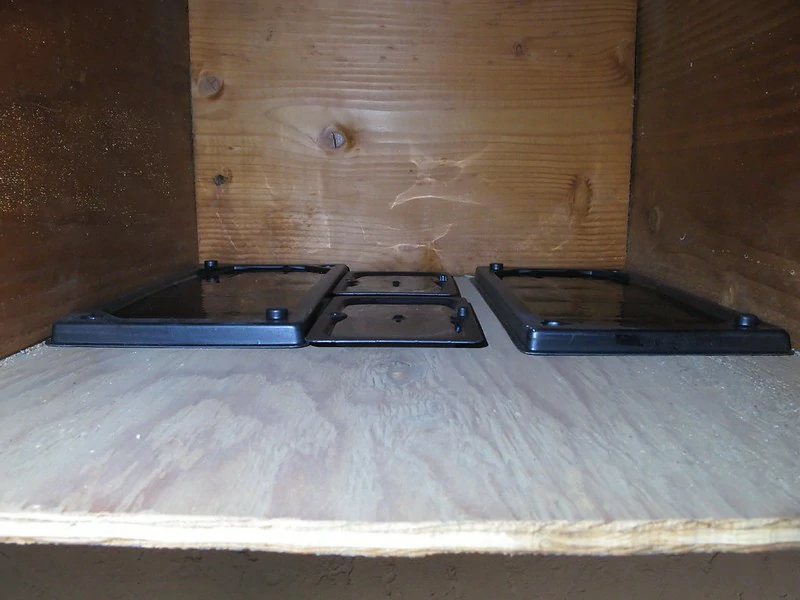
If you’ve just opened a pack of Tomcat glue traps and you’re staring at a plain looking board, it’s natural to wonder whether you should add something to it. So, do Tomcat glue traps need bait?
No, Tomcat glue traps don’t need bait. The glue is already scented to attract mice, and Tomcat says baiting is neither necessary nor recommended. Adding food, especially oily food like peanut butter, can weaken the glue.
That’s the quick answer, but there’s more to know, like why bait can backfire and how to place your traps so they work.
Why Tomcat Glue Traps Work Without Bait
Most traps need something to lure the animal in, but with a Tomcat glue trap you get the lure built in, because the glue itself is pre-scented to attract mice and rats.
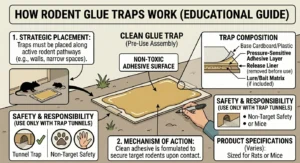
The scent is only half of the story. The other half is the route a mouse takes, since mice run along walls and edges, so a board you lay flat beside a wall is right in their path.
So the trap doesn’t have to tempt the mouse into doing anything. It just has to be in the right place (along a wall, where mice already run), and the sticky surface does the rest.
That’s also why Tomcat’s own product pages say the glue boards catch mice without bait, and why they tell you to place them along walls where you’ve seen signs of mice.
What Happens If You Add Bait to a Tomcat Glue Trap Anyway?
Nothing good, usually. If you add foods like peanut butter, you add oils, and oils can weaken the glue’s grip so a mouse can pull free more easily.
Pest supply companies (the ones that sell to professionals) say the same thing. One glue board maker even notes that adding bait lowers how well a trap works.
Bait can also make a mess. Crumbs and smears (even tiny ones) draw ants and roaches onto the board, and a board covered in bugs won’t have room left for a mouse.
Since Tomcat’s traps are already scented, extra food may not make them any more tempting, and for you it just adds risk and mess.
If you really feel like something is missing, the better move is to look at placement and food competition, which we’ll cover below.
Why Snap Traps Need Bait but Glue Traps Don’t
A snap trap only works when a mouse steps on a small trigger, so it needs something tasty to make the mouse stop and nibble right on that spot.
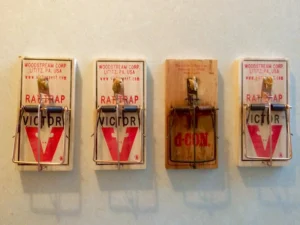
A glue trap is different, because the mouse only has to touch the board while it travels, so there’s no trigger to hit.
That’s why Tomcat’s Press ‘N Set snap trap has a bait well (a small cup right by the trigger) and comes with advice to use peanut butter or Tomcat Attractant Gel.
Tomcat says to use a dab about the size of a pencil eraser. A glue trap has no bait well, because you simply don’t need one.
Is There Ever a Time to Use Bait With Glue Traps?
Sometimes, though not on the Tomcat board itself. Some pest pros set a glue board right next to a baited snap trap.
That way, a smart mouse that dodges the snap trap, or tries to steal the bait without stepping on the trigger, may run right onto the glue.
It’s a clever trick, but it’s also a combination of two traps, and each one still follows its own rules. The glue stays clean, and the bait stays on the snap trap.
If you’re not sure this is worth the trouble, keep it simple, since a few well placed glue traps with no bait often do the job on their own.
Why Isn’t My Tomcat Glue Trap Catching Anything?
It’s frustrating to put out a trap and see nothing for days, but the cause is usually simple. Run through these fixes before you think about adding bait.
The first thing to check is the spot, because a trap that isn’t touching a wall, or sits in a room where you’ve never seen droppings, may never meet a mouse.
Next, think about competing food. If mice can reach crumbs, pet food, or open bags in your pantry, a scented trap is up against an easy meal.
Dust is another culprit (garages and basements are the usual suspects), since a thick coat of dust can cover the glue and keep a mouse from sticking. Wet or greasy spots can cause trouble too.
Mice also tend to avoid anything new in their territory for a little while, so a fresh trap may sit untouched for a day or two before you see any action.
Tomcat says you should move a trap if it hasn’t caught anything in 2 to 3 days. Pick a new spot where you’ve seen droppings or heard scratching.
If you’ve done this and still catch nothing after a week or two, you may have fewer mice than you thought, or they may be nesting somewhere you haven’t looked.
How Many Glue Traps You Need and How Far Apart to Put Them
There’s no perfect number, but a good rule is to space traps about 5 to 8 feet apart along walls where mice travel.
Check the package, though, because spacing changes from product to product. Some larger packs list 8 to 12 feet for mice and 15 to 30 feet for rats.
For a small kitchen, that usually means several traps, not just one or two, since a single board covers only a small patch of floor.
Some Tomcat sellers also suggest setting two traps side by side, because a clever mouse may try to jump over a single trap.
Once you stop catching mice, leave a few traps out for another week or two, since a mouse or two may still be hiding.
Where Should You Put Tomcat Glue Traps?
Put your traps flat against walls and baseboards where mice travel (think behind the fridge, beside the stove, and under the sink).
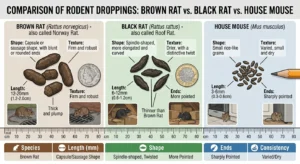
Look for droppings (small, dark pellets), gnaw marks, and nests made of shredded paper first, because those signs tell you where the mice are actually moving.
Garages, basements, utility rooms, and the backs of kitchen cabinets are all good spots, as long as the area is dry.
Tomcat says to avoid wet areas, and in dusty spots it says to put the trap between a leaning board and the wall. That keeps dust off the glue.
Keep every trap out of reach of your kids and pets, since glue traps aren’t pet proof and retail listings mark them as not pet resistant.
Indoors is the safer choice, since the listings call these traps indoor products. Outside, birds and other wildlife can end up stuck.
What Really Draws Mice Into Your Home (It Isn’t Bait)
Mice come inside for food, water, warmth, and shelter, and once they find a spot in your home that offers all four, they tend to stay and bring friends.
That’s why a clean, sealed home matters more than the fanciest bait. A trap can catch the mice you have, but it can’t stop new ones from coming.
Seal every crack and hole bigger than about a quarter inch (roughly the width of a pencil), because mice squeeze through gaps that look far too small.
Store your food in hard containers, wipe up crumbs, and don’t leave pet food out overnight. Trim plants that touch your walls too, since mice are good climbers.
When mice run out of easy food and hiding places, your glue traps get a lot more interesting to them.
Should You Bait a Rat Glue Trap?
Tomcat’s rat size glue traps are pre-scented too, so the same rule applies. They’re about 9 3/4 inches long and 4 5/8 inches wide, and they also catch mice and other pests.
Rats are bigger, stronger, and warier than mice, so a rat that gets stuck can fight hard, which makes the suffering even worse.
Pros often pre-bait snap traps for rats, which means leaving them unset for a bit so rats get comfortable. That’s a snap trap trick, not a glue trap one.
With rats, it’s smart to talk to a pest control pro, because a rat problem is usually bigger than it looks, and rats can carry germs and damage wiring and insulation.
Tomcat Glue Traps Also Catch Bugs Without Bait
Tomcat says its glue boards and rat size traps also catch crawling pests (cockroaches, spiders, scorpions, and more), again without any bait.
For bugs, place traps along walls and corners where you see them crawl, like near door frames and along baseboards.
Tomcat suggests the covered, folded version for areas with insect or scorpion activity, and you can fold the board along the lines and slide the tab into the slit.
A bug trap is also a handy way for you to see which pests are active and where.
Keep in mind that a trap meant for bugs can still catch a mouse or a lizard. Check it daily and move it if it’s catching the wrong things.
What to Do When a Tomcat Glue Trap Catches Something
Check your traps every day, because Tomcat’s directions say to, and because a trapped animal shouldn’t spend any longer stuck than it has to.
When you find a mouse, wear gloves and keep your face turned away, since rodents can carry germs (like hantavirus and salmonella). Put the whole trap in a sealed bag and wash your hands afterward.
Tomcat’s label says to throw away the trap and rodent in the trash. However, if the animal is still alive, call a vet or animal shelter for help, because a live animal in the trash faces a slow end.
Never sweep or vacuum droppings near the trap. Use gloves and a disinfectant spray, and wipe the spot clean with paper towels.
Can You Reuse a Tomcat Glue Trap?
No, Tomcat glue traps are made for one time use. Retail listings even mark them as not reusable, and the directions tell you to throw away the whole trap when you’re done.
Once a trap has caught something, or even collected a layer of dust and crumbs, the glue loses much of its grip and a mouse may pull free.
Reusing a trap that held a rodent is also a bad idea for your health. Urine, droppings, and germs (even ones you can’t see) can stay behind on the board.
So when a trap is full, dusty, or no longer sticky, throw it away and put out a fresh one in the same spot. A worn out trap gives you a false sense of security.
If you’re not sure whether a trap still works, touch the glue edge lightly with a gloved finger. If it feels weak, replace it.
What to Do If Glue Gets on Your Hands, Clothes, or Floors
Even careful people end up with glue on something, because it grabs skin, fabric, carpet, and floors the moment it touches them.
For skin, don’t pull hard, and instead rub on a little cooking oil, give it a minute to soften the glue, and then wash with soap and water.
For clothes and carpet, work a little oil into the stuck area and blot the glue away before you wash the item. Test a hidden spot first so the oil doesn’t stain the fabric.
Hard floors are easier, since a dab of oil and a plastic scraper (an old gift card works too) will lift most of the glue, and dish soap cuts the oily film.
Tomcat’s label mentions mineral spirits, but that’s a harsh solvent. Try oil first, and check with a vet or the product label before you use anything stronger on skin or pets.
If your dog or cat gets stuck, the same oil trick works, followed by a mild dish soap bath, and a vet can help if the skin is red or torn.
How Do You Bait a Snap Trap the Right Way?
If you decide glue isn’t for you, a snap trap is the usual next step, and this is where bait really does matter.
Use a small dab (about the size of a pencil eraser) of peanut butter or Tomcat Attractant Gel. A big glob lets a mouse lick it off without setting off the trigger.
Chocolate, nuts, and seeds work too, and some people try pre-baiting, which means putting baited traps out unset for a day or two so mice get used to them.
If anyone in your home has a peanut allergy, skip the peanut butter and try chocolate or gel instead.
Press ‘N Set traps also have a grab tab, so you can toss the trap without touching the mouse. They’re made for indoors or outdoors, and Tomcat says to point them toward the wall.
Ethics and Laws to Know Before You Use Glue Traps
Whether bait is needed is only part of the decision, because many vets and animal welfare groups oppose glue traps, since a stuck animal can suffer for hours or even days.
Some places have restricted them. England limited public use in 2024, Wales and Scotland have bans, and Victoria in Australia bans them too.
In the US, a few California cities (West Hollywood, Ojai, and Culver City) have banned them, and while there’s no nationwide ban in the US or Canada, the rules keep changing.
Check your local rules before you buy. And if you’d rather not use glue at all, snap traps, battery powered traps, and live traps can all do the job.
Conclusion
Tomcat glue traps don’t need bait, because the glue is already scented to attract mice and rats. Tomcat even says baiting isn’t necessary or recommended.
Adding food, especially oily food like peanut butter, can weaken the glue and let a mouse pull free, so it’s best to leave the trap just as it comes.
Focus on placement instead, since that’s where you’ll see the biggest difference. Put several traps flat against walls, check them daily, and move them if nothing shows up in 2 to 3 days.
Seal up your home, store food well, and keep traps away from kids and pets. If you’d rather avoid glue, a snap trap with a little bait (set against a wall) is a quicker option.

Hi, my name is Ezra Mushala, i have been interested animals all my life. I am the main author and editor here at snakeinformer.com.