
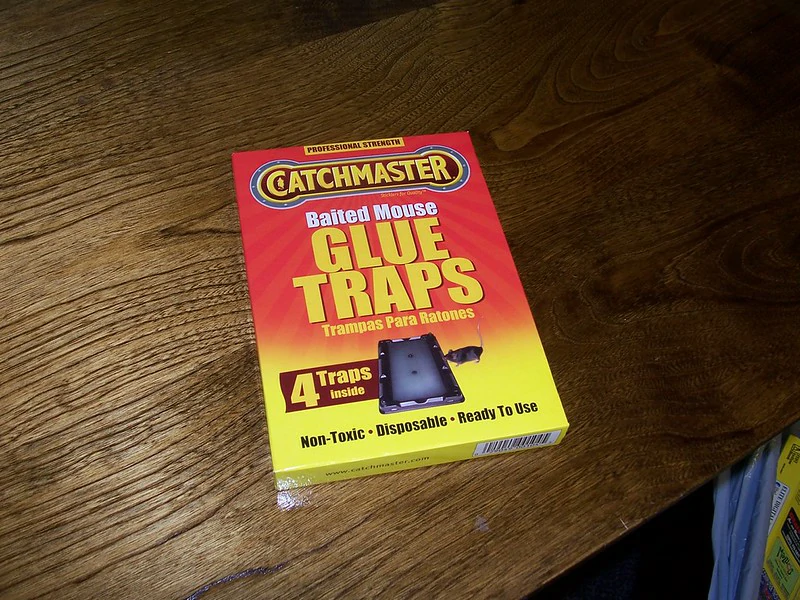
Ants have a way of showing up in a clean kitchen, and a sticky board can look like an easy fix when you see a line of them. Before you buy one, you might ask: will glue traps work on ants?
Glue traps will catch some ants, but they won’t get rid of an ant problem. They only grab the few workers that walk across them, while the nest keeps sending more. Ant baits and sealing entry points work much better.
A glue trap can catch a handful of ants in a day, and that can feel like a win. The trouble is that the ants you see are only a small part of the whole colony.
So the real question is what a trap can and can’t do for you. Once you know that, it’s much easier to pick the right tool.
Glue Traps Catch Ants, but They Won’t Fix an Ant Problem
Glue traps are made to grab anything that walks across them, and that includes ants. If a trail runs right over a board, you’ll see ants stuck on it within minutes.
That feels like progress, and for a little while it even looks like it’s working. But the line of ants usually comes back, because the ants on the board were never the source of the problem.
Ants live in colonies (big family groups that can hold thousands of ants), and most of the colony stays hidden in the nest. The ants in your kitchen are just the workers sent out to find food.
So catching a few workers is like picking a few apples off a tree, since the tree keeps making more.
What Draws Ants Into Your Home in the First Place?
Food is the biggest draw, and ants aren’t picky about it. Sweet spills, grease on the stove, crumbs under the toaster, and pet food left in a bowl overnight will all bring them in.
Water counts too, so a leaky pipe or a damp spot under the sink can attract a trail. Ants can also move in when the weather gets rough outside, since heavy rain or dry heat pushes them to look for shelter, food, and water indoors.
Once one scout finds something good, the rest follow. That’s why a single crumb can turn into a parade by lunchtime.
If you don’t remove what drew them in, a glue trap just sits in the middle of an ongoing invitation.
Why Do Glue Traps Fail to Stop an Ant Infestation?
The biggest reason is the nest. University pest experts point out that most ants nest outdoors, so a trap inside your home never gets anywhere near the queens that keep the colony growing.
Another reason is how little help a colony needs from its workers. As few as one percent of the foraging ants can bring back enough food to feed the whole colony, so killing the ants you can see does very little.
Think of it like a delivery service with thousands of drivers. You can stop a few of them, and the rest will still bring groceries to the nest.
There’s also the sheer number of ants. A glue board only holds so much, and once the glue is covered with ants and dust, it stops catching anything new.
That’s why a board that worked on day one can look useless by day three.
How Do Ants Find Their Way Across a Glue Trap?
Ants don’t wander around at random, because they follow scent trails (invisible chemical paths that ants lay down so other ants can find food). A scout finds a crumb, heads home, and marks the way back with that scent.
Soon dozens of workers are marching along the same path. If your glue trap sits right on it, the first ants may get stuck.
But the trail doesn’t disappear when a few ants die, and later ants can wander around the edge of the board or pick a new route nearby. That’s one reason a single trap rarely changes much.
The ants keep coming until the scent trail is wiped away or the food source is gone.
What Happens When You Put a Glue Trap Where Ants Are Walking?
At first you’ll catch a handful of ants, and it might even feel satisfying. Within a day or so, though, the board fills with ants, crumbs, and dust.
Once the surface is covered, the glue stops grabbing new ants, and workers can walk right over the bodies already stuck there. So a crowded board becomes less useful with each hour.
Meanwhile, the colony keeps sending out more workers. You swap the board, catch more ants, and the cycle repeats.
That’s a lot of effort for an ant problem that never ends, and each board costs money too.
Glue traps do work as a short-term helper in one case, which we’ll cover below. For fixing the problem, they just aren’t the right tool.
Are Mouse Glue Traps Any Good for Ants?
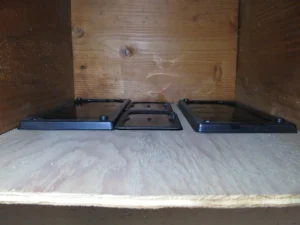
You can use a mouse glue board on ants, since the glue grabs most crawling bugs. Brands like Tomcat and Catchmaster even say their boards catch insects like roaches and spiders.
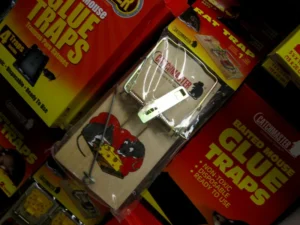
But a mouse board is a poor match for tiny ants, because it’s a big, strong trap for a job that needs very little glue. It’s also a waste, since one mouse-size tray is meant to hold a mouse.
Another problem is where you’d set it. Mouse boards are meant to stay out of reach of kids and pets, and a board in the open on your kitchen floor can catch a curious paw.
If you want a trap just for bugs, a small insect trap is a better match. Still, none of them solve the colony problem.
When a Glue Trap Is Actually Useful Against Ants
Glue traps can help you figure out where ants are coming from. Pest control pros call these pest monitors (traps used to check on pests, not to wipe them out).
Put a small sticky board along a wall or near a suspected entry point, and check it the next day. The ants stuck on it show you which kind you have and where they travel.
That helps you choose the right bait, since different ants like different foods. UC pest experts suggest trying another bait if the ants ignore the first one.
It also shows you how bad the problem is. A few ants on the board means a few scouts, while dozens means an active trail.
Used this way, a glue trap is a clue-finder. It isn’t the fix, but it helps you aim the fix.
What Works on Ants Better Than Glue Traps?
Ant baits work best. A bait is a mix of food and a slow-acting poison, and worker ants carry it back to the nest to share.
University experts say baits are the one tool that can reach the whole colony, including the queens. That’s why pest pros lean on them for almost every ant problem.
Place baits near the ant trails and nest openings. Ready-made bait stations (small plastic containers with a tiny opening) are the safest and easiest to use.
Give baits time, because it can take five to ten days before you notice fewer ants. If the ants ignore the bait, move it or try a different product.
How Do Ant Baits Wipe Out a Colony From the Inside?
The poison in the bait has to work slowly. If it killed ants right away, they’d die before they got home.
A worker finds the bait, eats some, and carries more back in her body. Back at the nest, ants pass food from mouth to mouth (a habit scientists call trophallaxis), so the bait spreads through the whole colony.
Eventually it reaches the queens and the young ants, and the colony slowly collapses. That’s the part a glue trap can never do.
You may see more ants at first, since the bait draws workers in. That’s a good sign, so don’t spray them.
Liquid baits made with a little borate (a mild mineral that’s poisonous to ants) mixed into sugar water are a common choice for homes. Look for baits sold in closed stations so pets and kids can’t get at the liquid.
Why Spraying Ants Doesn’t Solve It Either
Spraying kills the ants it touches, but it won’t stop more from coming. UC pest experts say plainly that spraying inside your home doesn’t keep new ants out.
The reason is the same one that makes glue traps fail. The spray reaches the workers you see, but the nest stays safe.
Sprays can also kill ants before they carry bait back, which cancels out the bait. So if you’re using bait, skip the spray around it.
There’s one more problem, which is that sprays leave chemicals on surfaces where kids and pets spend time. A better plan is simple: wipe up the ants you see, then use bait to handle the colony.
Simple Steps That Stop Ants From Coming Inside
Start with the cleanup, because food is what draws ants in. Sponge up trails with soapy water, which also wipes away the scent trail so other ants lose the way.
Next, seal the doors they use. Plug cracks and gaps around windows, pipes, and baseboards with caulk (or petroleum jelly for a quick fix).
Store sweet and greasy food in closed containers, and wipe up spills and grease right away. Don’t leave pet food out overnight, either.
Check for indoor nesting spots too, like potted plants that hide ants, and move any infested plants outside.
Finally, look around the outside of your home. Trim plants that touch the walls, and clear fallen fruit and aphid-covered bushes near the house, since ants love the sweet stuff aphids leave behind.
Where Sticky Barriers Do Work on Ants
There’s one kind of sticky tool that works on ants, and it’s different from a glue trap. A sticky barrier is a band of sticky material placed where ants have to cross it, so they can’t get past.
For example, you can smear petroleum jelly under the rim of a garbage can to keep ants out. You can also set pet food dishes in a shallow moat of water so ants can’t reach the bowl.
Gardeners use sticky bands on tree trunks to stop ants from climbing up to aphids. UC research on Argentine ants lists sticky trunk bands as a safe choice for organic citrus groves.
These barriers don’t kill the colony, but they do block the path, which can be enough to protect one tree or one bowl. So sticky materials have a place in an ant plan, as walls and not as traps.
Can You Use Glue Traps Safely Around Kids and Pets?
Not without care. A glue board is made to hold on to whatever touches it, so a child’s hand or a dog’s paw can end up stuck.
If you use one, put it where kids and pets can’t reach, like behind an appliance or inside a closed box. And check it every day.
Ant baits need the same care, since they contain poison. Keep them in sealed stations, up high or tucked behind furniture.
Don’t leave liquid bait in open saucers, because a curious pet might lap it up and a toddler might touch it. If your pet or child gets into bait, call your vet or poison control right away, and bring the package with you.
What if the Ants Keep Coming Back?
Don’t panic, because bait can take a while to work.
First, check that the ants are actually taking the bait. If they walk past it, move it closer to the trail or switch to a different type.
Second, keep the area clean. If ants have an easier food source nearby, they’ll ignore the bait.
Third, look for the nest. It’s often outside, under a stone or a log, though some nests hide in wall gaps or cabinet voids.
If nothing works after a couple of weeks, call a pest control company. Ask them to use baits, not just a perimeter spray, since baits are the better way to treat the colony.
Which Ants Are Hardest to Get Rid Of?
Some ants are tougher than others. Thief ants, for example, are harder to manage with baits than most house ants, so you may need more patience with them.
In the western US, Argentine ants are one of the most common kitchen invaders, and they form huge colonies with many queens. If you live there, you’ll likely see them marching in long, busy lines.
Carpenter ants are another tough case, since they nest in wood and can cause damage over time. If you see piles of wood shavings or a trail of large black ants, call a pro.
On the other hand, pharaoh ants look like thief ants, but baits work well on them. That’s why it helps to know what you have before you spend money.
This is where a monitor trap comes in handy, because a few ants stuck on a board give you something to show a pest pro. When in doubt, take a photo of the ants and bring it to your local extension office.
How Long Does It Take to Get Rid of Ants for Good?
You’ll usually see fewer ants within five to ten days of putting out bait. But getting rid of the whole colony can take a few weeks, so don’t quit early.
Keep the bait fresh and keep it where the ants are traveling. If the trail stops, wait a few more days before you take the bait away.
Even after the ants are gone, you still need to keep sealing gaps and cleaning up food. If you don’t, a new colony can find the same open door.
Ants are also most active in warm weather, and many people see them return each spring. UC pest experts say it helps to start baiting as soon as ants become active after the winter rains, since early action is easier and cheaper.
So treat ant control as a habit, not a one-time job. A few minutes of cleanup each day can save you weeks of trouble.
A Simple Plan for Getting Rid of Ants This Week
On day one, sponge up the ants and wipe the trail with soapy water. Seal the cracks you find and put food away.
Next, set out bait stations near the trails and nest openings, and leave them alone even if ants swarm them.
Keep wiping up crumbs and spills. Check the bait every few days, and replace it when it runs low.
After a week or two, the trails should thin out. If they don’t, try a different bait or call a pro.
Along the way, you can use a small sticky board to see where the ants are traveling. Just keep it away from pets and kids.
Conclusion
Glue traps will catch some ants, but they won’t solve an ant problem. The nest keeps sending more workers, and the traps only grab the few that walk across them.
Glue boards do have one good use, which is as a monitor to see where ants are traveling and what kind you have.
For real control, use baits so workers carry the poison back to the colony. Seal entry points, clean up food and spills, and skip the spray.
Sticky barriers like petroleum jelly or tree bands can block ants in certain spots. They work as walls, and they can help protect a bowl or a tree.
Give the plan a week or two, and the ants should fade away. If they don’t, a pest pro can help.

Hi, my name is Ezra Mushala, i have been interested animals all my life. I am the main author and editor here at snakeinformer.com.