
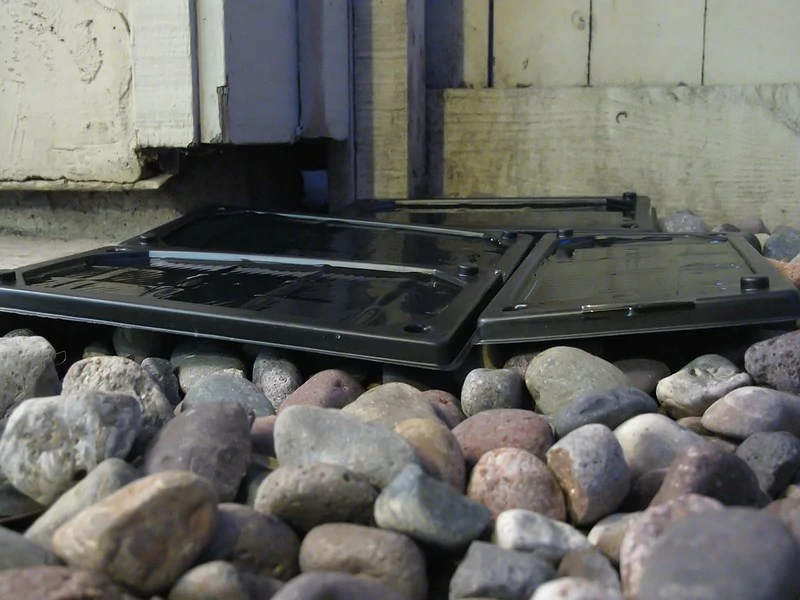
Sticky mouse traps seem like a gentle choice for a home with pets, since there’s no poison and nothing that snaps shut. Still, a dog’s nose and paws go everywhere, so it’s fair to ask: are sticky mouse traps dangerous to dogs?
Sticky mouse traps can be dangerous to dogs, but not because of poison. The glue isn’t toxic, but a dog can get stuck, panic, and tear out fur or skin. Chewing on the trap or eating a trapped mouse adds more risk.
The glue itself won’t poison your dog. What hurts dogs is how strongly it holds on, and what else ends up stuck to the board.
Most sticky trap accidents are small and can be fixed at home. But a few are real emergencies, and you’ll want to know the difference before one happens.
What Counts as a Sticky Mouse Trap?
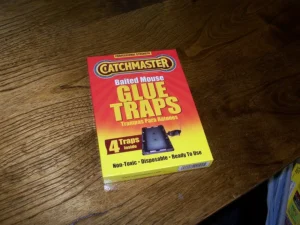
A sticky mouse trap is a flat tray, usually cardboard or plastic, coated with a thick layer of glue. Pest control pros call them glue boards, and you’ll also see them sold as glue traps or sticky pads.
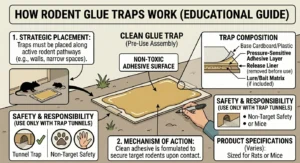
A mouse walks across the board, touches the glue, and can’t pull free. Brands like Tomcat and Catchmaster sell them in mouse and rat sizes, and many are scented to draw mice in.
These boards don’t pick favorites, though. Crickets, roaches, and other crawling bugs get stuck on them too, and so does anything else that touches the glue.
That’s the part dog owners need to remember. A sticky trap can’t tell a mouse from a paw.
Sticky Traps Don’t Poison Dogs, but They Still Cause Trouble
Sticky traps don’t contain rat poison or any pesticide, and the glue is a rubbery adhesive that stays tacky and never fully dries. So you don’t need to panic if your dog sniffs the board or gets a little glue on a paw.
But a dog doesn’t need to be poisoned to get hurt. A trap that grabs a paw can turn a quiet night into a trip to the vet.
Pest control experts say it plainly: pets and children can and do get stuck on glue boards. That’s why they suggest putting the board inside a tamper-resistant station (a plastic or metal box that kids and pets can’t open).
Think of a sticky trap as safe for the stomach but not safe for the skin and fur. That’s a better way to picture the risk.
How Does a Sticky Trap Hurt a Dog Without Any Poison?
It hurts through grip. The glue clamps onto fur and skin, and the harder your dog pulls, the more hair gets caught in it.
Most dogs panic when something sticks to their paw, so they shake it, bite at it, and drag the board across the floor. That’s when one stuck paw becomes a stuck leg, belly, or face.
A dog that rolls or rubs against furniture picks up dust and fluff too, which makes the mess even harder to clean. And pulling a board off by force takes fur with it.
If the glue grips the skin, a hard tug can leave a raw, sore patch. That’s why slow and gentle always beats fast and rough.
A dog’s mouth is the other danger zone. If he bites at the board, glue ends up on his lips and tongue, and bits of cardboard or plastic can end up in his stomach.
Are Sticky Traps Riskier Than Snap Traps for Dogs?
They’re different kinds of risk. University pest experts call snap traps and glue boards the safest and most economical traps for mice, mainly because neither one uses poison.
A snap trap can pinch a dog’s nose or paw hard, and that really hurts. A glue board won’t pinch, but it can trap a whole paw or leg.
A snap trap is also over in a moment, while a glue trap keeps holding on. A dog stuck to a board may panic for a long time before you find him.
For that reason, many pros say to put either type inside a covered box that only a mouse can enter. That protects your dog from both kinds of injury.
Neither one is as risky as poison bait, which is the real danger for dogs. We’ll get to that next.
Why Poison Bait Is a Bigger Worry Than Sticky Traps
Rat and mouse bait is made to be eaten, and dogs will eat almost anything that smells good. Most baits work by stopping blood from clotting, so a poisoned dog can bleed inside his body.
Signs can take days to show up, which makes the problem easy to miss at first. That delay is one reason vets take bait so seriously.
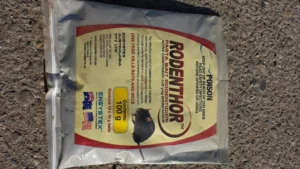
Baits are why some people choose sticky traps in the first place, and that’s a fair reason, since a glue board has no poison for your dog to swallow.
But a mouse that ate bait before it got stuck can still carry poison in its body. If your dog eats that mouse, the poison can pass to your dog (vets call this secondary poisoning).
So if you’ve used bait anywhere near your home, treat a trapped mouse as a possible danger. Don’t let your dog get near it.
Why Do Some Dogs Go Straight for a Sticky Trap?
Mostly because of smell. Many boards are scented, and a dog’s nose is far better than ours at picking up food smells.
Mice are also most active at night, so traps do their work while you’re asleep. That’s exactly when a dog is roaming the house on his own.
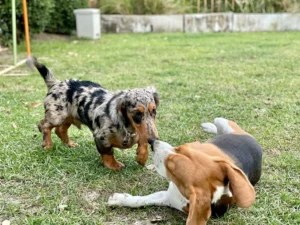
Dogs bred to hunt small animals, like terriers and dachshunds, are drawn to a trapped mouse even more. A squirming mouse on a board is hard for them to resist.
Puppies are curious and explore with their mouths, so a sticky board on the floor is just another thing to grab.
And some dogs simply get bored. A dog home alone for hours may check out anything new, including a trap you thought was well hidden.
Where Sticky Traps Are Most Likely to Catch a Dog
Pest experts say to place traps along walls, behind objects, and in quiet corners, since mice run along edges. Those same spots are where many dogs like to walk and sniff.
The kitchen is the most common place for trouble. A board behind the trash can or under the sink is easy for a dog to reach when a cabinet door is open.
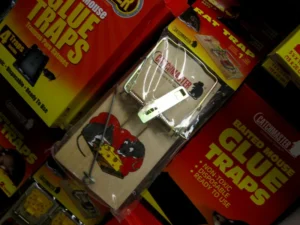
Garages and basements are risky too. Dogs often wander in when the door is left open, and they don’t know what’s on the floor.
Another spot is behind the couch or a bookshelf, and a dog that chases a toy back there can run right into a board.
So walk through your home the way your dog does. If he can get there, assume he will.
How to Set Sticky Traps So Your Dog Can’t Reach Them
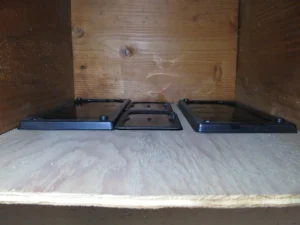
The best option is a tamper-resistant station, which is a box built to keep pets and kids out. The board sits inside, and a mouse walks in through a small opening.
If you don’t have one, put the board in a space your dog can’t get to, like behind a heavy appliance with no gap. Then give it a push to check that it can’t slide out.
Shut your dog out of the room at night, or put him in his crate or another room. Most mouse activity happens after dark, so this protects him when the risk is highest.
Check the board first thing in the morning, before your dog goes in. Take it up right away if it has caught something.
Store unused boards up high and sealed. A dog that finds a pack of them can chew right through the box.
What to Do in the First Minute After Your Dog Touches a Sticky Trap
Stay calm, because your dog will copy your mood. If you can, get a second person to help hold him.
Stop him from licking or biting the board. Hold his head gently and keep his mouth away from the glue.
Cover any exposed glue with paper towel or torn paper so nothing else sticks. Then rub cooking oil (vegetable, olive, canola, or baby oil) into the glue where it meets the fur.
Give the oil a few minutes to work, then slowly ease the board off while you hold the skin flat so the fur doesn’t pull.
Wash the area with dish soap and warm water until the oil is gone, and rinse well so he doesn’t lick it off. If the glue is on his face or he’s too upset to handle, skip all of this and head to a vet.
What Mistakes Make a Sticky Trap Mess Even Worse?
The biggest one is yanking. Pulling the board off dry takes fur and skin with it, and it hurts a lot.
Another is using water. Plain water won’t loosen this kind of glue, so you’ll just end up with a wet, sticky dog.
Harsh stuff like nail polish remover, rubbing alcohol, or paint thinner is a bad idea too. These can burn the skin, and they aren’t safe if your dog licks them.
Don’t reach for scissors either, because it’s easy to nick the skin on a squirming dog.
And don’t let him lick the glue or the oil while you work. Having a second person nearby makes this much safer.
How Do Vets Remove Glue From a Dog?
Vets use the same basic trick you would at home, which is oil. It breaks down the glue so the board can slide off without ripping the fur.
The difference is that a vet has help and the right tools. If your dog is too scared to hold still, the vet may use a calming medicine so he can be treated safely.
In bad cases, a vet or groomer may clip away the worst of the glued fur. That’s much better than tearing it out, and the hair grows back.
Afterward, the vet checks the skin for sore spots. They can also treat any raw patches so they heal cleanly.
If your dog swallowed anything, the vet can check for that too. That’s one more reason to go in when you’re not sure.
Signs Your Dog Needs a Vet After a Sticky Trap
Go to a vet right away if the board is on his face, near his eyes, or over his nose and mouth. A board there can make breathing hard.
Go too if he swallowed glue, a piece of the board, or the mouse. Some problems don’t show up for hours.
Skin that’s red, raw, or torn needs a vet’s care, and so does any bleeding or a patch of glue too big to treat at home.
Call your vet if the stuck dog is panicking, snapping, or too scared to touch. A vet can calm him down and remove the glue safely.
And if there’s any chance the mouse had eaten bait, call a vet or a pet poison hotline even if he seems fine.
Can a Dog Get Sick From the Trapped Mouse or Bugs?
Yes, it can happen. A mouse stuck on a board is still a wild animal, and your dog may try to grab it.
A live mouse can bite out of fear. A dead one can still carry parasites like roundworms and coccidia (tiny gut parasites).
Sticky boards also catch crickets, roaches, and sometimes spiders or scorpions. A trapped scorpion can still sting if your dog sniffs too close.
If your dog eats a trapped animal, call your vet and tell them what happened. Bring the trap, or snap a photo of it, if you can.
You can’t always tell what a mouse ate before it got caught. That’s why it’s safest to treat every trapped mouse as a risk.
What if Your Dog Gets Stuck While You’re Not Home?
This is the scary one, and it’s why traps and dogs don’t mix well. A dog stuck for hours gets more panicked, more tangled, and more likely to hurt himself.
If you can’t watch your dog, keep him away from any trap. A crate or a closed-off room is the safest choice.
When you come home to a stuck dog, don’t rush. Go slow, stay calm, and check his face and mouth first.
If he’s calm and the glue is only on a paw, you can usually handle it with oil and dish soap. If he’s frantic, bleeding, or has glue near his face, go straight to a vet.
Some people use a pet camera when they leave a trap down. It’s an easy way to catch a problem early.
Are Sticky Traps Safe if Your Dog Never Goes in That Room?
Safer, yes, but not perfectly safe. Dogs open doors, slip past guests, and wander in when you don’t expect them.
Visitors can leave a door open without knowing about the trap, and kids can move a board without telling you. Then it ends up somewhere your dog can reach.
A trap in a closed room is also easy to forget. The longer it sits, the more likely something goes wrong.
If you do use one, write down where you put it. Check it every day, and take it up once it catches something.
A quick walk through your home before bed takes only a minute. That small habit can prevent a lot of trouble.
Safer Choices for Homes With Dogs
Start by closing the holes mice use to get in. A gap about as wide as a pencil is enough, so check around pipes, vents, and door bottoms.
Use steel wool or metal mesh with caulk, since mice chew through foam and plastic. Also keep pet food in tight containers, because kibble is a big draw for mice.
Next, use traps that keep your dog out. A snap trap or glue board inside a tamper-resistant station works well, because only a mouse can fit through the opening.
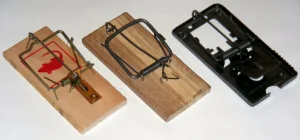
Multi-catch traps are another option. They catch mice alive, so there’s no glue or poison, and you take the mice outside to release them.
Skip poison bait if you have a dog. If the mouse problem is large, call a pest control company and tell them about your pet.
A Quick Checklist Before You Set a Sticky Trap
First, ask whether your dog can reach the spot. If there’s any doubt, pick another spot or use a station.
Second, think about night. If your dog sleeps loose in the house, shut him out of the trap area.
Third, make sure the board is the right size. A mouse board is much smaller than a rat board, and a smaller board is easier on a dog if something goes wrong.
Fourth, keep cooking oil and dish soap handy, along with your vet’s number. If something happens, you won’t have to search for them.
And last, plan to check every day. A trap you forget about is the one that causes problems.
Conclusion
Sticky mouse traps aren’t poisonous, but they can still be dangerous to dogs. The glue holds on tight, and a scared dog can hurt his paws, fur, skin, or mouth while trying to get free.
The trapped mouse adds another risk, since it can bite, carry parasites, or hold poison from bait.
If your dog gets stuck, stay calm, loosen the glue with cooking oil, and wash the oil off with dish soap. Go to a vet if the board is near his face or if he swallowed anything.
The best plan is to keep sticky traps out of your dog’s reach, ideally inside a tamper-resistant station. Better still, seal up your home and try safer options.
You can get rid of mice without putting your dog in harm’s way. It just takes a little planning before you set the trap.

Hi, my name is Ezra Mushala, i have been interested animals all my life. I am the main author and editor here at snakeinformer.com.