
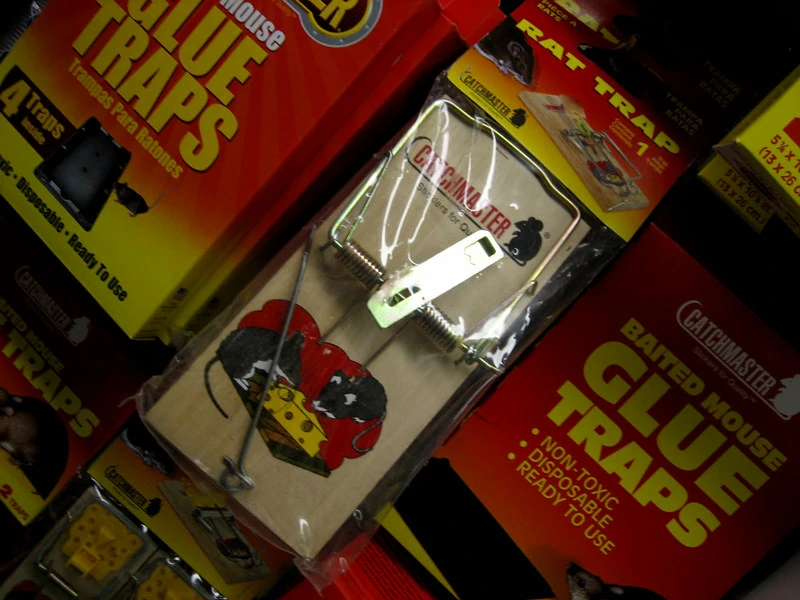
Maybe you saw a video of someone stuck to a huge glue board. Or maybe you just spotted an extra-large glue trap in the store and wondered how much trouble a person could get into. It’s a strange question, but it’s a fair one, especially if you have kids or curious pets around.
So can a giant glue trap catch a human, or is that just a myth?
No, a giant glue trap can’t trap a full-grown person the way it traps a mouse or a snake. But a person’s hand, foot, or clothing can stick to one, and the glue can irritate skin, so you should never handle these traps carelessly.
That short answer hides a few interesting details. The biggest glue boards are made for rats and snakes, not people, and no store-bought trap has the size or strength to hold an adult in place.
However, “can’t catch a human” doesn’t mean “harmless.” So let’s look at how big these traps really get, what happens when people get stuck, and what to do if it happens to you.
The Largest Glue Traps You Can Buy Are Still Smaller Than a Person
“Giant” isn’t a scientific term, so it helps to know what the biggest traps really look like. Most large glue boards are made for rats and snakes, and they’re bigger than the small mouse trays you may be used to.
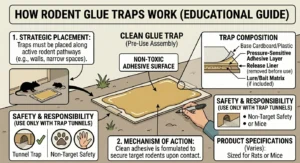
A jumbo rat and mouse glue trap covers about 81 square inches. That’s a bit larger than a sheet of notebook paper folded in half, and it’s one of the bigger rodent boards on the market.
Snake glue traps run larger. Many of the popular ones measure about 8 by 14 inches, and some are 10 by 16 inches.
A few extra-large versions reach 13 by 20 inches, or even 28 by 14 inches.
Those bigger sizes sound huge, but picture them next to a person. A 13 by 20 inch board is about the size of a small cutting board, or a large laptop with room to spare.
A grown adult is far bigger than that. Even the largest board on the shelf can only stick to whatever part of you touches it, like a hand, a foot, or a piece of clothing.
Why a Glue Trap Can’t Hold a Full-Grown Person
A glue trap works because an animal is small and light, and its feet and body sink into the glue. The stickiness holds a mouse in place because the mouse doesn’t have the weight or strength to pull free.
Rodent glue traps are made with a malleable mixture (a thick, gooey glue that molds around the animal). The animal’s feet and body get stuck, and it can’t get away.
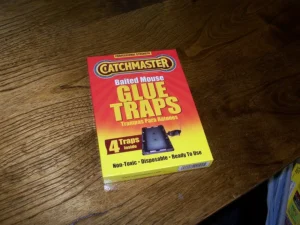
A person is a different story. You weigh well over a hundred pounds, and you have strong arms and legs that can peel a trap off with a firm pull.
Glue holds best against a light animal that’s trying to run across it. It holds much less well against a heavy person who can simply lift their foot and peel the board away.
That’s why the biggest hazard isn’t being “caught.” It’s getting a sticky patch on your skin, hair, or clothes that’s annoying and hard to clean up.
Here’s how a mouse and a person compare when they meet a glue trap:
| Factor | Mouse or Rat | Adult Human |
|---|---|---|
| Body weight | 1 to 16 ounces | 100 pounds or more |
| Strength to pull free | Very low | High |
| What touches the glue | Feet, belly, fur | Usually a hand, foot, or clothing |
| Can it get fully stuck? | Yes, often for hours or days | No, but part of the body can stick |
| Main risk | Slow, painful death | Skin irritation or torn skin |
The glue is strong, but it isn’t strong enough to hold a whole person in place.
Part of a Person Can Get Stuck to a Glue Trap
Yes, part of a person can. Poison Control says outright that humans can get stuck to the glue while handling the strips.
It happens more often than you’d think. Someone reaches for a trap to move it, sets a hand down without looking, or steps on one in the dark. The result is a hand, foot, or sleeve glued to a board.
Glue traps are indiscriminate, which means they’ll stick to anything that touches them. That includes birds, snakes, pets, and yes, people.
Kids and pets are the most likely to run into trouble. A toddler crawling across the floor or a dog sniffing around can grab a trap that you set for a mouse.
That’s the reason to be careful about where you place them. Keep glue traps out of reach of children and pets, and stay out of walkways where you might step on one by mistake.
Skin That Sticks to a Glue Trap Usually Isn’t an Emergency
If your hand or foot sticks to a glue board, the good news is that it’s rarely a medical emergency. The glue may stick to your skin or get in your eyes, but it’s unlikely to cause serious poisoning.
In plain words, that means the glue itself isn’t very poisonous. It’s more of a sticky mess than a danger.
However, the glue can still cause problems. There’s little regulation on what chemicals can go into glue boards, so an allergic reaction on the skin is possible.
The bigger risk is tearing your skin. Don’t rip the sticky glue off, since that can pull skin off along with the glue.
So if you get stuck, the goal is to loosen the glue, not to yank yourself free. A calm, slow approach works much better than panic.
How Do You Get Glue Trap Glue Off Your Skin?
There’s a simple way to handle it, and the advice from poison experts and the trap makers matches up nicely. Here’s what to do.
First, stay calm and don’t pull. A hard yank can rip your skin or hair, so take a breath and work slowly.
Next, wash the area with soap and water for 15 minutes.
You can also soak the area. Soaking your skin in warm, soapy water for 15 minutes can help soften the glue, and it’s a gentle way to start before you reach for anything stronger.
If that doesn’t do it, use cooking oil. Applying a little vegetable oil (or mineral oil) and massaging it into your skin can help loosen the glue.
Rub the oil in gently, and you’ll notice the glue start to ball up and lift. It can take ten or twenty minutes of rubbing with an oil-soaked cloth to get it all off, so be patient.
Once the glue is off, wash your skin again with soap and water to remove the oil. Then dry it well.
Glue in Your Eyes Needs Fast Rinsing, and Hair Needs Oil
Glue in your eyes is more serious, so treat it right away. If any glue gets in your eyes, rinse them thoroughly with lukewarm water for 15 minutes.
Keep your eyes open as you rinse, and let the water run over them. If they still hurt or feel gritty after that, call your doctor or a poison center.
In the US, the Poison Help line is 1-800-222-1222, and it’s free and open all day, every day. In Canada, you can reach your provincial poison centre, and in the UK, you can call NHS 111 for advice.
Hair is a different problem. Glue in your hair usually needs oil too, so work a little cooking oil into the sticky part, then comb it out slowly and shampoo well.
If the glue is stuck in a large patch of hair or on a child, cutting away a small section may be easier than a long fight. Don’t tug hard, since that can hurt the scalp.
Kids and Pets Are the Most Likely to Get Stuck on Glue Traps
Children and pets are more at risk, since they’re smaller and less careful. A child can get a whole hand or a foot stuck.
A dog or cat can end up with glue on its paws, fur, or face.
Kids can get into glue traps in surprising ways. In one case, a man opened a box of glue traps using his teeth.
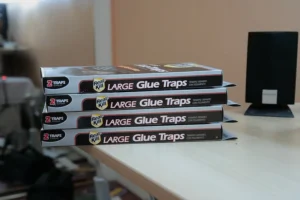
His poison center told him the glue is usually non-toxic, and that he should dilute it with something to drink.
For a stuck child or pet, stay calm, since panic makes it worse. Oil works on animals too, so use vegetable or mineral oil to remove glue from skin or fur.
For a pet, keep it from licking the glue, since that spreads it and can upset its stomach. Call your vet if it’s stuck on a large area, has glue on its face, or seems sick.
The best answer is to prevent it. Put glue traps where kids and pets can’t reach them, such as behind appliances, inside cabinets, or in a locked bait station.
The Real Danger of Glue Traps Is to Animals and Whoever Handles Them
If a glue trap can’t catch you, why do so many people worry about them? The real danger falls on the animals that get stuck, and on the people who have to deal with them.
A stuck animal can suffer for hours or days, and a panicked animal will go to the bathroom out of fear. That means anyone handling the board can be exposed to germs.
Picking up a trap with a live animal on it can also lead to a bite. So a person can get hurt by what’s on the trap even if the glue never touches them.
There’s a disease side too. Trapped rodents urinate when they get scared, which can spread diseases like hantavirus.
That’s why health experts recommend snap traps for mice and rats. They kill quickly and leave less mess than a live animal on a glue board.
Can a Glue Trap Catch Other Big Animals, Like Snakes or Cats?
Yes, and that’s where the “giant” glue boards come in. Snake glue traps are made to catch a much larger animal than a mouse, and they can also catch things they weren’t meant for.
Larger animals like birds and snakes can get stuck when they go after insects caught on the glue boards, and even frogs can end up trapped.
Even larger mammals have been stuck to wide glue boards, and they can suffer injuries or fur loss when pulling free.
So a big board can hold a small dog or a cat’s paws. But there’s a big difference between a sticky mess and a full trap, and no glue board is built to hold an adult person or a large dog.
This is exactly why wildlife groups push back on giant glue boards. A bigger trap catches bigger things by mistake, and the animals it does catch suffer for a long time.
Big Glue Traps Are Getting Banned or Limited in More Places
The rules on glue traps are changing, and giant ones draw extra attention. Some places have already banned or limited them.
In the UK, the Glue Traps (Offences) Act 2022 restricts how glue traps can be used. Rodents caught on them can suffer torn skin, broken limbs, and a slow, painful death, which is a big part of why the law passed.
In the US, more cities and states are looking at bans. Ojai, California banned rodent glue traps in 2024, and New York City lawmakers have pushed for one too.
If you’re in the US or Canada, check your state, provincial, or city rules before you buy any glue trap. A quick call to your local government office can tell you what’s allowed.
If you’re in Australia, check your local laws as well, since rules differ from one state to the next.
Some Household Cleaners Make Glue Trap Stickiness Worse, Not Better
When you’re stuck to a board, it’s tempting to reach for the strongest thing in the cupboard. That’s usually a mistake, because harsh products can hurt your skin more than the glue does.
Oil is the gentle first choice, and the reason is simple. Oils like olive oil, coconut oil, baby oil, or mineral oil break the bond between the glue and your skin, so the sticky stuff lifts away instead of tearing.
Give it time. Let the oil sit on the glue for a few minutes so it can soak in and loosen things, then rub gently with a soft cloth or a cotton ball.
Acetone (the strong stuff in some nail polish removers) is a stronger option, but it comes with a cost. It strips your skin of its natural oils, which can cause dryness, irritation, and cracking, so it should be a last resort on small, healthy patches of skin.
Never use acetone or rubbing alcohol near your eyes, mouth, or nose, or on cuts and scrapes. Skip them completely for babies and toddlers, since methods that use oil are the safer bet for children and sensitive skin.
Products like gasoline, paint thinner, and bleach are even worse. They can burn your skin and give off fumes, and they have no place in glue trap cleanup.
After the glue is gone, wash your skin with mild soap and lukewarm water to get every trace of oil off. Then add a moisturizer with no perfume in it if your skin feels dry.
When Should You Call a Doctor About a Glue Trap Injury?
Most glue trap mishaps are a nuisance, not an emergency. However, a few signs mean you should get medical help instead of handling it at home.
Call a doctor or a poison center if glue gets in your eyes and they still hurt after 15 minutes of rinsing.
The US Poison Help line is 1-800-222-1222, and it’s free and open all day, every day.
Get help if your skin is torn, bleeding, or blistered, or if a large patch is stuck and won’t loosen. Pulling harder is the wrong move, so don’t try to peel off stuck glue.
Watch for a rash, hives, swelling, or a burning feeling that gets worse after you’ve cleaned the area. Those can be signs of an allergic reaction to the glue.
Keep an eye out for signs of infection too, like redness that spreads, warmth, pus, or a fever.
That’s especially important if you or a child touched a trap with a rodent stuck on it, since the animal could have carried germs.
If someone swallows glue, call your poison center right away. Don’t make the person vomit unless a professional tells you to.
What Should You Use Instead of a Giant Glue Trap?
If you’re looking at a jumbo glue board because you have rats, there are safer and more effective options. Snap traps are the usual pick, since they kill quickly and reduce the chance of catching the wrong animal.
Pick a trap made for rats if you have rats, and a mouse trap if you have mice. Set it against a wall with the bait end touching the wall, and place it out of reach of kids and pets.
Electronic traps are another good choice. They give a quick shock in a closed box, which keeps the animal hidden and makes cleanup easier.
For snakes, don’t use a glue board at all. Snakes can suffer badly on glue, and the trap can catch birds and other wildlife too. Instead, seal up the gaps around your home and remove what draws them, like rodents and clutter, or call a wildlife pro.
And whatever trap you pick, seal up the entry points and remove food. The CDC’s advice is “seal up” and “trap up,” and that mix works better than any single trap.
Conclusion
A giant glue trap can’t catch a full-grown person the way it catches a mouse or a snake. The biggest boards are about the size of a cutting board, and an adult is far too big and strong to be held in place.
But a hand, foot, or piece of clothing can stick to one, and it can irritate your skin. If you get stuck, don’t yank. Wash with soap and warm water for 15 minutes, and work a little cooking oil into the glue to loosen it.
If glue gets in your eyes, rinse with lukewarm water for 15 minutes and call a doctor or poison center if it still hurts. Keep glue traps away from kids and pets, and check your local rules before you buy one.
For rats and mice, snap traps work better and cause less suffering. That’s the safer way to solve the problem without a sticky mess.

Hi, my name is Ezra Mushala, i have been interested animals all my life. I am the main author and editor here at snakeinformer.com.