
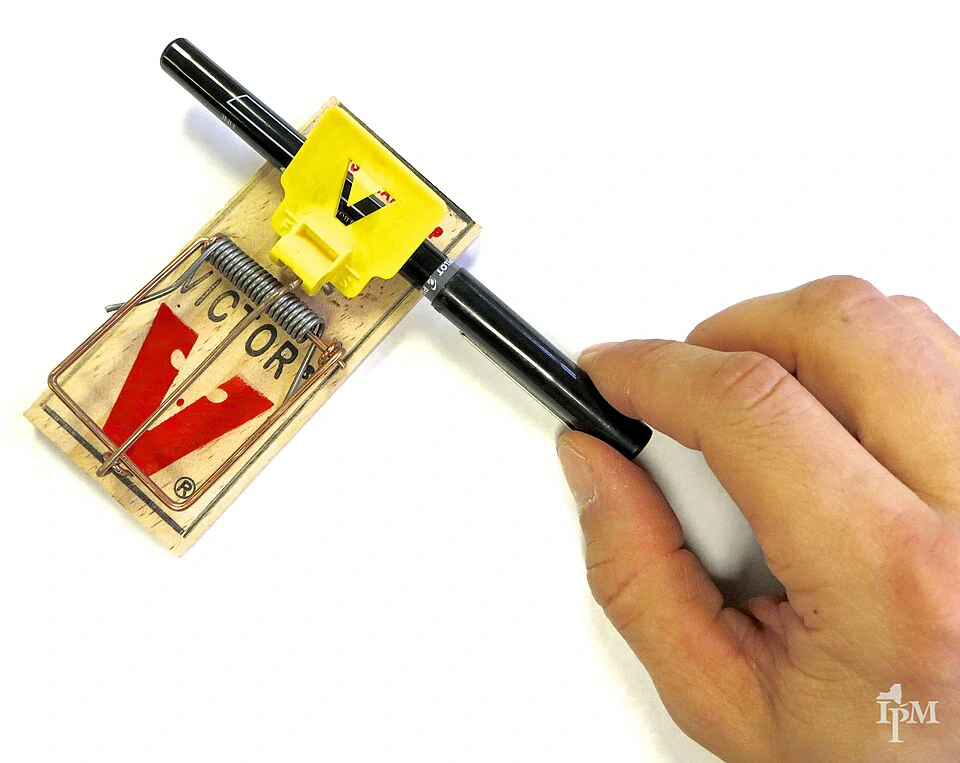
Nothing’s more frustrating than checking a trap and finding the bait gone, but no mouse. That usually means one thing: your trap isn’t sensitive enough to catch what’s setting it off.
A mouse only weighs about half an ounce to an ounce. That’s not much weight to trigger a mechanism built for slightly heavier rodents.
To make a mouse trap more sensitive, set the trigger to its lightest setting. Many traps have an F/S adjustment for this. Use a small, sticky bait like peanut butter, and place the trap along a wall so a mouse’s body brushes the trigger as it passes.
That covers the basics. But sensitivity really comes down to four things working together: the trigger setting, the bait, the placement, and how much human scent is left behind on the trap.
Why Standard Traps Miss So Many Mice
A lot of traps aren’t broken, they’re just built for an average mouse instead of the specific one in your house.
House mice usually weigh a little under an ounce. Young mice, and some individual mice, weigh even less than that.
That thin margin matters more than it sounds.
A trigger calibrated for a full-grown mouse (the kind most snap traps are designed around) can let a smaller or younger mouse walk right across it, without ever applying enough weight to fire.
Mice also aren’t clumsy about this. Their whiskers (called vibrissae) let them feel out a surface before they commit their full weight to it.
A mouse that senses something odd under its paws will often shift its weight, or approach from an angle instead of head-on. That’s exactly how a lot of bait gets stolen from a trap that’s set too firm.
Understanding the F and S Setting on Most Traps
Look closely at a classic wooden or plastic snap trap, and you might notice the letters F and S stamped near the trigger.
Most people assume these stand for fast and slow. They actually stand for firm and sensitive, according to pest industry sourcing from Target Specialty Products.
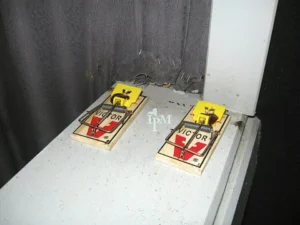
The two settings work almost the opposite of what you’d expect. S means the trigger fires with barely any pressure, sometimes just from vibration or a light touch.
F means the trigger needs more direct pressure before it releases (that setting exists for places with constant background vibration, like a warehouse with forklifts running past all day).
For a mouse in your home, you almost always want the S setting. Look for the small bar or bracket near the trigger plate, and slide it toward S.
Adjusting the Trigger Yourself When There’s No F/S Setting
Plenty of snap traps don’t have a marked F/S adjustment at all. You can still make the trigger more sensitive with a small physical tweak.
Set the trap the way you normally would, with the bar locked back, then gently press down on the trigger plate from above (light, repeated pressure works better than one hard push).
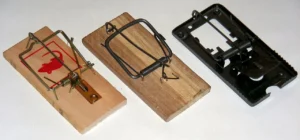
This slightly bends the metal, so less pressure is needed the next time to release it. Go slowly here, though, so you don’t overdo it.
Bend it too far, and the trap can fire on its own before a mouse ever touches it. That wastes your bait and your setup time.
Test it by lightly tapping the edge with a pencil (or anything similar and narrow). If it fires easily, you’ve got it where you want it.
Choosing Bait That Forces Real Contact With the Trigger
A trap can be perfectly sensitive and still miss, if the bait lets a mouse eat without touching the trigger at all.
Loose bait is the problem here, since a pile of seeds or a chunk of cheese is easy to nibble from the edges. A mouse can eat plenty of a loose pile without ever putting real weight on the plate underneath it.
Peanut butter solves this well. Its sticky texture forces a mouse to work at it directly, usually with its front paws braced right on the trigger.
Something about the size of a pea works best. A larger blob just gives the mouse more surface area to eat from without touching the plate underneath.
Some people take it further and glue a small piece of food, like a sunflower seed, right onto the bait cup itself. That forces the mouse to pull directly on the trigger to get the food loose.
Why Placement Affects Sensitivity Just as Much as the Trigger
A perfectly tuned trap in the wrong spot still won’t catch much, no matter how good the trigger feels when you test it by hand.
Mice travel with one side of their body brushing along a wall or edge. A trap sitting out in open floor space rarely gets touched at all, no matter how light the trigger is set.
Set your trap perpendicular to the wall, with the trigger end facing out. That way, a mouse moving along its usual path runs straight into the trigger instead of walking past it.
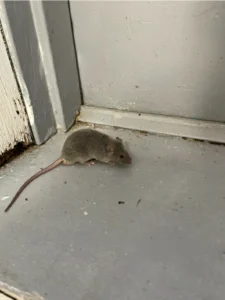
Mice also prefer dark, enclosed spots over open ones. It matches their instinct to avoid being seen by anything that might eat them.
A trap tucked near a dark corner, behind a cabinet, or inside a narrow gap along a wall tends to get noticed far faster than one sitting out in the middle of a lit room.
Does Trap Type Change What Sensitivity Even Means?
Snap traps aren’t the only option, and sensitivity works a little differently depending on which type you’re using.
A glue trap doesn’t have a trigger at all. It works through adhesive strength, so a mouse just needs to make contact with the surface for its feet to get stuck.
Sensitivity there really comes down to surface coverage and placement, not a mechanical setting.
A glue trap tucked against a wall, right in a mouse’s path, catches mice a poorly placed one never will, no matter how strong the glue is.
Multi-catch traps work differently again, using a one-way opening that draws a mouse in with bait. A spring-loaded door closes behind it once it’s inside.
These reset automatically after every catch, so a single trap can hold a dozen mice or more before you empty it.
Sensitivity here comes down to the door moving freely and the entrance sitting on an actual mouse path, rather than trigger pressure.
For most home setups though, a well-tuned snap trap still catches mice faster than either alternative.
It’s the only one that acts the instant a mouse commits its weight, rather than waiting for the mouse to fully enter or get stuck.
Why the Species of Mouse Changes What “Sensitive Enough” Means
Not every mouse getting into a North American home is the same species, and that actually matters for trigger sensitivity.
House mice, the ones most often found indoors, weigh about half an ounce as adults.
But if you’re in a more rural or wooded part of the US or Canada, you might be dealing with deer mice instead. They can weigh as little as 0.38 ounces.

That’s meaningfully lighter than a standard house mouse. A trigger set for an average house mouse can end up too firm for a smaller deer mouse to fire at all.
If your traps keep getting robbed and you’re in a wooded or rural area, it’s worth checking which species you’re actually dealing with.
Deer mice have larger eyes and ears, along with a two-toned tail that’s dark on top and white underneath. House mice tend to be a fairly uniform gray or brown all over.
If you suspect deer mice, lean toward the most sensitive trigger setting you can manage.
Keep the bait small too, since there’s less for a lighter mouse to steal without tripping the plate.
Why a Brand New Trap Sometimes Works Better
If your traps have sat untouched for days, the trap itself might not be the problem.
Mice can develop caution around new objects placed in a space they already know. Researchers call this behavior neophobia.
That caution has been documented in pest management research, and it can last several days even with good bait and a sensitive trigger.
This wariness tends to fade faster in areas mice haven’t fully settled into yet, and that’s why a brand new infestation is often easier to catch than a long-running one.
If your traps are being ignored, leave them in place a few extra days rather than moving them around every night. Constant repositioning just resets that caution over and over.
Keeping Human Scent Off the Trap
Handling a trap with bare hands can leave a scent trail mice pick up on (their sense of smell is far sharper than ours).
Wearing gloves while setting the trap, or at least washing your hands with an unscented soap first, cuts that trail down a lot.

This matters more for sensitivity than it seems like it should. A mouse cautious about a trap tends to approach slowly, testing the surface with its whiskers instead of stepping directly onto the trigger.
That slow, careful approach gives even a properly sensitive trap a worse shot at catching it. A mouse moving quickly, without hesitation, is far more likely to land its full weight on the plate.
Maintaining Sensitivity Over Time
A trap that worked well when it was new can quietly lose sensitivity after months in a garage, shed, or basement (dust and grime build up more than most people expect).
Dust, dirt, and a bit of rust can build up around the trigger’s pivot point. That adds friction, and friction makes the trigger harder to release.
A drop of light household oil (something like a general-purpose lubricant) can restore a lot of that original sensitivity, and it’s worth doing every few months.
Check the spring too. After dozens of sets and releases, a spring can weaken slightly, and that leads to a slower, less forceful snap, giving a mouse just enough time to pull back before the bar closes.
Traps that have seen heavy use for a year or more are usually worth replacing outright. At that point, no amount of adjusting really brings back the original snap.
Common Mistakes That Actually Lower Sensitivity
A few habits people think are helping actually work against them.
Using too much bait is one of the biggest culprits. A large glob of peanut butter lets a mouse eat from several angles without ever pressing the plate directly.
Setting the trigger too loose is another. Press it so lightly that it fires from a gust of air or a nearby vibration, and you’ll waste traps on false triggers instead of catching mice.
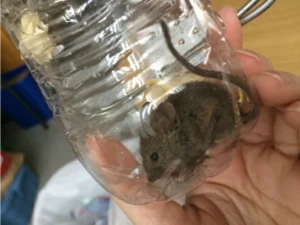
Leaving old, dried-out bait on a trap for weeks hurts your odds too. Stale bait loses its smell fast, and mice rely heavily on scent to find food in the first place.
A fresh dab every few days beats one application left to sit indefinitely.
Finally, placing a trap flat in open space instead of tight against a wall wastes even a perfectly sensitive trigger. The mouse may never walk anywhere near it.
Does a More Sensitive Trap Mean More False Triggers?
Sometimes, yes, and it’s worth knowing that tradeoff before you crank a trigger all the way down.
A trap set to fire at the lightest possible touch can occasionally trip from a draft, a falling leaf, or even the vibration of a door closing nearby. That’s a normal part of running a highly sensitive trap.
The fix isn’t to back off the sensitivity though, since that just lets more mice slip past. Instead, check your traps daily and reset anything that’s fired without a catch.
A false trigger costs you a little bait and a quick reset, nothing more.
That’s a small price for staying on the sensitive side. A missed mouse because the trigger was too firm costs you another week of the same problem.
Should You Use More Than One Trap at a Time?
Yes, and it usually pays off, especially if you’ve seen more than one mouse or a lot of droppings in one area.
A single trap, no matter how sensitive, only covers one path through a room. Mice often use multiple routes along the same wall. Setting two or three traps a few feet apart covers more ground than perfecting just one.
Pest control research generally recommends placing traps every 10 to 20 feet along walls with signs of activity, rather than relying on a single trap for an entire room.

That spacing matches how far mice usually range from their nest, so you’re covering the areas they’re most likely to actually walk through.
More traps also means more chances to catch a mouse before it learns to avoid your setup.
Remember, mice get cautious around things that suddenly appear in a space they know. If one trap gets triggered without a catch, a second nearby trap gives you another shot without needing to reset and wait.
Conclusion
Making a mouse trap more sensitive isn’t about cranking the trigger as loose as it’ll go and hoping for the best.
It’s a mix of the right trigger setting, the right bait in the right amount, and placing the trap exactly where a mouse’s own path will carry it across the plate.
Small adjustments matter more than most people expect.
Switching to the S setting, using a pea-sized dab of peanut butter, and setting the trap tight against a wall usually does more than buying a completely different trap.
If your traps have been sitting untouched, give them a few more days before assuming they’ve failed.
Between a mouse’s natural caution around new objects and a sensitivity setting that might just need a light adjustment, most sensitivity problems have a simple fix once you know where to look.

Hi, my name is Ezra Mushala, i have been interested animals all my life. I am the main author and editor here at snakeinformer.com.