
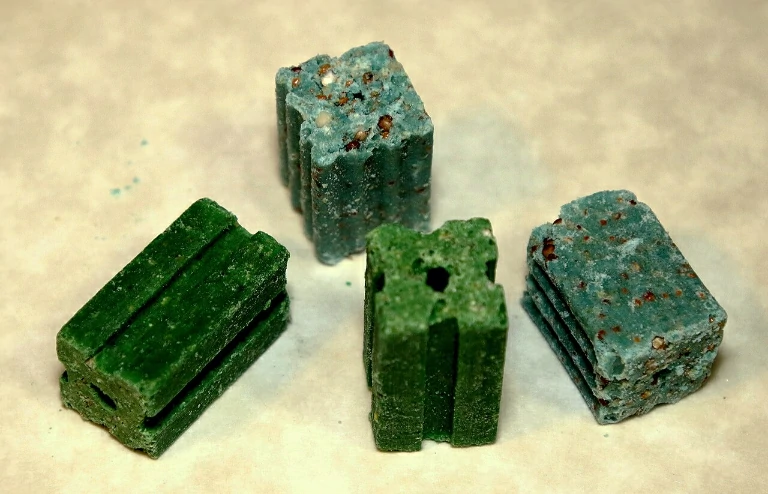
If you’ve got rats getting into your shed or garden, grabbing some rat poison probably feels like the obvious fix. It’s sold in hardware stores and garden centers all over the country.
So it’s easy to assume you can use it however you want. But the UK actually has strict rules around rat poison, and they’ve gotten tighter in the last couple of years.
So what rat poison is legal in the UK, and are there types you’re not allowed to use?
Only certain types of rat poison are legal in the UK. Difenacoum, bromadiolone, and some products containing brodifacoum are authorised for use, while other rodenticides are restricted to trained professionals. Older poisons such as strychnine and thallium are not legal for use as rat poison.
So not all rat poison is treated the same under the law. Something like a bromadiolone bait block is fine for anyone to buy at a shop.
Something like professional strength brodifacoum needs special training to even purchase.
And a few are banned completely because they’re too dangerous to animals, the environment, or people. Let’s break down exactly what’s legal, what’s not, and what’s changed recently.
What Makes a Rat Poison Legal or Illegal in the UK
In the UK, rat poison falls under something called the Biocidal Products Regulation. It’s overseen by the Health and Safety Executive, usually just called the HSE.
Basically, any poison sold to kill rodents has to be tested and approved first.
If it hasn’t gone through that process, it’s illegal to sell or use, no matter how well it might work.
This is why some older, more dangerous poisons aren’t on shelves anymore, even though people used them decades ago.
A few things decide whether a poison is legal for you to use. First is whether the active ingredient has HSE approval at all.
Second is whether it’s approved for home use, or only for professionals.
Where you’re allowed to use it also matters, since some poisons can only go indoors or right around buildings now, not out in open fields.
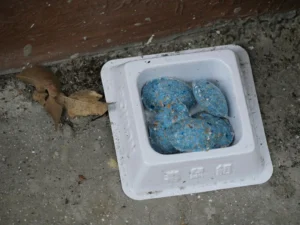
And whether you’re using a locked, tamper proof bait station matters too.
That’s a box that keeps other animals and kids away from the bait, and it’s required by law for most rodenticides.
That last point catches a lot of people off guard. Even with a fully legal poison, just scattering it loose in your garden isn’t allowed.
Which Rat Poisons Are Legal for Home Use?
Most poisons sold in UK shops are anticoagulants. That just means they work by stopping a rat’s blood from clotting properly.
Given enough of it, the rat dies from bleeding inside its body over several days. It sounds harsh, but this is how most legal rodenticides work.
Difenacoum and bromadiolone are the two most common ones you’ll find. They’re usually sold as ready to use bait blocks or pasta sachets at DIY stores.
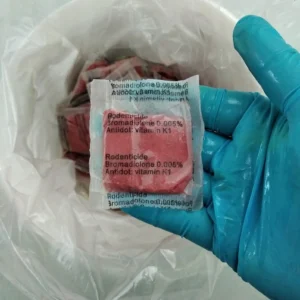
Brodifacoum is also legal for home use, and it’s actually the strongest poison available without special training. It only takes one feed to work.
That’s unlike weaker poisons that need repeat visits from the rat before they do the job.
Warfarin is an older type, and it’s weaker than the others. Rats need to eat it several times before it does the job.
It’s still legal though, and it gets used in places where rats have stopped responding well to newer poisons.
Cholecalciferol is a bit different. It’s basically a concentrated form of vitamin D3, and instead of messing with blood clotting, it causes calcium levels in the rat’s body to spike dangerously high.
This one is often used specifically against rats that have stopped responding to the anticoagulant types.
All of these have to be sold in the pack sizes and strengths approved for home use. Pest control companies can get stronger, bulkier versions of the same ingredients.
That’s the kind of product you just can’t buy off a shelf yourself.
Recent Changes to UK Rodenticide Law You Should Know About
If you’ve bought rat poison in the UK before, a few things have changed since then. It’s worth knowing about them before you buy again.
As of January 2025, difenacoum and bromadiolone can no longer be used in open outdoor areas away from buildings.
You can still use them in your house, shed, or garden right next to your home.
But you can’t use them in an open field or along a hedgerow anymore. This changed because these poisons kept showing up inside birds of prey that ate poisoned rodents.
Brodifacoum, flocoumafen, and difethialone already had this restriction in place before that. So this change basically brought all five common anticoagulants in line with each other.
Then, starting January 2026, pest control professionals buying the stronger products need to complete an approved training course first. It’s called CRRU certification.
That name comes from the group that pushed for the change, the Campaign for Responsible Rodenticide Use.
This training rule is for professionals buying professional strength products. It doesn’t apply to regular people buying the amateur use poison sold at the shop.
If you’re just dealing with rats in your own home, this rule doesn’t really touch you.
Rat Poisons That Are Illegal in the UK
Now for the other side of things. A handful of poisons that used to be common are completely banned in the UK today.
Strychnine used to be a go-to rat poison decades ago. It’s now banned across most of the UK and much of the world.
It causes brutal muscle spasms and seizures in anything that eats it, not just rats.
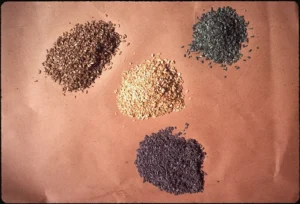
Thallium is another one that’s banned. It was once used as rat poison, and even in some old cosmetic products, but it turned out to be dangerously toxic to humans too.
Sodium fluoroacetate, sometimes called Compound 1080, is banned for general use here. It’s still used in a few countries like Australia and New Zealand.
But it’s considered too risky for regular use in the UK.
Tetramethylenedisulfotetramine, known as TETS, is banned in nearly every country, including the UK. It’s an extremely potent nerve poison.
Today it mostly shows up in criminal poisoning cases rather than legitimate pest control.
Here’s a quick table laying out where things stand:
| Poison | Legal Status in UK | Common Use |
|---|---|---|
| Difenacoum | Legal (amateur use) | Common household rat and mouse poison |
| Bromadiolone | Legal (amateur use) | Common household rat and mouse poison |
| Brodifacoum | Legal (amateur use) | Strongest poison available to the public |
| Warfarin | Legal (amateur use) | Older, weaker anticoagulant |
| Cholecalciferol | Legal (amateur use) | Used when other poisons stop working |
| Flocoumafen | Legal (professional use only) | Restricted to trained pest controllers |
| Difethialone | Legal (professional use only) | Restricted to trained pest controllers |
| Strychnine | Illegal | Banned, once used as rat poison |
| Thallium | Illegal | Banned, once used as rat poison |
| Sodium fluoroacetate (1080) | Illegal | Banned in UK, still used in a few countries |
| TETS | Illegal | Banned worldwide |
Do You Need a License to Buy or Use Rat Poison?
For regular homeowners, no, you don’t need any license to buy rat poison in the UK. Amateur use products are sold openly in supermarkets and hardware stores.
Anyone over 18 can pick one up without any paperwork.
Where it gets more complicated is the professional strength stuff. Those bulkier packs with higher concentrations are only sold to registered professionals.
And as of 2026, those professionals also need to have finished CRRU approved training in the last five years.
If you’re a farmer, gamekeeper, or run a pest control business, this training rule applies to you too.
For the average person just dealing with rats at home, buying an approved amateur product and following the label is completely legal. No license needed at all.
Rules You Still Have to Follow Even With Legal Poison
Just because a poison is legal doesn’t mean you can use it however you like. There are still rules attached, and ignoring them is actually a legal problem, not just bad practice.
You have to use a locked, tamper proof bait station for most rodenticides. It’s a small box that lets rats get in and eat the bait, but keeps out kids and pets.
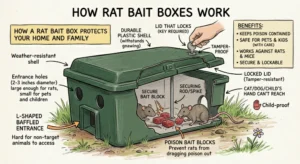
You’re not allowed to just scatter loose bait outdoors. Open baiting, where poison sits out with no container at all, is illegal in the UK.
It’s also how a lot of accidental poisonings of pets and wild animals happen in the first place.
You also have to follow the label’s rules on where the poison goes. As covered earlier, some poisons can only be used in and around buildings now, not out in open countryside.
And you’re expected to remove the bait once the rat problem is actually dealt with.
Leaving poison out forever, even inside a bait station, goes against how these products are meant to be used.
Why the UK Has Gotten Stricter About Rat Poison
If it feels like these rules have tightened up a lot lately, that’s because they have. There’s a clear reason behind it too.
Anticoagulant rodenticides don’t just disappear once a rat eats them and dies. They stay in the rat’s body for weeks sometimes.
If a bird of prey, a fox, or even a pet cat eats that poisoned rat, the poison passes along to them too.
This is called secondary poisoning, and it’s been a real problem for UK wildlife.
Studies looking at birds like barn owls and red kites have found rodenticide residue in a huge share of the birds tested.
Many of those birds were never exposed to bait directly at all.
That’s a strong sign the poison has been working its way up the food chain more than anyone would like.
The outdoor restrictions, the push for bait stations, and the new training rules are all aimed at cutting down on this kind of accidental harm.
At the same time, they still let people deal with real rat problems when they show up.
What This Means If You’re Dealing With Rats Right Now
If you’ve got a rat problem at home in the UK, here’s the practical takeaway. You can legally buy and use an approved rodenticide like difenacoum, bromadiolone, or brodifacoum.
Just place it in a proper bait station, and only use it in or around your home rather than out in an open field.
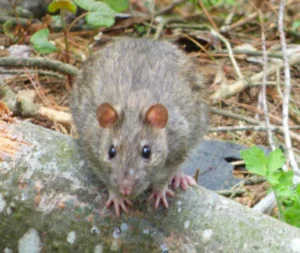
Stick to the instructions on the packaging. Keep the bait station somewhere pets and kids can’t mess with it, and remove it once you’re confident the rats are gone.
If your rat problem is bigger than a few bait stations can handle, calling a licensed pest control company might be the smarter move.
They have access to stronger products, and they know how to use them within the rules.
How UK Rules Compare to the US and Other Countries
If you’re reading this from the US or Canada, the UK’s approach might actually surprise you. The rules aren’t the same at all, and in some ways they’re almost the opposite.
In the United States, the EPA took a different path. Second generation anticoagulants like brodifacoum, bromadiolone, difenacoum, and difethialone aren’t sold to regular consumers anymore.
They’re registered for professional and commercial pest control use only.
If you walk into a US hardware store, the rat poison on the shelf is almost always a first generation anticoagulant, like warfarin or diphacinone.
In the UK, it’s the reverse. Brodifacoum, bromadiolone, and difenacoum are the everyday products sold to homeowners, while a couple of newer compounds are kept professional only.
Some individual US states have gone even further than the federal rules.
California, for example, has banned several second generation anticoagulants outright, since they were badly affecting mountain lions, bobcats, and birds of prey.
Australia takes a similar approach to the UK, sorting rodenticides by strength and limiting access to the strongest ones.
The European Union has pushed for tighter rules too, for those same secondary poisoning reasons behind the UK’s changes.
So if you’ve bought rat poison in the US or Canada before, don’t assume the same brand works the same way here.
Always check the label rather than going off what you’re used to buying back home.
What Happens If You Break These Rules?
It’s worth understanding what’s actually at stake if you ignore these rules, rather than just knowing they exist.
Using an unapproved poison, like anything containing strychnine or thallium, is a criminal offense in the UK. This falls under pesticide and biocide law, and it can lead to fines or prosecution.
Using an approved poison the wrong way, like scattering loose bait outdoors instead of using a bait station, is also against the law.
Enforcement usually comes through environmental health officers or the HSE, especially if a complaint gets made or wildlife turns up poisoned nearby.

For professionals, using rodenticides without the right training or certification once the 2026 rules are in force could mean losing the ability to legally purchase professional products at all.
For most homeowners, the real risk isn’t so much a fine. It’s the chance of accidentally poisoning a pet, a neighbor’s cat, or a wild bird because the bait wasn’t secured properly.
That’s really the reason these rules exist in the first place.
They’re not just red tape, they’re there because misused rat poison has caused real, documented harm to animals that were never the intended target.
Conclusion
Rat poison is legal in the UK, but it comes with real limits. You can’t use just any poison, and you can’t use it however you want.
Difenacoum, bromadiolone, brodifacoum, warfarin, and cholecalciferol are all fine for home use, as long as they go in a proper bait station and stay near buildings.
On the other end, poisons like strychnine, thallium, sodium fluoroacetate, and TETS are banned outright. They’re simply too dangerous to people, pets, and wildlife.
The rules have gotten stricter in recent years, mostly because these poisons kept turning up in wildlife that never even touched the bait themselves.
If you follow the label, use a proper bait station, and stick to approved products, you’re doing this the right way.
You’re also doing your part to keep the risk to other animals as low as it can be.

Hi, my name is Ezra Mushala, i have been interested animals all my life. I am the main author and editor here at snakeinformer.com.