
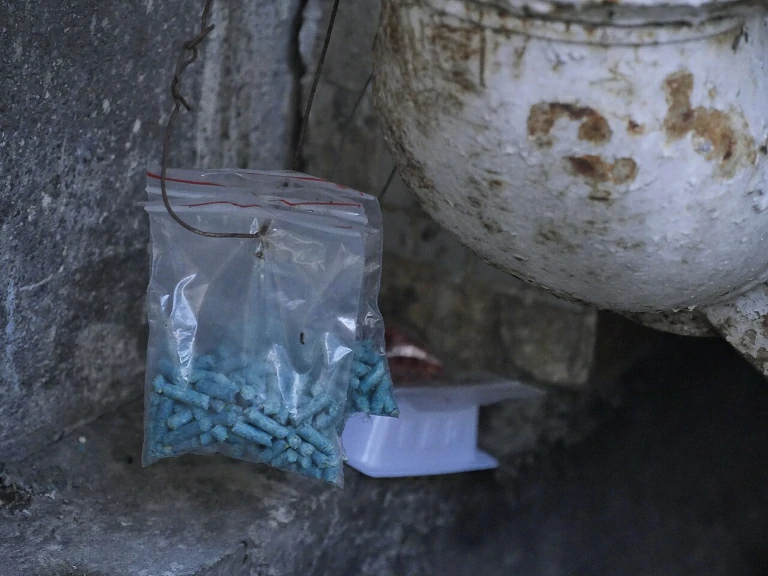
Rat poison usually gets talked about like it’s its own separate thing, sitting somewhere between household cleaning supplies and something you’d only find at a hardware store.
It’s tucked away in its own category that doesn’t quite match anything else under your sink.
That framing leaves out an important detail about how it’s actually classified and regulated. So is rat poison a pesticide?
Yes, rat poison is a pesticide. Specifically, it falls under a category called a rodenticide, which is a type of pesticide designed to kill rodents like rats and mice. In the US, rat poison is regulated under the same federal law that governs insecticides, herbicides, and fungicides.
This isn’t just a technical label with no real consequences. Because rat poison is legally a pesticide, it’s subject to a whole framework of testing, labeling, and safety rules.
That framework shapes what you’re actually allowed to buy and how you’re expected to use it, whether you’re buying a single bait station or managing a much larger rodent problem.
This question tends to come up when people are filling out paperwork that asks about pesticide use, like a home inspection form or a lease agreement.
They pause because rat poison doesn’t immediately come to mind as a pesticide the way bug spray does.
What the Word Pesticide Actually Means
A lot of people hear “pesticide” and picture a truck spraying crops or a can of bug spray, but the actual definition is much broader than that.
Under the Federal Insecticide, Fungicide, and Rodenticide Act, the main US law governing this category, a pesticide is any substance intended for preventing, destroying, repelling, or reducing any pest. That definition covers insects, weeds, fungi, and rodents alike.
Notice that rodenticides are literally named in the title of the law itself.
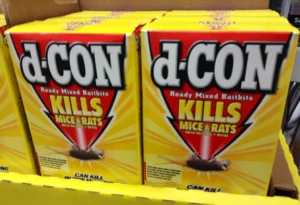
The Federal Insecticide, Fungicide, and Rodenticide Act, usually shortened to FIFRA, treats rat and mouse poison as one of its three core categories from the very start.
The law defines a pest broadly too, including rodents, insects, weeds, and fungi, along with other organisms that mess with human activity, health, or property.
A rat chewing through your walls or contaminating stored food fits that definition just as clearly as a beetle in a cornfield does.
It’s worth noting that this legal definition doesn’t care about scale.
A single mouse trap in an apartment kitchen and a large-scale agricultural rodent control program both fall under the exact same legal category, even though the situations look completely different day to day.
Why Rodenticide Is Its Own Word
Pesticide is really an umbrella term, and it gets divided into more specific categories based on which kind of pest a product is designed to target.
The pattern shows up clearly once you notice it. Insecticides target insects. Herbicides target weeds and unwanted plants.
Fungicides target fungi. Rodenticides target rodents like rats, mice, and sometimes gophers.
The EPA lists rodenticides directly alongside these other categories on its own official page describing types of pesticide ingredients, right next to insecticides, molluscicides, and nematicides.
It’s treated as a standard, established branch of the pesticide family, not some kind of edge case or exception.
This naming pattern goes back to Latin, where the suffix “-cide” means to kill.
An insecticide kills insects, a fungicide kills fungi, and a rodenticide kills rodents. Rat poison isn’t separate from that naming convention, it’s a textbook example of it.
The same pattern extends further than most people realize. Molluscicides target snails and slugs, nematicides target microscopic worm-like organisms in soil, and avicides target birds.
Each of these is its own narrow category under the same broad pesticide umbrella. Rodenticides sit right alongside them as one of the more commonly recognized branches, used in an average household about as often as insecticides and herbicides are.
How Rat Poison Gets Regulated as a Pesticide
Since rat poison legally counts as a pesticide, it has to go through the same basic regulatory process that any other pesticide does before it can be sold.
In the US, the EPA requires all pesticides, including rodenticides, to be registered before they can be distributed or sold. Registration involves reviewing safety data on how the product affects humans, pets, wildlife, and the environment.
This is why rat poison packaging includes an EPA registration number, usually printed in small text near the ingredient list. That number is the product’s official record with the agency, and it means the formula has gone through federal review.
The EPA also has the authority to restrict how certain rodenticides can be sold. Some second generation anticoagulants are now limited to professional and agricultural use, meaning general consumers can’t buy them directly off a store shelf.
This is the same kind of restricted-use classification the EPA applies to certain agricultural insecticides and herbicides too.
This registration process didn’t always exist in its current form. FIFRA was first passed back in 1947, originally focused mainly on making sure pesticide labeling was honest and accurate.
Oversight moved to the newly created EPA in 1970. The law has been amended many times since then to add stronger safety and environmental review requirements, including the framework that governs rodenticides today.
Does This Classification Affect How You’re Supposed to Use It?
Yes, in a very direct way. Because rat poison is legally a pesticide, the label instructions aren’t just suggestions, they’re part of a legally binding document.
Under FIFRA, using a registered pesticide in a way that goes against its label directions is actually a violation of federal law, not just bad practice. This applies to rat poison exactly the same way it applies to weed killer or bug spray.
This is why rat poison labels are so specific about where you can place bait, how you’re supposed to store it, and what to do if there’s accidental exposure. These aren’t arbitrary suggestions, they’re requirements tied to the same registration process that approved the product for sale in the first place.
It also explains why certain rodenticide products can only be applied by a licensed pest control professional rather than sold to the general public. That’s the restricted-use pesticide system at work, the same system that limits access to certain stronger agricultural chemicals.
This legal weight also applies if something goes wrong.
If a pet or child is accidentally exposed to a rat poison that was stored or applied against its label instructions, that detail can matter for liability and insurance purposes.
It’s not just a safety lesson learned the hard way.
What This Means for Bait Stations and Packaging
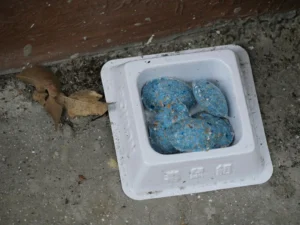
If you’ve ever wondered why rat poison typically comes in tamper-resistant plastic bait stations rather than loose piles of pellets, the pesticide classification is part of the answer.
Because rodenticides are pesticides subject to EPA review, manufacturers have to demonstrate that their products can be used with a reasonable level of safety for children, pets, and non-target wildlife. Tamper-resistant packaging is a direct response to that requirement.
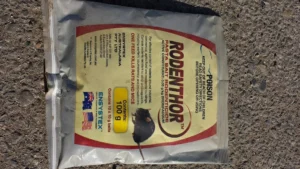
This is also why you’ll often see warnings on rat poison packaging about keeping products away from waterways. Pesticide regulation considers environmental impact, not just human safety, as part of the approval process.
This environmental angle has actually driven a lot of the more recent changes to rodenticide regulation.
Concerns about anticoagulants harming birds of prey and other wildlife that eat poisoned rodents, a phenomenon called secondary poisoning, have led to tighter restrictions on the strongest formulas in several states and countries.
Rat Poison Compared to Other Common Pesticides
Putting rat poison side by side with more familiar pesticides makes the classification easier to picture.
Insect spray you’d use on ants or roaches is an insecticide, built to kill or repel insects specifically. Weed killer for your lawn is an herbicide, built to kill unwanted plants.
A fungicide treats mold or fungal disease on plants. Rat poison, a rodenticide, follows that exact same structural pattern, just aimed at a different kind of pest.
All four of these categories share a regulatory home under FIFRA in the US. That means they share overlapping rules around registration, labeling, and restricted use, even though the actual chemistry inside each product looks completely different.
This is part of why you’ll sometimes see rat poison sold in the same store aisle as insect and weed control products.
From a retail and regulatory standpoint, they’re all classified under the same broad umbrella.
Does Being a Pesticide Make Rat Poison More Dangerous Than People Think?
Not necessarily. The pesticide classification is about legal and regulatory category, not automatically about the severity of danger.
Some pesticides, like certain agricultural fungicides, are considered quite low risk under typical use. Others, like restricted-use insecticides or some rodenticides, carry more serious safety considerations, depending heavily on the specific active ingredient involved.
Being a pesticide just means a product is designed to control a living pest and gets regulated accordingly. It doesn’t mean the product automatically falls into any one danger tier.
That said, rodenticides do carry real risks that are worth taking seriously. That’s exactly why the registration and labeling system exists in the first place.
Knowing that rat poison is legally a pesticide is actually useful information. It tells you the safety data and label instructions have been reviewed by federal regulators rather than just written by the manufacturer with no oversight.
It helps to think of the pesticide classification less like a warning label and more like a quality and oversight system.
A registered pesticide, whatever category it falls into, has been through a formal review process. An unregistered substance someone mixes up at home and calls “rat poison” has been through no review at all, which is actually the more concerning situation from a safety standpoint.
Conclusion
Rat poison is a pesticide, specifically a rodenticide, and this isn’t just a technicality. It’s directly named in the same federal law that regulates insecticides, herbicides, and fungicides, and it goes through the same EPA registration process before it can legally be sold.
That classification shapes everything from the tamper-resistant packaging you see on store shelves to the legally binding label instructions printed on every bait station. It also explains why certain stronger formulas are restricted to licensed professionals rather than sold to the general public.
Understanding rat poison as a pesticide, rather than as some separate, less regulated household product, is genuinely useful. It’s a reminder that the same care you’d bring to any other pesticide in your home, careful storage, following label instructions, and washing your hands afterward, applies here too.
The next time you set out a bait station or hire someone to do it for you, it’s worth remembering what you’re actually using.
It’s a federally reviewed pesticide, with all the labeling, testing, and safety expectations that come with that category, not just a generic box of poison picked up off a shelf.

Hi, my name is Ezra Mushala, i have been interested animals all my life. I am the main author and editor here at snakeinformer.com.