
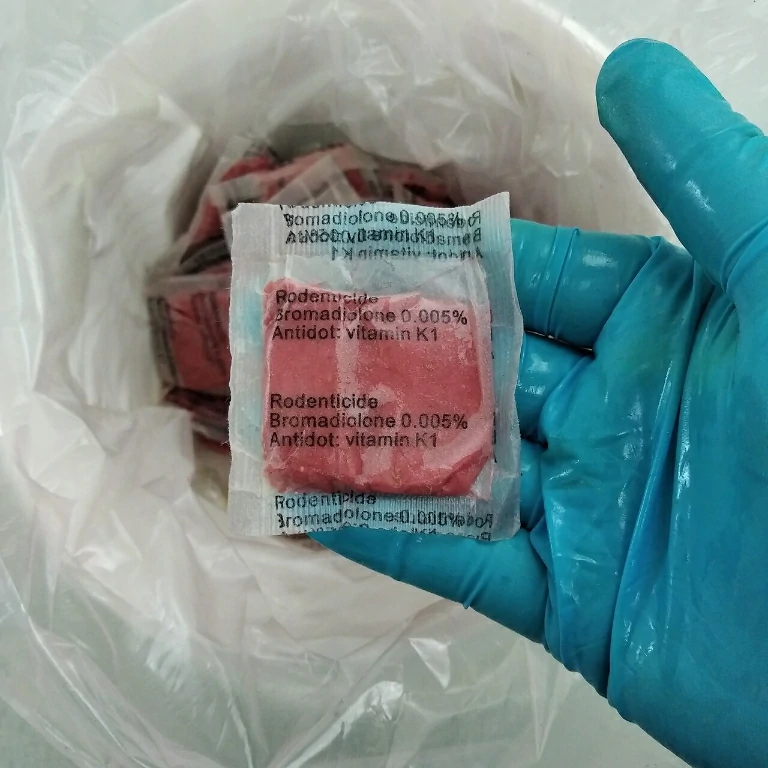
If you’ve ever set out rat poison, cleaned up an old bait station, or handled a bag of pellets while moving boxes in the garage, you’ve probably wondered about this at some point.
Skin contact happens more often than people realize, and it’s natural to want to know what your body actually does with that exposure. So can rat poison be absorbed through the skin?
Yes, rat poison can be absorbed through the skin, and this has actually been confirmed by research on the exact active ingredients used in most household products. That said, absorption through healthy, unbroken skin is slow and usually only becomes a real concern with repeated or long lasting contact.
Your skin isn’t a perfect wall. It’s more like a slow filter that lets a small amount of certain chemicals through over time.
Rat poison happens to be one of the chemicals that can get through it. How much gets in, and how fast, depends on a handful of specific factors worth understanding.
Why Skin Isn’t Fully Waterproof to Chemicals
Your skin’s outer layer is called the stratum corneum. The Centers for Disease Control and Prevention describes it as the main barrier that keeps most chemicals from passing into your body.
Think of the stratum corneum less like a solid wall and more like a brick and mortar structure. The “bricks” are dead skin cells, and the “mortar” is a layer of fats and oils that holds them together.
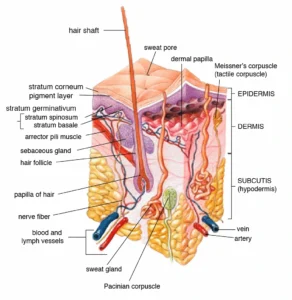
This mortar layer is actually the weak point for certain chemicals. Substances that dissolve well in fat, called lipophilic compounds, can slip through that mortar more easily than substances that don’t.
This matters a lot here, because the active ingredients in most rat poison, a group of chemicals built around coumarin, are lipophilic. Their chemical structure lets them move through that fatty layer more easily than a lot of other household chemicals would.
This isn’t unique to rat poison, either. Plenty of everyday things work the same way for the same reason.
Nicotine patches, certain pain relief gels, and some hormone medications are designed specifically to use this fat-soluble pathway to get into your bloodstream through the skin on purpose.
Rat poison wasn’t designed to do this, but it shares a similar chemical trait that lets it happen anyway.
What the Research Actually Shows
This isn’t just a theory. Studies specifically testing coumarin compounds (the chemical backbone shared by warfarin, brodifacoum, and other common rat poison ingredients) on human and animal skin have measured real absorption.
One set of studies found that when a coumarin compound was applied to human and rat skin, a majority of it was eventually absorbed rather than staying on the surface. Most of that absorption happened within the first six hours of contact.
The World Health Organization has also stated plainly that anticoagulant rodenticides are readily absorbed from the gut, but can also be absorbed through the skin and the lungs if inhaled as dust.
This lines up with what pest control labels already tell you. Brodifacoum product labels specifically warn against skin contact, and that warning exists because regulators have seen the absorption data, not just as a generic caution.
There’s an important nuance in that research worth pointing out, though. Most of these studies applied the pure chemical compound directly to skin in a lab setting, at concentrations and durations well beyond what a typical homeowner would ever come across.
Real world exposure usually looks different. It’s typically a lower concentration and a shorter contact time, often through a barrier like gloves or clothing.
All of that lowers the actual absorbed dose well below what a lab study is designed to measure.
How Much Actually Gets Into Your Body?
Confirming that absorption happens is different from saying it happens quickly or in large amounts. The actual dose that gets into your bloodstream from casual contact tends to be small.
A few things determine how much makes it through. The first is contact time.
A few seconds of contact, followed by washing, gives the chemical very little time to move through your skin’s barrier.

Hours of continuous contact is a completely different situation. This is part of why label warnings focus so heavily on removing contaminated clothing right away rather than just rinsing over it.
Surface area matters too. Getting a small amount on one fingertip is a much smaller exposure than having it spread across your palms and forearms.
Concentration plays a role as well. Most household rat poison bait contains a very small percentage of active ingredient, often less than half a percent by weight.
This is part of why typical consumer contact carries lower risk than concentrated professional-grade product would.
Temperature and moisture can also change things slightly. Warm, sweaty skin tends to absorb chemicals a bit faster than cool, dry skin, since heat and moisture can soften the outer barrier layer somewhat.
This is a minor factor compared to contact time and concentration, but it’s part of the full picture.
Does Skin Thickness Change How Much Gets Absorbed?
Yes, and this is something the CDC specifically points out when discussing chemical absorption through skin in general, not just for rat poison.
Skin thickness varies a lot across your body. Your palms and the soles of your feet have some of the thickest skin you have, which makes them more resistant to absorption.
Thinner skin, like on your wrists, the back of your hands, your eyelids, or your face, allows chemicals through more easily. This is exactly why product labels warn so specifically about keeping bait away from your eyes and face.
Broken skin removes the barrier almost entirely. A cut, scrape, blister, or even a patch of eczema gives the chemical a much more direct route into your bloodstream, since the stratum corneum simply isn’t intact there to slow it down.
Age and skin condition matter too. Older adults tend to have thinner, drier skin, and young children have skin that’s still developing and generally more permeable than an adult’s.
There’s a reason children’s rat poison exposures get treated with more caution across the board, and it isn’t only because kids are more likely to put things in their mouths. Their skin genuinely behaves differently than an adult’s does when it comes to absorbing chemicals.
Does the Type of Rat Poison Change the Answer?
Somewhat, yes. Not every rodenticide works through the same chemical pathway, and that affects how skin absorption plays into the overall picture.
First generation anticoagulants, like warfarin, were the earliest widely used rat poisons and require a rodent to eat them multiple times to be effective. These are generally considered less potent overall, including through skin contact.
Second generation anticoagulants, like brodifacoum, bromadiolone, difenacoum, and difethialone, are far more common in today’s consumer products. They’re more potent per dose and stay in the body’s tissue much longer than older formulas.

Because these newer compounds are stronger overall, the same principle of skin absorption applies to them. Their higher potency means even a similar level of skin contact carries a bit more relative concern than it would with an older, first generation product.
Non-anticoagulant rodenticides, like bromethalin or zinc phosphide, work through entirely different mechanisms in the body.
These are less common in typical household bait but are worth knowing about if you’re using a professional-grade product. Their absorption and toxicity profile is different from the anticoagulants most people are used to.
Bromethalin, for example, affects the nervous system rather than blood clotting, and its symptoms and timeline look completely different from an anticoagulant exposure.
If you’re ever unsure which type of product you’re dealing with, the active ingredient is always listed on the label, and it’s worth checking before you assume you know what you’re handling.
What Symptoms Would Skin Absorption Actually Cause?
This is where it helps to separate local skin reactions from actual systemic absorption, since they’re not the same thing.
Local irritation, like redness, itching, or a mild rash where the product touched your skin, is common and usually not a sign that meaningful absorption has happened. It’s often more of a reaction to inactive ingredients like dyes or wax in the bait.
Actual systemic absorption, meaning enough got into your bloodstream to affect how your blood clots, is a different story and requires a lot more exposure than a quick touch.
If it does happen, the National Pesticide Information Center notes that signs in people include sudden, unexplained bleeding from the nose, gums, or skin. Unusual bruising that shows up without an obvious cause is another warning sign.
These symptoms take time to show up, often days, since your body has a reserve of clotting factors that has to run low before you’d notice anything. This delay is exactly why doctors ask about exposure history going back a week or more.
It’s worth pointing out how different this timeline is from something like a chemical burn or an acid splash, where you’d know something happened right away.
Anticoagulant exposure is quiet by comparison, which is honestly part of what makes it worth taking seriously even when nothing seems wrong in the moment.
Who Faces a Higher Risk From Skin Absorption?
Not everyone absorbs chemicals through their skin at the same rate, and a few groups deserve extra caution around rat poison specifically.
Young children have thinner skin relative to their body size, plus a much smaller total blood volume. The same amount of exposure simply counts for more in a small child than it would in an adult.
People with any kind of broken or compromised skin, whether from a cut, a rash, eczema, or psoriasis, lose a meaningful part of their natural barrier. They end up absorbing more than someone with healthy, intact skin would.
Pest control workers and anyone who handles rat poison regularly as part of their job face a different kind of risk, cumulative exposure over time rather than a single incident.
This is exactly why OSHA guidance for pest management professionals calls for chemical-resistant gloves as standard practice.
People already on blood thinning medication should also be cautious, since anticoagulant rat poison affects the same clotting pathway that their medication does, and the two together could compound more than expected.
Pregnant women are generally advised to minimize handling rat poison as well.
While the strongest evidence for reproductive effects comes from animal studies rather than large human studies, medical guidance generally leans toward caution when there’s a reasonable alternative.
That might mean having someone else handle it, or simply wearing gloves without exception.
How Skin Absorption Compares to Other Ways Rat Poison Gets Into the Body
Skin contact isn’t the only way rat poison can enter your body, and it isn’t the fastest either. Understanding where it fits compared to the other routes helps put the actual risk in perspective.
Swallowing rat poison is by far the most direct and efficient route. Your digestive system is built to absorb things quickly, and anticoagulants are described as readily absorbed from the gut, generally within a few hours of ingestion.
Breathing in rat poison dust is the second most direct route. Your lungs have an enormous surface area and very thin tissue separating air from your bloodstream, so inhaled dust or powder gets absorbed fast, similar in speed to swallowing it.
Skin contact is the slowest and least efficient of the three main routes. It requires the chemical to work through several layers of protective tissue before reaching your bloodstream.
That’s exactly why brief skin contact carries meaningfully lower risk than eating or inhaling the same amount would.
This ranking is part of why safety guidance places so much emphasis on avoiding hand to mouth contact after touching rat poison. The real danger usually isn’t the skin contact itself, it’s what happens if that residue makes its way from your hands into your mouth, nose, or eyes afterward.
How to Reduce Skin Absorption Risk in Practice
Since the science says absorption is real but slow, the practical response is simple: shorten contact time and reduce how often it happens.
Wear gloves anytime you’re handling bait directly, whether you’re setting it out, refilling a station, or cleaning up. This single habit removes almost the entire pathway for skin absorption before it can start.
If contact does happen, wash the area with soap and water as soon as you reasonably can rather than waiting. Since most absorption happens over hours rather than seconds, getting it off quickly meaningfully lowers your exposure.
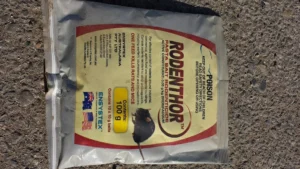
Avoid letting bait sit against your skin under clothing or gloves for an extended period. If you spill some on your sleeve or pant leg, change out of that clothing rather than continuing to wear it.
Use enclosed bait stations instead of loose pellets or blocks whenever that’s an option. These are specifically designed to keep the product contained so your skin never has to make direct contact with it in the first place.
Pay attention to what kind of gloves you’re using, too. Thin dish gloves offer some protection, but chemical-resistant gloves like nitrile give a more reliable barrier for extended handling.
That’s why OSHA guidance for pest management professionals specifically calls for chemical-resistant gloves rather than just any glove.
Store bait away from areas where you’re likely to brush against it accidentally, like low shelves near where you keep gardening tools or bags you reach into without looking. A little bit of thought about placement goes a long way toward avoiding contact you didn’t even mean to have.
Conclusion
Rat poison can be absorbed through the skin, and this isn’t speculation, it’s backed by real research on the same chemical compounds found in common household products.
Still, that absorption tends to be slow and requires a meaningful amount of contact time before it becomes a real concern.
A quick touch followed by washing your hands carries low risk for most healthy adults. The situations that matter more are prolonged contact, broken skin, thin or sensitive areas like your face and wrists, and repeated exposure over time.
Wearing gloves and washing up promptly closes off almost the entire pathway this article has walked through.
If you ever have a meaningful exposure and aren’t sure whether it’s serious, Poison Control is available around the clock and would rather answer a question early than treat a problem later.

Hi, my name is Ezra Mushala, i have been interested animals all my life. I am the main author and editor here at snakeinformer.com.