
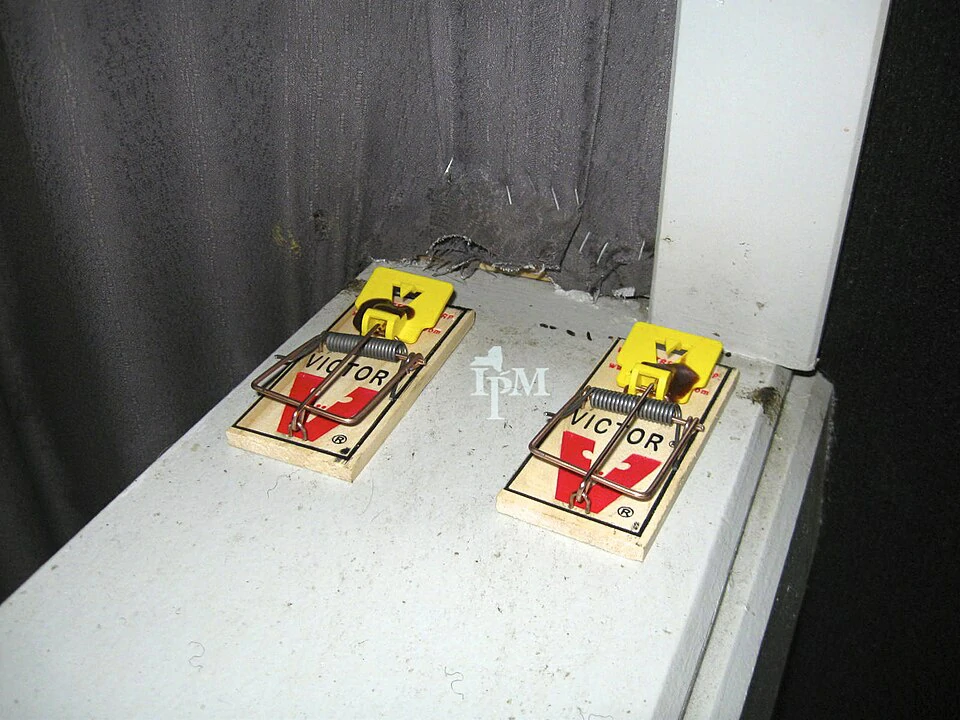
Rat snap traps have been around for over a century, and they’re still one of the most popular ways to deal with rat problems.
If you’ve never actually examined how one of these traps functions, you might be curious about the mechanics that make them so effective at catching rats quickly. How does a rat snap trap work?
A rat snap trap works by using a spring-loaded metal bar that’s held in place under high tension. When a rat steps on the trigger plate or disturbs the bait, it releases the holding mechanism, and the spring instantly pulls the metal bar down with enough force to kill the rat by striking its head or neck.
The beauty of a snap trap is in its simplicity. There are no batteries, no complicated electronics, just basic mechanical principles that create a fast, powerful strike when triggered.
The Basic Components and Their Functions
Every rat snap trap has the same basic parts working together to create a lethal mechanism.
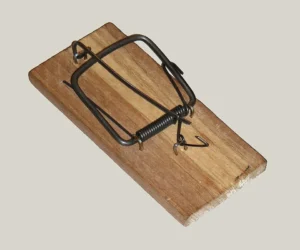
The base is the foundation. It’s usually a rectangular piece of wood, plastic, or metal about 6-8 inches long. This base holds all the other parts in place and provides stability when the trap is set.
The kill bar is a thick metal wire shaped like a U or sometimes straight across. This is the part that actually strikes the rat. It’s attached to a heavy-duty spring at one end and swings down across the base when released.
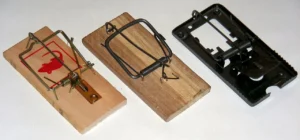
The spring provides the power. It’s a strong coiled metal spring that stores a lot of energy when it’s compressed. For rat traps (as opposed to mouse traps), this spring is significantly stronger because it needs to generate enough force to kill a much larger animal instantly.
The trigger plate is a small metal or plastic platform in the center of the trap where you place bait. This plate is connected to the release mechanism. When a rat steps on it or pulls at the bait, it moves slightly and triggers the trap.
The holding bar (also called the staple or hammer) is a small wire or metal piece that holds the kill bar in the set position. When the trigger activates, this releases and the kill bar snaps down.
How You Set the Trap
Before the trap can work, you need to set it up correctly, and this process explains a lot about how it functions.
First, you pull the kill bar back away from the base. This compresses the spring and stores energy. You’re basically loading the trap with potential energy that will be released when triggered.
As you hold the kill bar back, you also pull the holding bar over it. This holding bar clips or hooks onto a small notch on the trigger plate.
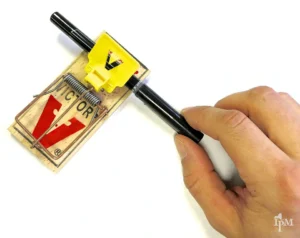
This creates a very delicate balance where the holding bar is keeping the kill bar in place, but the trigger plate is what’s keeping the holding bar in position.
You place bait on the trigger plate. The bait needs to be secured enough that the rat has to press down or tug at it, which will move the trigger plate even slightly.
The whole system is now under tension. The spring is compressed, the kill bar wants to snap forward, and the only thing stopping it is the holding bar, which is itself only held by the trigger plate. It’s like a loaded gun with a hair trigger.
What Happens When a Rat Triggers It
The actual mechanism of catching a rat happens in a fraction of a second.
A rat approaches the trap, attracted by the scent of the bait. Rats have an excellent sense of smell and can detect peanut butter, bacon, or other baits from several feet away.
The rat steps onto the base and reaches for the bait on the trigger plate. As it pulls at the bait or steps directly on the plate, the plate moves down even just a tiny bit.
This small movement is enough to release the holding bar from its notch. The holding bar immediately swings out of position because it was under pressure from the kill bar trying to spring forward.
The instant the holding bar releases, the kill bar snaps forward with tremendous force. The spring releases all its stored energy at once, pulling the kill bar down in a circular arc across the base.
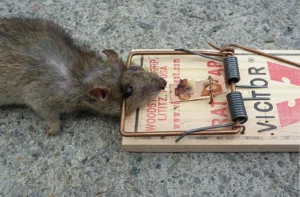
The bar strikes the rat with enough force to cause instant death (when it works correctly). The impact is focused on the rat’s head or neck area, causing immediate trauma to the brain or breaking the neck.
The entire sequence from trigger to strike takes less than a tenth of a second. Rats have quick reflexes, but they’re not quick enough to escape once they’ve actually triggered the mechanism.
The Physics Behind the Trap
Understanding the physics helps explain why these simple devices are so effective.
The trap uses potential energy storage. When you compress the spring by pulling back the kill bar, you’re storing mechanical energy.
The tighter the spring is wound, the more energy is stored. This is why rat traps have stronger springs than mouse traps. They need more stored energy to kill a larger animal.
When the trap releases, that potential energy converts to kinetic energy (movement energy) instantly. The spring pulls the kill bar forward, accelerating it to high speed in a very short distance.
The force of impact depends on the mass of the kill bar and its velocity when it hits the rat. Even though the kill bar is relatively light (just a metal wire), it’s moving so fast that it delivers significant force.
This is the same principle as a hammer. The hammer head isn’t that heavy, but when swung quickly, it delivers a powerful blow.
The arc of the kill bar’s movement is important too. It swings in a circular path, which means it’s accelerating the entire time it’s moving from the set position to the closed position.
The fastest speed (and strongest impact) happens right at the end of the arc, which is exactly where the rat’s head should be if the trap is positioned correctly.
Why the Trigger Mechanism Is So Sensitive
The trigger system is designed to be extremely sensitive, and there’s a good reason for that.
Rats are careful animals. They don’t just run up and grab food without any caution. They test things with their paws, sniff carefully, and might only put slight pressure on a surface before committing fully.
The trigger needs to activate from even light pressure. If a rat just touches the bait with its nose or barely steps on the plate, that should be enough to set off the trap. This is why the holding bar sits in such a delicate position. It’s balanced on a knife edge, basically.
The sensitivity also means the trap can catch rats approaching from different angles. Whether the rat steps on one side of the trigger plate or the other, whether it pulls the bait from above or from the side, any movement of that plate should release the mechanism.
This sensitivity is why you need to be very careful when setting these traps. It’s easy to accidentally trigger them while you’re handling them, which is painful (and can break fingers on rat-sized traps).
How Trap Design Affects Success
Not all snap traps are designed exactly the same, and these differences affect how well they work.
Traditional wooden traps have been around for over 100 years. The wood provides a good stable base and it’s cheap to manufacture. However, wood can absorb blood and fluids, which makes cleanup unpleasant and can create odors that might warn other rats.
Plastic base traps are newer. They’re easier to clean and don’t absorb fluids. Many plastic traps also have improved trigger mechanisms that are more sensitive or have better holding bars that don’t slip.
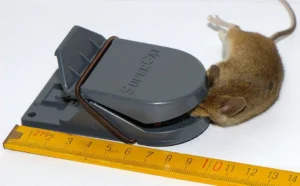
The shape of the kill bar matters. Some traps use a straight bar, while others use a U-shaped bar. The U-shape provides a wider strike zone and is less likely to miss the rat entirely if it’s not positioned perfectly.
Some modern traps have teeth or ridges on the kill bar. These help grip the rat and prevent it from escaping if the bar doesn’t hit a vital area immediately. They also ensure the bar doesn’t bounce back up after the initial strike.
The size and placement of the trigger plate varies too. Larger trigger plates are easier for rats to activate but might also be triggered by vibrations or other non-target disturbances. Smaller plates are more precise but require the rat to step directly on them.
Why Spring Strength Is Critical
The spring is really the heart of the trap, and its strength determines whether the trap works humanely.
A proper rat trap spring should require significant effort to compress. If you can easily pull the kill bar back with one finger, the spring is too weak for rats. You should need to use real force and possibly both hands.
Weak springs cause several problems. The kill bar moves slower, giving rats a chance to react and potentially escape. Even if the bar hits the rat, it might not have enough force to kill instantly, just injuring the rat instead.
Over time, springs lose their tension. Metal fatigue happens after many compression and release cycles. This is why traps that have been used 10 or 15 times aren’t as effective as new traps. The spring just doesn’t have the same power anymore.
Temperature affects springs too. In very cold conditions (like an unheated garage in winter), metal springs can become more brittle and less flexible. In hot conditions, they might become slightly softer. These effects are usually minor but can matter in extreme cases.
Quality traps use better spring steel that’s properly tempered. The metal is heat-treated to give it the right balance of stiffness and flexibility. Cheap traps often use inferior springs that are either too weak or that break after a few uses.
The Importance of Proper Bait Placement
How you place bait on the trigger plate directly affects how the trap functions.
If you put too much bait on the plate, a rat can lick it off without putting enough pressure on the trigger. The rat gets a free meal and you get nothing. The bait needs to be secured so the rat has to work for it.
Peanut butter works well because you can smear a small amount directly on the trigger plate. When a rat tries to lick it off, it has to press its nose or paw against the plate, which triggers the mechanism.
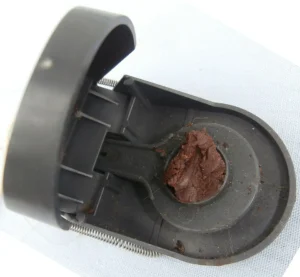
Some people tie the bait to the trigger with string or wire. This forces the rat to pull at the bait, which definitely moves the trigger. Dried fruit, nuts, or small pieces of food can be secured this way.
The amount matters too. A small dab (about pea-sized) is perfect. It’s enough to attract the rat’s attention but not so much that the rat can get full without fully engaging with the trap.
Fresh bait works better than old bait. Rats have an excellent sense of smell and they’re attracted to fresh food. Old bait that’s been sitting for days loses its scent and becomes less attractive.
Why Trap Placement Affects How It Works
Even a perfectly functioning trap won’t catch rats if it’s not positioned correctly.
Rats travel along walls, not out in the open. They use their whiskers to sense the wall and feel safer with a solid surface on one side. This means your trap needs to be against a wall.
The trap should be perpendicular to the wall, with the trigger end (where the bait is) facing the wall. This forces the rat to walk over the trigger as it travels along its normal path. If the trap is parallel to the wall, the rat might walk beside it instead of over it.
The trap needs to be on a flat, stable surface. If the trap rocks or tilts when the rat steps on it, the kill bar might not strike at the right angle. A wobbly trap can also scare the rat away before it triggers.
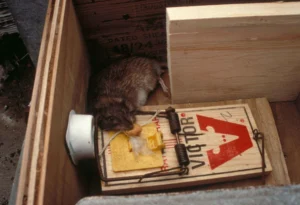
The location along the wall matters too. Place traps where you see signs of rat activity like droppings, grease marks, or gnaw marks. These signs tell you where rats are actually traveling. A trap in the perfect position but in the wrong room won’t catch anything.
Common Reasons Traps Don’t Work
Understanding how the trap works helps you troubleshoot when it doesn’t.
If the trap keeps getting triggered without catching anything, the rat is probably approaching from the side or rear instead of over the trigger. Adjust the trap’s position so the rat has to go over the trigger to reach the bait.
If the bait disappears without the trap triggering, the rat is stealing the bait without activating the mechanism. Secure the bait better or use stickier bait like peanut butter.
If the trap catches rats but doesn’t kill them, the spring is too weak or the trap is too small for the rat. Buy heavier-duty traps with stronger springs.
If rats avoid the trap entirely, they might be suspicious of new objects in their environment. Leave the trap in place but unset for a few days so they get used to seeing it. Then set it once they’re comfortable with its presence.
Conclusion
A rat snap trap works through a simple but effective mechanical system. You compress a strong spring by pulling back a metal kill bar, which is then held in place by a delicate holding mechanism connected to a trigger plate.
When a rat disturbs the bait or steps on the trigger, it releases the holding bar, and the spring instantly pulls the kill bar forward with enough force to kill the rat by striking its head or neck.
The key to the trap’s effectiveness is the combination of stored energy in the compressed spring, the sensitive trigger mechanism that releases from even light pressure, and the fast acceleration of the kill bar.
When the trap is properly positioned and uses a strong enough spring, this mechanism delivers an instant, humane kill.
Understanding how the trap works helps you use it more effectively. You know why proper placement matters, why fresh bait needs to be secured correctly, and why you need quality traps with strong springs.
This knowledge turns a simple mechanical device into an effective tool for solving your rat problem.

Hi, my name is Ezra Mushala, i have been interested animals all my life. I am the main author and editor here at snakeinformer.com.