
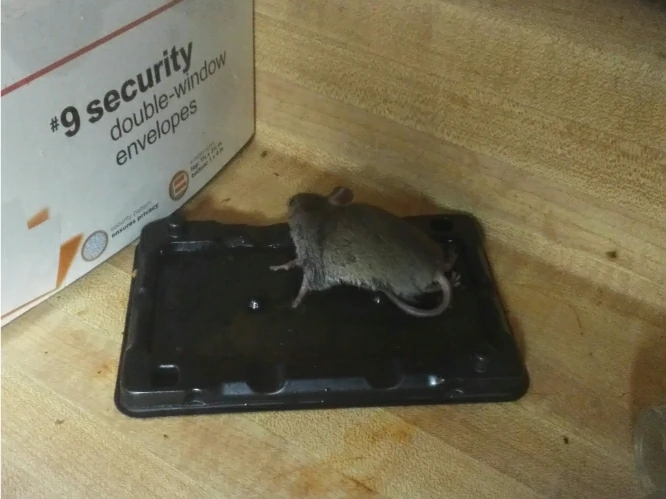
You’re setting up sticky traps (also called glue traps) to catch rats in your home, and you’re worried about what might be on them.
Maybe you have kids or pets, or you’re just concerned about handling them yourself. You want to know if there’s poison involved before you start putting these traps around your house. Do sticky rat traps have poison?
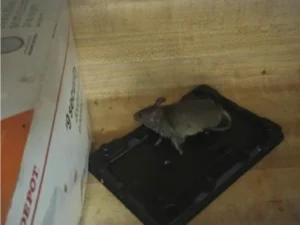
No, sticky rat traps don’t have poison on them. They work purely through adhesive, using a very sticky glue to trap rats. The glue itself isn’t toxic, though it can cause skin irritation in some people and is difficult to remove once it touches skin or fur.
Sticky traps are one of the few rat control methods that doesn’t involve any toxic chemicals or poisons. They catch rats through physical restraint, not by poisoning them.
How Sticky Traps Actually Work
Understanding what’s on sticky traps can help put your mind at ease about using them.
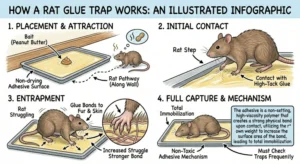
The sticky surface is made from a strong adhesive, similar to the glue on really strong tape but much tackier. When a rat steps on the trap, its feet get stuck immediately. The more the rat struggles, the more of its body gets stuck to the adhesive.
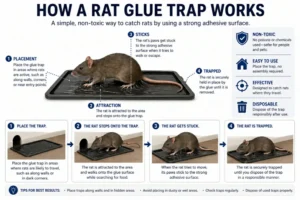
This adhesive is designed to be long-lasting and maintain its stickiness over time. It won’t dry out quickly like regular glue would. The trap can sit for weeks or even months and still be just as sticky as when you first put it down.
The glue is usually petroleum-based or made from synthetic polymers. These materials are chosen because they’re very sticky but also stable. They don’t break down easily and they don’t need toxic chemicals to maintain their effectiveness.
Some traps have scent attractants added to the adhesive or the cardboard base. These scents are meant to attract rats to the trap, making them more likely to walk onto the sticky surface. The attractants are typically food-based scents, not poisons.
The trap works entirely by restraining the rat physically. There’s no mechanism to kill the rat quickly. The rat either dies from stress, dehydration, or exhaustion from struggling, or you have to kill it yourself or release it somehow.
What’s Actually in the Glue
The ingredients in sticky trap glue are pretty simple and don’t include any toxic pesticides or poisons.
Most glue traps use polybutene as the main sticky ingredient. This is a synthetic rubber-like substance that’s very tacky and doesn’t dry out. It’s the same type of material used in some industrial adhesives and sealants.
Natural or synthetic resins are often added to increase the stickiness and help the adhesive maintain its properties over time. These resins aren’t toxic, though they can be irritating to skin if you’re sensitive to them.
Mineral oil or other oils are sometimes included to keep the adhesive from getting too hard or too soft depending on temperature. This helps the trap work in different environments.
Some manufacturers add food-grade attractants like peanut oil or vanilla scent to make the trap more appealing to rats. These are the same ingredients you’d find in actual food, just in very small amounts.
Preservatives might be added to prevent the glue from breaking down or growing mold over time. These are typically the same types of preservatives used in cosmetics or other consumer products, not agricultural poisons.
The cardboard or plastic base of the trap is just regular material with no special coatings or treatments. It’s there to give the glue something to stick to and to make the trap easy to handle and place.
Why People Think They Might Be Poisonous
There are several reasons people worry that sticky traps might contain poison.
Many other rat control products do use poison, so it’s natural to assume sticky traps might too. Bait stations, poison pellets, and tracking powders all contain toxic substances. It’s easy to lump all rat control methods together and assume they’re all poisonous.
The warning labels on sticky trap packaging can be confusing. They often say things like “harmful if ingested” or “keep away from children and pets,” which sounds like a poison warning.
But these warnings are actually about the adhesive causing problems if swallowed, not about toxic chemicals.
If you touch the glue and it irritates your skin, you might think it’s because of poison. But skin irritation from glue is usually just a reaction to having a strong adhesive stuck to you or a mild allergic reaction to the ingredients, not poisoning.
Some sticky traps are sold alongside poisoned bait products in stores. When you see them on the same shelf with poison pellets and bait stations, it’s easy to assume they all work the same way.
The word “trap” itself might make people think of danger and toxicity. We associate pest control with chemicals and poisons, so anything designed to kill pests must have poison in it, right? Not in this case.
Marketing language doesn’t help either. Terms like “kills rats” on the packaging don’t clarify that the trap kills by restraint, not poison. It just says it kills, which could mean anything.
Is the Glue Harmful to Humans?
While the glue isn’t poisonous, it can still cause problems if you’re not careful.
Skin contact with the adhesive is annoying and can be painful to remove. The glue is designed to hold onto things very strongly, so when it grabs your skin, it doesn’t let go easily. Pulling it off can tear the outer layers of your skin and cause pain and bleeding.
Ingesting the glue would make you sick, but not because it’s poisonous. If a child or pet ate some of the adhesive, it could cause stomach upset, vomiting, or digestive blockage. The warning labels are about this physical danger, not about toxic chemicals.
Some people have allergic reactions to the ingredients in the glue. This usually shows up as skin redness, itching, or a rash where the glue touched you. It’s not common, but it can happen to people with sensitive skin or chemical sensitivities.
Getting glue in your hair is painful to remove because it sticks to hair just as well as it sticks to rats. You’ll probably have to cut out some hair or spend a long time working oil through it to dissolve the adhesive.
If glue gets in your eyes, it can cause serious irritation and possibly damage. The adhesive isn’t toxic to your eyes, but having a sticky substance in your eye is dangerous. You’d need immediate medical attention to safely remove it.
The glue won’t poison you through your skin. Unlike some pesticides that can be absorbed through skin contact, sticky trap glue just sits on the surface. It’s annoying and painful to remove, but it’s not entering your bloodstream or poisoning you.
What About Pets and Children?
Even though sticky traps aren’t poisonous, they can still be dangerous for kids and animals.
Pets stepping on sticky traps can panic and make the situation worse. A dog or cat will try to shake the trap off or bite at it, spreading glue all over their fur and possibly into their mouth. This is stressful for the animal and can be really difficult to clean up.
Children who touch sticky traps might get scared and pull hard, tearing their skin. A calm adult can remove glue carefully with oil, but a frightened child will just yank their hand away and hurt themselves.
Swallowing small pieces of the adhesive is the biggest risk. If a child or pet tears off pieces of the trap and eats them, the glue can cause choking or intestinal blockage. This is a medical emergency even though the glue itself isn’t poisonous.
Getting fur or hair stuck causes pain and distress. A cat with a sticky trap stuck to its paw will groom itself and potentially get glue in its mouth and on its face. Dogs might chew at stuck areas and end up with glue on their teeth and gums.
The stress of being stuck can be harmful even if there’s no poison involved. Pets in particular can become very distressed when they’re stuck and can’t get free. This psychological stress can cause physical problems like rapid heartbeat and breathing difficulties.
For these reasons, sticky traps should be placed where children and pets absolutely can’t reach them. Under furniture, behind appliances, or in closed cabinets are better than open floor areas.
Sticky Traps Versus Poisoned Bait
Understanding the difference between these two rat control methods helps clarify why sticky traps don’t need poison.
Poisoned bait works by attracting rats to eat something laced with toxic chemicals. The rat consumes the poison, leaves, and dies later somewhere else. The poison does all the work.
Sticky traps work by physically restraining the rat. There’s no need for poison because the trap catches and holds the rat directly. The adhesive is the entire mechanism.
Combining poison with sticky traps would actually be pointless. If a rat is already stuck on the adhesive, it’s trapped. Adding poison wouldn’t make the trap more effective, it would just add unnecessary chemicals and risk.
Poison is used when you want to kill rats without seeing them or handling them directly. You put out bait, they eat it, and they die somewhere else. Sticky traps are the opposite approach where you’re catching them directly.
Many people actually choose sticky traps specifically because they don’t want to use poison. If you have concerns about poisoning non-target animals or contaminating your home, sticky traps seem like a safer alternative.
The main difference is that poison kills the rat through internal damage, while sticky traps catch it through external restraint. Two completely different mechanisms that don’t need to be combined.
What the Warning Labels Actually Mean
The warnings on sticky trap packages are about physical hazards, not poisoning.
“Keep away from children” means kids could get stuck to the trap and hurt themselves trying to pull free. It doesn’t mean the trap contains poison that would harm them if they touched it.
“Harmful if swallowed” refers to the risk of choking or intestinal blockage from the adhesive, not to toxic chemicals. Swallowing a chunk of sticky glue could cause serious digestive problems even though it’s not poisonous.
“Wash hands after handling” is good hygiene advice because you don’t want sticky residue on your hands. It’s not because the trap is coated with poison that could be absorbed through your skin.
“Avoid contact with eyes and skin” is about the difficulty and pain of removing the adhesive, not about chemical burns or poisoning. Getting this stuff on you is just a really bad idea from a practical standpoint.
“Use in well-ventilated areas” might appear on some packages, but this is just general safety language. The adhesive doesn’t release toxic fumes. The warning is probably there because some people are sensitive to smells or might have reactions to the scent attractants.
These labels are required by regulations and manufacturers often use standard safety language that covers multiple products. It’s easier to put comprehensive warnings on everything than to customize labels for each product.
Can You Safely Handle Sticky Traps?
Yes, you can handle sticky traps safely as long as you’re careful not to touch the adhesive.
Wear gloves if you’re worried about accidental contact. Cheap disposable gloves will protect your hands from the sticky surface. If you do touch the glue with gloves on, just throw away the gloves instead of dealing with cleanup.
Hold traps by the edges of the cardboard or plastic base. The adhesive is only on the flat surface, not on the sides. As long as you grip the edges, you won’t get stuck.
Set traps down carefully in the spot you want them. Don’t toss them or slide them into place because the adhesive can pick up dust and debris, making it less effective. Place them gently and precisely.
If you need to move a trap after you’ve already set it down, pick it up the same way, by the edges. Don’t try to slide it across the floor because it might stick to the surface or flip over and get the sticky side on your floor.
When disposing of a used trap (whether it caught something or not), fold it over on itself so the sticky sides touch each other. This makes it safe to handle and prevents accidental contact. Double bag it in plastic bags before throwing it away.
You don’t need any special safety equipment beyond basic gloves. Unlike with poison baits where you might want masks or special handling procedures, sticky traps are just sticky surfaces. Basic caution is enough.
Alternatives If You Want to Avoid Glue Traps
If you’re concerned about sticky traps for any reason, there are other options that also don’t use poison.
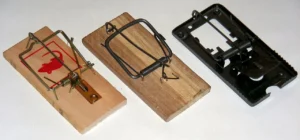
Snap traps kill rats quickly through physical force, not poison. They’re considered more humane than sticky traps because death is nearly instant when the trap works correctly.
Electronic traps use electricity to kill rats in seconds. There’s no poison involved, just a high-voltage shock that stops the heart. They’re expensive but very effective and humane.
Live catch traps (cage traps) catch rats alive without harming them. There’s no poison, no glue, and no killing. You catch the rat and then decide what to do with it (usually release it far from your home).
Bucket traps with water can drown rats quickly, which is considered more humane than letting them die slowly on a sticky trap. There’s no poison, just water in a bucket.
Ultrasonic repellents try to drive rats away without catching or killing them. They emit sounds that rats find unpleasant. No poison, no killing, though their effectiveness is debated.
Professional pest control can handle the problem for you using whatever methods you prefer. You can specifically request non-poison methods if that’s important to you.
Conclusion
Sticky rat traps don’t contain any poison. They work purely through a strong adhesive that physically restrains rats. The glue is made from synthetic materials like polybutene and resins, not toxic pesticides or chemicals.
While the adhesive isn’t poisonous, it can still cause problems if it gets on your skin, in your hair, or if children or pets touch it. The warnings on the packages are about these physical hazards, not about toxic chemicals.
If you choose to use sticky traps, handle them carefully by the edges, wear gloves if you’re worried about accidental contact, and place them where kids and pets can’t reach them. If you do get stuck, use oil to dissolve the adhesive and free yourself safely.
If you’re looking for a rat control method that doesn’t involve poison and you understand how sticky traps work, they’re a poison-free option. Just be aware of the other concerns like humaneness and the difficulty of dealing with caught rats.

Hi, my name is Ezra Mushala, i have been interested animals all my life. I am the main author and editor here at snakeinformer.com.