
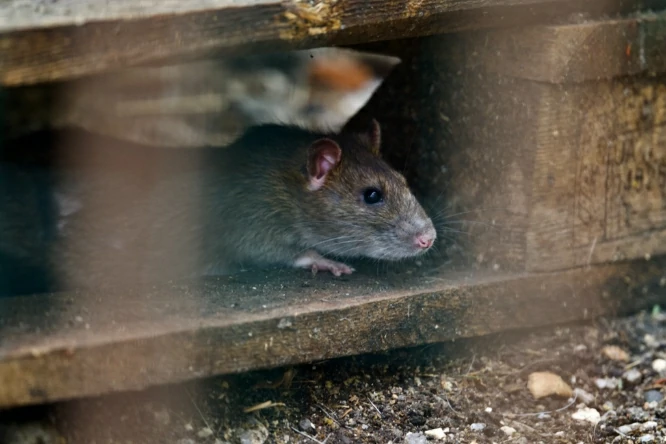
You’ve been hearing scratching sounds in your walls, and then suddenly the noises stopped. Now you’re wondering if a rat got stuck in there and what might happen next. How long can a rat live trapped in a wall?
A rat trapped in a wall can survive anywhere from a few days to two weeks, depending on whether it has access to water. Without water, a rat will die in 3 to 4 days. With water but no food, it might last up to two weeks. Temperature, the rat’s health, and stress levels also affect how long it survives.
The timeframe varies quite a bit based on conditions, but one thing is certain: a rat trapped without resources won’t last very long.
Why Water Matters More Than Food
Water is the most critical factor for a trapped rat’s survival. Like all mammals, rats can’t live long without it.
A rat’s body is about 60-70% water. They lose water constantly through breathing, urination, and just normal body functions.
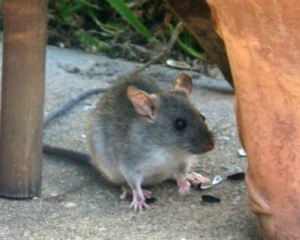
Without water, a rat will become dehydrated within 24 hours. After 3 to 4 days without drinking, most rats will die.
Food is important too, but rats can survive much longer without eating than without drinking. Their bodies can break down fat and muscle for energy when food isn’t available.
In a wall cavity, there’s rarely any standing water. Unless there’s a leak or condensation, the rat won’t have anything to drink.
Some wall cavities do have moisture from pipes, condensation, or water damage. If a rat can access even small amounts of water, its survival time increases dramatically.
How Long Rats Can Survive Without Food
Rats are surprisingly resilient when it comes to food deprivation. Their bodies are adapted to deal with periods when food is scarce.
A healthy adult rat can survive about 2 weeks without food if it has access to water. This varies based on the rat’s size, health, and activity level.
Trapped rats don’t move around much, which conserves energy. This might extend their survival time slightly compared to an active rat.
Baby rats or sick rats won’t last as long without food. They need more frequent meals and have less stored energy in their bodies.
As the rat gets hungrier, it’ll become weaker and less active. Eventually, its body will start breaking down muscle tissue for energy.
In the final days, the rat will be too weak to move much or make noise. This is often when people assume the rat is gone, even though it might still be barely alive.
Temperature Effects on Survival Time
The temperature inside your walls affects how long a trapped rat can survive. Extreme temperatures speed up the dying process.
In very hot conditions, a rat loses water faster through respiration and any minimal sweating they do through their paws. This accelerates dehydration.
Summer temperatures inside walls can get really high, especially in attics. This could reduce a rat’s survival time to just 2 or 3 days even with minimal water.

Cold temperatures slow down the rat’s metabolism. This sounds like it would help them survive longer, but extreme cold can also kill them.
Most homes maintain temperatures that aren’t extreme enough to kill rats quickly. Room temperature (around 68-72°F) is actually comfortable for rats.
Insulation in walls can help moderate temperature swings, which might actually extend a trapped rat’s survival time a bit.
What Happens as the Rat Dies
Understanding the dying process helps explain why you might hear certain sounds or smells at different times after a rat gets trapped.
In the first 24-48 hours, the rat will be active and panicking. You’ll hear a lot of scratching, squeaking, and movement as it tries to escape.
After a couple days without water, the rat becomes lethargic. The sounds decrease significantly. It might only move when it has brief bursts of energy.
Around day 3 or 4 without water, the rat is severely dehydrated and extremely weak. You might hear occasional movement but nothing like the initial activity.
When death is near, the rat will be mostly still. Its body systems are shutting down from dehydration, starvation, or both.
After death, decomposition begins. This is when the smell starts, though it might take a day or two before you notice it depending on temperature and airflow.
Signs a Rat Is Trapped vs. Just Living There
Not every rat in your wall is trapped. Many rats live in wall cavities intentionally and can come and go freely.
Trapped rats make frantic, continuous sounds. You’ll hear constant scratching, clawing, and sometimes squeaking or high-pitched distress calls.

Rats that aren’t trapped have patterns. They’re active at certain times (usually night) and quiet at others. Trapped rats panic and make noise at all hours.
If the sounds are coming from the exact same spot for days, that suggests the rat can’t move around. Free rats move throughout the wall space.
The sounds from a trapped rat get weaker over time. You’ll notice the scratching becoming less intense and less frequent as days pass.
If sounds completely stop and then you start smelling something bad a few days later, the rat was likely trapped and has now died.
Why Rats Get Trapped in Walls
Understanding how rats end up stuck helps you prevent it from happening again. There are several common scenarios.
Rats sometimes fall down vertical spaces inside walls. They can climb well, but smooth metal or plastic surfaces don’t give them grip to climb back up.
Baby rats exploring for the first time might wander into spaces they can’t navigate out of. They don’t have the experience to avoid dead ends.
Walls that have been recently modified or repaired might create new dead ends that rats don’t expect. They enter from their usual route and suddenly can’t get out.
Weak or sick rats might get into a space when they’re feeling okay but then become too weak to escape. The effort of getting in uses their last bit of energy.
Sometimes people accidentally seal rats inside walls during home repairs. If you cover an entry point while a rat is inside, it’s now trapped.
The Smell of a Dead Rat in Your Wall
One of the biggest concerns about a trapped rat is the smell after it dies. This is a legitimate worry because the odor can be really bad.
Dead rat smell typically starts about 24-48 hours after death. The exact timing depends on temperature and how much air circulation there is.
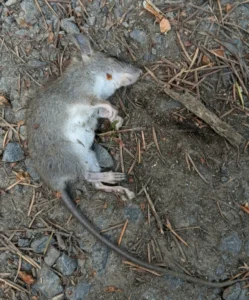
The smell gets worse over the first week as decomposition progresses. This is usually the peak of the odor.
In warm conditions, the smell develops faster and can be more intense. Cool temperatures slow down decomposition and the smell.
The odor is described as sweet, sickly, and unmistakable. Once you’ve smelled a dead rat, you’ll recognize it immediately if it happens again.
The smell can last anywhere from 1 week to several weeks. Smaller rats decompose faster and smell for a shorter time than larger rats.
Airflow in the wall affects how much smell gets into your living space. Good ventilation might mean less smell in the rooms, but it might also spread the odor around more.
Can You Save a Trapped Rat?
If you know a rat is trapped and you can hear it’s still alive, you might wonder if you should try to help it escape.
Locating the exact spot where the rat is trapped is the first challenge. Sound can echo through wall cavities and be misleading about the actual location.
You’d need to cut into your wall to reach the rat. This is expensive and causes damage that you’ll have to repair later.
Even if you open the wall, the rat might not come out willingly. Rats are scared of humans, and a panicked, trapped rat might try to bite if cornered.
If you do manage to release the rat, it’ll just find its way back into your walls or another part of your home. You haven’t solved the rodent problem.
Most people decide it’s not worth the effort, cost, and risk to save a single rat. Harsh as it sounds, letting nature take its course is usually the chosen option.
Health Risks of a Dead Rat in Your Wall
Beyond the smell, there are health concerns when a rat dies inside your wall. These risks are why some people do choose to remove it.
Dead rats can attract other pests. Flies, beetles, and other insects feed on decomposing animals and might move into your home.
The decomposition process can promote mold growth if moisture is present. Mold has its own health risks, especially for people with allergies or respiratory issues.

Bacteria from the decomposing rat can become airborne to some degree. This is more of an issue if there are openings in the wall that allow air exchange with living spaces.
If you have other rats, they might be attracted to or disturbed by the dead rat. This can change their behavior patterns in unpredictable ways.
The psychological stress of knowing there’s a dead animal in your wall and smelling it daily can affect your quality of life and mental health.
How to Deal With the Smell
If you’ve decided to wait for nature to take its course rather than opening the wall, you’ll need strategies to manage the odor.
Air fresheners and odor eliminators can help mask the smell but won’t remove it. Products with enzymes designed for biological odors work better than regular air fresheners.
Activated charcoal or baking soda near the source of the smell can absorb some odors. Place containers of these in the room affected.
Increase ventilation in the room. Open windows, use fans, and get air moving. This dilutes the smell and helps it dissipate faster.
Seal any small openings in the wall if you can identify where the smell is strongest. This won’t fix the problem but might reduce how much odor gets into your room.
Commercial odor neutralizers designed for dead animal smell are available. These work better than household products because they’re formulated for this specific problem.
Some people find that certain strong scents like coffee grounds or vanilla extract can help overpower the dead rat smell. Results vary.
Finding and Removing the Dead Rat
If the smell is too much to handle, you can locate and remove the dead rat. This isn’t a fun job, but it’s doable.
Follow your nose to find the strongest smell. This is generally where the rat’s body is, though wall cavities can make this tricky.
You might need to cut a small inspection hole in the drywall. Do this carefully with a utility knife or small saw. Start small; you can always make the hole bigger.
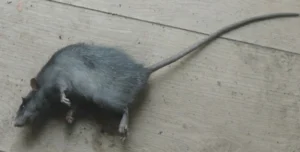
Use a flashlight to look inside the wall cavity. The rat might be right there, or you might need to look around with a mirror or inspection camera.
Wear gloves and a mask before reaching in. Use a plastic bag as a glove to grab the rat without directly touching it.
Seal the rat in a plastic bag, then put that bag inside another one. This contains the smell and any fluids from decomposition.
Throw the bagged rat in your outdoor trash immediately. Don’t leave it in your house any longer than necessary.
Clean the area where the rat was with disinfectant. This kills bacteria and helps eliminate lingering odor.
Repairing the Wall After Removal
Once you’ve removed the dead rat, you’ll need to patch the hole you made. This is relatively straightforward if the hole is small.
For small holes, drywall patch kits are available at hardware stores. These include everything you need and are designed for DIY repairs.
Cut a drywall patch slightly larger than your hole. Secure it in place with the adhesive mesh that comes in the kit.
Apply joint compound (also called mud) over the patch. Smooth it out with a putty knife. You’ll need to do several thin coats, letting each dry.
Sand the dried compound smooth once it’s fully cured. This usually takes 24 hours after the last coat.
Prime and paint the patched area to match your wall. You might need to paint a larger section to blend it in properly.
If the hole is large or you’re not comfortable with drywall work, hiring a handyman or drywall professional is worth considering.
Preventing Rats from Getting Trapped
The best solution is preventing rats from being in your walls at all, but if they are there, you want to make sure they have escape routes.
Identify and seal entry points where rats are getting into your walls from outside. This is the most important step in long-term rat control.
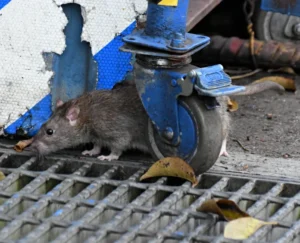
Make sure any spaces within walls connect so rats can move freely. Dead ends are where trapping happens, so during renovations, consider airflow and animal movement.
Don’t seal up holes or entry points until you’re sure all rats are out of that space. Set up one-way doors or wait until you’ve had no activity for at least a week.
Regular inspection of your home’s exterior can help you spot new entry points before rats use them. Check for gaps around pipes, vents, and where different materials meet.
Keep trees and bushes trimmed away from your house. Rats use these as highways to access your roof and upper levels where they can get into walls.
Do Rats Learn from Trapped Members?
This is an interesting question about rat intelligence and social behavior. The answer is somewhat complicated.
Rats can learn from watching other rats, but a rat trapped inside a wall isn’t visible to the others. They can’t learn by observation in this case.
Other rats might smell or hear the trapped rat. This could make them more cautious about entering that particular space, but it’s not guaranteed.
Rats do communicate distress through ultrasonic calls that humans can’t hear. If the trapped rat is calling out, others might receive a warning signal.
However, rats are also attracted to the scent of other rats in some contexts. The trapped rat’s scent might actually draw others to investigate.
Once a rat dies, its decomposing body might make other rats avoid that area. Many animals instinctively avoid dead members of their own species.
The bottom line: some individual rats might learn to avoid the spot, but it won’t keep all rats away from your walls permanently.
Professional Pest Control Options
If you’re dealing with rats in your walls, professional help might be worth the investment. They have tools and knowledge that most homeowners don’t.
Professionals can use inspection cameras to see inside walls without cutting large holes. This helps locate live or dead rats accurately.

They have experience with rat behavior and know the most likely places where rats get trapped. This speeds up the location and removal process.
Pest control companies have better tools for sealing entry points and making sure rats can’t return. They know all the spots homeowners typically miss.
Some companies offer guarantees on their work. If rats return within a certain period, they’ll come back and address the problem at no extra cost.
The cost of professional service varies, but it’s often worth it to avoid the trial and error of DIY methods, especially if you’ve already spent money on approaches that didn’t work.
Conclusion
A rat trapped in a wall will survive for a few days to two weeks depending mainly on access to water. Without water, death comes in 3 to 4 days. With water but no food, the rat might last up to two weeks.
Temperature, the rat’s health, and stress levels all play roles in how long survival lasts. Hot conditions speed up dehydration, while trapped rats that are already sick won’t last as long as healthy ones.
The process from active scratching to silence to smell usually takes about a week. You’ll hear frantic activity at first, then decreasing sounds, then nothing, followed by odor within a day or two.
You can wait for the rat to decompose naturally, which takes a few weeks, or you can locate and remove it. Removal means cutting into your wall but eliminates the smell problem faster.
Prevention is the real solution. Seal entry points, eliminate food sources, and make sure any rats that do get into wall spaces can also get back out.
If you’re dealing with repeated issues of rats in walls, professional pest control is worth considering. They can solve the problem more thoroughly than most DIY approaches.

Hi, my name is Ezra Mushala, i have been interested animals all my life. I am the main author and editor here at snakeinformer.com.